Preparing
LoadingPreparing
LoadingA Bhutanese religious tradition
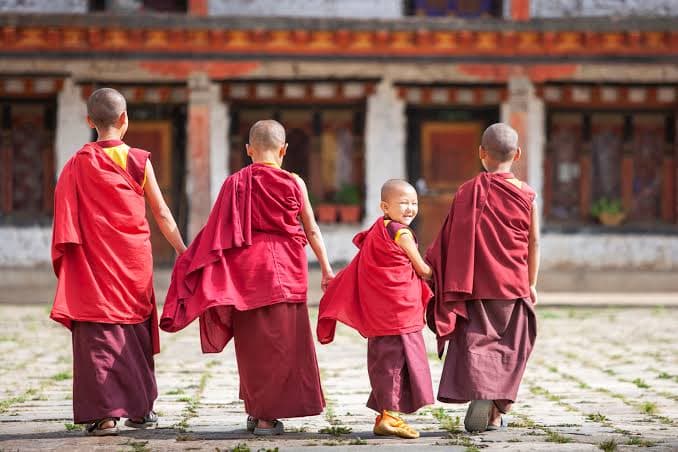
Vajrayana is the branch of Buddhism that shapes Bhutanese religious life. Vajra — variously rendered diamond, thunderbolt, or adamantine — describes both the indestructible nature of awakened mind and the swift transformative method the tradition emphasises. Vajrayana practice is the substance of what a visitor sees in every dzong, monastery, prayer-flag-strung pass, and tshechu festival across the country.
religion
In short
Vajrayana is the branch of Mahayana Buddhism that emerged in India in the 5th-7th centuries CE and became the dominant tradition of Tibet and Bhutan. Bhutan is one of the few countries where Vajrayana is the state religion. The visible texture — dzongs, tshechus, prayer flags, mantra — is Vajrayana in operation.
A branch of Mahayana Buddhism that emerged in India between roughly the fifth and seventh centuries CE. It incorporates tantric methods — visualisation, mantra recitation, mandala practice, deity yoga, and direct guru-to-student transmission through formal empowerment (wang) — to compress what other Buddhist paths describe as a multi-lifetime journey into the possibility of awakening in a single life. The defining elements: mantra (sacred sound formulas — the most widely heard in Bhutan are Om Mani Padme Hum for Avalokiteshvara, the bodhisattva of compassion, and the Vajra Guru mantra Om Ah Hung Vajra Guru Padma Siddhi Hung for Guru Rinpoche); mandala (geometric ritual diagrams representing the enlightened cosmos — the sand mandalas constructed by monks during major rituals and ceremonially dispersed are the visible form a visitor will most often encounter); deity yoga (visualisation practice in which the practitioner identifies with an enlightened being); and guru devotion (direct transmission from master to student through empowerment — Vajrayana lineages are lines of living transmission, not textual succession alone).
Bhutan is one of the very few countries in the world where Vajrayana is the state religion and the dominant idiom of public life. The two major expressions: the Drukpa Kagyu is the dominant school — the state religion, the central monk body, the dzong system, and the official ceremonial calendar are all Drukpa Kagyu, established as Bhutan's preeminent tradition by Zhabdrung Ngawang Namgyal in the seventeenth century. The Nyingma is the older tradition transmitted by Guru Rinpoche in the eighth century — particularly strong in eastern Bhutan and Bumthang, sustained through tertöns such as Pema Lingpa. The two coexist in cooperative rather than competitive relation, one of the more notable features of Bhutanese religious life given the sectarian conflicts that have marked the history of the same schools elsewhere in the Himalaya. The central figure of veneration across both traditions is Guru Rinpoche (Padmasambhava), the eighth-century master credited with bringing Vajrayana to the Himalayas — his eight manifestations are the iconographic spine of Bhutanese monastery art and the principal subject of masked dances at every tshechu.
The visible texture of Vajrayana fills the country. Monasteries (gompas) and dzongs — the most concentrated embodiment; walking into the central temple of a dzong is to walk into a Vajrayana ritual space organised around principal deities, guru lineages, and mandala geometry. Tshechus — annual masked-dance festivals held at every dzong, centred on Guru Rinpoche's life and miraculous deeds; the Paro Tshechu and the Thimphu Tshechu are the largest. Prayer flags — printed with mantras, deities, and the wind-horse, released to the wind so that every breeze carries blessing across the landscape. Mani walls — stone walls inscribed with the Om Mani Padme Hum mantra, circumambulated clockwise. Butter lamps — the gold-illuminated rows in temple antechambers among the most recognisable images of Bhutanese ritual life. Chortens (stupas) — reliquary monuments anchoring pilgrimage geography; the National Memorial Chorten in Thimphu is the most-visited. Mantra recitation — heard everywhere, from monasteries to taxi drivers; the country is audibly Vajrayana, and travellers often remark on it as one of the first things they notice and one of the last things they forget.
The deepest engagement available is attendance at a tshechu or a private blessing (jinlap) from a senior lama at one of the major monasteries — both routinely arranged for visiting travellers who are interested. The matched guide handles the protocol — language, dress code, gift-giving, prayer-time pacing — and arranges the introductions where the relationships allow. For visitors with prior Buddhist background (Theravada, Zen, Pure Land, Korean Seon), the comparative-tradition tradition is often the most rewarding cultural moment of the trip — see the Buddhist journey for Thai, Japanese, and Korean travellers for the comparative framework.
Common questions
Closely related but not identical. Tibetan Buddhism is one expression of Vajrayana (the Gelug, Kagyu, Nyingma, and Sakya schools, all Tibetan). Bhutanese Vajrayana shares lineages with Tibetan Buddhism (the Drukpa Kagyu and Nyingma in particular) but evolved within Bhutan's distinct cultural and political framework — particularly since the unification under Zhabdrung Ngawang Namgyal in the 17th century gave the country its own ecclesiastical institutions distinct from Tibet's.
No. All Bhutanese temples are open to visitors of any background, with the standard cultural protocol (modest dress, shoes off inside the lhakhang, no photography in the interior unless explicitly permitted, walking clockwise around the central stupa or relic). The matched guide handles the practicalities; the cultural is welcoming.
Private blessings (jinlap) are arranged for many visitors through the matched guide's relationships with senior lamas. Formal empowerments (wang) — the deeper Vajrayana transmissions — require a teacher-student relationship and prior preparation; visitors with established Buddhist practice can sometimes be introduced to the appropriate Bhutanese lineage holder through their teacher at home.
The Paro Tshechu (March-April) and Thimphu Tshechu (September-October) are the largest. Punakha Drubchen + Tshechu (February-March) is the most historically significant. Smaller dzongkhag tshechus offer more intimate access. See the Tshechu Festival journey for the autumn-window framing.
Journeys that visit Vajrayana Buddhism
The Vajrayana register read against Theravada, Tendai, Shingon, Zen, Seon
A nine-night Bhutan Buddhist journey for Thai, Japanese, and Korean travellers. Comparative Vajrayana / Theravada / Tendai / Zen / Seon. Knowledgeable monastic-trained guide.
9 nights · from USD 10,000
For the traveller weighing both
A fair, gracious comparison of Bhutan and Ladakh for the culture-first traveller — altitude, green versus high desert, the guided model, self-drive versus private — with a representative seven-night western-circuit week.
7 nights · from USD 7,000
For the traveller weighing both
A fair, gracious comparison of Bhutan and Tibet for the culture-first traveller — living practice, altitude, access, the guided model — with a representative seven-night western-circuit week.
7 nights · from USD 7,000
Where to see it
Monument
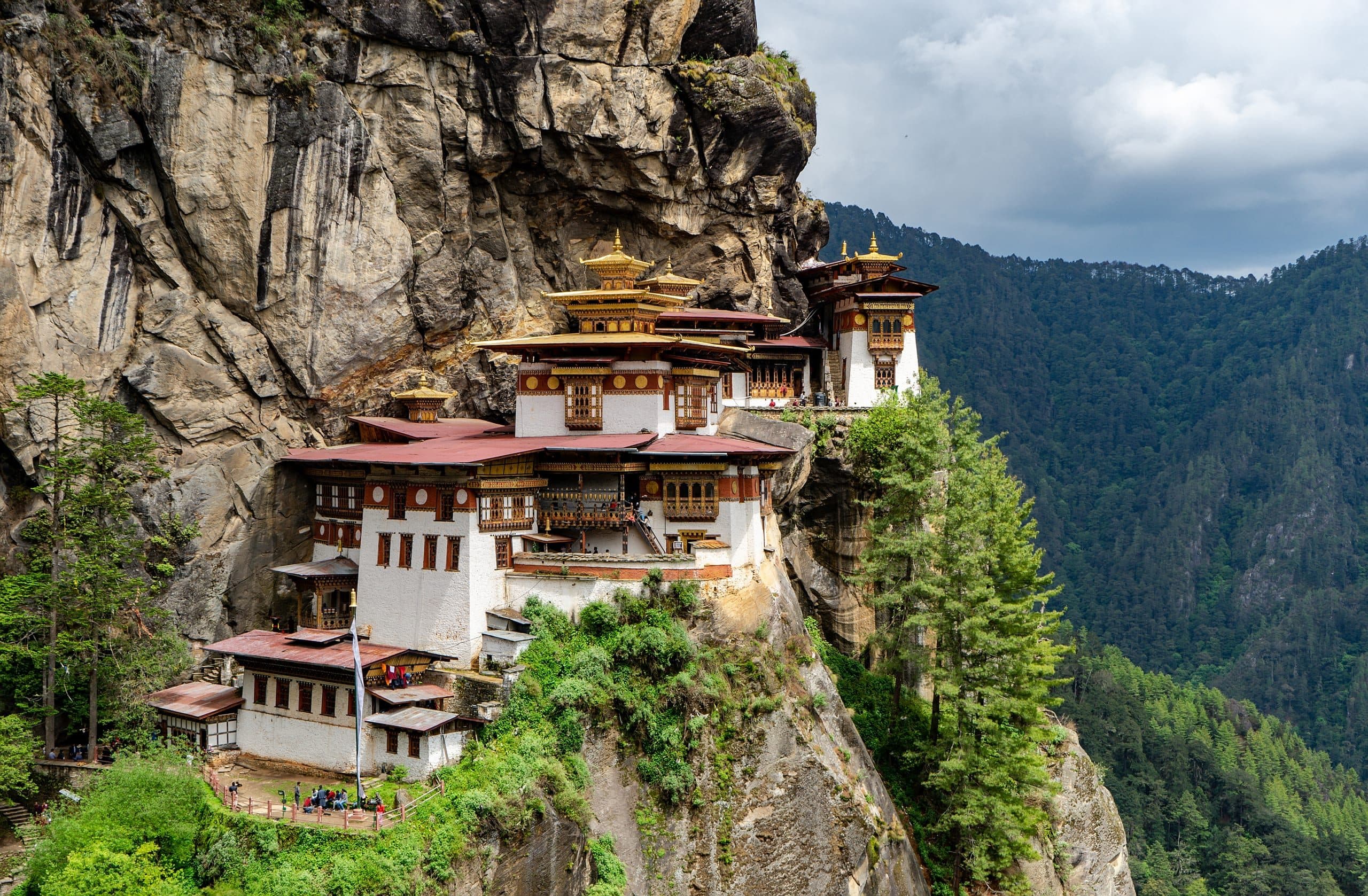
Paro Taktsang (Tiger's Nest) — the founding by Guru Rinpoche, the 1692 monastery, the 2-hour hike, what to know before you visit.
Monument
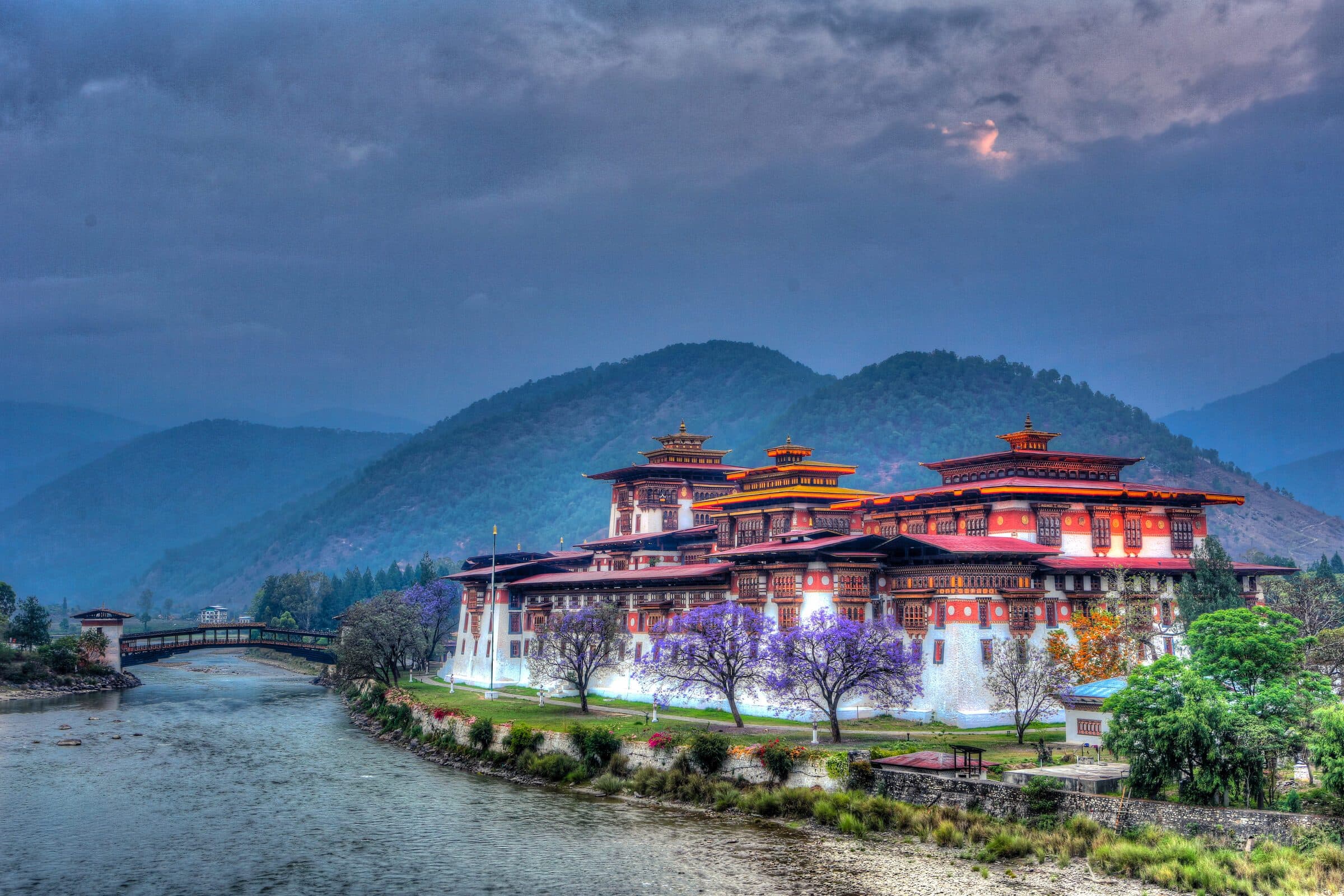
Punakha Dzong — the Palace of Great Happiness, founded 1638. The history, the architecture, what to expect on a visit.
Monument
Kurjey Lhakhang — the Bumthang cliff cave bearing Guru Rinpoche's body imprint. The three-temple complex, history, visiting.
Monument
Kyichu Lhakhang — the 7th-century temple of Paro, one of 108 Songtsen Gampo founded across the Himalaya. History, visiting.
Monument
National Memorial Chorten — Thimphu, 1974, in memory of His Majesty the 3rd King. Architecture, daily pilgrimage, visiting.
When it is performed
Festival
Paro Tshechu — the principal spring festival at Rinpung Dzong. This year's dates, the programme, the pre-dawn thongdrel, what to expect for international visitors.
Festival
Thimphu Tshechu — the autumn festival at Tashichho Dzong, capital of Bhutan. This year's dates, the programme, what to expect as an international visitor.
Festival
Punakha Drubchen & Tshechu — the late-winter festival pair at Punakha Dzong, with the Tibetan-invasion re-enactment. Dates, programme, what to expect.
Festival
Jambay Lhakhang Drup — five days at Bumthang's oldest temple, including the Mewang fire ritual. Dates, programme, what to expect.
Journeys built around it
Journey
A nine-night Bhutan Buddhist journey for Thai, Japanese, and Korean travellers. Comparative Vajrayana / Theravada / Tendai / Zen / Seon. Knowledgeable monastic-trained guide.
Journey
A ten-night Bhutan Buddhist pilgrimage for Asian-Buddhist travellers. Monastic context; matched monastic-trained guide; Bumthang religious circuit.
Journey
A seven-night Bhutan meditation retreat through Clear-Sky Bhutan (Dec–Feb). Daily sittings with a monastic-trained guide, hot stone baths, no festival noise.
Five questions. A bespoke draft back within a day or two.