
Preparing
LoadingPreparing
Loading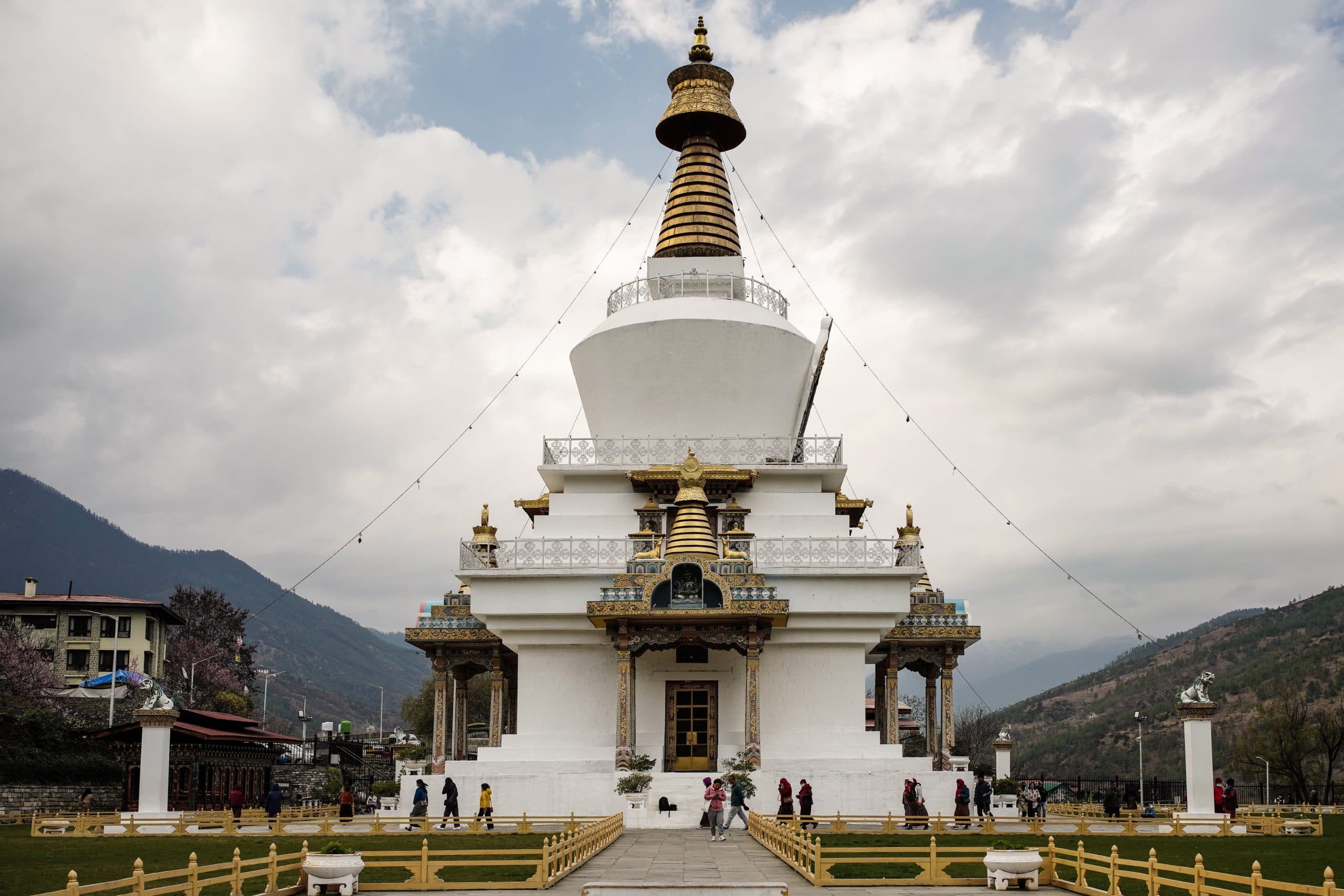
The memorial to His Majesty the 3rd King
The National Memorial Chorten sits in central Thimphu at 2,360 metres elevation — a tall whitewashed chorten built in 1974 in memory of His Majesty Druk Gyalpo Jigme Dorji Wangchuck (the 3rd King, 1928–1972), known as the Father of Modern Bhutan. The chorten is the principal civic-religious monument of the capital and one of the most-attended pilgrimage sites in the country.
Also known as · Thimphu Memorial Chorten · Thimphu Chorten · Memorial Chorten
His Majesty Druk Gyalpo Jigme Dorji Wangchuck (1928–1972) is held by the Bhutanese as the Father of Modern Bhutan. During his reign (1952–1972), he led the country's first five-year plans, abolished serfdom, brought Bhutan into the United Nations (1971), established the National Assembly, and laid the foundations of the modern state. He died in Nairobi in 1972 at the age of 43, before construction on the present chorten had begun — the structure was conceived by Her Majesty Royal Grandmother Ashi Phuntsho Choden Wangchuck as a memorial to her late husband and was completed in 1974.
The chorten follows the Tibetan stupa pattern — a tiered base, a bulbous dome, a tapered spire — but with Bhutanese architectural detail in the canopy and the proportions. The interior is more substantial than most chortens: rather than a sealed reliquary, the structure contains three storeys of chapels, accessible by an internal staircase. The chapels house images and statues of the principal Vajrayana deities — the Wrathful Deities cycle, the Long-Life Deities cycle, the Peaceful Buddha images — depicted in the Nyingma tradition. The chapel paintings were executed by master Bhutanese craftsmen across the 1970s.
The chorten is one of the most-attended pilgrimage sites in the country. The Thimphu Bhutanese — particularly the elderly — gather here from dawn to dusk to circumambulate (perform the kora) clockwise around the structure, spin the prayer wheels lining the outer wall, recite mantras, and offer butter lamps in the surrounding lamp houses. The kora is open to international visitors who wish to join — the Bhutanese protocol is to walk clockwise, in silence or in quiet conversation, at a measured pace. The early-morning kora (6–7 a.m.) and the late-afternoon kora (4–5 p.m.) catch the largest local attendance and the most reverent register.
Visiting
Common questions
His Majesty Druk Gyalpo Jigme Dorji Wangchuck (1928–1972) was the third king of Bhutan and is held by the Bhutanese as the Father of Modern Bhutan. During his reign he led the country's first five-year plans, abolished serfdom, and brought Bhutan into the United Nations. He died in Nairobi in 1972 at the age of 43; the National Memorial Chorten was built by his consort, Her Majesty Royal Grandmother Ashi Phuntsho Choden Wangchuck, in his memory.
Yes — the chorten has three storeys of interior chapels accessible by an internal staircase. The chapels house images and statues of the principal Vajrayana deities depicted in the Nyingma tradition. The interior is open with a guide from 9 a.m. to 5 p.m. Photography is prohibited inside.
Yes — international visitors are welcome to join the circumambulation. The protocol is to walk clockwise, in silence or in quiet conversation, at the measured pace of the surrounding pilgrims. The early-morning and late-afternoon kora windows catch the largest local attendance; the experience is one of the principal local-register moments of any Thimphu visit.
The National Memorial Chorten is unusual among Bhutanese chortens in having an interior chapel structure — most chortens are sealed reliquaries. The Bhutanese tradition holds three principal interior-chapel chortens in the country: the National Memorial Chorten in Thimphu, the Chorten Kora in Trashiyangtse (modelled on Bodhnath in Kathmandu), and the Chendebji Chorten on the Pele La pass.
Most visitors combine the National Memorial Chorten with Tashichho Dzong (the seat of government), the Folk Heritage Museum, and the Centenary Farmers' Market as a half-day Thimphu circuit. The Buddha Dordenma on the Kuensel Phodrang ridge is 20 minutes' drive south for the late-afternoon or sunset visit.
Journeys featuring this site
Journey
A seven-night Bhutan journey timed to Thimphu Tshechu in autumn — second-tier seating, a culturally fluent guide, Bhutanese lodges.
Journey
A ten-night Bhutan milestone trip from London — for 50th birthdays, retirement, decade-marking anniversaries. Signature-tier; full circuit including Bumthang.
Journey
A ten-night Bhutan Buddhist pilgrimage for Asian-Buddhist travellers. Monastic context; matched monastic-trained guide; Bumthang religious circuit.
Five questions. A bespoke draft back within a day or two.