Preparing
LoadingPreparing
Loading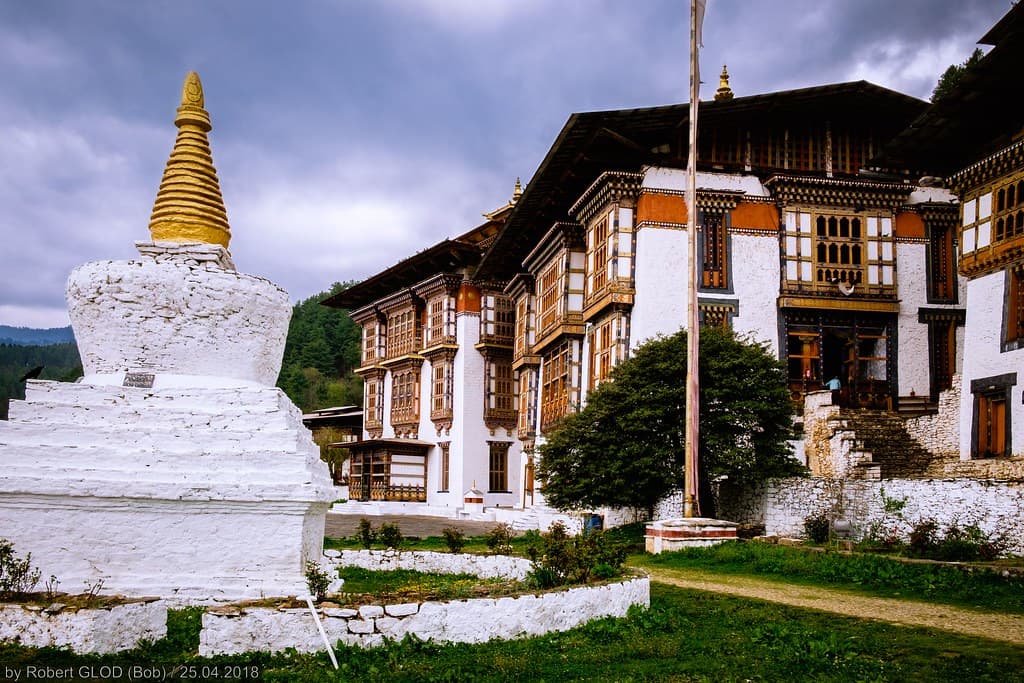
The body-imprint of Guru Rinpoche
Kurjey Lhakhang sits in the Choekhor valley of Bumthang at 2,600 metres elevation. The temple complex grew around a cave on the cliff face that Guru Rinpoche is held to have entered in the 8th century, leaving his body imprint (kur jey) on the rock — the impression is still visible inside the principal chapel and remains one of the most-revered devotional sites in the Bhutanese Buddhist tradition.
Also known as · Kurjey Goemba · Kurje Lhakhang
In the 8th century, Guru Rinpoche was invited to Bumthang by Sindhu Raja, the king of the Bumthang valleys, to cure a serious illness brought on by the loss of the king's life-deity. Guru Rinpoche came, meditated in the cliff cave for an extended retreat, subdued the demon afflicting the king (a deity called Shelging Karpo whom he turned to the dharma), and left the cave with his body imprint (kur jey) impressed in the rock as a sign. The imprint remains visible to this day inside the principal chapel — one of the most-revered physical traces of Guru Rinpoche anywhere in the Himalaya. The original 8th-century cave was sealed and consecrated; the surrounding temple complex grew over the subsequent centuries.
The Kurjey Lhakhang complex consists of three temples built across three centuries. The eastern temple (the smallest and oldest) was built in 1652 by Mingyur Tenpa around the body-imprint cave; it contains the imprint itself and is the principal pilgrimage destination. The middle temple was built in 1900 by His Majesty Druk Gyalpo Ugyen Wangchuck (the first King); it contains a large image of Guru Rinpoche. The western temple — the largest of the three — was built in 1990 under the patronage of Her Majesty Royal Grandmother Ashi Kesang Choeden Wangchuck; it houses 108 large images of Guru Rinpoche. The three temples together represent the layered religious patronage of the Bumthang valleys across the modern era.
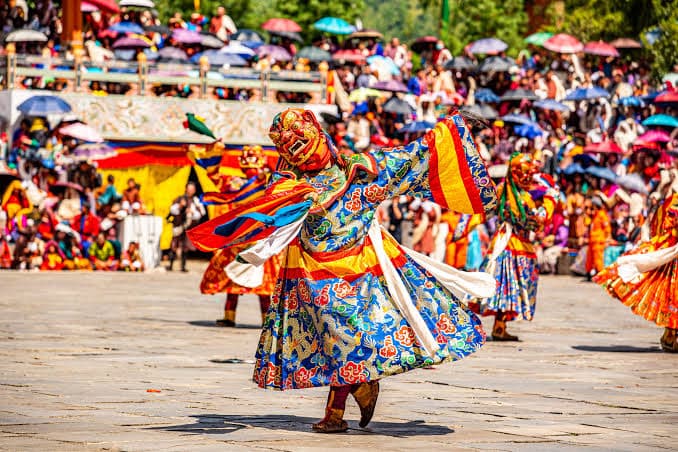
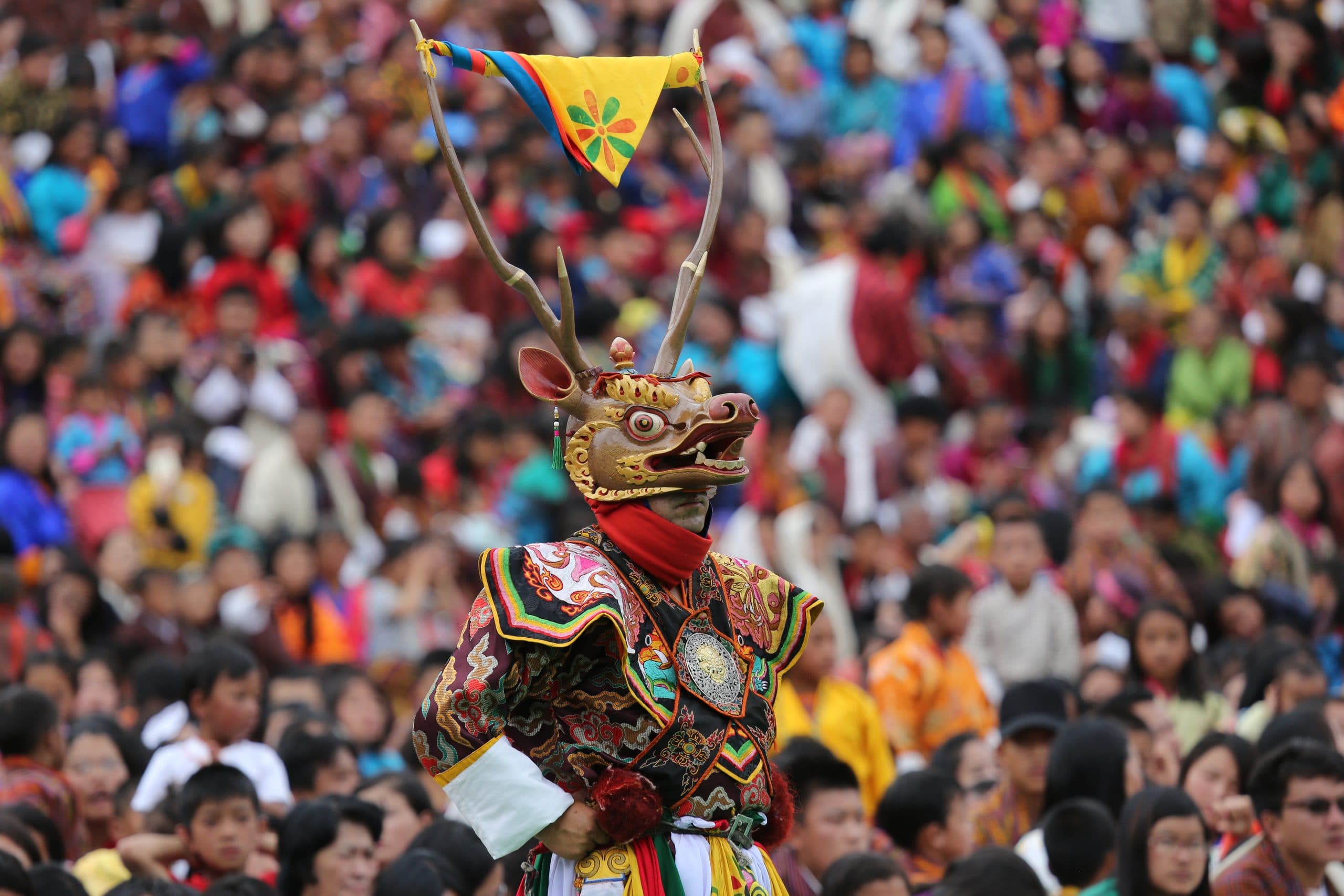
The temple complex is approached across a broad meadow ringed by 108 small chortens — built in memory of Her Majesty Royal Grandmother Ashi Kesang Choeden Wangchuck. The meadow is where the Kurjey Tshechu is held in mid-June (the 8th–10th day of the 5th Bhutanese lunar month) — a relatively small festival but distinctive for being held in the open meadow rather than in a dzong courtyard. The cypress tree behind the eastern temple, the largest in Bhutan, is held to have grown from Guru Rinpoche's walking-stick — planted in the soil at the end of his meditation and growing into the present-day tree.
Visiting
Common questions
Guru Rinpoche meditated in the cliff cave at Kurjey in the 8th century, subduing the demon afflicting the king Sindhu Raja. When he left the cave, his body imprint (kur jey) was impressed in the rock as a sign of his transformation of the site. The imprint remains visible to this day inside the principal eastern chapel.
Three temples built across three centuries. The eastern (1652) contains the body-imprint cave. The middle (1900) was built by the first King and contains a large Guru Rinpoche image. The western (1990) was built under Royal Grandmother patronage and houses 108 large Guru Rinpoche images. The complex represents continuous religious patronage of the Bumthang valleys.
Yes — the cypress tree behind the eastern temple is the largest in Bhutan and is held to have grown from Guru Rinpoche's walking-stick. It is visible from the meadow and from the path approaching the eastern temple. Photography is permitted.
Yes — Kurjey Lhakhang, Jambay Lhakhang (Bhutan's oldest temple), Tamshing Lhakhang (Pema Lingpa's monastery), Jakar Dzong, and Mebar Tsho (Pema Lingpa's burning lake) form the standard Bumthang circuit. Most visitors plan 2–3 days in Bumthang to do the circuit comfortably.
Approximately 9 hours by road from Paro via Thimphu, Punakha, and Trongsa — typically broken across two driving days. There is also a domestic Drukair flight from Paro to Bumthang's Bathpalathang airport (operating in clear-weather windows).
Festivals held here
Festival
Jambay Lhakhang Drup — five days at Bumthang's oldest temple, including the Mewang fire ritual. Dates, programme, what to expect.
Festival
Tamshing Phala Choepa — three days at the 15th-century Tamshing Lhakhang in Bumthang, founded by the terton Pema Lingpa. Dates, programme, what to expect.
Journeys featuring this site
Journey
A fourteen-night Bhutan east-to-west circuit exiting via Samdrup Jongkhar and Guwahati. The full eastern dzongkhags, the quieter half of the country.
Journey
A seven-night Bhutan journey timed to Thimphu Tshechu in autumn — second-tier seating, a culturally fluent guide, Bhutanese lodges.
Journey
A ten-night Bhutan Buddhist pilgrimage for Asian-Buddhist travellers. Monastic context; matched monastic-trained guide; Bumthang religious circuit.
Five questions. A bespoke draft back within a day or two.