Preparing
LoadingPreparing
Loading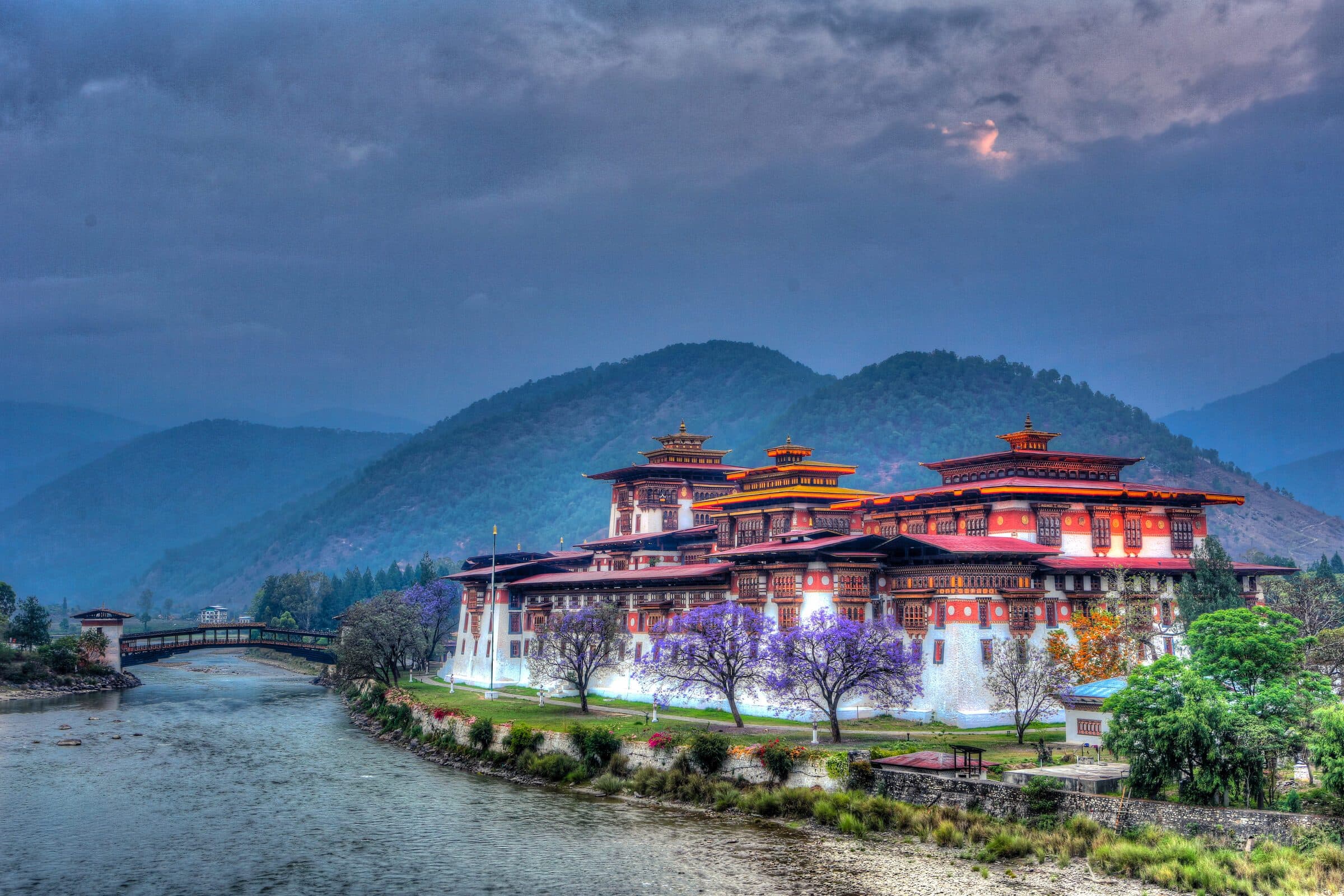
The most beautiful dzong in Bhutan
Punakha Dzong — known formally as Pungtang Dechen Phodrang Dzong, the Palace of Great Happiness — sits at the confluence of the Pho Chhu (father river) and the Mo Chhu (mother river) in the Punakha valley at 1,200 metres elevation. Founded in 1638 by Zhabdrung Ngawang Namgyal, it served as the capital of Bhutan until 1955 and remains the winter residence of the Je Khenpo (the Chief Abbot) and the principal venue for state ceremonies.
Punakha Dzong was founded in 1638 by Zhabdrung Ngawang Namgyal, the architect of the unified Bhutanese state. The site selection follows a prophecy of Guru Rinpoche: 'A person named Namgyal will arrive at a hill that looks like an elephant.' The Zhabdrung selected the spit of land between the Pho Chhu (the father river, flowing from the glacial heights of Lunana) and the Mo Chhu (the mother river, flowing from the Gasa valleys) — a hill shaped like a sleeping elephant. The dzong served as the capital of Bhutan from 1638 until 1955, when the capital moved to Thimphu under His Majesty the 3rd King. Punakha remains the winter residence of the Je Khenpo and the principal venue for state ceremonies — including the 2008 coronation of His Majesty the 5th King and the 2011 royal wedding.
The dzong is 180 metres long and 72 metres wide, with a 6-storey central utse (the principal tower) flanked by the administrative wing and the monastic wing. The whitewashed walls, the gold-leafed roofs of the principal lhakhangs, the tortoise-pattern painted wood of the windows — the Bhutanese dzong tradition reaches its architectural maturity here. The dzong houses the Machhen Lhakhang, which contains the embalmed body of the Zhabdrung (sealed; viewable only to a small monastic circle), the Rangjung Karsapani (a self-arisen image of Avalokiteshvara that came out of the Zhabdrung's vertebra at cremation), and the relic-armour of the Zhabdrung. These are the principal relics of the Bhutanese state.
Punakha Dzong has been damaged by fire six times in its history and by glacial-lake-outburst flood once (1994). Each time the Royal Government has rebuilt and the dzong's continuity has been maintained. The 1994 flood was particularly severe — the Pho Chhu rose to the dzong's foundations after a glacial lake at Lunana burst — and prompted the construction of the upstream flood-warning system that protects the valley today. The dzong's current form is faithful to the 17th-century original, with the most recent comprehensive restoration completed under His Majesty the 4th King.
Also known as · Pungtang Dechen Phodrang · Pungthang Dewachen Phodrang · Palace of Great Happiness
Visiting
Common questions
1637–1638 by Zhabdrung Ngawang Namgyal, on a hill shaped like a sleeping elephant at the confluence of the Pho Chhu (father river) and the Mo Chhu (mother river). The site selection followed a prophecy of Guru Rinpoche.
Punakha Dzong's formal name is Pungtang Dechen Phodrang Dzong — the Palace of Great Happiness. 'Pungtang' refers to the heap of jewels (the dzong's accumulated wealth and relics); 'Dechen Phodrang' is the Tibetan / Dzongkha term for the palace of bliss. The name was conferred by the Zhabdrung at the dzong's founding.
The Machhen Lhakhang, which contains the Zhabdrung's embalmed body, is sealed and viewable only to a small monastic circle. International visitors are not permitted entry to the Machhen, even for the principal Royal ceremonies. The visit to the surrounding lhakhangs and the dzong's courtyards is itself the principal experience.
A thorough visit takes 2–3 hours including the courtyards, the principal lhakhangs, and the river-confluence view from the dzong's southern terrace. We typically combine the Punakha Dzong visit with the Chimi Lhakhang (the Divine Madman's monastery) in the morning and an afternoon riverside walk along the Mo Chhu — a half-day in the valley.
Amankora Punakha (in the valley with a 20-minute drive to the dzong), COMO Uma Punakha, Six Senses Punakha, Dhensa Boutique Resort, and Zhingkham Resort. Premium lodges fill 3–6 months in advance, particularly for the Tshechu and the autumn windows.
Journeys featuring this site
Journey
A private seven-night Bhutan honeymoon for couples flying from Singapore. Bhutanese lodges, a matched guide, transparent all-inclusive pricing.
Journey
A nine-night Bhutan itinerary built around the Paro Tshechu — the spring mask-dance festival at Rinpung Dzong, with six days for the wider country.
Journey
A five-night Bhutan anniversary journey for couples — Bhutan, lodge dinners on the anniversary night, signature-tier hotels and a knowledgeable guide.
Five questions. A bespoke draft back within a day or two.