Preparing
LoadingPreparing
Loading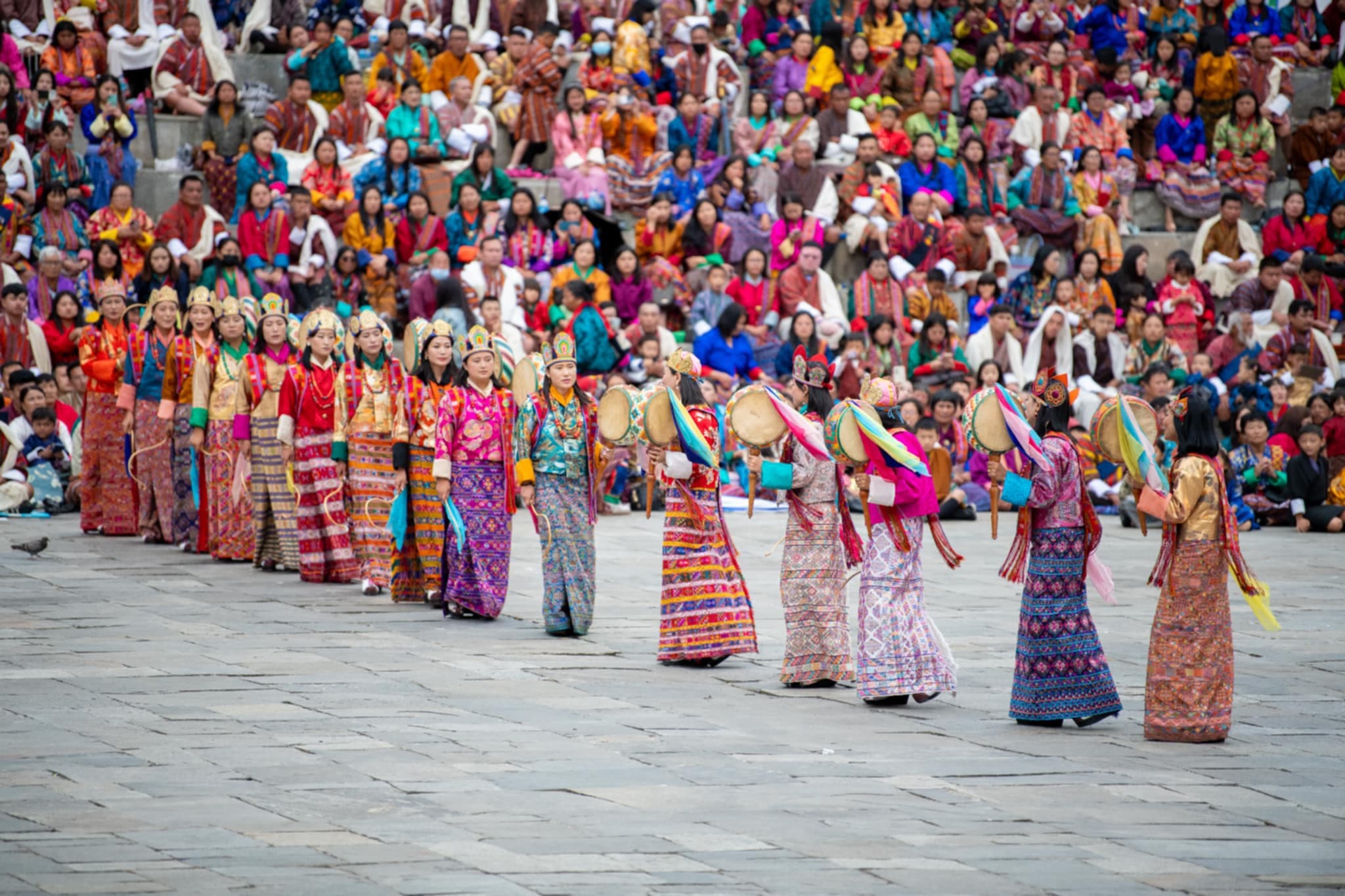
The late-winter festival pair
The Punakha Drubchen and the Punakha Tshechu are held back-to-back at Punakha Dzong in late February or early March. The Drubchen opens with the Serda procession — a re-enactment of the 17th-century Tibetan-invasion victory — and the Tshechu closes with the principal chams and the pre-dawn thongdrel.
drubchen tshechu pair · Punakha Dzong, Punakha · Punakha
The Punakha Drubchen is unique in the Bhutanese festival calendar — it is the only festival that re-enacts a historical military event. The Serda procession on the opening day commemorates the 1639 defeat of the Tibetan army by the forces of Zhabdrung Ngawang Namgyal, the founder of the Bhutanese state. Pazaps — costumed warriors representing the original militias — process through the dzong courtyard with the relic that draw the Tibetan army's pursuit. The pair runs to the Tshechu, which closes with the principal chams and the pre-dawn thongdrel.
Drubchen Day 1 (5th lunar day): the Serda procession and the principal military re-enactment. Drubchen Days 2–3: the protector-deity rituals and the smaller chams. Tshechu Day 1 (8th lunar day): opening chams. Tshechu Day 2: the principal cycle — the Pholay Molay, the Shawa Shachi, the Drametse Ngacham. Tshechu Day 3 (10th lunar day): the pre-dawn unfurling of the thongdrel at Punakha Dzong, displayed at first light and rolled back before direct sun. The Punakha thongdrel is one of the most beautiful in Bhutan, set against the dzong's white walls at the confluence of the Pho Chhu and Mo Chhu.
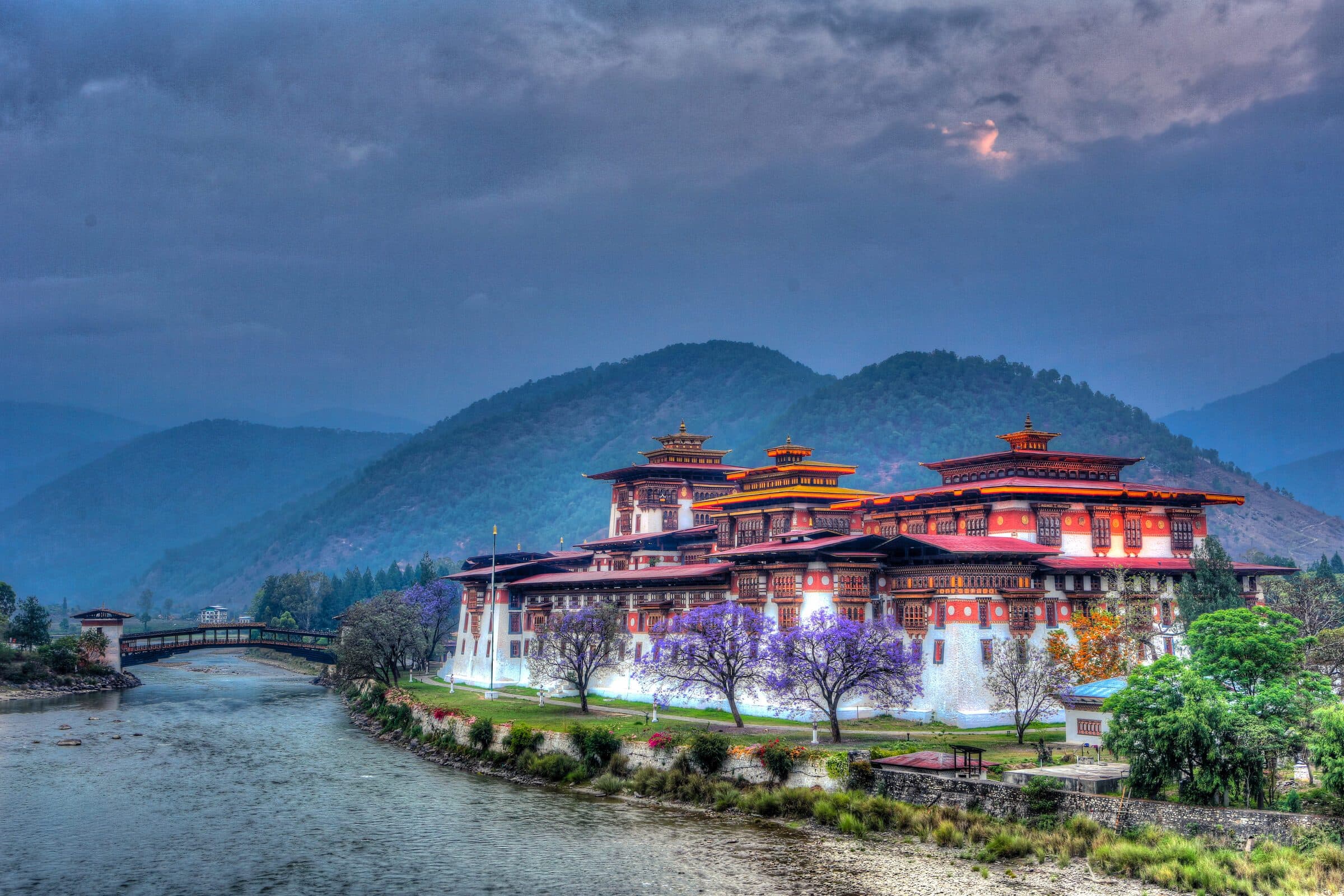
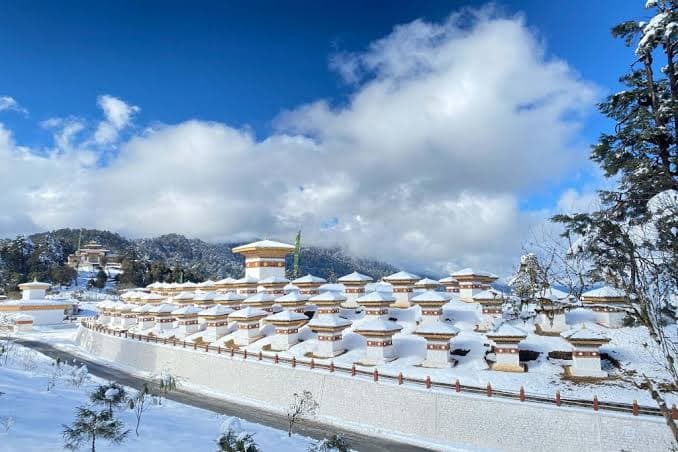
Punakha sits at 1,200 metres — substantially warmer than Thimphu (2,300m) or Paro (2,200m) — and the late-February timing catches the valley before the heat of summer but after the cold of January. The drive from Paro is approximately 4 hours via the Dochu La pass (3,100m), where the 108 chortens and the panorama of the eastern Himalaya — Masagang, Tsendagang, Gangkhar Puensum, Chomolhari — are visible on clear winter days. The dzong is held to be the most beautiful in the country; the festival is held in the central courtyard.
Common questions
21–26 February 2026 (six days total — three Drubchen days followed by three Tshechu days). The dates are per the Department of Tourism's published calendar and shift each year with the Bhutanese lunar calendar.
The international cohort is smaller in the late-winter window than in the spring or autumn windows, and Punakha is a 4-hour drive from Paro airport. The festival itself is large by Bhutanese attendance, but the foreign visitor count is a fraction of the Paro Tshechu's.
The Serda is a 17th-century military re-enactment — the only such event in the Bhutanese festival calendar — commemorating the defeat of the Tibetan army by the Zhabdrung's forces in 1639. Pazaps process with the relic that drew the Tibetan army's pursuit; the procession is solemn rather than theatrical.
Approximately 4 hours by road from Paro airport via Thimphu, crossing the Dochu La pass at 3,100 metres. The Dochu La is a notable photographic and walking stop. We recommend an overnight in Thimphu en route to break the drive and acclimatise.
Amankora Punakha (the lodge sits in the valley with a 20-minute drive to the dzong), COMO Uma Punakha, Six Senses Punakha, Dhensa Boutique Resort, and Zhingkham Resort. Premium lodges fill 3–6 months in advance for the festival window.
What a visitor encounters
Drubchen Day 1, late morning. Pazaps in armour and the relic carried through the courtyard. The historical re-enactment is acted in solemn earnest.
The principal mask dance cycle on Day 2 of the Tshechu — the Pholay Molay, the Shawa Shachi, the Drametse Ngacham. The chams are framed by the dzong's whitewashed walls; the photographic tradition is exceptional.
Closing morning of the Tshechu. The thongdrel is unfurled before sunrise; the window is perhaps thirty to forty minutes; the crowd is substantial but quieter than Paro.
The drive from Paro or Thimphu crosses the Dochu La pass at 3,100 metres — the 108 chortens are a notable photographic stop and on clear winter mornings the Himalayan panorama is visible.
Dates by year
The Bhutanese calendar is a distinct lunar system, not identical to the Tibetan or the broader Indian lunar calendars, and the Gregorian dates of every Bhutanese festival shift each year. The Royal Government's Department of Tourism publishes the official calendar each year, typically 6 to 12 months in advance. The dates below are our projection from the published lunar pattern (Drubchen 5th–7th day of the 1st Bhutanese lunar month; Tshechu 8th–10th day); we confirm each year against the Department of Tourism's release and update this page accordingly. Before you finalise travel dates, please confirm with our concierge.
| Year | Dates | Note |
|---|---|---|
| 2026 | 21-26 February 2026 | |
| 2027 | 12-17 March 2027 | |
| 2028 | 29 February - 5 March 2028 |
Monuments at and around this festival
Monument
Punakha Dzong — the Palace of Great Happiness, founded 1638. The history, the architecture, what to expect on a visit.
Monument
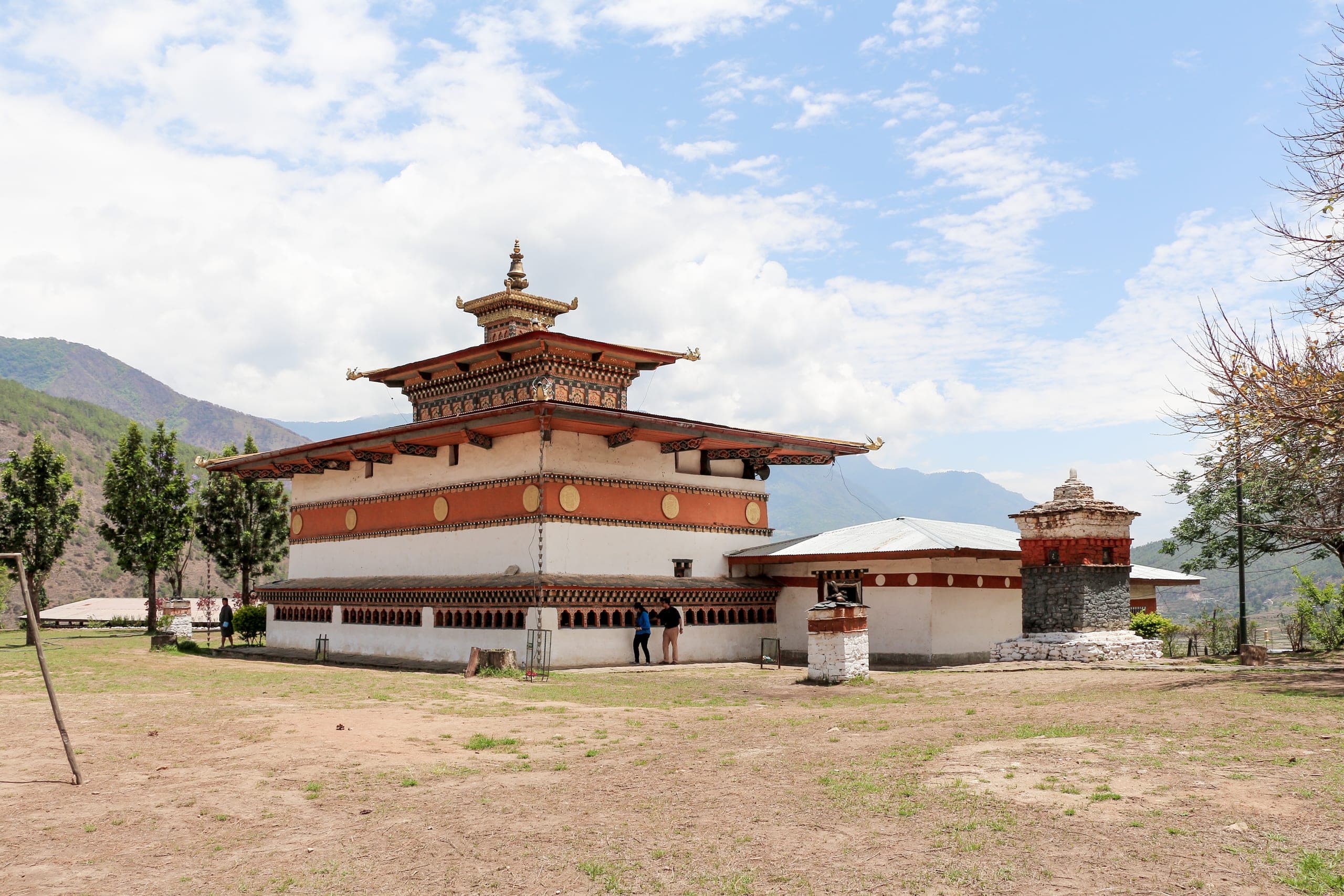
Chimi Lhakhang — Drukpa Kunley's 'Divine Madman' fertility temple in Punakha. History, the iconography, visiting protocol.
Monument
Dochu La — the 108-chorten pass at 3,100 metres between Thimphu and Punakha. The Druk Wangyel Chortens and the Himalayan panorama.
Journeys around this festival
Journey
A nine-night Bhutan itinerary built around the Paro Tshechu — the spring mask-dance festival at Rinpung Dzong, with six days for the wider country.
Journey
A private seven-night Bhutan honeymoon for couples flying from Singapore. Bhutanese lodges, a matched guide, transparent all-inclusive pricing.
Journey
A private seven-night Bhutan honeymoon for couples flying from Mumbai. Bhutanese lodges, a matched guide, transparent all-inclusive pricing.
Five questions. A bespoke draft back within a day or two.