Preparing
LoadingPreparing
Loading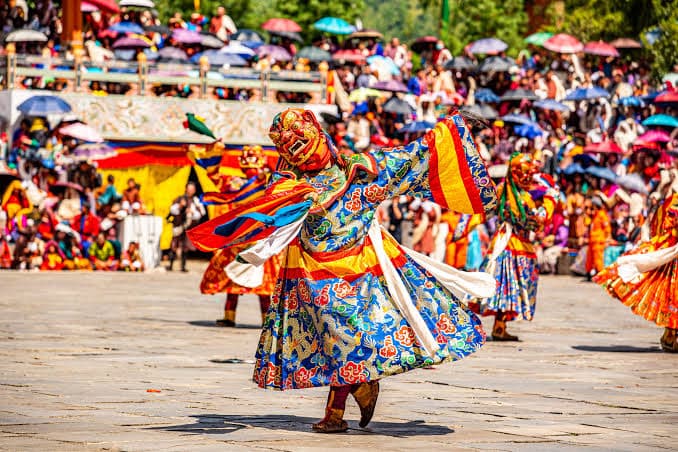
Bumthang's most-attended festival
The Jambay Lhakhang Drup is held annually at Jambay Lhakhang in the Choekhor valley of Bumthang, in late October or November. Five days of chams; the festival's principal moments are the Mewang (the fire-blessing ceremony, attended at midnight on the second night) and the Tercham, a sacred fertility cham held in the small hours.
drup · Jambay Lhakhang, Choekhor valley, Bumthang · Bumthang
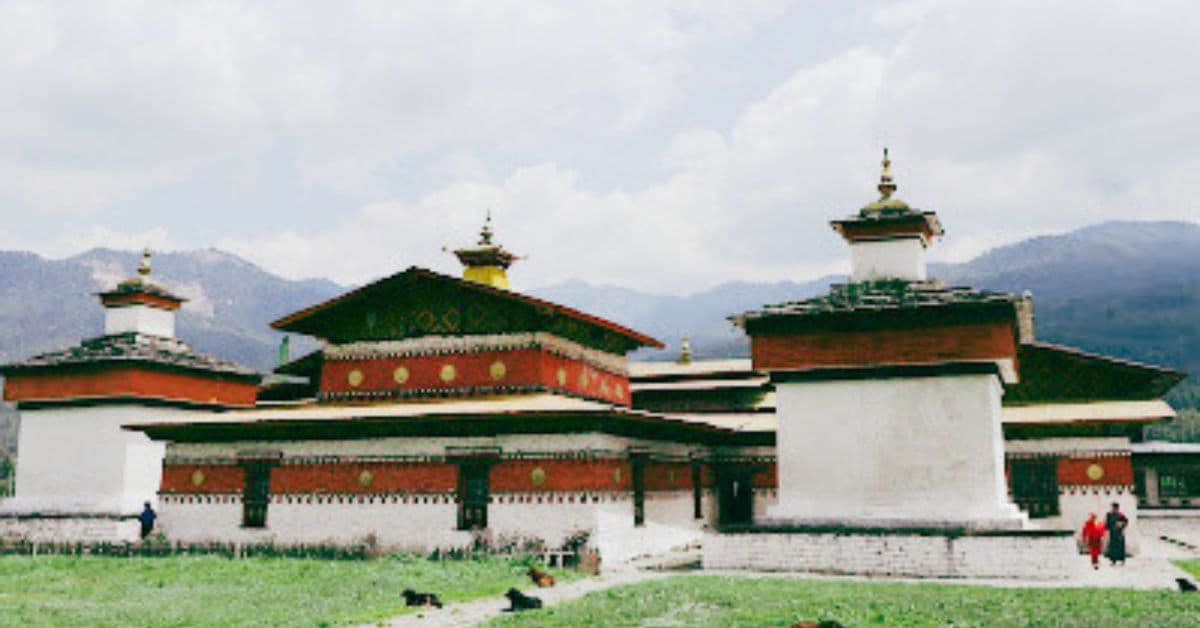
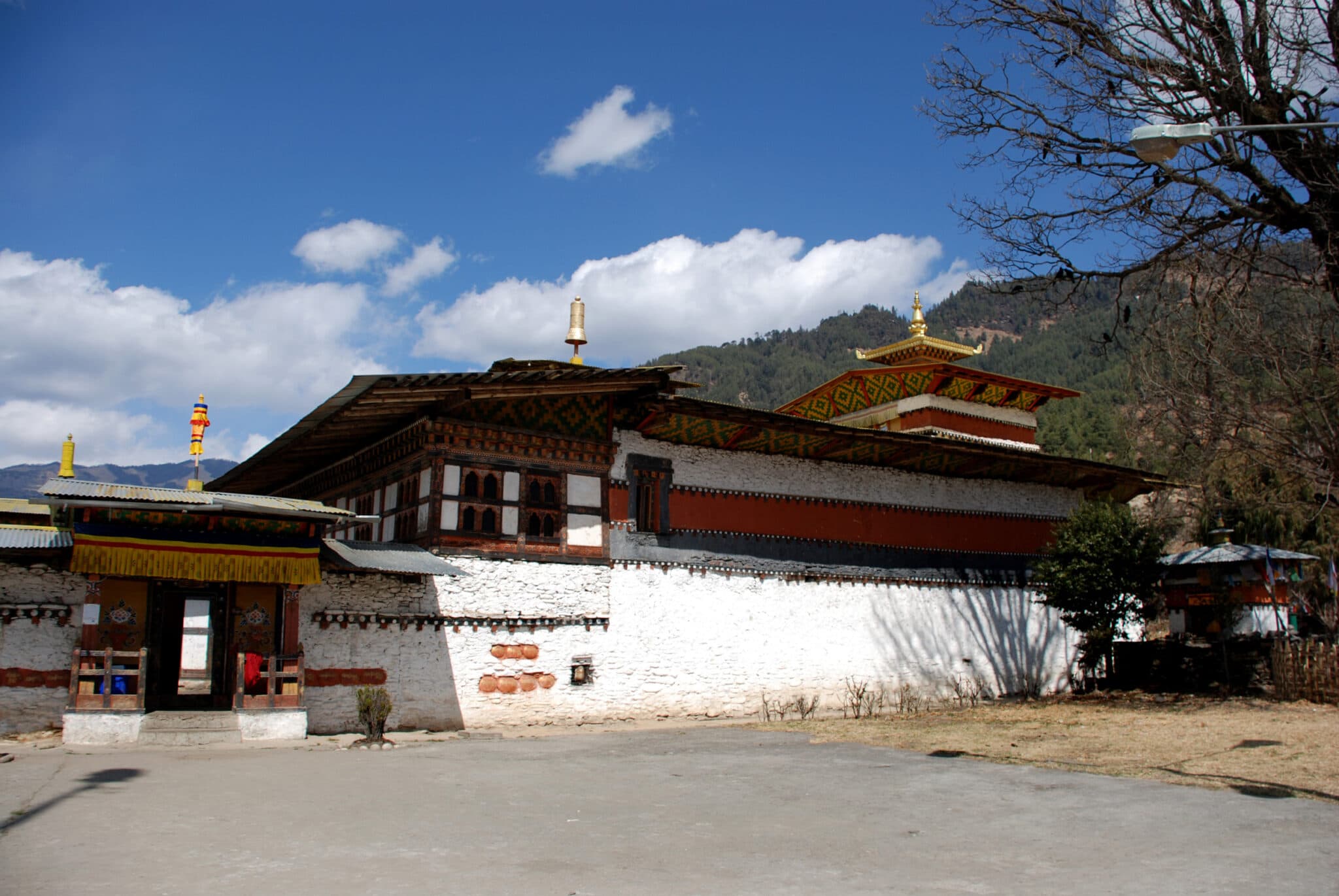
Jambay Lhakhang is held to be one of the 108 temples built by the Tibetan king Songtsen Gampo in 659 CE, fixing the limbs of a giant ogress whose body lay across the Himalayan region. It is the oldest temple in Bhutan, and the Jambay Lhakhang Drup is the principal festival of the Bumthang valleys. The festival is held outside the temple in the meadow that adjoins it, not inside a dzong courtyard — the tradition is older, more intimate, and the chams sit closer to their pre-monastic-dance origins than the tshechus of the western dzongs.
The Mewang is held on the second evening, after dark. A high arch of dried grass is built in the meadow; the arch is set alight; the assembled local community runs beneath it in single file. The fire is held to cleanse and to bless those who pass under. The Mewang is one of the few Bhutanese festival moments that takes place at night, and the photographic tradition is exceptional — the firelight, the chants, the rising sparks against the cold November sky of the Bumthang valleys at 2,600 metres.
The Tercham is a sacred fertility cham performed in the small hours of one of the festival nights, by chosen male dancers. The cham is held to bless families who are seeking children, and is part of the festival's deep antiquity. The atmosphere is solemn rather than theatrical; the cham is brief; photography is restricted; some visitors choose to attend, others to skip the small-hours session. Your guide will brief you on the schedule and the protocol; the decision sits with you. The day-time chams that follow the Mewang and the Tercham are the principal public programme.
What a visitor encounters
Days 1 and 2 daytime — the cycle of chams that sit older than the western tshechus. The atmosphere is intimate, the audience predominantly Bhutanese.
Second evening, after dark. The grass arch, the lighting, the assembled community running beneath the flames. Photography is permitted; flash is discouraged.
Bumthang in late October to November sits in the deep autumn window — the buckwheat fields turning red, the pine forests dark, the Chumey valley golden. The 9-hour drive from Paro is broken with overnights in Punakha or Trongsa.
Amankora Bumthang (in the Choekhor valley, walking distance to Jambay Lhakhang), Six Senses Bumthang, Wangdicholing Resort. Lodges are fewer than in Paro or Thimphu; book 6+ months in advance for the festival window.
Dates by year
The Bhutanese calendar is a distinct lunar system, not identical to the Tibetan or the broader Indian lunar calendars, and the Gregorian dates of every Bhutanese festival shift each year. The Royal Government's Department of Tourism publishes the official calendar each year, typically 6 to 12 months in advance. The dates below are our projection from the published lunar pattern (15th–19th day of the 9th Bhutanese lunar month); we confirm each year against the Department of Tourism's release and update this page accordingly. Before you finalise travel dates, please confirm with our concierge.
| Year | Dates | Note |
|---|---|---|
| 2026 | 28 October - 1 November 2026 | |
| 2027 | 16-20 November 2027 | |
| 2028 | 4-8 November 2028 |
Common questions
Monuments at and around this festival
Monument
Jambay Lhakhang — Bhutan's oldest temple alongside Kyichu, founded by Songtsen Gampo in 659 CE. The Mewang fire ritual venue.
Monument
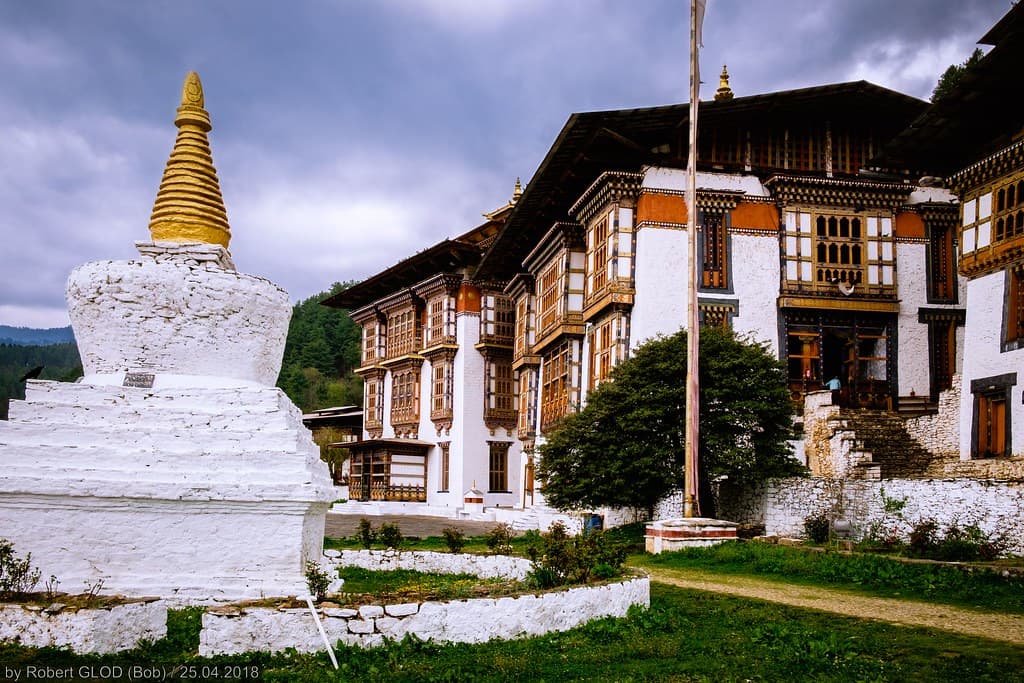
Kurjey Lhakhang — the Bumthang cliff cave bearing Guru Rinpoche's body imprint. The three-temple complex, history, visiting.
Monument
Tamshing Lhakhang — the 1501 monastery of Pema Lingpa, in the Choekhor valley of Bumthang. History, the chain-mail vest relic, visiting.
Monument
Jakar Dzong — the dzong of the white bird, founded 1549. The administrative centre of Bumthang, history and visiting.
Journeys around this festival
Journey
A seven-night Bhutan journey timed to Thimphu Tshechu in autumn — second-tier seating, a culturally fluent guide, Bhutanese lodges.
Journey
A fourteen-night Bhutan east-to-west circuit exiting via Samdrup Jongkhar and Guwahati. The full eastern dzongkhags, the quieter half of the country.
Journey
A seven-night Bhutan photography journey in October — Bhutan, golden-hour access at Punakha Dzong, a tripod-friendly guide, and transparent pricing.
Five questions. A bespoke draft back within a day or two.