Preparing
LoadingPreparing
Loading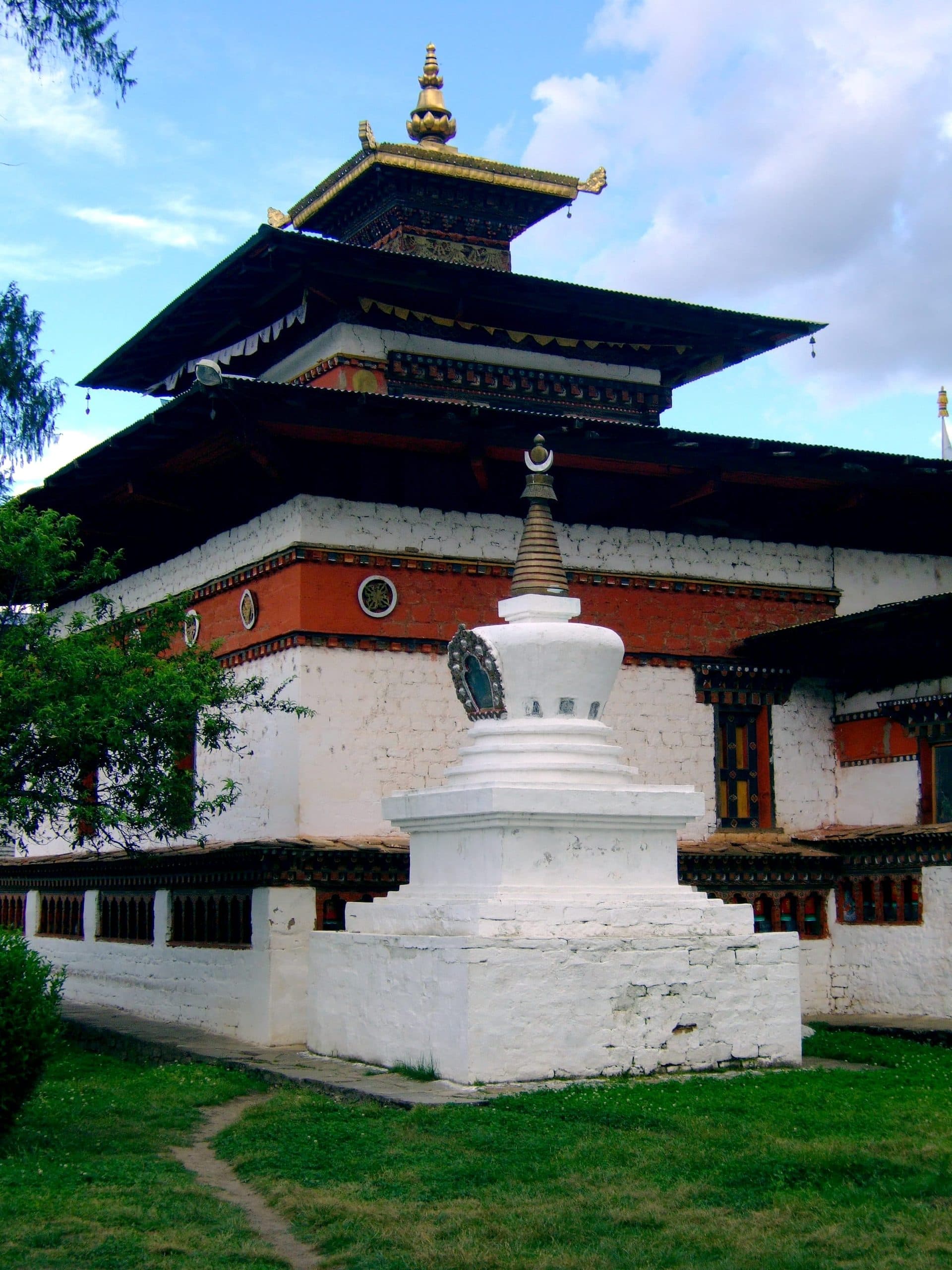
One of the 108 founding-era temples of the Himalaya
Kyichu Lhakhang sits in the Paro valley at 2,300 metres elevation — the oldest temple in Bhutan, founded in 659 CE by the Tibetan king Songtsen Gampo as one of 108 temples built across the Himalayan region to pin the limbs of a giant ogress whose body lay across the landscape. The temple has been continuously active for over thirteen centuries.
Also known as · Kyerchu Lhakhang · Kyichu Goemba
The Tibetan tradition holds that the 33rd Tibetan emperor, Songtsen Gampo (605–650 CE), recognised the Himalayan landscape as the form of a giant ogress lying across the region — her heart at Lhasa, her limbs spread across Tibet, Bhutan, Nepal, and Sikkim. To subdue her and to fix the Buddhist dharma in the landscape, Songtsen Gampo commissioned 108 temples to be built simultaneously in a single day, each pinning a limb or a critical point on the ogress's body. Twelve of the 108 temples were taming temples (Thaduel); twelve more were further-taming temples (Yangduel); twelve more were district-controlling temples. Two of the 108 lie in present-day Bhutan: Kyichu Lhakhang in Paro (pinning the left foot of the ogress) and Jambay Lhakhang in Bumthang (pinning the left knee).
A century after Kyichu's founding, Guru Rinpoche (Padmasambhava) visited the temple during his 8th-century travels through the Himalaya. The temple was consecrated for the broader Vajrayana tradition and the principal images and frescos were augmented under his direction. The image of Jowo Sakyamuni installed in the original temple — held by tradition to be one of three statues made from the same casting as the great Jowo Buddha of Lhasa — remains the principal devotional image of the lhakhang.
In 1968, Her Majesty Royal Grandmother Ashi Kesang Choeden Wangchuck commissioned a second temple to be built adjacent to the original — the Guru Lhakhang, dedicated to Guru Rinpoche. The original 7th-century temple and the 20th-century addition together form the present-day complex. The courtyard between the two temples is graced by two ancient orange trees, said to bear fruit year-round through the temple's continuous blessing — a notable detail and one of the lhakhang's distinctive visual signatures.
Visiting
Common questions
Yes — the lhakhang is held by Tibetan and Bhutanese tradition to have been founded by Songtsen Gampo in 659 CE, as one of 108 temples built across the Himalaya to pin the limbs of a giant ogress. It is the oldest continuously-active temple in Bhutan, predating the broader spread of Vajrayana Buddhism by approximately a century. Archaeological work has confirmed Songtsen Gampo-era foundations.
The Tibetan tradition holds that Songtsen Gampo recognised the Himalayan landscape as the form of a giant ogress and commissioned 108 temples to subdue her. Two of the 108 lie in present-day Bhutan: Kyichu Lhakhang (pinning the left foot) and Jambay Lhakhang in Bumthang (pinning the left knee). The others lie across Tibet, Nepal, Sikkim, and Arunachal Pradesh.
The Jowo Sakyamuni image installed in the original 7th-century temple is held by tradition to be one of three statues made from the same casting as the great Jowo Buddha of Lhasa (the most-revered Buddhist image in the Tibetan tradition). The Kyichu Jowo remains the principal devotional image of the lhakhang.
The original 7th-century temple is the smaller, eastern temple. The larger, western temple — the Guru Lhakhang — was commissioned in 1968 by Her Majesty Royal Grandmother Ashi Kesang Choeden Wangchuck and dedicated to Guru Rinpoche. The two temples together form the present-day complex, with the orange trees between them.
Yes — Kyichu Lhakhang, the Tiger's Nest trailhead, and Drukgyel Dzong are all in the upper Paro valley and combine naturally as a single-day itinerary. Most visitors do the Tiger's Nest hike in the morning, descend for lunch, and visit Kyichu and Drukgyel in the afternoon.
Journeys featuring this site
Journey
A private seven-night Bhutan honeymoon for couples flying from Singapore. Bhutanese lodges, a matched guide, transparent all-inclusive pricing.
Journey
A seven-night Bhutan journey in April — cherry blossom and rhododendron on Bhutan, Paro Tshechu if dates align, transparent pricing.
Journey
A nine-night Bhutan itinerary built around the Paro Tshechu — the spring mask-dance festival at Rinpung Dzong, with six days for the wider country.
Five questions. A bespoke draft back within a day or two.