Preparing
LoadingPreparing
Loading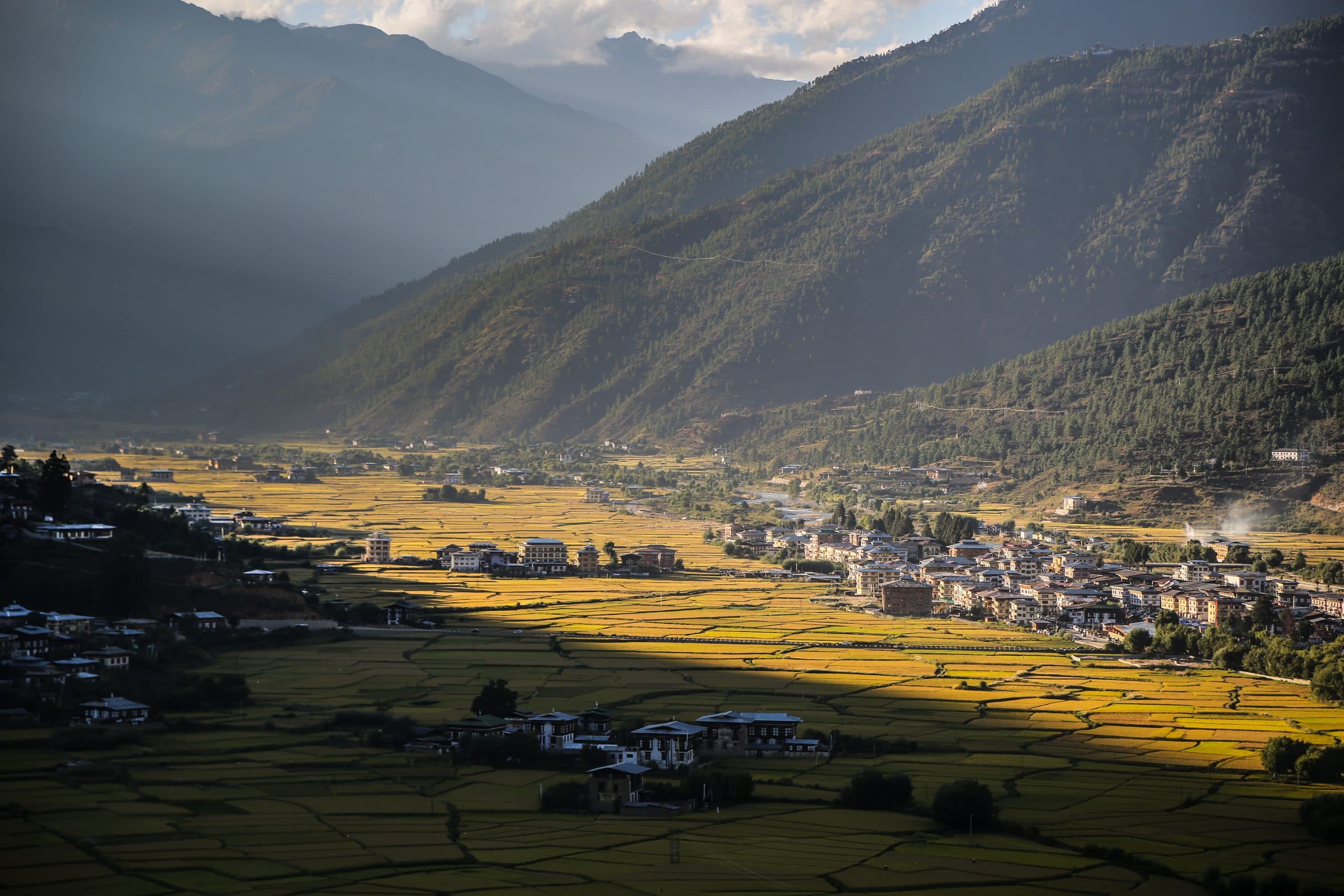
A Bhutanese valley
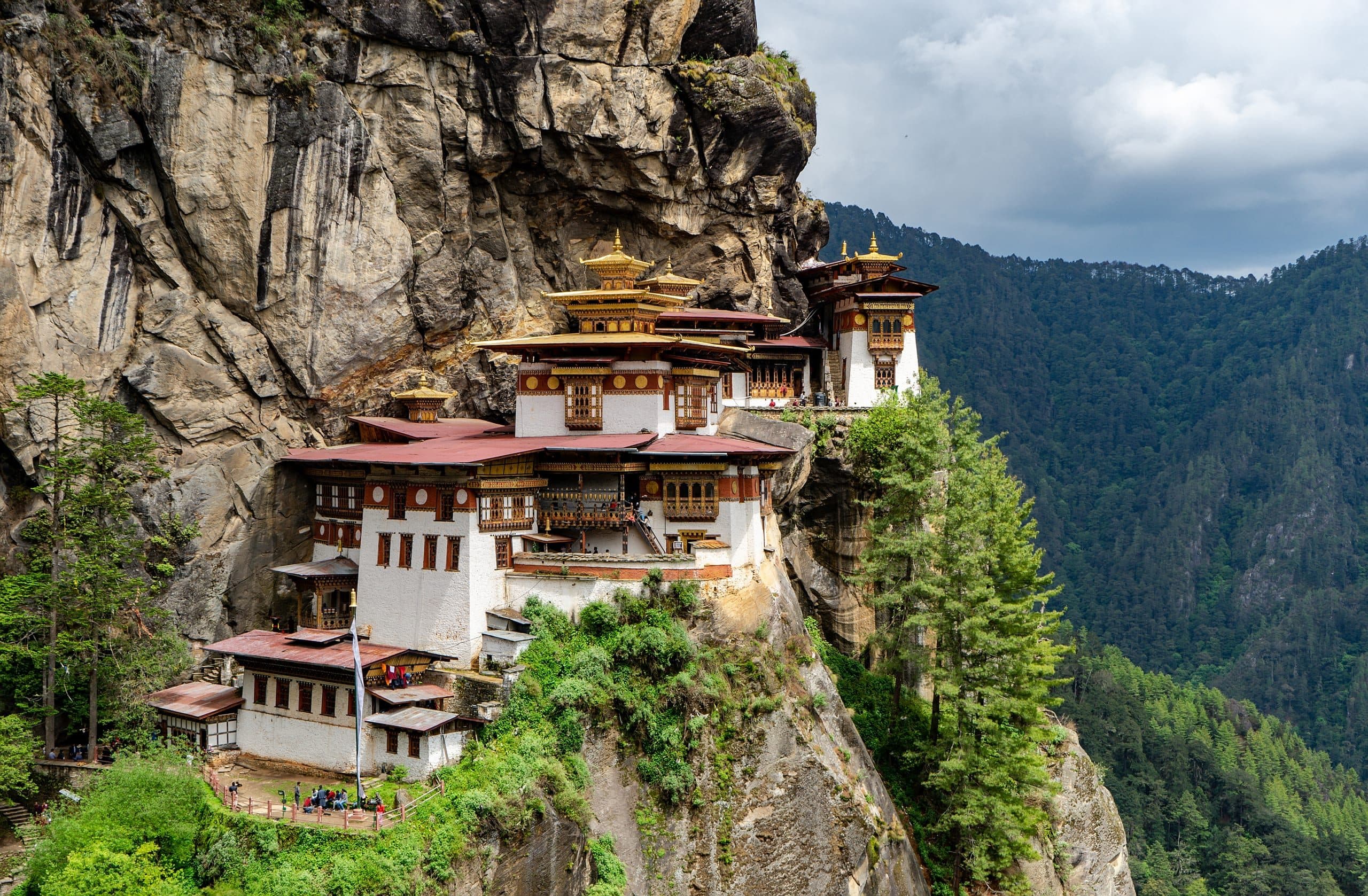
Paro is Bhutan's primary point of arrival, the country's only international airport, and the valley around which most first-time visitor itineraries are anchored. Home to Paro Taktsang (the Tiger's Nest) — Guru Rinpoche's most famous meditation site, and the image most strongly associated with Bhutan in the wider world. To arrive in Bhutan is, in nearly every case, to arrive in Paro, and to find the country composed in its very first valley with a kind of quiet completeness.
dzongkhag · Paro · 2,250 m
Paro International Airport (PBH) is Bhutan's only international airport and the country's principal connection to the world. The approach is one of the most demanding in commercial aviation — visual only, certified pilots only (fewer than fifty in the world), daylight only, mountain-flanked. Drukair and Bhutan Airlines are the two carriers licensed to operate the approach. Most international visitors arrive through Paro and overnight here before continuing east; the approach itself, in clear weather, is among the more memorable arrivals in commercial aviation.
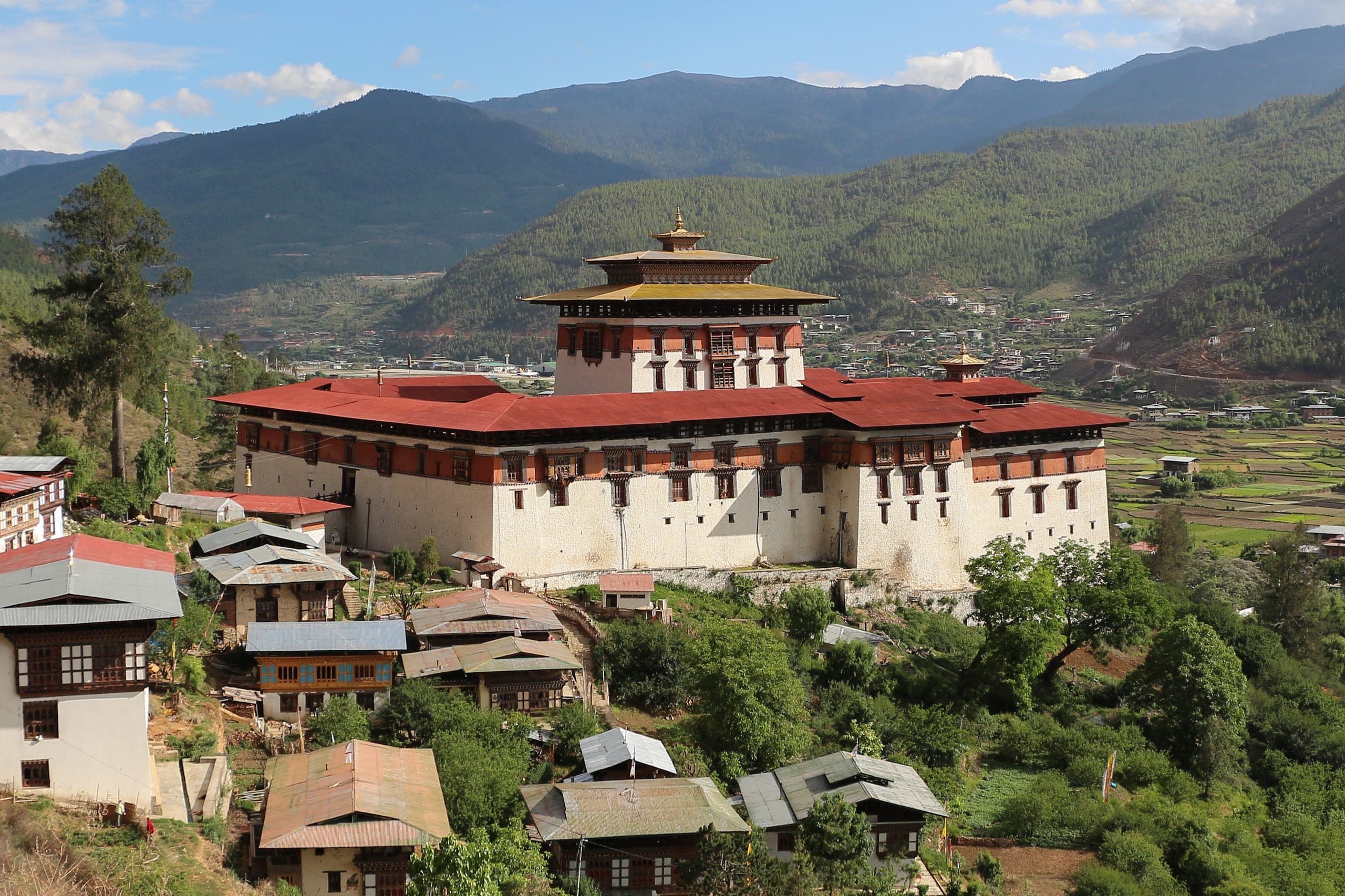
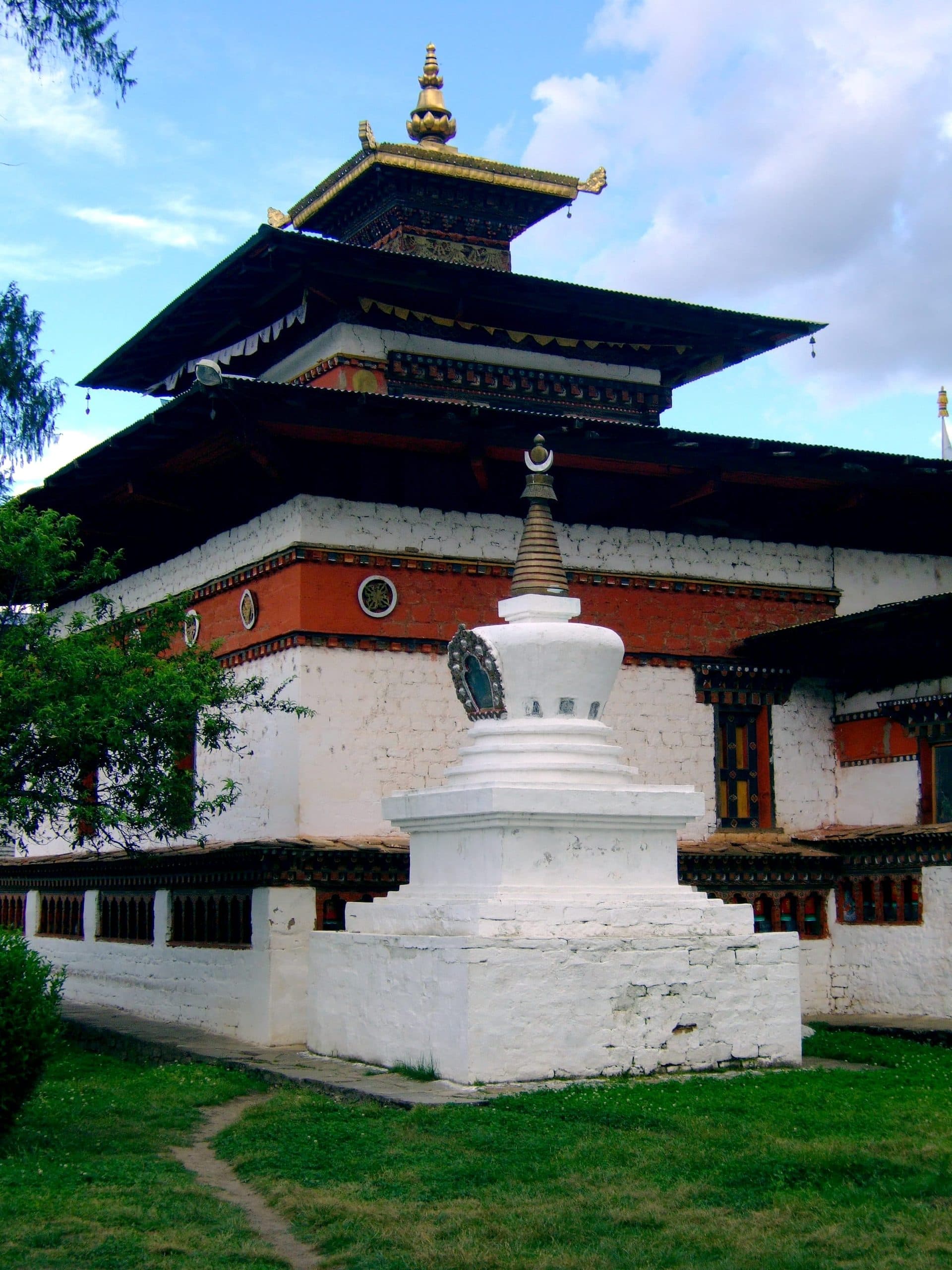
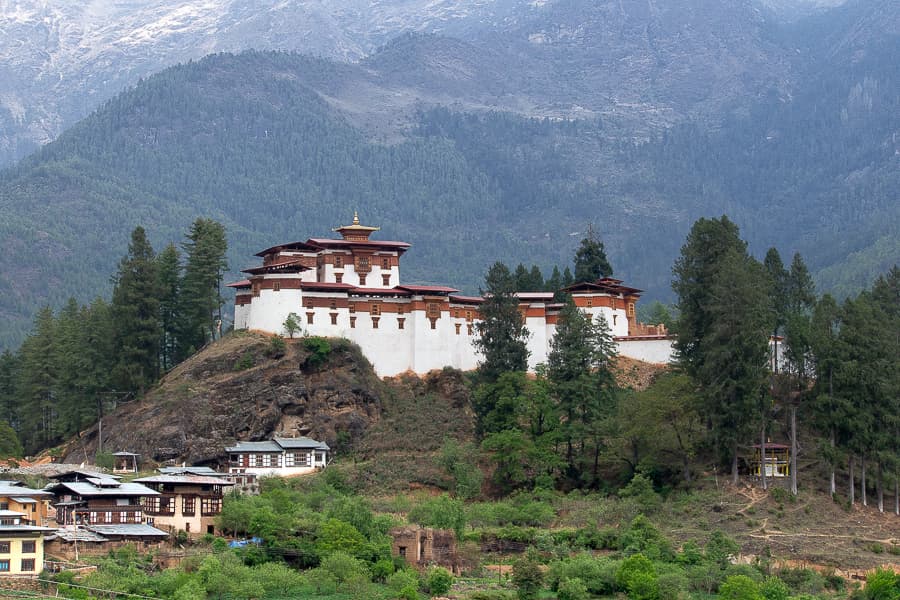
Paro Taktsang (the Tiger's Nest) — the cliffside monastery, the cultural climax of any Western-circuit visit and the image every international visitor recognises; roughly four to five hours on foot round trip from the parking area at the head of the valley. Paro Rinpung Dzong — the dzong on the spur above the valley floor, administrative seat of the dzongkhag, and the filming location for Bertolucci's Little Buddha. Kyichu Lhakhang — one of the two oldest temples in Bhutan, dating in tradition to the seventh century, built by Songtsen Gampo. Drukgyel Dzong — built by Zhabdrung Ngawang Namgyal to defend against Tibetan invasion, ruined by fire in 1951, now partially restored. Ta Dzong (the National Museum) — the country's principal museum, in the watchtower above Rinpung Dzong. The Chele La pass at 3,810 metres — the highest motorable point in the western country, the road south to Haa, with views to Chomolhari on a clear day.
Paro valley is broad and agricultural — terraced rice paddies on the floor (the country's principal red-rice region), pine forest on the surrounding slopes, the Pa Chhu river running south through the valley. The valley climate is cool-temperate; winter days are sunny and crisp, summer is mild and wet (July is the wettest month). Paro town (population approximately 20,000) sits on the valley floor at 2,406 metres; the principal premium lodges (Amankora Paro, COMO Uma Paro, Six Senses Paro, Bhutan Spirit Sanctuary) are distributed across the upper and southern valley. Most premium Bhutan itineraries start and end with 2-3 nights in Paro.
The annual Paro Tshechu (March or April, dates set by the Bhutanese lunar calendar) is one of the country's most-attended festivals — three days of masked dances at the Rinpung Dzong courtyards, with the great Thongdrel unfurled in the early-morning darkness on the final day. Many visitors plan itineraries around it. See the Paro Tshechu festival page and the spring Paro Tshechu journey.
Visiting
Paro International Airport (PBH) is the only international entry. Daily Drukair from Bangkok, Singapore, Delhi, Kolkata, Kathmandu; Bhutan Airlines from Bangkok, Singapore, Hong Kong (via BKK), Saigon (via BKK), Hanoi direct, Delhi, Kolkata, Mumbai (selected schedules).
Three nights typically — arrival and recovery (Day 1), Tiger's Nest climb (Day 2), valley exploration (Day 3). The final morning is often reserved for the dawn Tiger's Nest climb on the return to the airport. Founder pacing cap: ≤ 3 nights per visit for first-timers.
Common questions
Paro town is approximately 7 km from the airport. The airport sits on the valley floor at 2,250m; Paro town is slightly higher in the central valley. Most premium lodges are 15-30 minutes from the airport.
The Tiger's Nest climb. Beyond that: Rinpung Dzong, Kyichu Lhakhang, the National Museum, the valley walks, the Paro Tshechu if your dates align. Three nights covers it without rush.
Strenuous but accessible. The viewing platform at the trailhead is reachable by a 15-minute walk for non-climbers; the full climb to the monastery is 4-5 hours round-trip with 700m elevation gain. Horse-assisted ascent is available to the cafeteria. See the detailed climb assessment.
Journeys that visit Paro
A Singapore March-school-holiday trip
Bhutan from Singapore for the March school holiday — pre-Paro Tshechu shoulder, six nights, family-friendly Bhutan, spring rhododendron.
6 nights · from USD 5,000
A Singapore year-end trip
Bhutan from Singapore for the year-end — Clear-Sky Bhutan, the National Day window, six nights Bhutan, Drukair direct.
6 nights · from USD 5,000
Sunday out, Saturday back — six nights between the board meetings
Six-night signature-tier Bhutan journey for Singapore senior executives. Drukair Sun–Sat rhythm, Bhutan, named guide, no working-day loss.
6 nights · from USD 28,000
What to see here
Monument
Paro Taktsang (Tiger's Nest) — the founding by Guru Rinpoche, the 1692 monastery, the 2-hour hike, what to know before you visit.
Monument
Rinpung Dzong (Paro Dzong) — the heap of jewels, founded 1644. History, architecture, visiting, the Paro Tshechu venue.
Monument
Kyichu Lhakhang — the 7th-century temple of Paro, one of 108 Songtsen Gampo founded across the Himalaya. History, visiting.
Monument
Drukgyel Dzong — the 1649 Bhutanese victory fortress, ruined by fire 1951, under restoration. The Chomolhari panorama and visiting.
Walks from here
Trek
Chomolhari Lingshi Trek — six days at 2,900–4,900 m, the principal view of Chomolhari, the high pasture country of Lingshi. Paro to Thimphu via Lingshi.
Trek
Chomolhari Yaksa Trek — the 7-day Chomolhari Circuit. Loop route to Paro via Bhonte La (4,890m), Soi Yaksa, Thombu La. Itinerary, season, fitness.
Trek
Tiger's Nest day hike — the route, the cafeteria stop, what to know. Three hours up, two hours down, 520m elevation gain. Trailhead, fitness, gear.
Where to go next
Place
Thimphu — the capital of Bhutan. Tashichho Dzong, Buddha Dordenma, the National Memorial Chorten, the Centenary Farmers' Market, the Folk Heritage Museum.
Place
Haa — Bhutan's westernmost valley. Accessed via Chele La (3,810m). Lhakhang Karpo and Lhakhang Nagpo. Off-circuit, fewer visitors, the Tibetan-border register.
Journeys through here
Journey
A nine-night Bhutan itinerary built around the Paro Tshechu — the spring mask-dance festival at Rinpung Dzong, with six days for the wider country.
Journey
A seven-night Bhutan journey in April — cherry blossom and rhododendron on Bhutan, Paro Tshechu if dates align, transparent pricing.
Journey
The signature-tier Bhutan journey. Private knowledgeable guide, the most considered lodges, helicopter or PC-24 charter, exclusive-use arrangements. By invitation, from USD 14,000.
Five questions. A bespoke draft back within a day or two.