Preparing
LoadingPreparing
Loading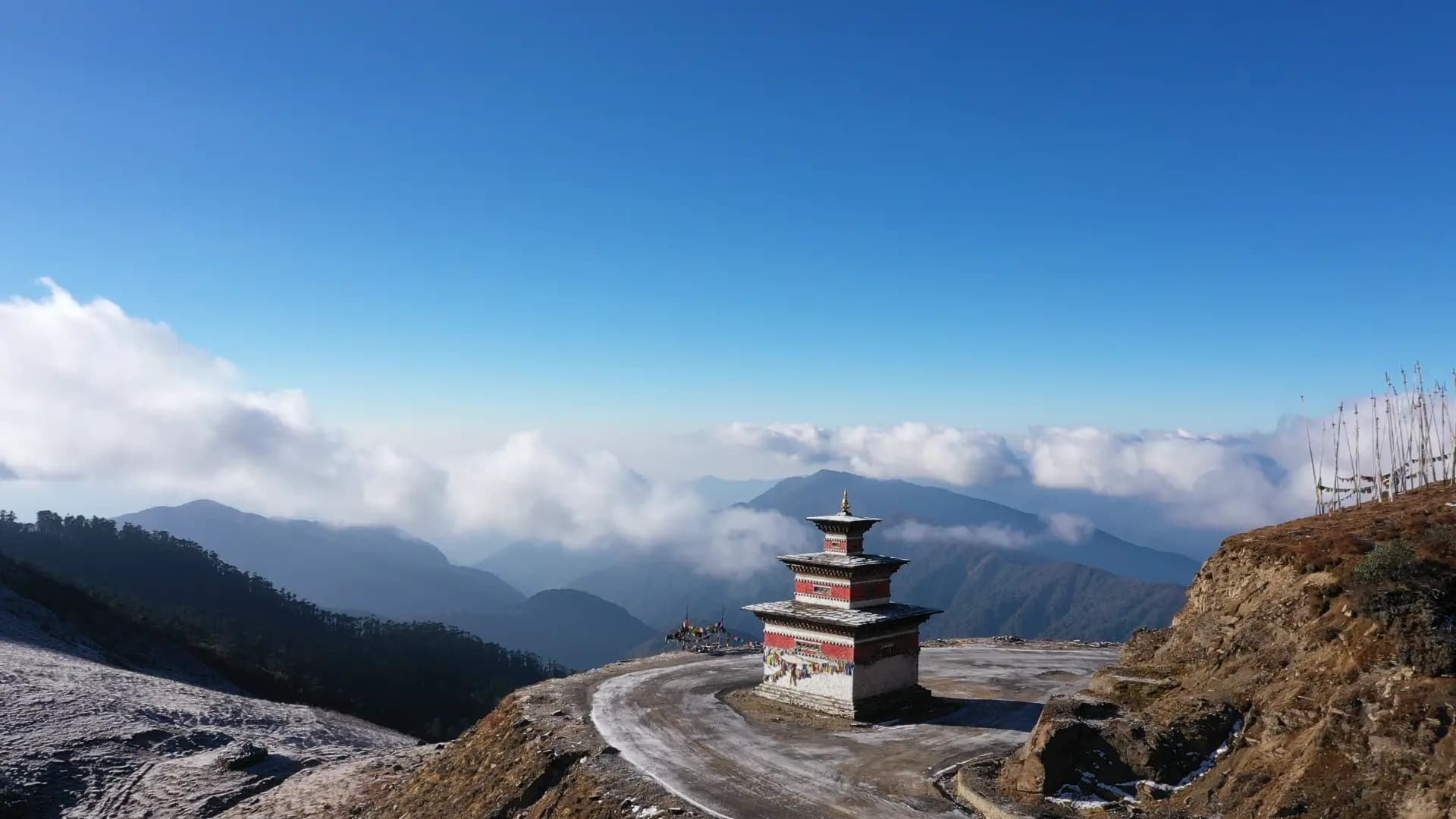
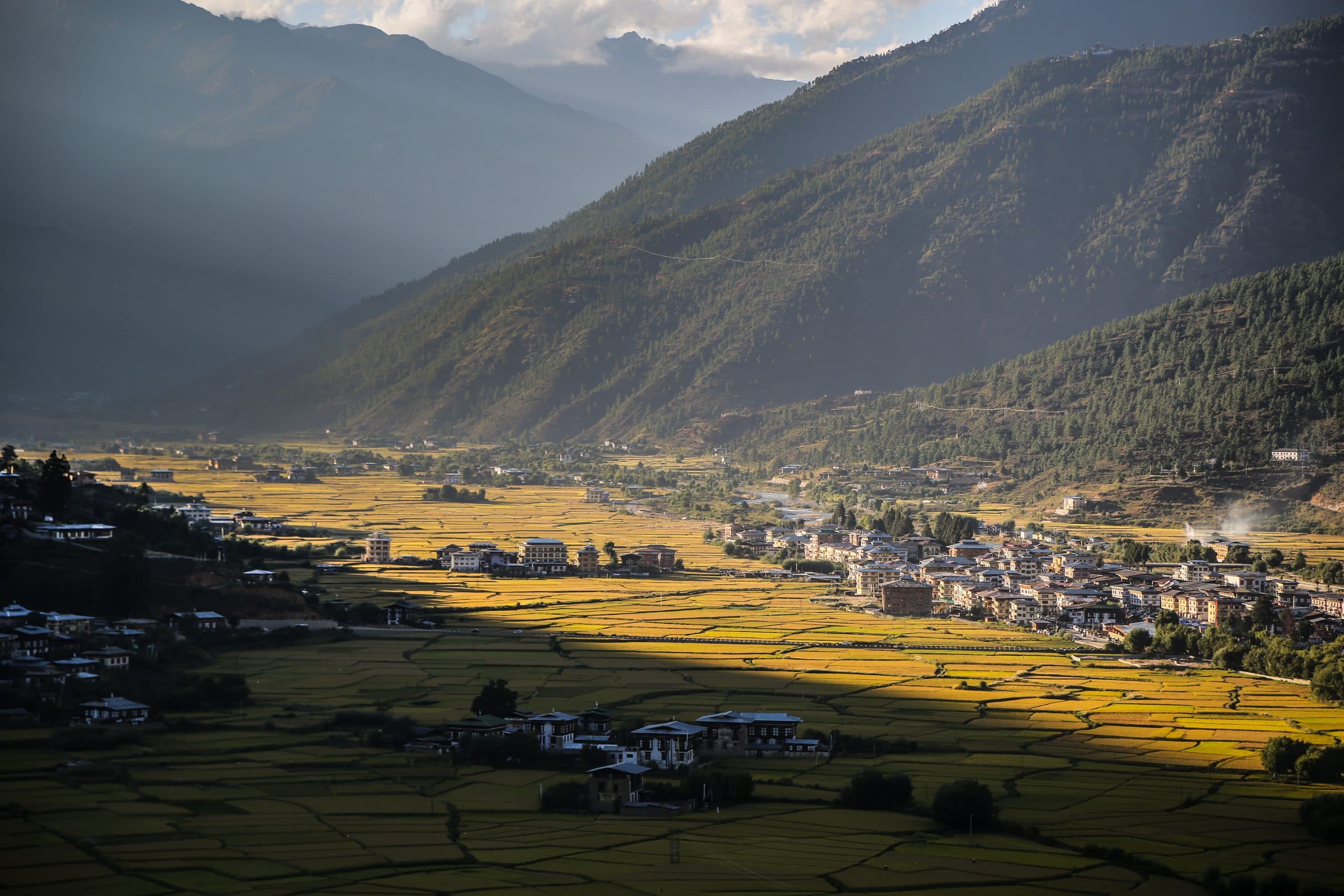
A Bhutanese valley
Haa is the westernmost dzongkhag of Bhutan, bordering the Chumbi valley of Tibet. The valley sits at approximately 2,700 metres — higher and narrower than Paro, with the highest motorable pass in the western country (Chele La at 3,810m) as its southern road. Haa was closed to international tourism until 2002; the off-circuit tradition is its principal appeal. Visitors to Haa encounter Bhutan with substantially fewer other visitors than the Western circuit valleys.
dzongkhag · Haa · 2,700 m
The principal road into Haa is via the Chele La pass at 3,810 metres — the highest motorable point in the western Bhutan road network. The pass is itself a destination: prayer flags, the panoramic view across to Chomolhari (7,326m) on clear days, the high-altitude clarity. The descent from Chele La into the Haa valley is steep and substantial — the valley opens narrowly between forested ridges. The road continues to Haa town on the valley floor; beyond Haa town the road dead-ends near the Tibetan border (closed to international visitors). Most premium Haa visits combine the Chele La traverse with a half-day or overnight in Haa.
Lhakhang Karpo (the White Temple) and Lhakhang Nagpo (the Black Temple) — the two principal religious sites in Haa, both 7th-century in tradition, built (legend has it) where a black and white dove landed during a search for the right siting. The two lhakhangs sit close to each other on the valley floor; the contrast between the white and the black temple is the principal photographic. Haa Dzong — the dzongkhag administrative seat; smaller and less elaborate than the western-circuit dzongs but unrestored in places, giving a sense of the older Bhutanese. The annual Haa Summer Festival (June-July) features traditional Bhutanese highland sports, local cuisine, and the alpine flower bloom; one of the more atmospheric smaller festivals.
Visitors with previous Bhutan experience who want the off-circuit; visitors prioritising the Chele La traverse as a half-day extension from Paro; visitors interested in the Tibetan-border cultural register (Haa has historical Tibetan-trade connections, distinct cultural elements). Not the right destination for first-time Bhutan visitors who want the principal cultural circuit. The premium accommodation in Haa is limited — a few boutique-and-heritage options rather than the multi-lodge brand circuits.
Visiting
Approximately 3 hours' drive via the Chele La pass. The pass is the principal en-route stop.
A day trip from Paro is workable — Chele La in the morning, lunch in Haa town, return to Paro in the afternoon. Overnight is rewarding for visitors who want the deeper; one night is enough. Two-plus nights only for specific cultural depth or the Summer Festival window.
Common questions
Closed to international tourism until 2002 — the late opening means it hasn't accumulated the lodge infrastructure of the Western circuit. The strategic border position (the Tibetan Chumbi valley is just over the ridge) made it a sensitive area historically. The off-circuit tradition is the principal Haa appeal today.
From the Chele La pass yes (on clear days). From the Haa valley floor — partial views; the surrounding ridges block the principal line of sight. Chele La is the better Chomolhari viewing point.
Bhutanese standard with some distinctive western-Bhutanese elements — hoentay (buckwheat dumplings stuffed with turnip greens and cheese) is the Haa speciality; the matched guide arranges the proper preparation. The seasonal alpine vegetables and the locally-produced butter are also distinctive.
Journeys through here
Journey
A fourteen-night Bhutan east-to-west circuit exiting via Samdrup Jongkhar and Guwahati. The full eastern dzongkhags, the quieter half of the country.
Journey
A seven-night Bhutan light-trek journey from Sydney — first half-day trails, comfortable lodges, a guide who paces the day to you.
Five questions. A bespoke draft back within a day or two.