Preparing
LoadingPreparing
Loading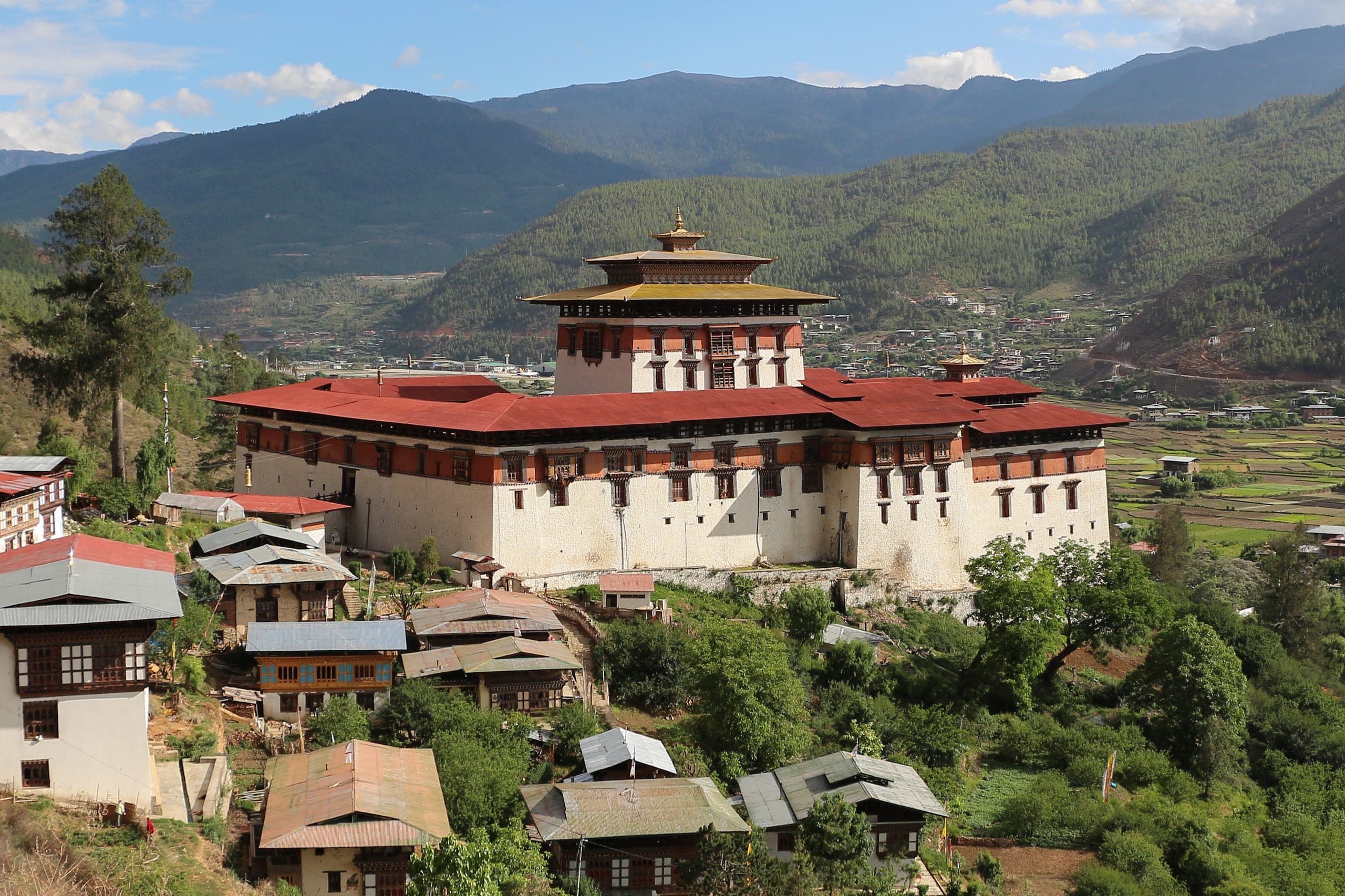
The principal dzong of the western valley
Rinpung Dzong — commonly called Paro Dzong by international visitors — sits on a low hill above the Pa Chhu in the Paro valley at 2,280 metres elevation. Founded in 1644 by Zhabdrung Ngawang Namgyal on the foundations of an earlier 15th-century fort, the dzong is the administrative and monastic centre of Paro dzongkhag and the venue of the Paro Tshechu, the country's most-internationally-attended festival.
Also known as · Paro Dzong · Rinchen Pung Dzong · Heap of Jewels
Rinpung Dzong was founded in 1644 by Zhabdrung Ngawang Namgyal on the foundations of an earlier 15th-century fort built by Lama Drung Drung Gyal. The Zhabdrung named the new dzong Rinchen Pung Dzong — 'the fortress on a heap of jewels' — and conferred on it the principal civil administration of the western Bhutanese valleys. The name was later contracted to Rinpung Dzong, and the dzong has held its civic and religious functions continuously through nearly four centuries. The current structure is faithful to the 17th-century original with periodic restoration.
The dzong is built on the classic Bhutanese pattern — the principal entrance through a tall painted gate; a steep ramped passage up to the central courtyard; the utse (central tower) flanked by the administrative wing and the monastic wing. Rinpung is particularly noted for the painted galleries on the upper floors of the courtyard — the cycle of the eight manifestations of Guru Rinpoche, the protector deities, and the wheel of life. The Bhutanese tradition holds that the dzong's painted wood was executed by master craftsmen from across the kingdom, each region contributing a section.
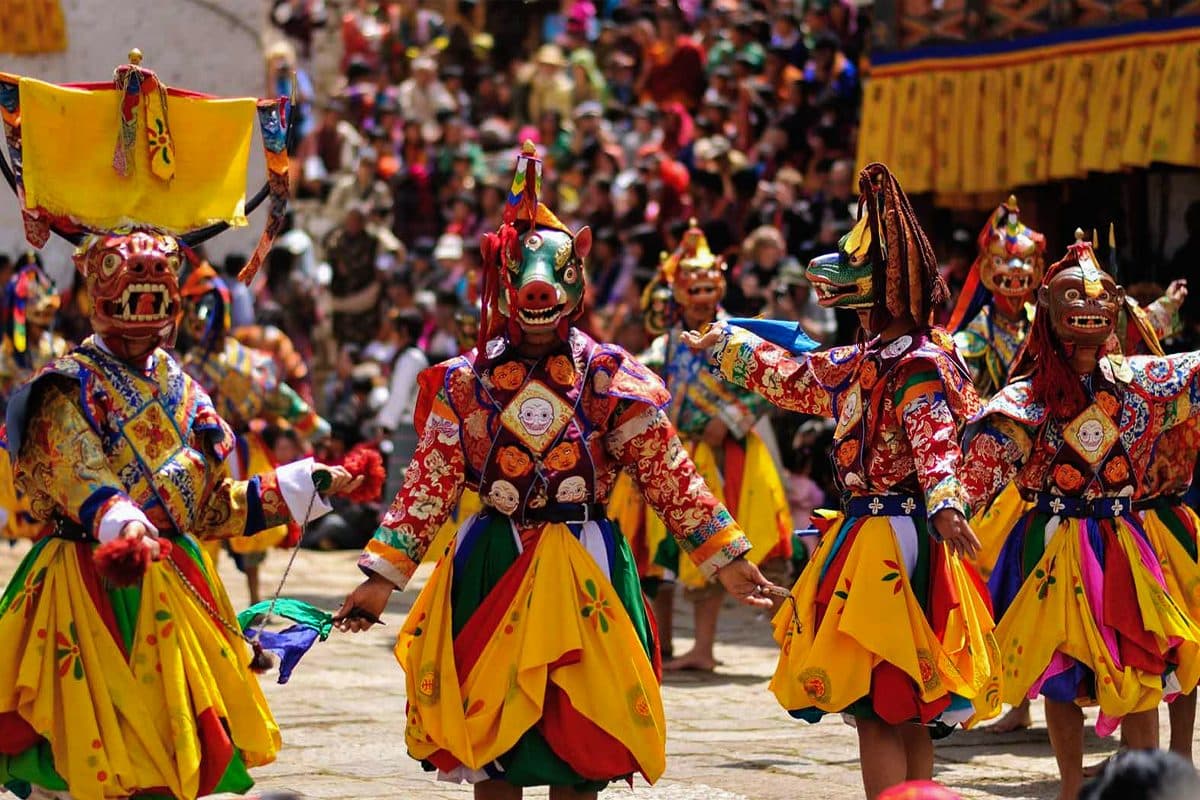
Rinpung Dzong is the venue of the Paro Tshechu (11th–15th day of the 2nd Bhutanese lunar month, typically late March or early April). The Tshechu is the country's most-internationally-attended festival — drawing several thousand foreign visitors over its five-day window, alongside the Bhutanese community from the western valleys. The pre-dawn thongdrel unfurling on the final morning is the principal photographic moment of any Bhutanese trip in the spring window. The dzong's principal courtyard becomes the festival's stage; the Bhutanese families gather in their finest gho and kira; the atmosphere is simultaneously religious and festive.
Visiting
Common questions
Rinpung Dzong's full name is Rinchen Pung Dzong — 'the fortress on a heap of jewels' (rinchen = jewels, pung = heap). The name was conferred by Zhabdrung Ngawang Namgyal at the dzong's founding in 1644. The contracted form Rinpung Dzong is the conventional spelling; international visitors more commonly call the dzong by the simpler name Paro Dzong.
Three reasons. First, it hosts the Paro Tshechu — the country's most-internationally-attended festival. Second, the painted galleries on the dzong's upper floors are among the finest examples of Bhutanese religious art. Third, the dzong's location at the head of the Paro valley, with the approach across the wooden cantilever bridge, is one of the most-photographed scenes in Bhutan.
Yes — Rinpung Dzong is the formal name; Paro Dzong is the conventional international shorthand. The dzong is the principal dzong of Paro dzongkhag and is the only dzong in the Paro valley, so 'Paro Dzong' is unambiguous in conversation.
Yes — the Tshechu is held in the dzong's principal courtyard, and international visitors with a guide are welcome to attend across the five festival days. The pre-dawn thongdrel viewing on the final morning is the principal photographic moment; arrive at the dzong gates by 4 a.m. to secure position. We organise the Tshechu access where the itinerary includes the festival.
Most Paro lodges are within 5–15 minutes by road of the dzong. Amankora Paro, COMO Uma Paro, Six Senses Paro, and Zhiwa Ling are the principal premium options. The Bhutan Spirit Sanctuary (in the upper valley) is a 25-minute drive. Premium lodges fill 3–6 months in advance for the Tshechu window.
Journeys featuring this site
Journey
A private seven-night Bhutan honeymoon for couples flying from Singapore. Bhutanese lodges, a matched guide, transparent all-inclusive pricing.
Journey
A nine-night Bhutan itinerary built around the Paro Tshechu — the spring mask-dance festival at Rinpung Dzong, with six days for the wider country.
Journey
A seven-night Bhutan journey in April — cherry blossom and rhododendron on Bhutan, Paro Tshechu if dates align, transparent pricing.
Five questions. A bespoke draft back within a day or two.