- What's the single best month to visit Bhutan?
- Depends on what you've come for. **October** for the post-monsoon clarity and the autumn colour. **April** for spring rhododendron and the warmer cultural. **November** for the cleanest Himalayan panorama and the cranes' arrival in Phobjikha. **January** for the deepest Clear-Sky Bhutan register and the lowest visitor count. **February** for the Punakha Drubchen + Tshechu pair and the late-winter mountain views. The two principal-attendance festival weeks (Paro Tshechu in late March/April, Thimphu Tshechu in late September/October) carry the maximum cultural draw but also the maximum visitor pressure — the smaller dzongkhag tshechus and the quieter shoulder windows give similar depth with better lodge availability and a more intimate atmosphere.
- I've heard Paro Tshechu is unmissable — should I plan around it?
- It's exceptional, certainly — the country's most-internationally-attended festival, the pre-dawn thongdrel unfurling at Rinpung Dzong, the considered cultural depth. But the festival week puts substantial pressure on lodge availability and Drukair seats; book 9-12 months in advance specifically for that window. If your dates aren't locked to the festival itself, mid-May (the late-spring shoulder), the [[punakha-tshechu|Punakha Tshechu]] in February, or the [[wangdue-tshechu|Wangdue Tshechu]] in late September give similar cultural depth with a quieter atmosphere and better availability. Considered visitors increasingly choose the alternatives.
- Is the monsoon really that bad?
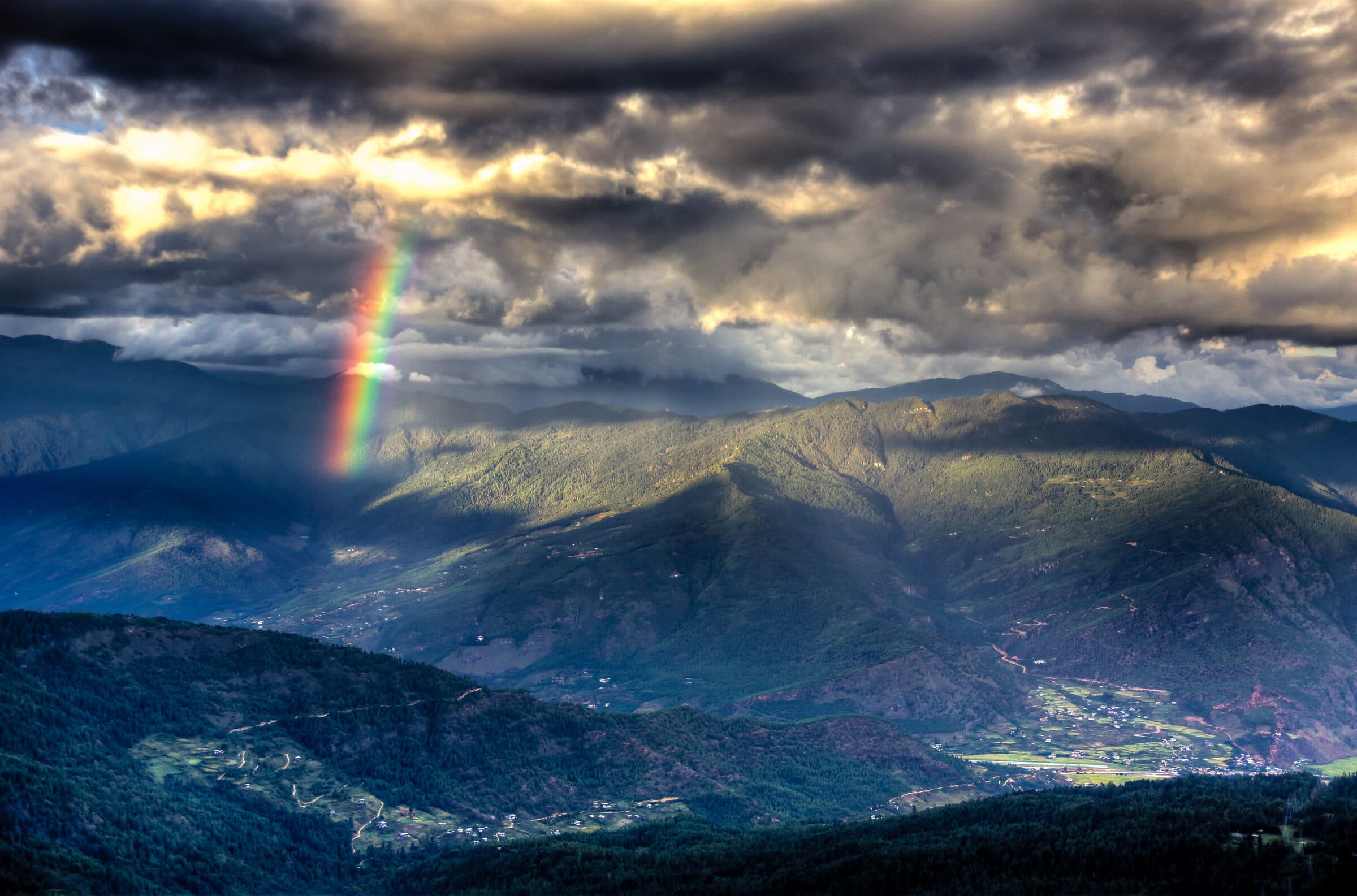
- The monsoon shoulders (June and mid-September) are not bad — distinctive. The heart of the monsoon (late July through early September) is genuinely difficult: sustained rainfall, road landslide risk, cloud cover obscuring the Himalayan panorama, high-altitude treks closed. We actively discourage this window for first-time visitors. Returning visitors who value atmosphere over photography — the deepest-green rice paddies, the cloud-wreathed monasteries — sometimes prefer it; we accommodate where the visitor has informed expectations.
- How do you decide whether a borderline window is workable?
- By looking at the current data. The static seasonal calendar is the broad pattern, but the actual conditions in any given month vary year-on-year — the Indian Monsoon can be early or late by 2-3 weeks; a winter cold snap can close high passes unexpectedly. Our concierge checks the current monsoon forecast and the daily conditions across the principal valleys against each proposal's travel dates, and adjusts the recommendation accordingly. If your dates land in a marginal window, we surface the current forecast as part of the proposal.
- Will it be cold in winter?
- Yes — December and January are the coldest months. Thimphu mornings hit 0 to –5°C; days warm to 10-16°C. Paro is similar; Punakha (lower altitude) is warmer. Bumthang and the central valleys are cold. The high passes carry snow. Pack layers, a warm coat, gloves; lodge heating is reliable but rooms are not warmed during the day. The compensating gift is the most-reliable Himalayan panorama of the year.
- What about the Tshechu festivals?
- Bhutanese festival dates follow the Bhutanese lunar calendar (a distinct system, not Tibetan or Indian) and shift each Gregorian year. The Department of Tourism publishes the year's calendar 6–12 months in advance; we confirm dates against the official release before any itinerary is locked. See the [[/festivals|festivals calendar]] for the full year's schedule with projected dates and the lunar pattern for each festival.
- How does altitude affect when to visit?
- Altitude is the principal seasonality lever beyond weather. The Bhutan (Paro 2,200m, Thimphu 2,300m, Punakha 1,200m) operates year-round. The Phobjikha valley (3,000m) is cold but accessible Dec–Feb. The high-altitude treks (Druk Path, Chomolhari, Snowman) operate only in Apr–Jun and Sep–Nov. Bumthang (2,600m) is accessible year-round but late December and January are cold.