Preparing
LoadingPreparing
Loading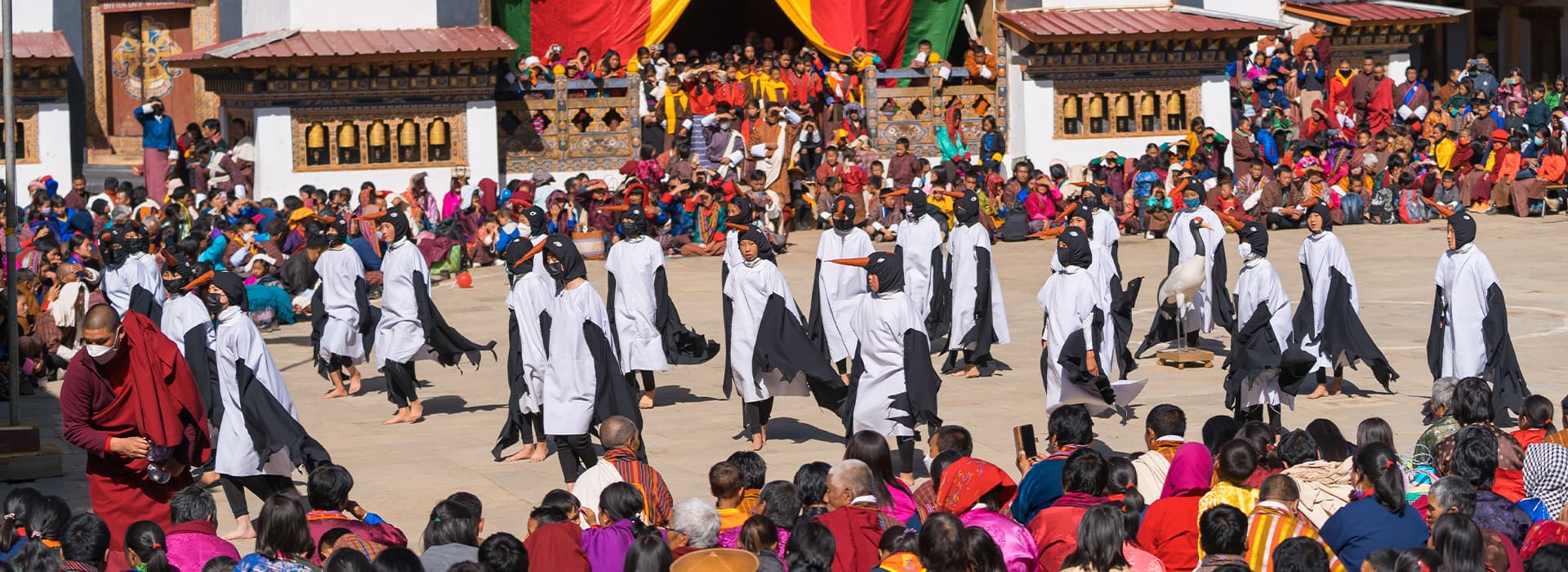
A one-day Gregorian-fixed festival
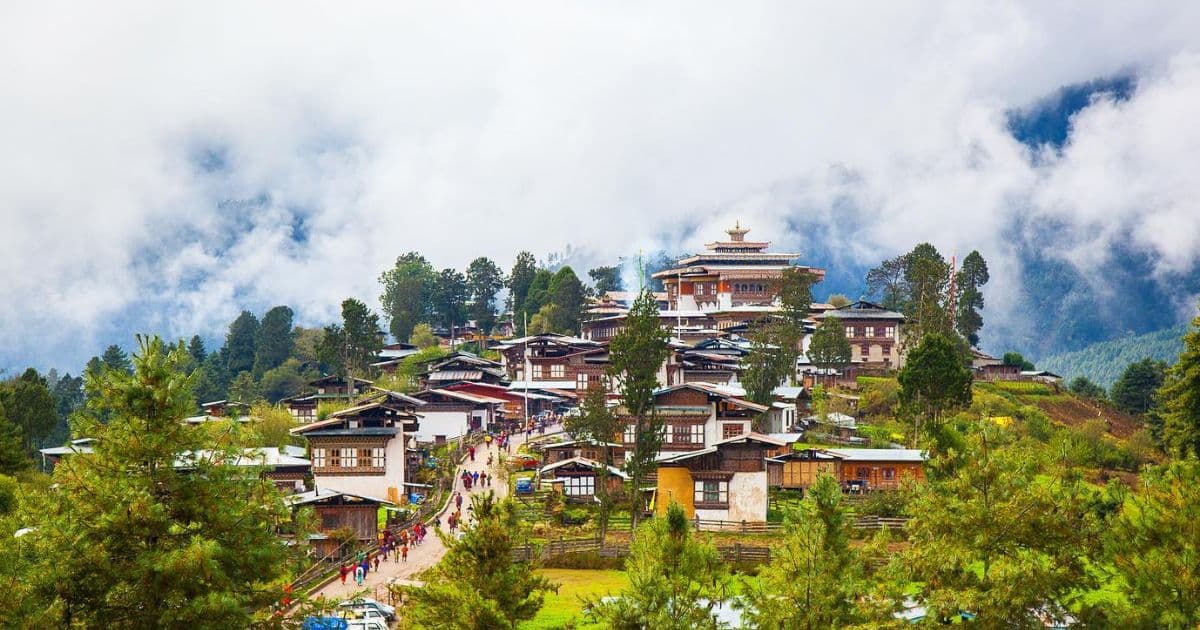
The Black-Necked Crane Festival is held annually on 11 November in the courtyard of Gangtey Goemba, in the Phobjikha valley — the principal overwintering ground of the rare black-necked crane (Grus nigricollis). The festival celebrates the cranes' return from the Tibetan plateau, marks His Majesty the 4th King's birthday, and runs as a one-day Gregorian-fixed event.
fixed date · Gangtey Goemba courtyard, Phobjikha valley · Wangdue Phodrang
The 11 November date carries two meanings — it is the birthday of His Majesty Druk Gyalpo Jigme Singye Wangchuck, the Fourth King, and it falls within the early-November window when the first cranes return to the Phobjikha valley from their Tibetan-plateau breeding grounds. The festival was inaugurated in 1998 by the Royal Society for Protection of Nature (RSPN) to mark the cranes' return and to build the local-community tradition around their conservation.
The festival opens mid-morning with traditional chams in the courtyard of Gangtey Goemba (a 17th-century Nyingma monastery overlooking the valley), followed by a series of children's dances performed by the schoolchildren of the Phobjikha valley schools — dancers in crane costumes, choreographed to mark the cranes' arrival, return, and overwintering. The day closes with songs, a community lunch, and a brief conservation programme by the RSPN. The chams sit at the smaller, intimate scale of a community festival, not the dzong-courtyard scale of Paro or Thimphu.
The black-necked crane (Grus nigricollis) is the principal high-altitude crane species of the Himalayas — black plumage on the head and upper neck, white body, grey-tipped wings, standing approximately 1.4 metres tall. Around 600 birds typically overwinter in the Phobjikha valley from late October to mid-March. They feed on dwarf-bamboo roots and harvested-rice stubble in the valley's marshy floor. Three cranes appear on the back of the Bhutanese 500-ngultrum note. The RSPN's Crane Information Centre at the valley's edge runs the principal observation hide and the educational programme.
What a visitor encounters
Mid-morning in the courtyard of the 17th-century goemba. Smaller and more intimate than the dzong tshechus; the audience is predominantly the Phobjikha local community plus the international cohort.
The principal photographic moment — schoolchildren in crane costumes performing choreographies of the cranes' arrival and overwintering. The dances are the festival's signature.
Combine the festival day with two or three days in Phobjikha for the crane observation. The RSPN Crane Information Centre runs the hide; the cranes feed in the valley's marshy floor from first light to mid-morning and again before dusk.
Amankora Gangtey, Six Senses Gangtey (in the surrounding hills), Dewachen Hotel, Gangtey Lodge. The valley sits at 3,000 metres — pack warm layers for early-morning crane viewing.
Dates by year
This festival is held on a fixed Gregorian date each year (Fixed Gregorian date — 11 November annually).
| Year | Dates | Note |
|---|---|---|
| 2026 | 11 November 2026 | |
| 2027 | 11 November 2027 | |
| 2028 | 11 November 2028 |
Common questions
Monuments at and around this festival
Monument
Gangtey Goemba — the 1613 Nyingma monastery overlooking the Phobjikha valley and the black-necked crane wintering ground.
Monument
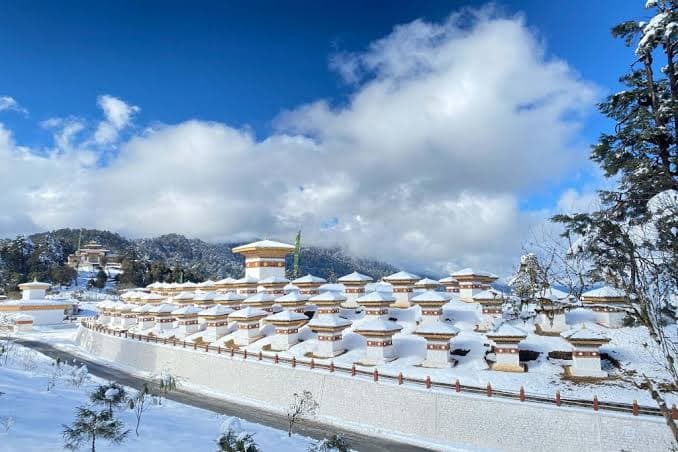
Dochu La — the 108-chorten pass at 3,100 metres between Thimphu and Punakha. The Druk Wangyel Chortens and the Himalayan panorama.
Journeys around this festival
Journey
An eight-night Bhutan journey timed to the Black-Necked Crane Festival at Gangtey on 11 November — Paro, Thimphu, Punakha, and the Phobjikha valley, with a culturally fluent guide and Bhutanese lodges.
Journey
An eight-night Bhutan birding journey targeting the principal endemics — black-necked cranes at Phobjikha, white-bellied heron, hornbills, the beautiful nuthatch.
Journey
A seven-night Bhutan journey timed to Thimphu Tshechu in autumn — second-tier seating, a culturally fluent guide, Bhutanese lodges.
Five questions. A bespoke draft back within a day or two.