- Is the Druk Path Trek difficult?
- Moderate. Four walking days averaging around 15 km on well-defined trail; max altitude approximately 4,200 metres on the ridge above Phajoding (Day 4, between the Simkota Tsho camp and the descent to Phajoding). The principal challenge is altitude — the middle two camps sit at 3,870–4,100 metres. Pre-trek conditioning over 6–8 weeks is the typical preparation. The trek is widely held as the most-accessible serious multi-day route in Bhutan.
- Can I do the Druk Path with no prior trekking experience?
- Yes, with proper preparation. The Druk Path is one of the most-accessible multi-day treks in Bhutan, and many first-time multi-day trekkers complete it comfortably. The altitude — not the terrain — is the principal challenge. We build a 2-day Paro acclimatisation profile before the trek begins.
- What's the best month for the Druk Path?
- Late April-early May catches the spring rhododendron bloom (the lower trail through the rhododendron forest is the photographic peak). Late October-early November catches the autumn clear-sky window with the clearest Himalayan views from the ridge. October is, in our view, the single best month — dry, clear, cool, with the Chomolhari panorama at its most reliable.
- Will I see the Himalayan panorama?
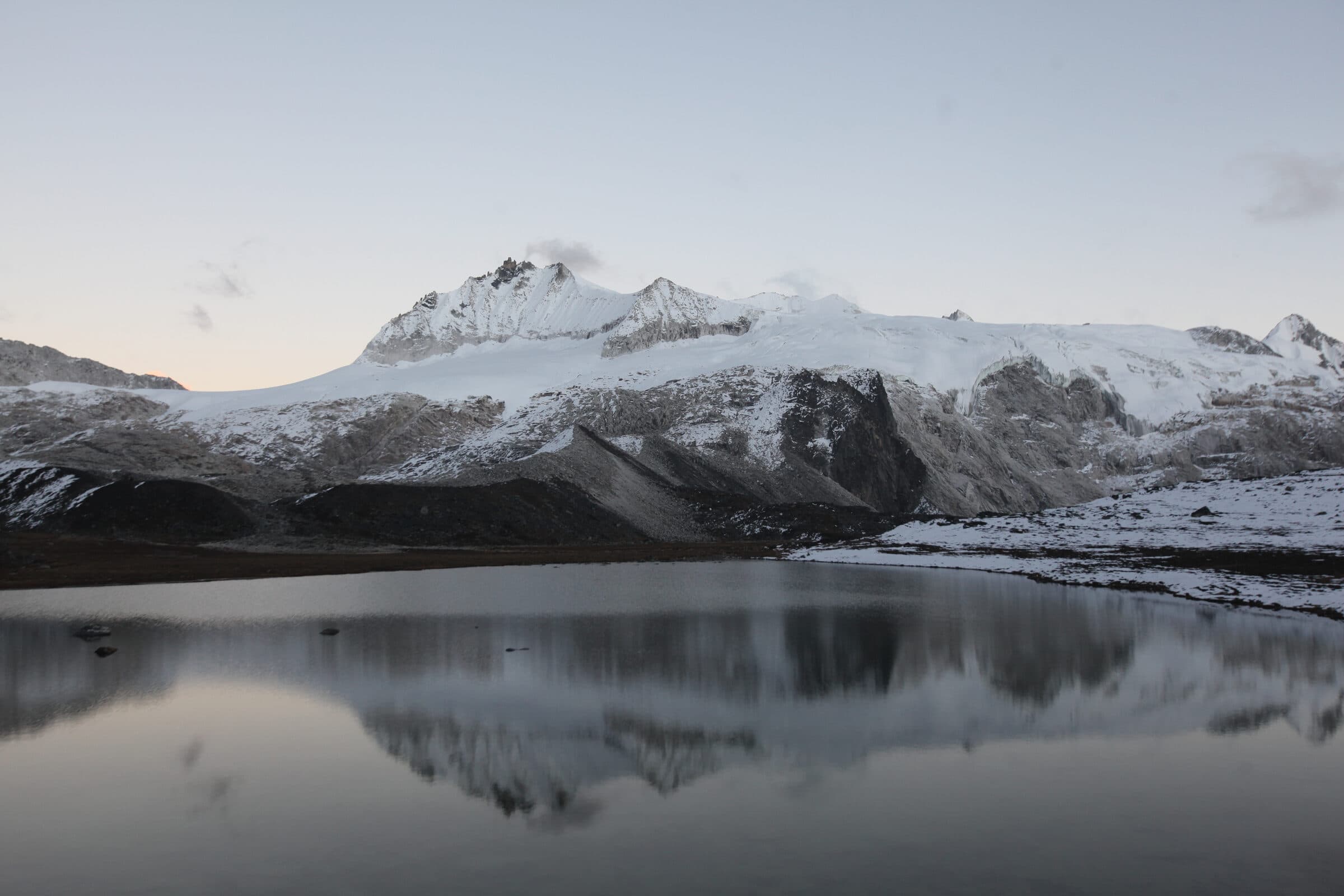
- On clear days, yes — the ridge days (Days 2 and 3) give the northern panorama including Chomolhari (7,326 m), Jichu Drake (6,989 m), and on exceptional days the Gangkhar Puensum range. October mornings before 10 a.m. give the most-reliable panorama; afternoon cloud builds across the day.
- What's the Phajoding monastery?
- Phajoding is a Drukpa Kagyu retreat centre at 3,640 metres above Thimphu — a complex of small temples and monks' cells founded by the great Drukpa master Phajo Drugom Zhigpo (the lineage's 13th-century founder in Bhutan). The Day 4 descent from Simkota Tsho passes through Phajoding on the way down to Motithang, giving the trek its religious-cultural closing register.