Preparing
LoadingPreparing
Loading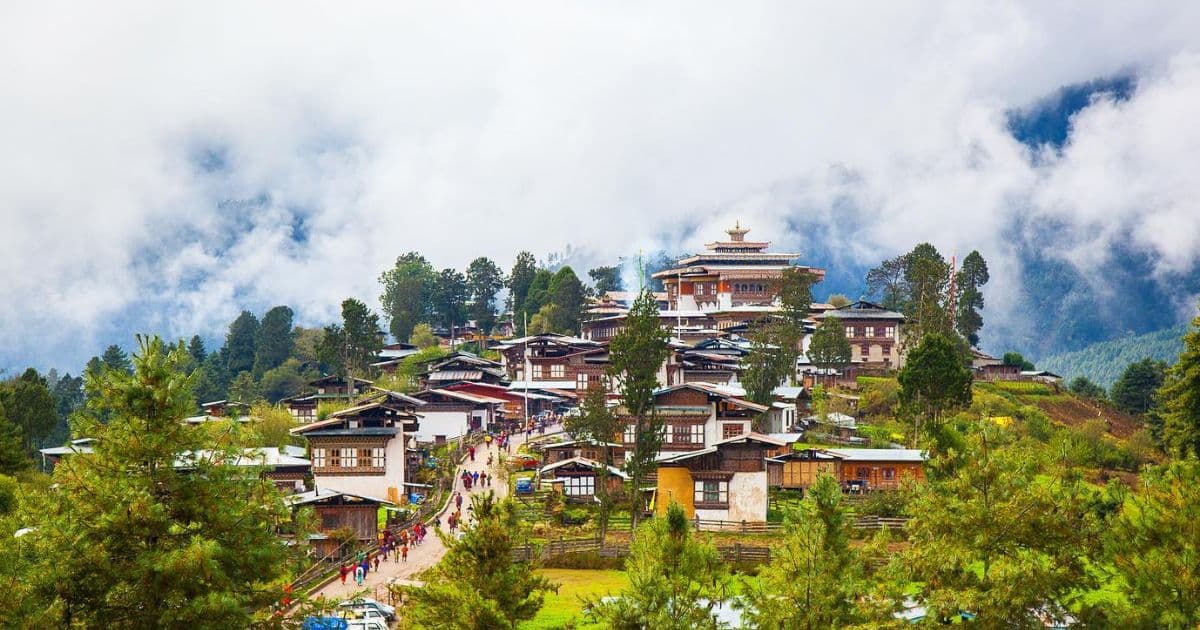
An intimate autumn tshechu
The Gangtey Tshechu is held at Gangtey Goemba in the Phobjikha valley, typically in late September or early October. Three days; smaller and substantially less crowded than Paro or Thimphu; the festival sits at the scale of a community gathering, in one of the most beautiful valleys in Bhutan.
tshechu · Gangtey Goemba, Phobjikha valley · Wangdue Phodrang
Gangtey Goemba was founded in 1613 by Pema Trinley, the grandson and reincarnation of the great Nyingma terton Pema Lingpa. The goemba sits on a hillock overlooking the Phobjikha valley — held by many to be the most beautiful glacial valley in Bhutan — and the tshechu is held in its small courtyard. The festival's scale matches the goemba's: intimate, deeply local, with a fraction of the international attendance of the dzong tshechus. The chams cycle is the same as the larger tshechus, but the tradition is family-scale rather than national-scale.
Day 1 opens with the protector-deity dances and the ritual offerings. Day 2 brings the principal cycle of chams — the Pholay Molay, the Shawa Shachi, the Drametse Ngacham, and the Guru Tshengye (the eight manifestations of Guru Rinpoche). Day 3 closes with the Tungam — the dance of the wrathful deities — and a community blessing. There is no thongdrel at Gangtey Tshechu; the unrolled-thangka tradition sits at the dzong tshechus. Atsaras (masked clowns) work the crowd as at every Bhutanese tshechu.
The Phobjikha valley sits at 3,000 metres; the late-September and early-October timing catches the valley before the cranes' arrival (the first cranes typically reach Phobjikha in late October) but in the clear-skies window after the monsoon. The drive from Paro is approximately 5 hours via Thimphu, Punakha, and the Pele La pass — a 5,500-metre Himalayan panorama-drive in clear weather. Combine the Tshechu with two or three days of valley walking, the goemba visit, and the RSPN Crane Information Centre.
What a visitor encounters
The principal mask dance cycle — the Pholay Molay, the Shawa Shachi, the Drametse Ngacham. In the goemba's small courtyard the dancers are close, the audience small, the experience intimate.
Combine the Tshechu with two or three days of valley walking. The Gangtey Nature Trail runs the length of the valley floor (3-4 hours); the longer Shashila ridge walk gives the panorama from above.
Phobjikha's buckwheat fields turn pink to red in the late-September window; the festival timing catches the harvest.
Amankora Gangtey (in the valley with a 15-minute drive to the goemba), Six Senses Gangtey (in the surrounding hills), Gangtey Lodge, Dewachen Hotel. Lodges are fewer than in Paro or Thimphu; the festival window books 4–6 months in advance.
Dates by year
The Bhutanese calendar is a distinct lunar system, not identical to the Tibetan or the broader Indian lunar calendars, and the Gregorian dates of every Bhutanese festival shift each year. The Royal Government's Department of Tourism publishes the official calendar each year, typically 6 to 12 months in advance. The dates below are our projection from the published lunar pattern (5th–7th day of the 8th Bhutanese lunar month); we confirm each year against the Department of Tourism's release and update this page accordingly. Before you finalise travel dates, please confirm with our concierge.
| Year | Dates | Note |
|---|---|---|
| 2026 | 16-18 September 2026 | |
| 2027 | 5-7 October 2027 | |
| 2028 | 23-25 September 2028 |
Common questions
Monuments at and around this festival
Monument
Gangtey Goemba — the 1613 Nyingma monastery overlooking the Phobjikha valley and the black-necked crane wintering ground.
Monument
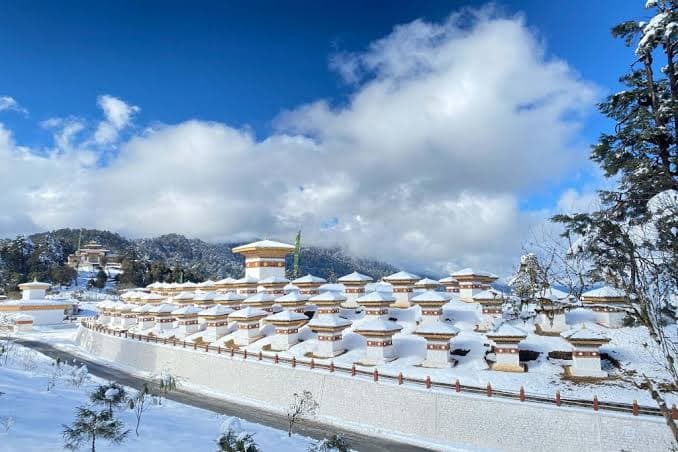
Dochu La — the 108-chorten pass at 3,100 metres between Thimphu and Punakha. The Druk Wangyel Chortens and the Himalayan panorama.
Journeys around this festival
Journey
A seven-night Bhutan journey timed to Thimphu Tshechu in autumn — second-tier seating, a culturally fluent guide, Bhutanese lodges.
Journey
A seven-night Bhutan photography journey in October — Bhutan, golden-hour access at Punakha Dzong, a tripod-friendly guide, and transparent pricing.
Journey
An eight-night Bhutan birding journey targeting the principal endemics — black-necked cranes at Phobjikha, white-bellied heron, hornbills, the beautiful nuthatch.
Five questions. A bespoke draft back within a day or two.