Preparing
LoadingPreparing
LoadingA Bhutanese historical event · Punakha Dzong / Tashichoedzong
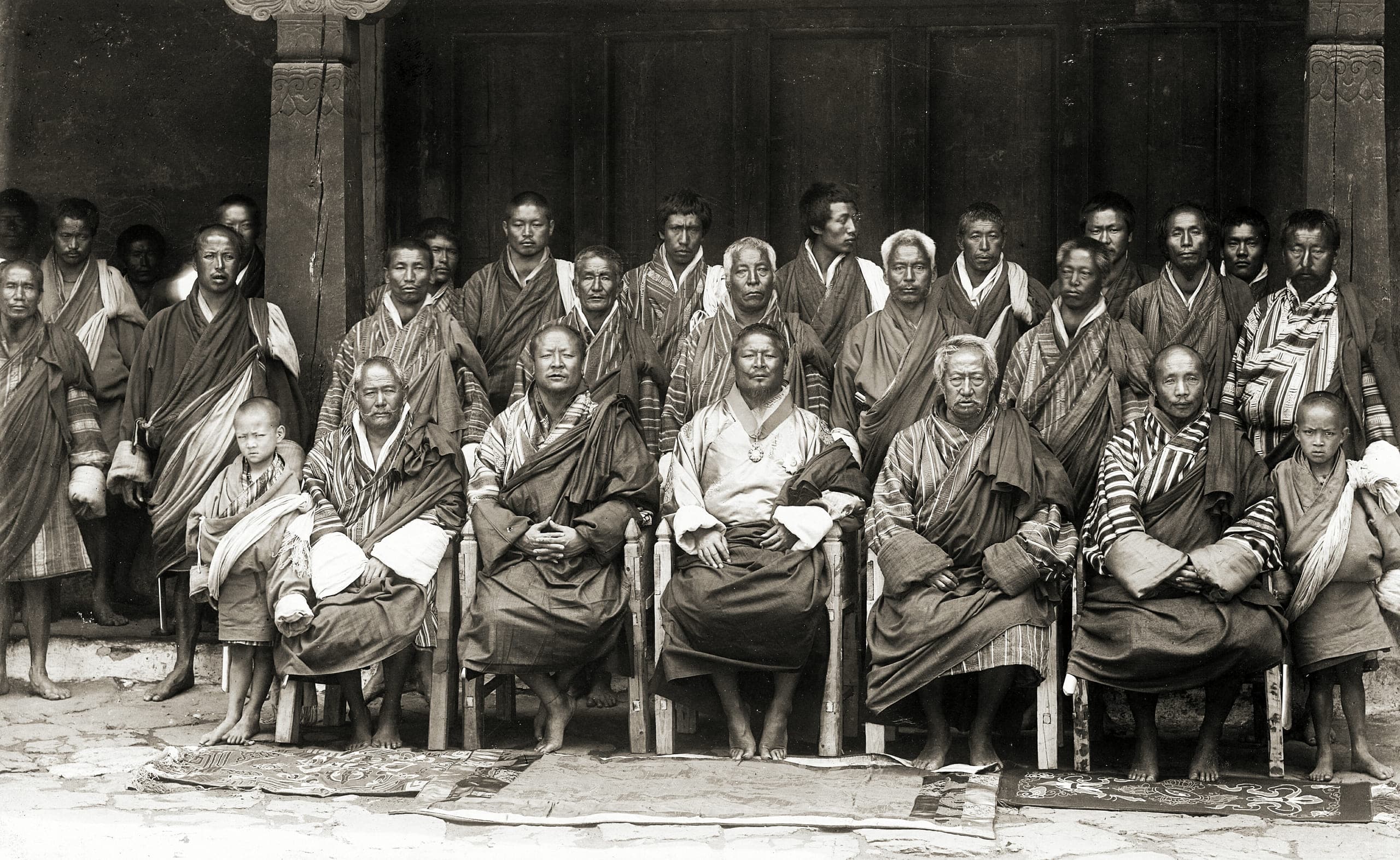
In 1953, in the opening years of His reign, His Majesty the Third Druk Gyalpo Jigme Dorji Wangchuck founded the Tshogdu — Bhutan's first National Assembly. The new body had 130 elected members (later raised to 150 in 1968), convened twice a year, and served initially as an advisory chamber to the executive. By the 1968 royal-initiated amendment, Tshogdu decisions became final and binding without further Royal approval — the moment the Bhutanese legislative-executive separation came into being. The Tshogdu is the founding chamber of the constitutional-democracy arc that culminates in the 2008 Constitution.
On His ascension to the throne in 1952, His Majesty the Third Druk Gyalpo Jigme Dorji Wangchuck inherited an institutional framework that had been built by His grandfather His Majesty Ugyen Wangchuck (the 1907 founding and the 1910 Treaty of Punakha) and consolidated by His father His Majesty the Second Druk Gyalpo Jigme Wangchuck across the previous quarter-century. The early-1950s context, however, called for a substantially different institutional architecture: India had become independent in 1947, the 1949 Bhutan-India Treaty of Friendship had reframed the bilateral relationship, the broader regional context (the Tibetan crisis was emerging in earnest) required Bhutan to be visibly modern in its governance. His Majesty's response was the Tshogdu — Bhutan's first National Assembly, founded in 1953.
The Tshogdu was designed as a deliberative body representing the major institutional constituencies of the Bhutanese state. The initial membership of 130 (raised to 150 in 1968) was drawn from three sources: elected representatives from the gewogs (the principal source of seats — the citizens' chamber), representatives of the Central Monk Body under the Je Khenpo (the religious chamber), and government officials appointed by the King (the executive chamber). Members served three-year terms. The Tshogdu convened twice a year — once for the spring session, once for the autumn session — and operated initially as a legislative-advisory chamber to His Majesty rather than as a fully sovereign legislative body. The structure provided the institutional vehicle for the broader reforms His Majesty would undertake across His reign — the abolition of slavery and serfdom, the introduction of the land-ceiling reform, the legal-code revision, the establishment of the Lodroe Tshogde (Royal Advisory Council) and later the Lhengye Zhungtshog (Cabinet).
In 1968, at His Majesty's own initiative, the Tshogdu's constitutional position was substantially upgraded: Tshogdu decisions became final and binding without further Royal approval. The amendment was the moment the Bhutanese legislative branch became formally independent of the executive — fifteen years after the founding, forty years before the 2008 Constitution formalised the full parliamentary-democracy framework. The 1968 amendment is the principal example of His Majesty the Third Druk Gyalpo's deliberate institutional self-limiting: a King who voluntarily reduced His own constitutional authority for the sake of long-term institutional health. The same instinct would later be evident in His Majesty the Fourth Druk Gyalpo's 1998 decision to retain only the Head-of-State role, and in the 2006 voluntary abdication.
The contemporary National Assembly of Bhutan, established under the 2008 Constitution as one of the two chambers of Parliament alongside the National Council, is the direct institutional successor of the 1953 Tshogdu. The 47-member chamber (one from each of the 47 dzongkhag constituencies) convenes in the National Assembly building near Tashichho Dzong in Thimphu; sessions are open to public observation; the elected members face periodic five-yearly democratic elections (first held 2008, subsequent elections 2013, 2018, 2023). For visitors with a serious interest in Bhutanese democratic institutions, the National Assembly building is on the standard Thimphu cultural-political tour; the Royal Heritage Museum at Trongsa Ta Dzong holds the historical archive of the original Tshogdu proceedings. The 1953 founding is treated by Bhutanese historians as the principal institutional inflection point of the 20th-century state.
Common questions
Partially. The 1953 Tshogdu had elected representatives from the gewogs (the principal source of seats), but it also included religious representatives from the Central Monk Body and government officials appointed by His Majesty. Decisions were advisory to the King rather than binding (until the 1968 amendment made them sovereign). The structure was a hybrid representative-deliberative body — a substantial step toward democratic governance in a country that had been an absolute monarchy from the 1907 founding, but not yet a parliamentary democracy in the modern sense. The full parliamentary structure came under the 2008 Constitution.
The initial sessions were held at Punakha Dzong (the historical seat of Bhutanese institutional life) and later moved to Tashichoedzong in Thimphu as the capital shifted (1952-1962). The contemporary National Assembly building, completed in the 1990s and substantially refurbished since, sits adjacent to Tashichho Dzong in Thimphu; visitors can see the building from the dzong grounds on the standard cultural tour.
Directly. The 2008 Constitution of Bhutan formalised the National Assembly as one of two chambers of Parliament (the other being the National Council, an upper chamber introduced under the 2008 framework). The Constitution did not replace the Tshogdu — it elevated and formalised it as a fully sovereign parliamentary chamber. The contemporary 47-member chamber is the direct institutional descendant of the 1953 130-member chamber; the constitutional-democracy arc that runs from 1953 through the 1968 amendment, the 1998 head-of-state decision, the 2001 Constitution-drafting decree, the 2006 voluntary abdication, and the 2008 formal democracy is the canonical narrative of the modern Bhutanese state.
Who was there
Person
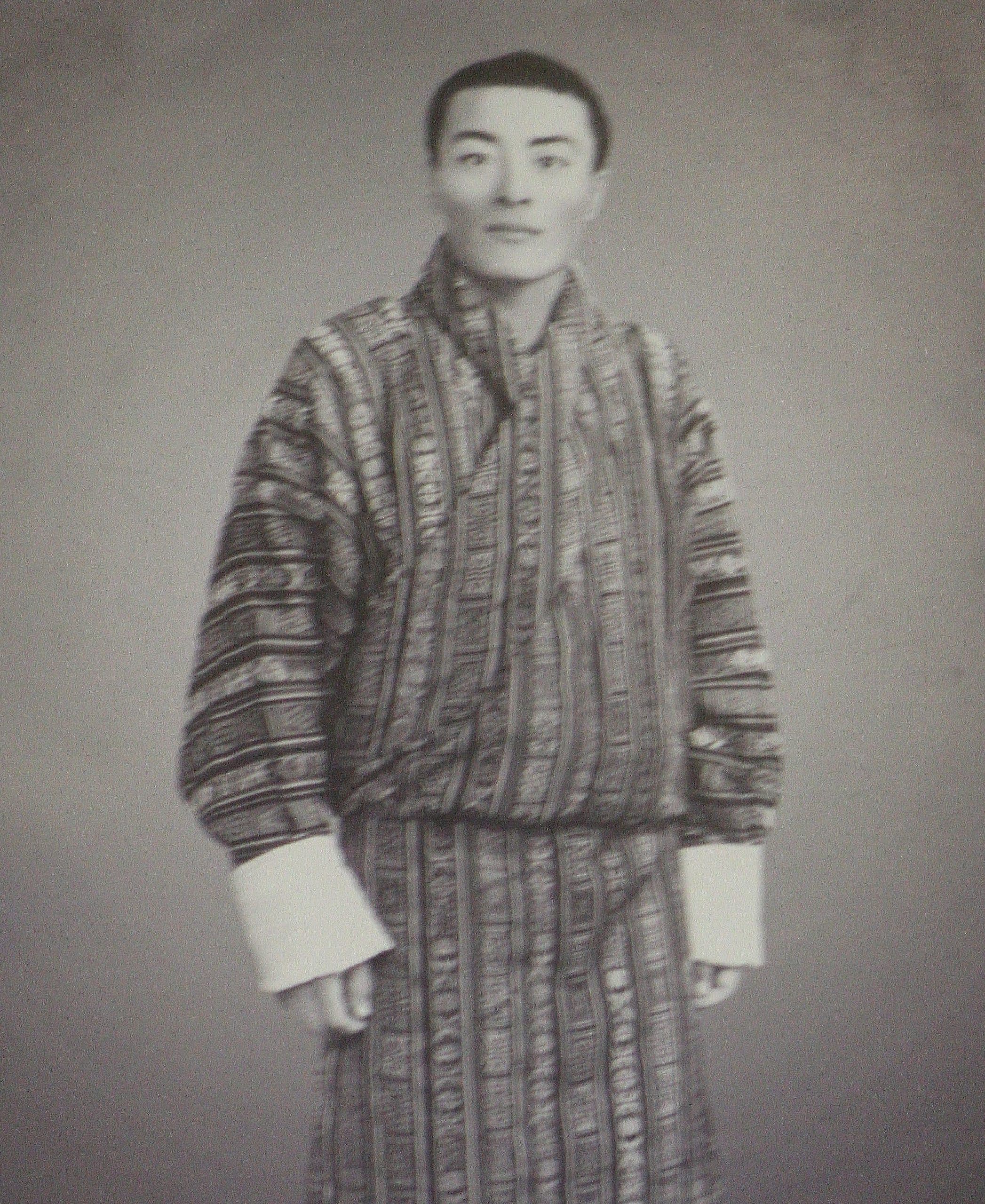
His Majesty Jigme Dorji Wangchuck (1929-1972) — the Third Druk Gyalpo of Bhutan. The modernising king who abolished slavery, established the National Assembly, and led UN admission.
Person
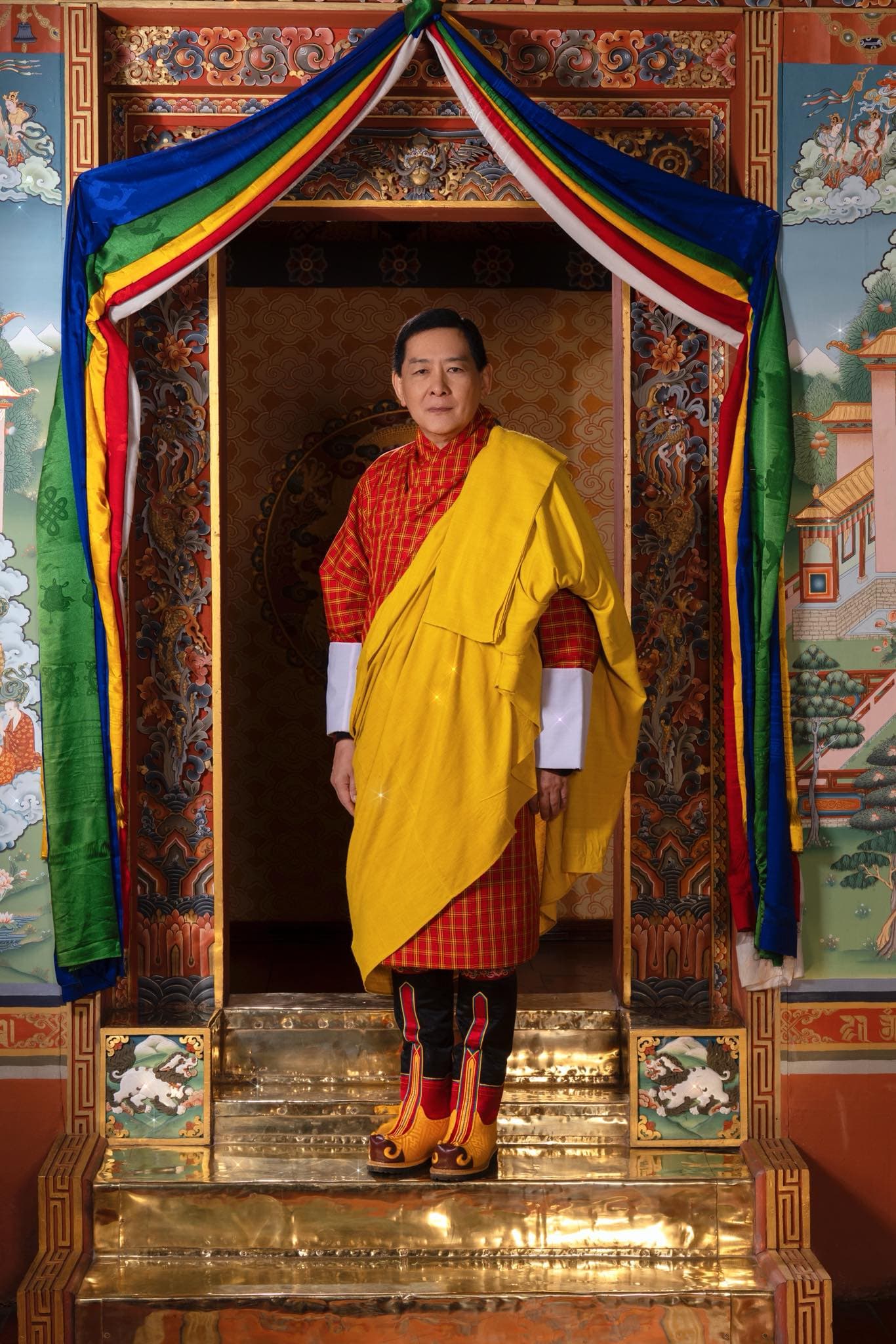
His Majesty Jigme Singye Wangchuck — the Fourth Druk Gyalpo of Bhutan. Articulated Gross National Happiness, opened Bhutan to tourism, voluntary abdication 2006.
Person
His Majesty Ugyen Wangchuck (1862-1926) — the First Druk Gyalpo of Bhutan, crowned 17 December 1907 at Punakha Dzong. The unifier of the modern Bhutanese state.
Where it stands now
Monument
Punakha Dzong — the Palace of Great Happiness, founded 1638. The history, the architecture, what to expect on a visit.
Monument
Tashichho Dzong — the seat of Bhutan's central government and Je Khenpo summer residence in Thimphu. History, architecture, visiting.
What followed
Event
The Abolition of Slavery and Serfdom — His Majesty the Third Druk Gyalpo's social reform of the 1950s. Bhutan's transformation into a structurally egalitarian society.
Event
Prime Minister Nehru's Visit to Bhutan — 1958. The first foreign-state visit; the diplomatic exchange that opened Bhutan to the 20th-century world.
Event
The First Five-Year Plan — Bhutan's modernisation arc launches 1961-66. 1,700 km of roads, India-financed, the founding act of the modern Bhutanese state.
Event
The 1998 Decision — His Majesty the Fourth Druk Gyalpo relinquishes head-of-government authority. The beginning of Bhutan's constitutional-monarchy journey.
Event
Bhutan's Constitutional Democracy Transition — 2008. Constitution ratified, first democratic elections, the move from absolute to constitutional monarchy.
The wider idea
Theme
The Wangchuck dynasty — the hereditary monarchy of Bhutan since 17 December 1907. Five reigning monarchs across five generations. The contemporary state's institutional spine.
Theme
Bhutanese democracy — the constitutional monarchy, the 2008 transition, the National Assembly, the political party landscape. A distinctive Asian democracy.
Five questions. A bespoke draft back within a day or two.