Preparing
LoadingPreparing
Loading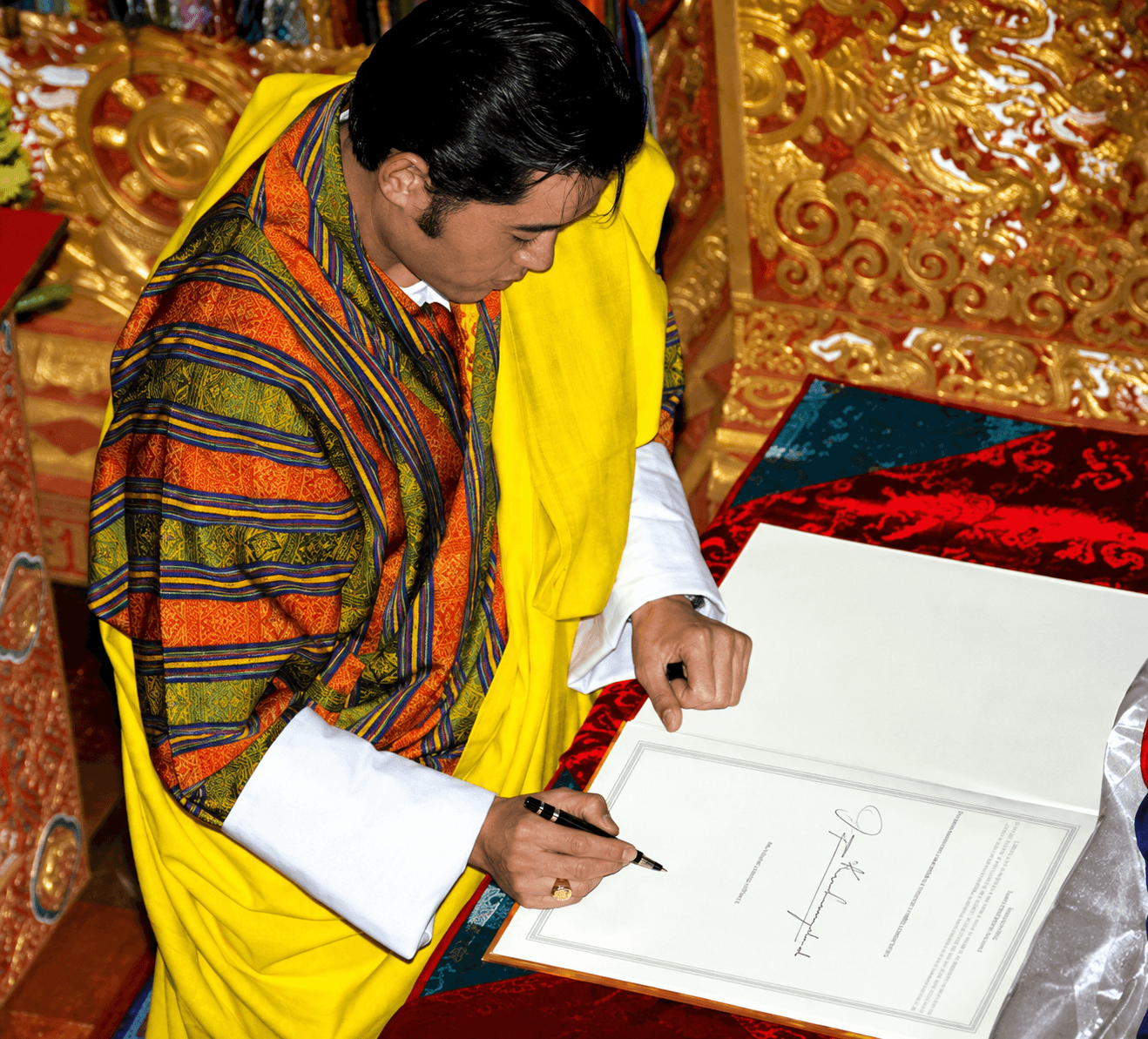
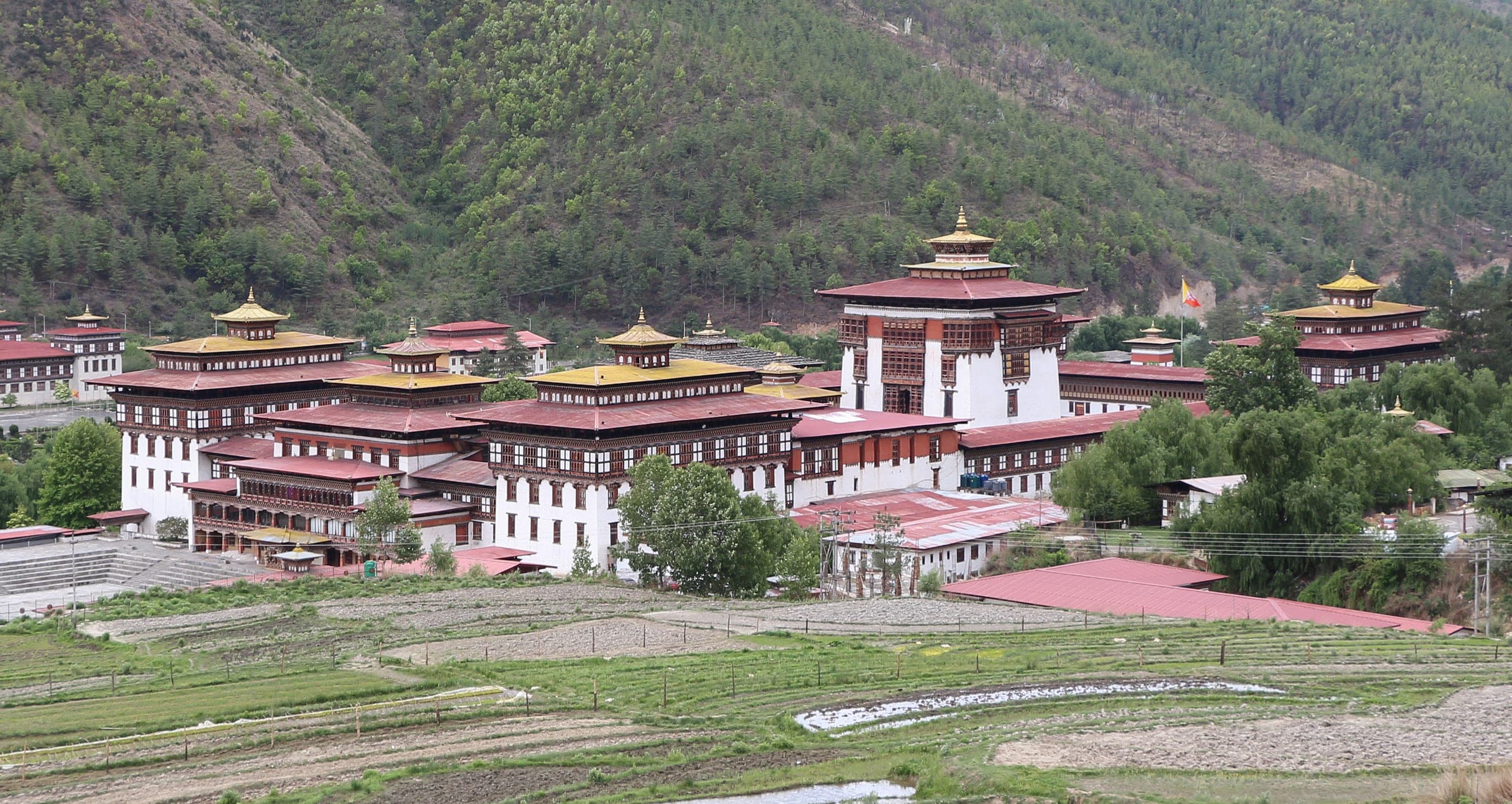
A Bhutanese constitutional event · Tashichho Dzong, Thimphu (Constitution signing); Royal Government, Thimphu (elections)
Bhutan transitioned to constitutional democracy in 2008 — the new Constitution ratified on 18 July 2008 under the reign of His Majesty Jigme Khesar Namgyel Wangchuck, the Fifth Druk Gyalpo; the first democratic National Assembly and National Council elections held in March-April 2008. The transition was the deliberate institutional reform initiated under His Majesty the Fourth Druk Gyalpo and completed under the Fifth — Bhutan moving from absolute monarchy to constitutional monarchy with elected democratic government, while preserving the cultural-religious framework and the Gross National Happiness governance principle.
The constitutional democracy transition was the deliberate multi-year institutional reform under the Wangchuck monarchy. The Constitution drafting began under His Majesty the Fourth Druk Gyalpo in 2001 — a 39-Article document with substantial public consultation across the dzongkhags over the subsequent six years. The voluntary abdication of His Majesty the Fourth Druk Gyalpo in 2006 enabled the new Constitution to be ratified under His Majesty the Fifth Druk Gyalpo. The first elections held in March-April 2008 — the National Council elections in December 2007, the National Assembly elections in March 2008. The Constitution ratification on 18 July 2008 at Tashichho Dzong. The formal coronation of His Majesty the Fifth Druk Gyalpo on 6 November 2008, coinciding with the centenary of the Wangchuck monarchy. The combined sequence — abdication, elections, Constitution, coronation — is the principal foundational moment of contemporary Bhutanese state governance.
The 2008 Constitution establishes Bhutan as a constitutional monarchy under His Majesty the Druk Gyalpo (the reigning monarch as head of state) with an elected democratic government (the National Assembly as the lower house, the National Council as the upper house, both with elected representatives). The Constitution preserves the cultural-religious framework: Article 3 establishes Buddhism as the spiritual heritage of Bhutan (without making it the state religion); Article 4 protects the country's cultural traditions; Article 5 mandates 60% minimum forest cover in perpetuity; Article 9 enshrines Gross National Happiness as the state's guiding development principle. The Constitution also establishes the framework for the eventual succession of His Majesty the Druk Gyalpo (mandatory abdication at age 65, with succession to the elder child of the reigning monarch) — institutionalising the voluntary-abdication precedent set by His Majesty the Fourth Druk Gyalpo.
The contemporary Bhutan a visitor encounters is the country operating under the 2008 Constitution. The visa framework, the SDF rate, the tourism policy, the dzong-administration, the festival calendar are all the operational outputs of the constitutional democracy. The Royal Government departments (the Department of Tourism, the Department of Immigration, etc.) operate within the constitutional framework. Elected representatives — including from rural dzongkhags — participate in the national policy debate. For visitors with serious civic interest, the dzongs continue to host both the Royal Government administrative offices and the Zhung Dratshang religious institutions — the principal Choesi structural legacy still operating within the new constitutional framework. The transition was deliberately structured to preserve continuity while enabling democratic governance; the result is one of the more distinctive constitutional democracies in Asia.
Common questions
In effect yes, twice. Public referendum during the constitutional drafting (2005-2007) confirmed broad support for the new framework. The first National Assembly elections in March 2008 saw a 79.4% voter turnout — substantial validation of the new democratic framework. The transition was both top-down (initiated by the Royal Government) and bottom-up (supported by the citizenry).
No. The 2008 Constitution Article 3 establishes Buddhism as the 'spiritual heritage' of Bhutan but does not make it the state religion. The constitutional framework protects religious freedom for all citizens; the institutional framework of the Zhung Dratshang (the central monk body) continues to operate but is funded by and integrated with the constitutional state rather than being the state itself. The cultural register of contemporary Bhutan remains substantially Buddhist; the constitutional framework is religiously neutral.
Multiple registered political parties operate in Bhutan's constitutional democracy. The principal parties include the People's Democratic Party (PDP), Druk Phuensum Tshogpa (DPT), Druk Nyamrup Tshogpa (DNT), and others. National Assembly elections operate on a two-round system; the National Council is non-partisan (members run independently). The political landscape has evolved across the four electoral cycles since 2008 (2008, 2013, 2018, 2023).
Who was there
Person
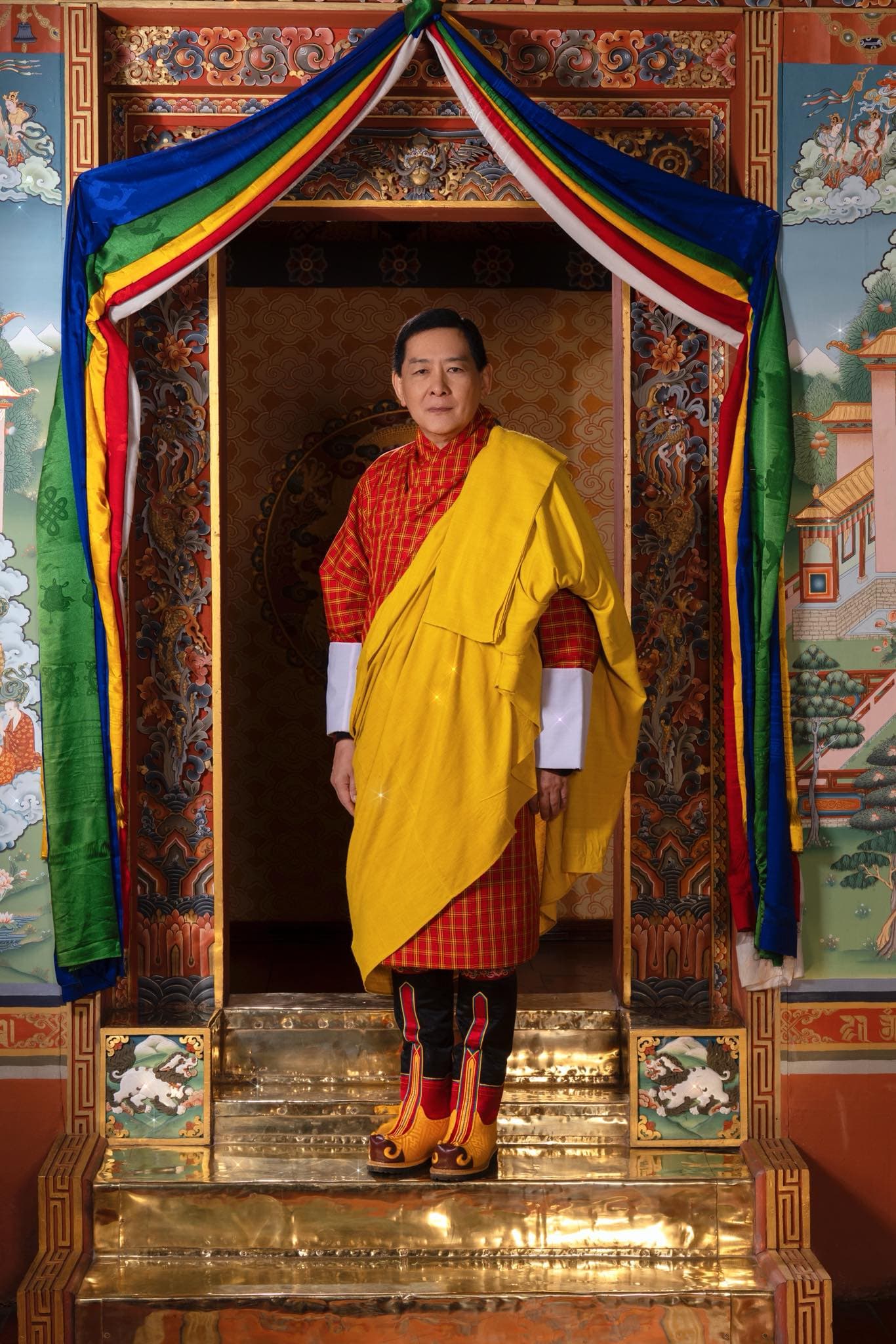
His Majesty Jigme Singye Wangchuck — the Fourth Druk Gyalpo of Bhutan. Articulated Gross National Happiness, opened Bhutan to tourism, voluntary abdication 2006.
Person
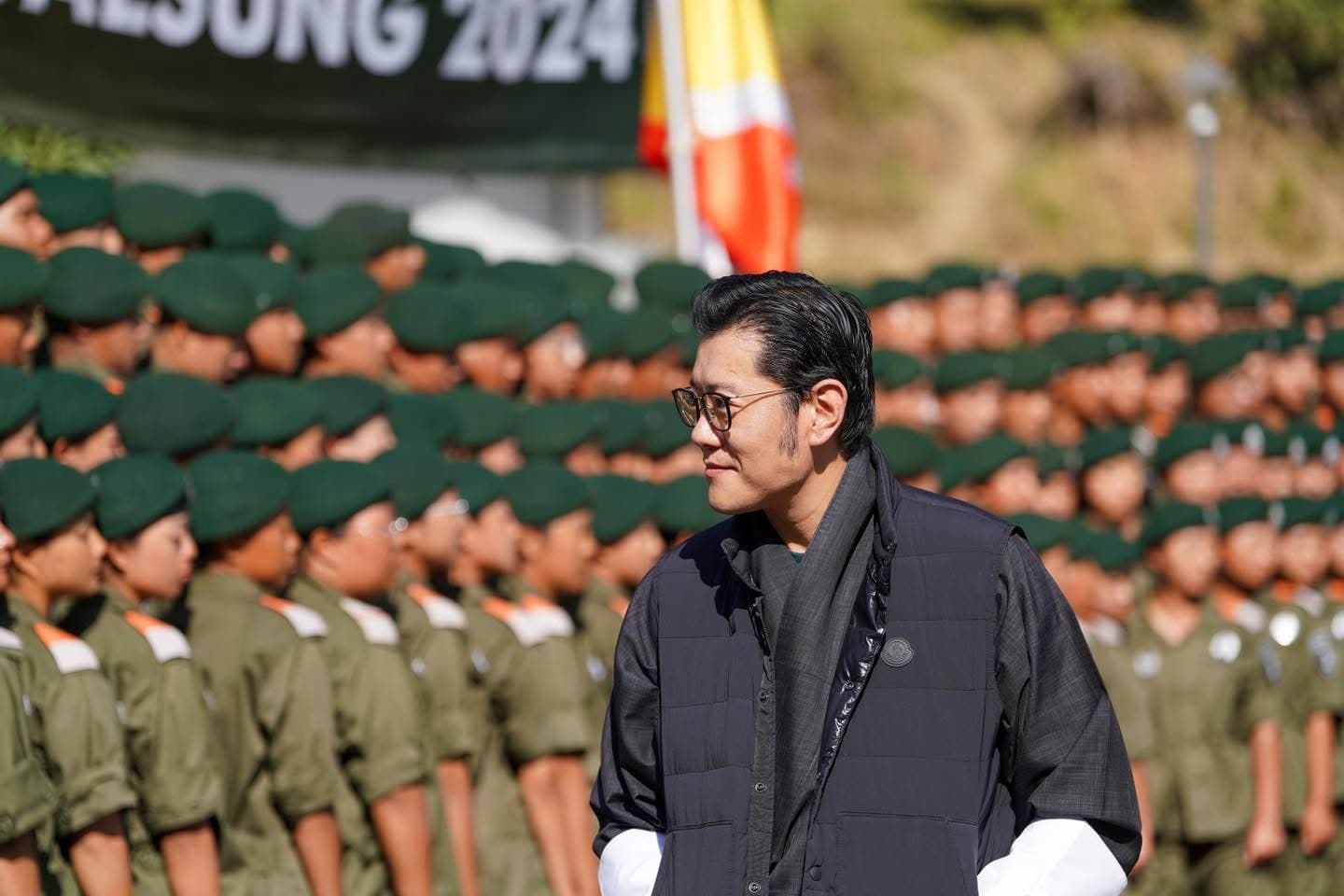
His Majesty Jigme Khesar Namgyel Wangchuck — the Fifth Druk Gyalpo, ascended 2006, crowned 2008. The current King of Bhutan. Married Her Majesty Jetsun Pema 2011.
What followed
Event
The Voluntary Abdication of His Majesty the Fourth Druk Gyalpo — 14 December 2006. The internationally unprecedented royal handover enabling the 2008 democracy.
Event
Coronation of His Majesty Jigme Singye Wangchuck, the Fourth Druk Gyalpo — 2 June 1974 at Tashichho Dzong, Thimphu. Age 18, the youngest monarch in the world.
Five questions. A bespoke draft back within a day or two.