Preparing
LoadingPreparing
Loading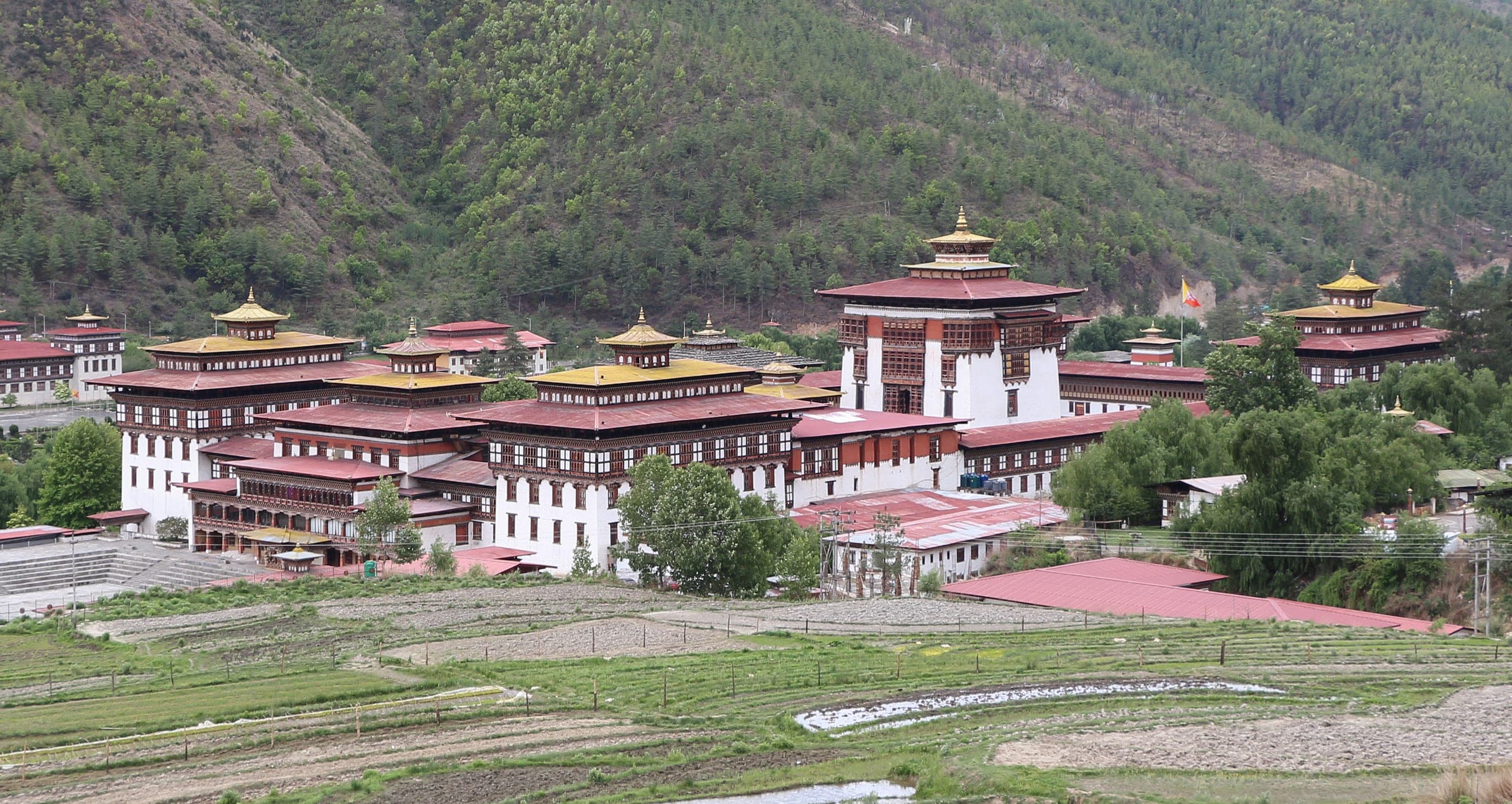
The seat of the central government and the Je Khenpo
Tashichho Dzong sits on the western bank of the Wang Chhu in Thimphu at 2,330 metres elevation. The original dzong was founded in 1216; the present structure was reconstructed under His Majesty the 3rd King in the 1960s as the seat of the central government and the summer residence of the Je Khenpo (the Chief Abbot). It is the principal civic and religious institution of modern Bhutan.
Also known as · Trashichho Dzong · Fortress of the Auspicious Religion
The original Tashichho Dzong was founded in 1216 by Lama Gyalwa Lhanapa, a Drukpa Kagyu master, on a hill higher up the Thimphu valley. The dzong was destroyed by fire and rebuilt multiple times across the next seven centuries. In 1641 the Zhabdrung Ngawang Namgyal consecrated the present site as the official seat of the dual system of government (the religious and civil administration unified). Under His Majesty the Third Druk Gyalpo Jigme Dorji Wangchuck — the reconstruction was undertaken across seven years (1962 to 1969) to serve as the seat of the central government in the new capital of Thimphu. Thousands of masons, carpenters, and craftsmen from across the kingdom were drawn in to complete the work, which used traditional methods: no nails, no drawings, the master builders working from oral tradition and timber proportion. The reconstruction completed in 1969 is the dzong a visitor sees today.
Tashichho Dzong houses the throne room of His Majesty the King, the offices of the Prime Minister and the principal Cabinet ministries, the Secretariat, and the summer residence of His Holiness the Je Khenpo. The dzong's southern wing is the civil administration; the northern wing is the central monastic body. The dzong is an active institution — the offices are staffed on weekdays, and the monastic body conducts daily prayers from 4 a.m. to 8 p.m. International visitors are welcome to enter the courtyard outside working hours (typically after 5 p.m. on weekdays, all day on weekends and government holidays).
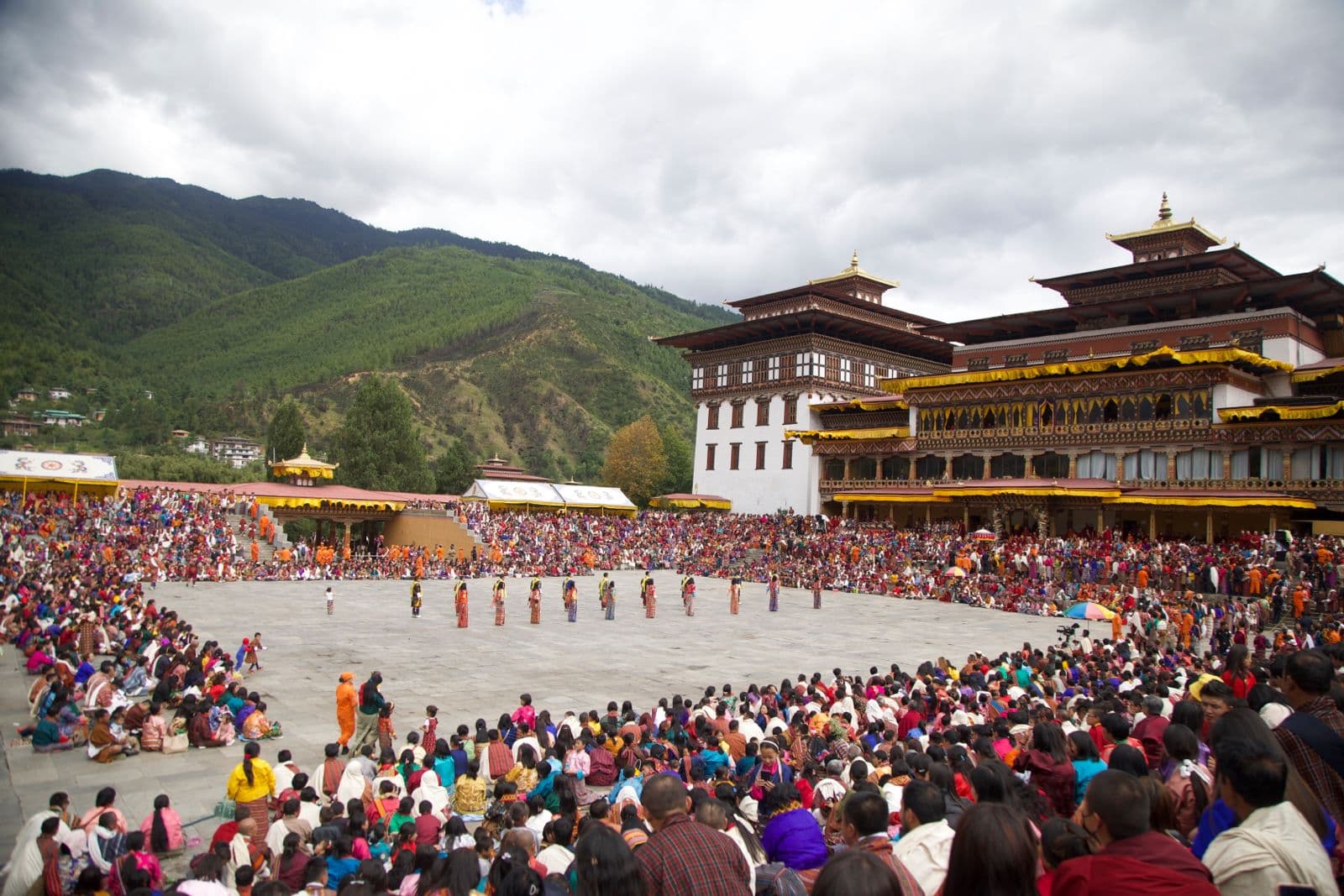
Tashichho Dzong is the venue for the Thimphu Tshechu (10th–12th day of the 8th Bhutanese lunar month) and the preceding Thimphu Drubchen — the country's largest annual festival by total attendance, drawing tens of thousands of Bhutanese from every dzongkhag. The dzong's principal courtyard is set for the cycle of chams; the principal photographic tradition is the Day 2 chams and the Drubchen thongdrel viewing. The Royal Family typically attends one day of the Tshechu.
Visiting
Common questions
The original dzong was founded in 1216 by Lama Gyalwa Lhanapa. The current structure was reconstructed and substantially expanded under His Majesty the Third Druk Gyalpo across the seven years from 1962 to 1969, when Thimphu was being established as the new capital. Thousands of masons and carpenters from across the kingdom worked on the project using traditional methods — no nails, no drawings, the master builders working from oral tradition.
Yes, outside working hours. Typically after 5 p.m. on weekdays, and all day on weekends and government holidays. The interior lhakhangs are open with a guide. Access can be restricted when state functions are in progress; your guide will confirm on the day.
Tashichho Dzong (Thimphu) is the current seat of central government and the summer residence of the Je Khenpo. Punakha Dzong is the winter residence of the Je Khenpo and the principal venue for state ceremonies including the coronation. The monastic body relocates between the two dzongs each spring and autumn — a notable spring procession through the Dochu La pass.
Yes — the Thimphu Tshechu (the largest tshechu in Bhutan by attendance) is held in the dzong's principal courtyard in late September or early October. The preceding Thimphu Drubchen (which includes the thongdrel viewing) is held at the same venue. Combined, the Drubchen + Tshechu runs as a six-day sequence at the dzong.
Most Thimphu lodges are within a 10–15 minute drive of Tashichho Dzong. Amankora Thimphu (southern Thimphu), Le Méridien Thimphu and Pemako Thimphu (central Thimphu), and the Bhutan Suites and Norkhil are the principal premium options. The dzong is best visited late afternoon for the floodlit evening view.
Festivals held here
Festival
Thimphu Tshechu — the autumn festival at Tashichho Dzong, capital of Bhutan. This year's dates, the programme, what to expect as an international visitor.
Festival
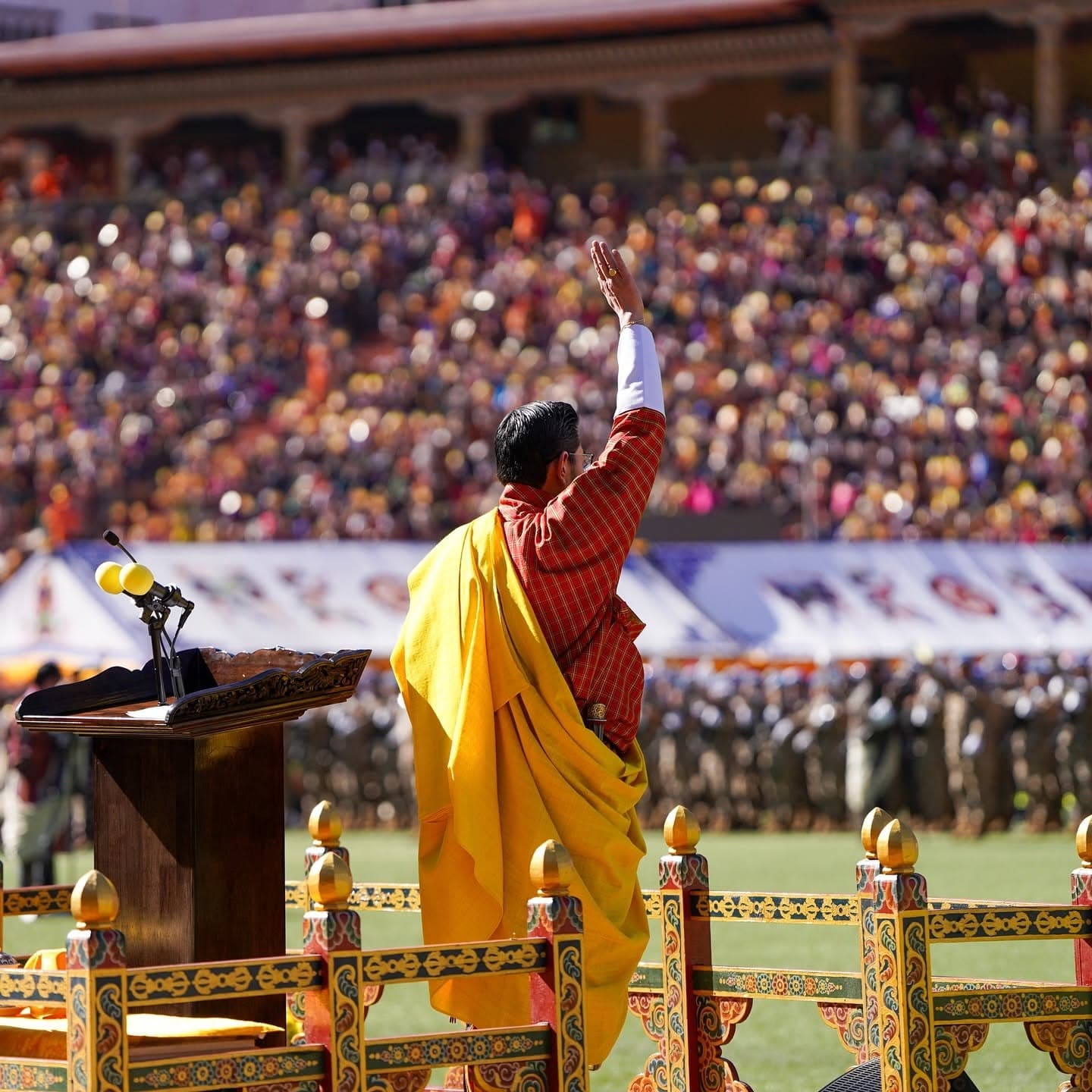
Bhutan National Day — 17 December, founding of the Wangchuck dynasty (1907). The principal Royal ceremony at Changlimithang, Thimphu.
Journeys featuring this site
Journey
A seven-night Bhutan journey timed to Thimphu Tshechu in autumn — second-tier seating, a culturally fluent guide, Bhutanese lodges.
Journey
A ten-night Bhutan milestone trip from London — for 50th birthdays, retirement, decade-marking anniversaries. Signature-tier; full circuit including Bumthang.
Journey
A five-night Bhutan anniversary journey for couples — Bhutan, lodge dinners on the anniversary night, signature-tier hotels and a knowledgeable guide.
Five questions. A bespoke draft back within a day or two.