Preparing
LoadingPreparing
Loading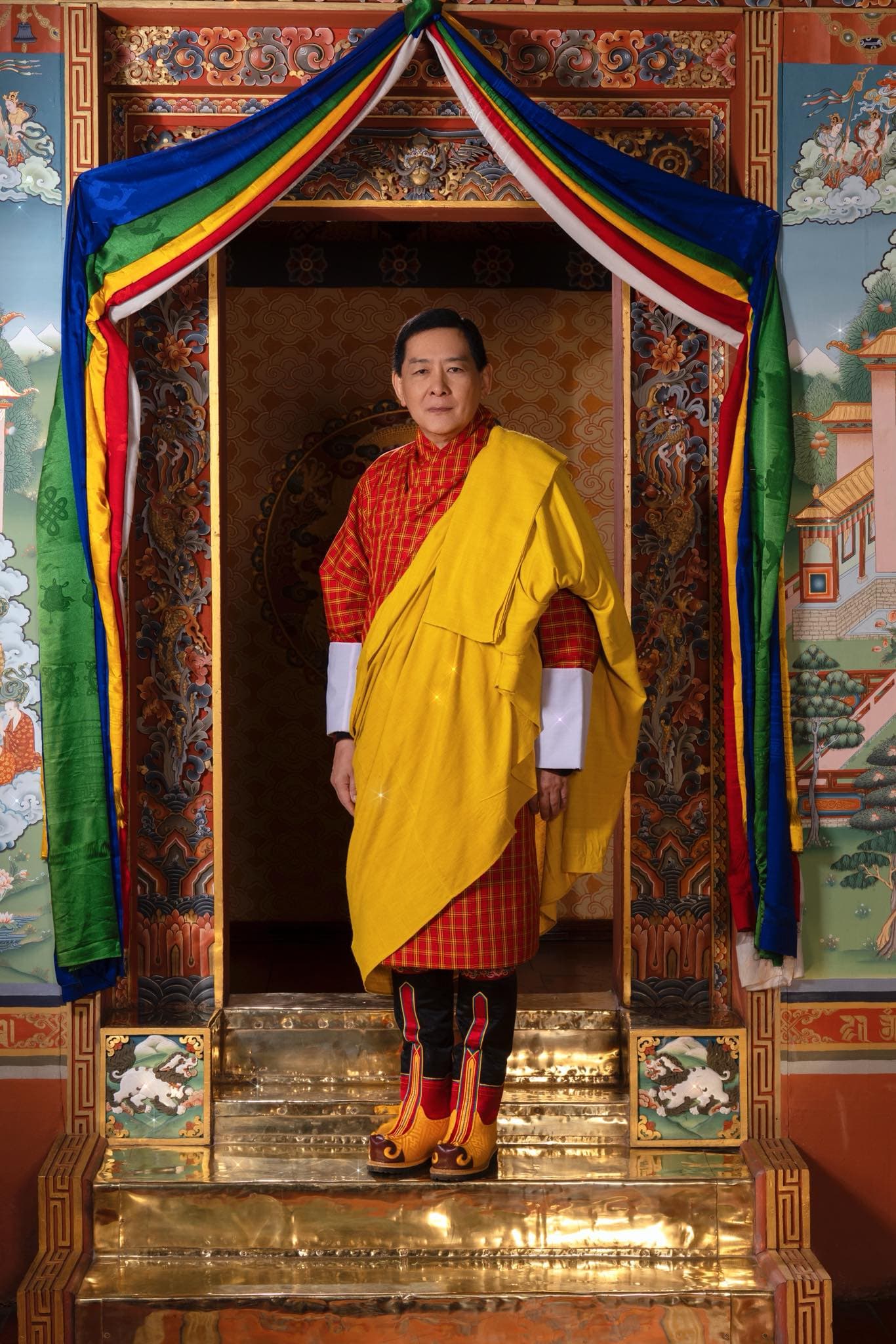
A Bhutanese royal figure
Born 1955
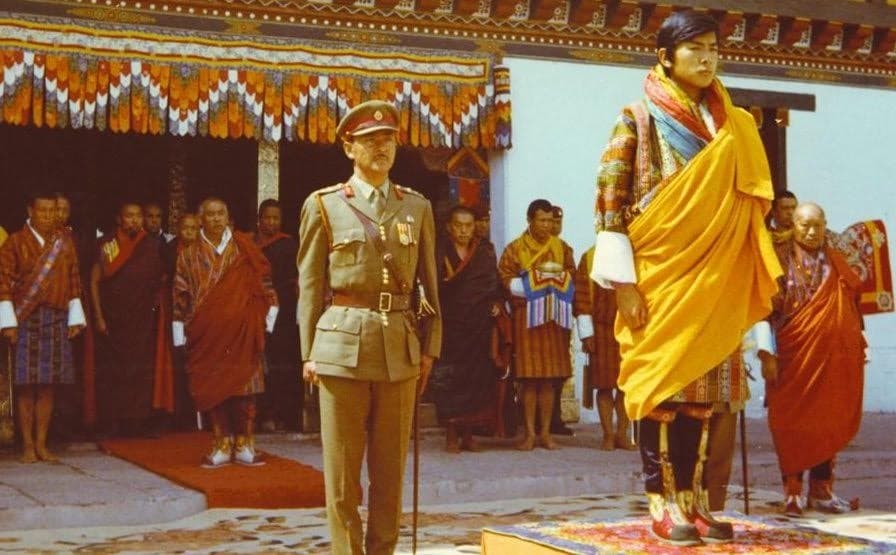
His Majesty Jigme Singye Wangchuck reigned as the Fourth Druk Gyalpo of Bhutan from 1972 to 2006 (formally crowned 1974). His Majesty articulated the Gross National Happiness governance framework, deliberately opened Bhutan to international tourism on the high-value-low-impact model, and voluntarily abdicated in favour of His son to facilitate the constitutional democracy transition. His Majesty is widely regarded as the most consequential figure in modern Bhutanese history; today His Majesty holds the title of King Father (Druk Gyalpo Jigme Singye Wangchuck).
His Majesty Jigme Singye Wangchuck ascended the throne on 21 July 1972 on the death of His Majesty's father, His Majesty the Third Druk Gyalpo Jigme Dorji Wangchuck. At seventeen years old, His Majesty was the youngest monarch in the world; the formal coronation followed on 2 June 1974 at Tashichho Dzong, Thimphu. The reign continued until the formal handover to His Majesty the Fifth Druk Gyalpo in 2006-2008. The 34-year reign is widely regarded as the most consequential in modern Bhutanese history — the period in which Bhutan emerged from medieval isolation into the contemporary state system while preserving the distinctive cultural and religious framework.
Gross National Happiness — articulated as the country's development framework from the early 1970s, with the often-quoted formulation 'Gross National Happiness is more important than Gross National Product'. The framework was formalised by royal decree to the Planning Commission in 1986 and constitutionally embedded in Article 9 of the 2008 Constitution. The deliberate opening to international tourism — Bhutan opened to international tourism in June 1974 around the coronation, on the high-value-low-impact framework that continues today. The constitutional democracy transition — drafted from 2001 onward under His Majesty's direction; ratified 2008; first elections 2008. The voluntary abdication — announced 2005, completed 2008; internationally unprecedented and confirmed the Wangchuck monarchy's commitment to constitutional democracy. The broader modernisation — health, education, telecommunications, infrastructure all developed under the reign, while the cultural and religious framework was preserved.
His Majesty's portrait is in every dzong, lodge, government building, and public space — alongside His Majesty the Fifth Druk Gyalpo and Her Majesty the Queen Jetsun Pema. The GNH framework articulated by His Majesty is visible in the forest cover (constitutional 60% minimum, actual approximately 71%), the SDF, the tourism framework, the festival calendar, and the constitutional governance. His Majesty holds the title of King Father and remains one of the most-revered figures in contemporary Bhutan. His Majesty occasionally appears publicly at major events (the principal tshechus, royal weddings, state ceremonies); the matched guide will mention royal sightings if they occur, with appropriate cultural register.
Throughout this entry the honorifics 'His Majesty' and 'the Fourth Druk Gyalpo' are observed — the canonical Bhutanese protocol when referring to members of the royal family. The Bhutanese register holds the royal family in deep reverence; visitors are encouraged to follow the same protocol when speaking with Bhutanese citizens, with the matched guide, or at any official event. Clipped Western epithets ('the Fourth King', 'the abdicator') are inappropriate in the Bhutanese cultural context.
Also known as
Common questions
To facilitate the constitutional democracy transition. His Majesty announced in 2005 the intention to abdicate at age fifty in favour of His son, to allow the new constitutional democracy to be established under His Majesty the Fifth Druk Gyalpo. The decision was internationally unprecedented; most monarchs reign until natural death. His Majesty's voluntary handover confirmed the Wangchuck monarchy's commitment to the democratic transition.
With deep reverence. His Majesty articulated GNH, opened the country thoughtfully to the world, voluntarily transitioned to democracy, and preserved the cultural framework throughout. The portrait of His Majesty (in royal robes, with the distinctive 19-year-old crowning image as well as later mature-statesman images) is in nearly every Bhutanese household and public space.
Yes. GNH was articulated by His Majesty and remains the country's constitutional governance principle. His Majesty the Fifth Druk Gyalpo continues the framework; the GNH Commission, the Centre for Bhutan Studies, the GNH Index measurement, and the policy-screening process all continue to operate. The framework is foundational to contemporary Bhutan and to what a visitor encounters.
What they built
Monument
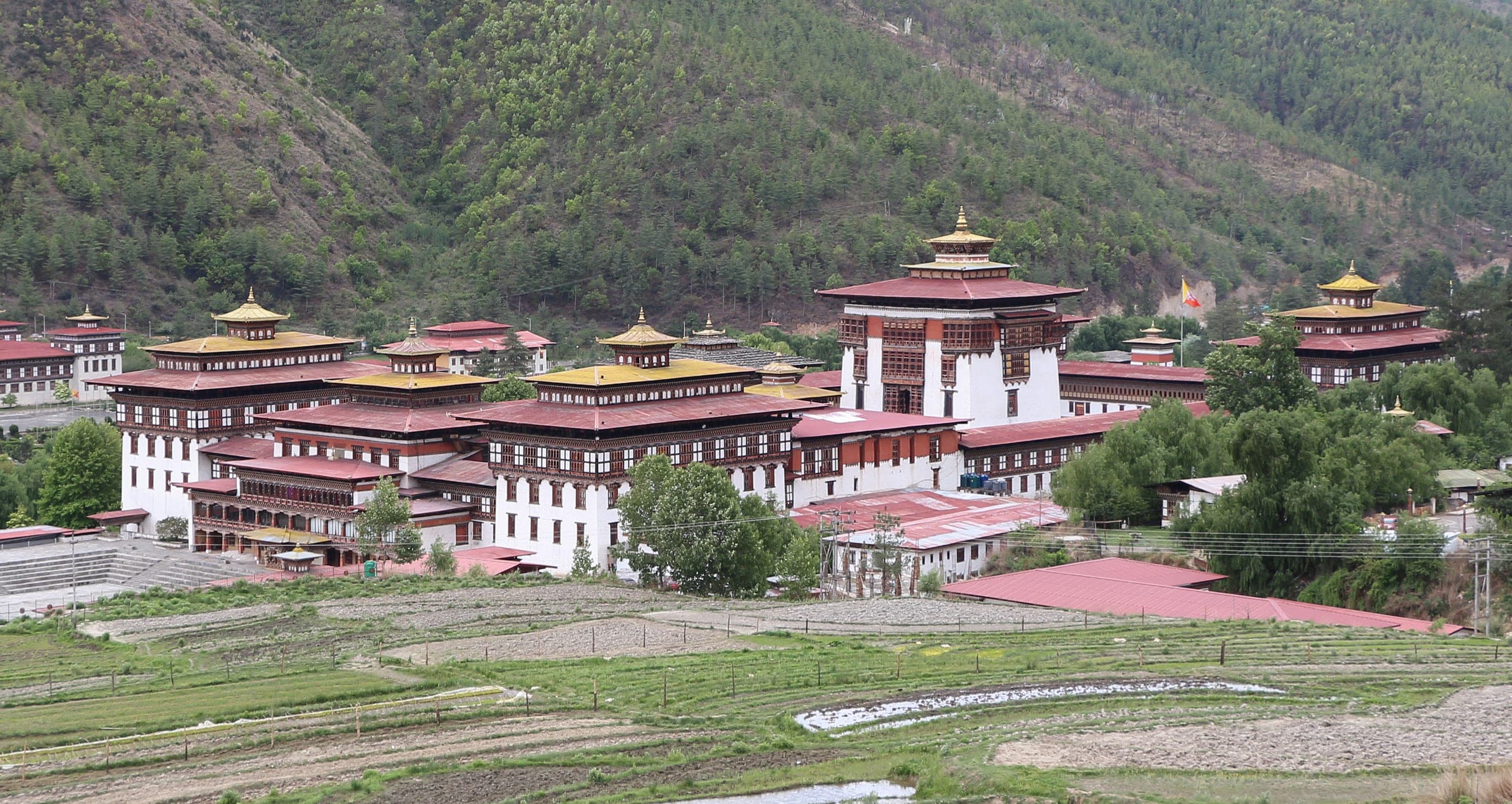
Tashichho Dzong — the seat of Bhutan's central government and Je Khenpo summer residence in Thimphu. History, architecture, visiting.
Monument
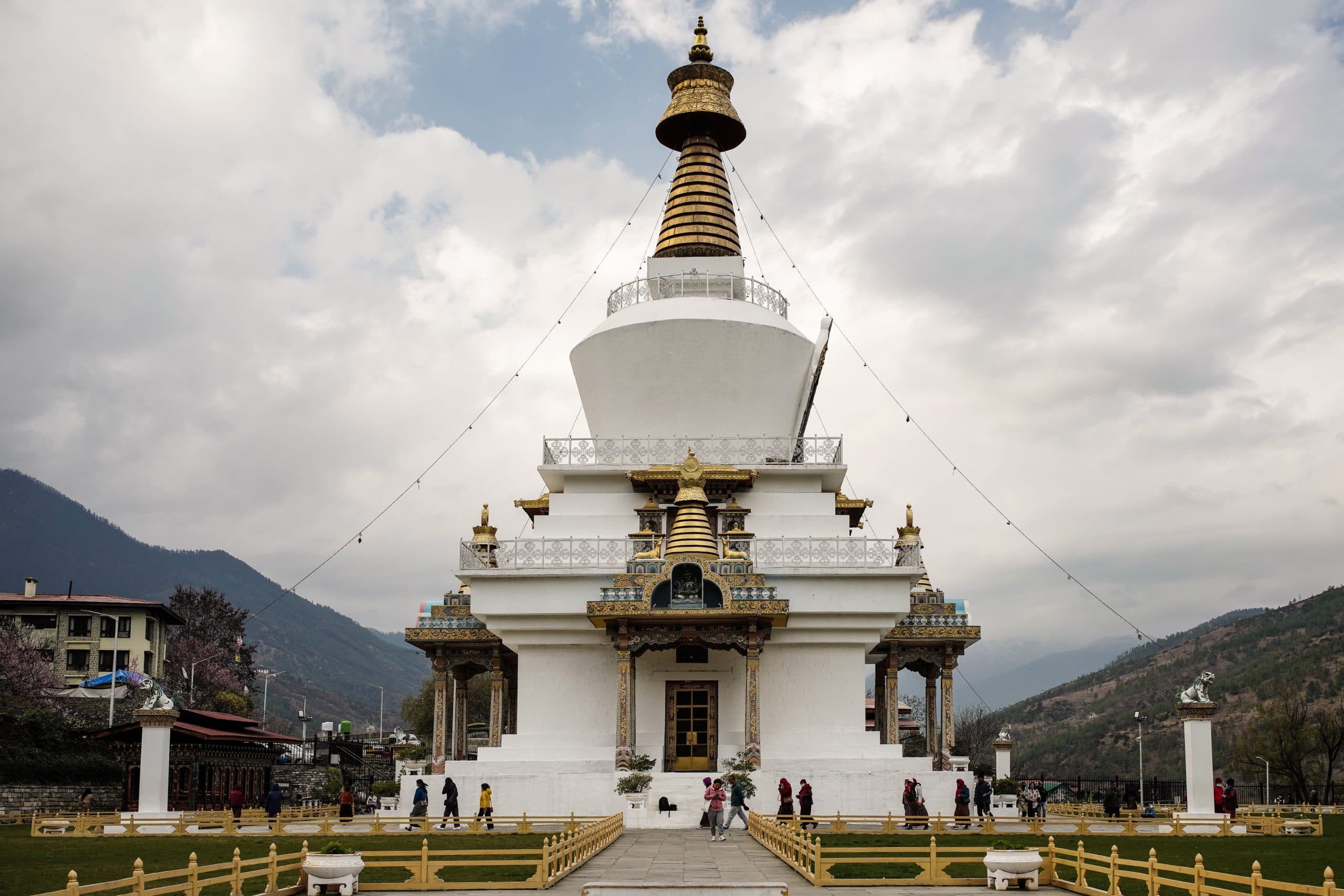
National Memorial Chorten — Thimphu, 1974, in memory of His Majesty the 3rd King. Architecture, daily pilgrimage, visiting.
What happened
Event
Coronation of His Majesty Jigme Singye Wangchuck, the Fourth Druk Gyalpo — 2 June 1974 at Tashichho Dzong, Thimphu. Age 18, the youngest monarch in the world.
Event
Bhutan opens to international tourism — June 1974, around the Coronation of the Fourth King. The high-value-low-impact framework, the 200 inaugural visitors.
Journeys that touch this
Journey
The signature-tier Bhutan journey. Private knowledgeable guide, the most considered lodges, helicopter or PC-24 charter, exclusive-use arrangements. By invitation, from USD 14,000.
Journey
A signature-tier seven-night Bhutan journey for founders. The Phobjikha silence, no-screens discipline, matched knowledgeable guide, the considered reset.
Five questions. A bespoke draft back within a day or two.