Preparing
LoadingPreparing
Loading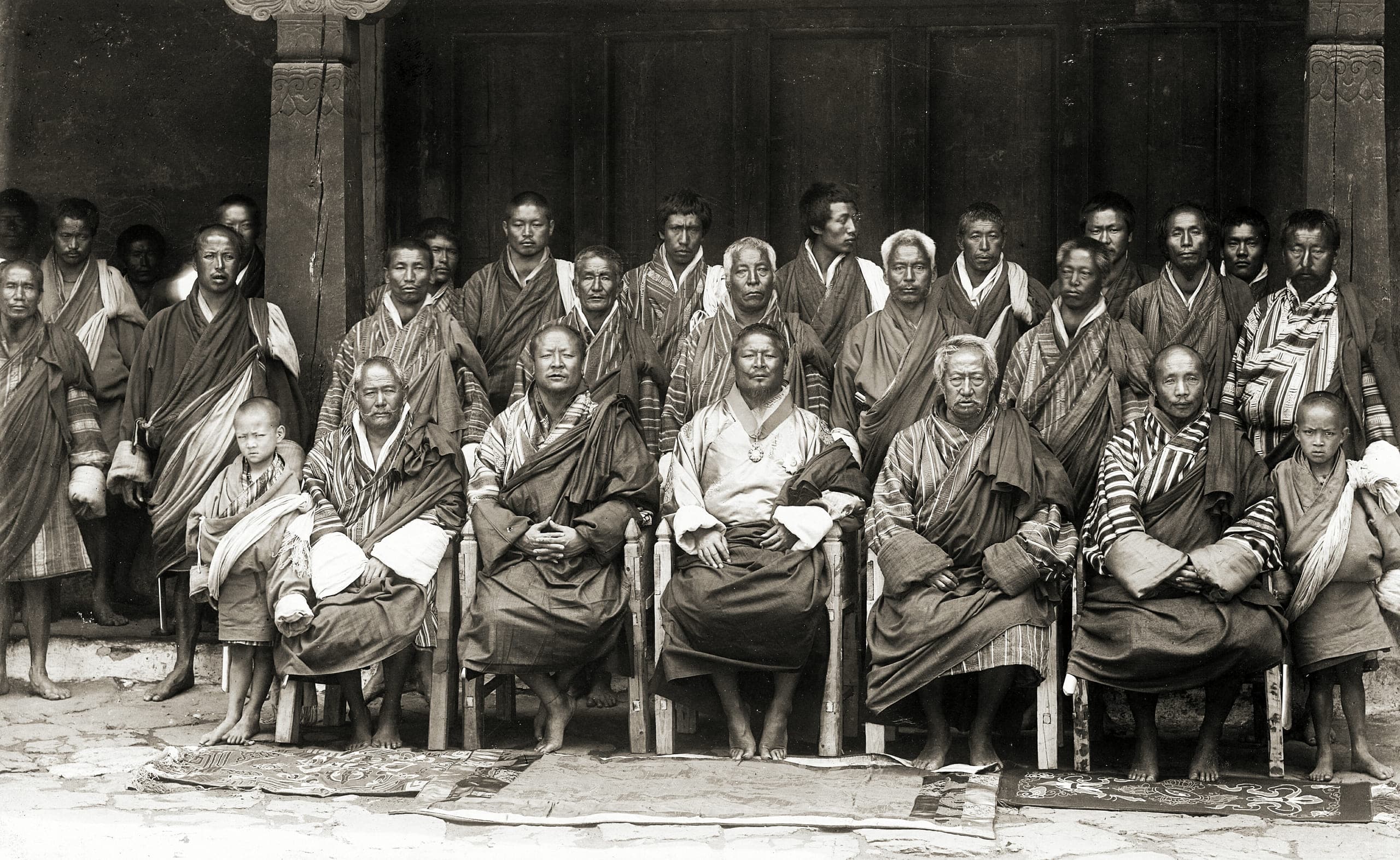
A Bhutanese royal figure
1862 to 1926
His Majesty Ugyen Wangchuck (1862-1926) was unanimously elected the First Druk Gyalpo of Bhutan on 17 December 1907 at Punakha Dzong by an assembly of senior monks, government officials, and dzongpens (governors) — establishing the hereditary monarchy that continues to the present and consolidating the Bhutanese state after a period of internal civil conflict. His Majesty had served as Trongsa Penlop (governor of Trongsa) before the coronation; the strategic position made the role the principal power-base of the country in the late 19th century.
His Majesty Ugyen Wangchuck was born in 1862 to the powerful Trongsa Penlop family. The 19th-century Bhutanese political tradition was characterised by intermittent civil conflict between rival factions — the Choesi institutional structure established by the Zhabdrung Ngawang Namgyal had weakened across the centuries, leaving political power contested between competing penlops. By the 1880s the Trongsa-versus-Paro rivalry was the principal conflict axis; His Majesty's father Jigme Namgyal had consolidated the Trongsa power-base. His Majesty Ugyen Wangchuck succeeded his father as Trongsa Penlop in 1881 and over the subsequent decades consolidated control across the country — through strategic alliances, decisive military action where necessary, and increasingly substantial diplomatic engagement with the British in India.
On 17 December 1907 at Punakha Dzong, an assembly of the Zhung Dratshang (the central monk body), senior government officials, and the dzongpens unanimously elected His Majesty Ugyen Wangchuck as the First Druk Gyalpo (Dragon King) of Bhutan — establishing the hereditary monarchy that continues to the present. The election was substantially the formalisation of His Majesty's existing position as the country's principal political authority; the coronation provided the institutional structure for the subsequent dynastic continuity. The date — 17 December — is now the Bhutanese National Day; the centenary in 2007 was a major state event marking the constitutional democracy transition.
His Majesty's reign as First Druk Gyalpo (1907-1926) established the institutional framework of the modern Bhutanese state. Principal achievements: the consolidation of national administration under hereditary monarchy (the Wangchuck-Trongsa connection became the canonical royal lineage); the diplomatic engagement with British India culminating in the 1910 Treaty of Punakha, which formalised Bhutan's status as a protected state with internal sovereignty; the educational and infrastructural initiatives that began the country's modernisation arc; the maintenance of the cultural and religious framework throughout. His Majesty died in 1926 and was succeeded by His Majesty the Second Druk Gyalpo Jigme Wangchuck, beginning the unbroken dynastic continuity of the Wangchuck monarchy.
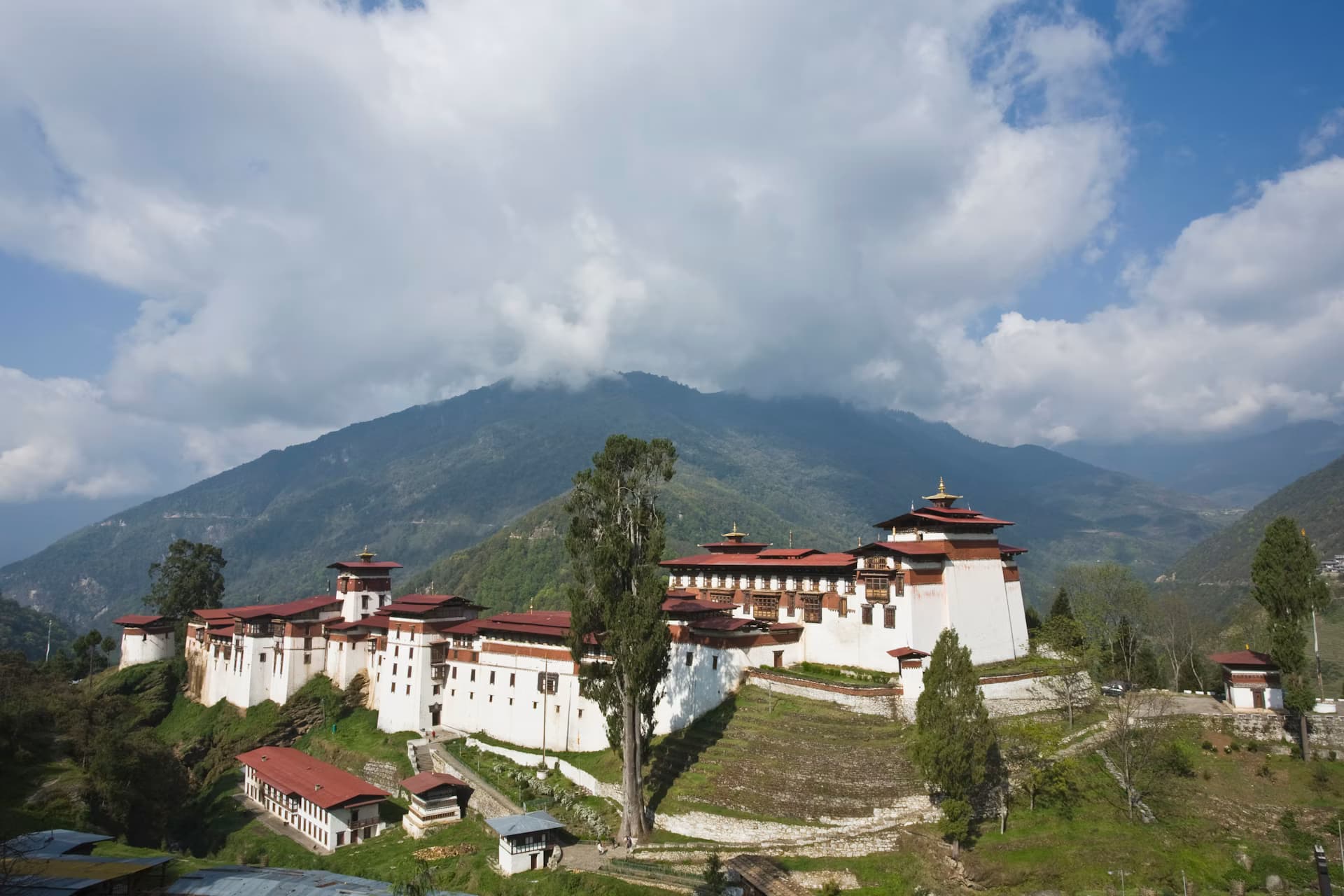
Throughout the country. The National Day on 17 December is the canonical contemporary celebration; the Royal Heritage Museum at Trongsa Ta Dzong traces the dynasty from His Majesty Ugyen Wangchuck forward; the principal royal portraits in every dzong, lodge, and government building include His Majesty as the founding monarch. For visitors with serious interest in Bhutanese history, the Trongsa connection is essential — the dzong itself was the power-base from which His Majesty Ugyen Wangchuck consolidated the country. The Wangduecholing Palace in Bumthang (the summer palace of His Majesty's son the Second King) carries the early-dynasty atmospheric register.
Also known as
Common questions
To end the 19th-century pattern of intermittent civil conflict between rival penlops. The Zhabdrung-era Choesi institutional structure had weakened; the country needed a single hereditary authority to consolidate national governance. His Majesty Ugyen Wangchuck had established de facto control across the country by 1907; the unanimous election by the assembly of senior monks, officials, and dzongpens formalised the new constitutional structure.
His Majesty served as Trongsa Penlop before the 1907 coronation. The position made the Trongsa power-base the principal political-authority centre of the country in the late 19th century. Every subsequent Druk Gyalpo has served as Trongsa Penlop before coronation, marking Trongsa as the ancestral seat of the dynasty.
Because His Majesty Ugyen Wangchuck was crowned the First Druk Gyalpo on 17 December 1907 at Punakha Dzong — the founding moment of the Wangchuck monarchy and the unified contemporary Bhutanese state. The annual National Day at Changlimithang Stadium in Thimphu commemorates the date.
Others in this story
Person
His Majesty Jigme Singye Wangchuck — the Fourth Druk Gyalpo of Bhutan. Articulated Gross National Happiness, opened Bhutan to tourism, voluntary abdication 2006.
Person
His Majesty Jigme Khesar Namgyel Wangchuck — the Fifth Druk Gyalpo, ascended 2006, crowned 2008. The current King of Bhutan. Married Her Majesty Jetsun Pema 2011.
What they built
Monument
Trongsa Dzong — the ancestral seat of the Wangchuck dynasty, the largest dzong in Bhutan. History, the Royal History Museum, visiting.
Monument
Punakha Dzong — the Palace of Great Happiness, founded 1638. The history, the architecture, what to expect on a visit.
Five questions. A bespoke draft back within a day or two.