
Preparing
LoadingPreparing
Loading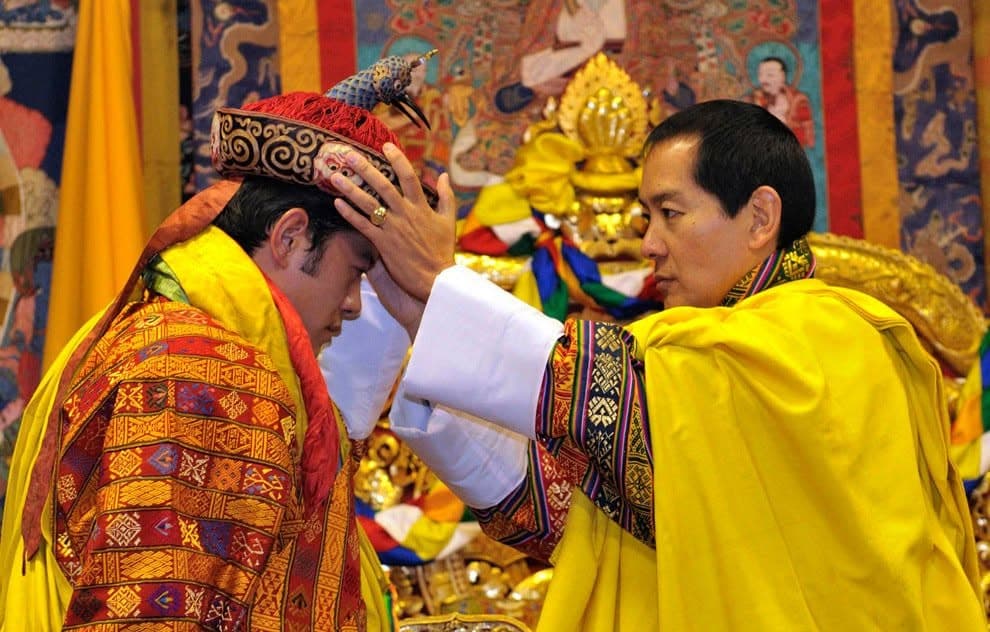
A Bhutanese royal event · Tashichho Dzong, Thimphu
On 6 November 2008 at Tashichho Dzong in Thimphu, His Majesty Jigme Khesar Namgyel Wangchuck was formally crowned the Fifth Druk Gyalpo of Bhutan — completing the multi-year dynastic transition that began with His Majesty the Fourth Druk Gyalpo's voluntary abdication in December 2006 and continued through the March 2008 first democratic elections and the July 2008 Constitution ratification. The coronation date was deliberately chosen to coincide with the centenary of the Wangchuck dynasty (the 17 December 1907 founding marking the start of the centennial year). international attendance and press coverage marked the principal Bhutanese state event of the year.
On 6 November 2008, His Majesty Jigme Khesar Namgyel Wangchuck was formally crowned the Fifth Druk Gyalpo of Bhutan in the principal coronation ceremony at Tashichho Dzong in Thimphu. The ceremony followed the traditional Bhutanese royal coronation protocol — the principal religious rituals presided over by His Holiness the Je Khenpo, the state-ceremonial elements including the principal traditional dress and regalia, the public-presentation tradition that followed the ceremony itself. The new Druk Gyalpo, born 21 February 1980, was 28 years old at the coronation — one of the youngest reigning monarchs in the world. The ceremony marked the completion of the multi-year dynastic transition: His Majesty the Fourth Druk Gyalpo's voluntary abdication on 14 December 2006, the March 2008 first democratic elections, the 18 July 2008 Constitution ratification, and now the 6 November 2008 formal coronation.
The 6 November 2008 coronation date was deliberately chosen to coincide with the centenary of the Wangchuck dynasty — the dynasty had been founded on 17 December 1907 when His Majesty Ugyen Wangchuck was unanimously elected the First Druk Gyalpo at Punakha Dzong. The centennial year (running from December 2007 to December 2008) provided the dynastic-narrative framework for the coronation; the principal centennial commemorations — including the opening of the Royal Heritage Museum at Trongsa Ta Dzong, the Thimphu commemorative events, the international visits — reinforced the broader dynastic-continuity. The coronation as the principal centennial moment combined the new-monarch tradition with the broader 100-year-dynasty. See the Wangchuck dynasty theme and the Royal Heritage Museum for the centennial context.
Notable international attendance marked the coronation as one of the principal contemporary South Asian royal events. Heads of state and senior government representatives from India (Vice-President Hamid Ansari), Bangladesh, Nepal, Thailand, Japan, and other countries attended; the international press coverage was substantial. Royal-family representatives — the international royal-family register including from Thailand, Japan, the United Kingdom, and the broader regional royal-family network. The substantial Bhutanese cultural register — the coronation was the principal national event with public celebrations across the country (multi-day national holiday, processions, the public-presentation tradition at Changlimithang Stadium following the coronation ceremony itself). The combined register made the coronation a principal moment of contemporary Bhutanese international visibility.
The Bhutan a visitor encounters is the country operating under His Majesty the Fifth Druk Gyalpo — the contemporary constitutional-monarchy framework, the royal-family tradition (His Majesty, Her Majesty Queen Jetsun Pema, the three royal children), the policy continuity that the new-monarch coronation institutionalised. The principal tshechus, the dzong-administration framework, the Bhutanese state institutions all operate under the Fifth Druk Gyalpo's reign. Tashichho Dzong (the coronation venue) is open to visitors during standard hours; the matched guide can point out the specific courtyards where the principal ceremony elements occurred. The royal portraits — the formal coronation portraits and the subsequent royal-family portraits including Her Majesty Queen Jetsun Pema and the three royal children are visible throughout the country.
Common questions
The substantial Bhutanese tradition required the principal religious-and-astrological consultation to determine the auspicious coronation date; the 6 November 2008 date was determined through this consultation alongside the centenary-timing consideration (the 100-year anniversary of the dynasty's founding running through 2008). Between the December 2006 abdication and the November 2008 coronation, His Majesty the Fifth Druk Gyalpo operated as the reigning monarch with full constitutional authority; the formal coronation was the religious-ceremonial confirmation rather than the constitutional accession itself.
Substantially. The reign continues the dynastic narrative across five generations: His Majesty Ugyen Wangchuck (the founder, 1907-1926), His Majesty Jigme Wangchuck (the consolidator, 1926-1952), His Majesty Jigme Dorji Wangchuck (the modernising king, 1952-1972), His Majesty Jigme Singye Wangchuck (the GNH king, 1972-2006), and His Majesty Jigme Khesar Namgyel Wangchuck (the contemporary constitutional-monarchy era, 2006/2008-present). The Fifth Druk Gyalpo's reign has continued the deliberate-institutional-evolution tradition that the dynasty has operated within across its first century.
Yes. Tashichho Dzong is open to visitors during the standard hours (typically late afternoon outside the working day, accommodating the Royal Government administrative function that the dzong houses). The matched guide arranges the visit and can point out the principal coronation-ceremony venues. The dzong is one of the principal contemporary Bhutanese institutional sites and is essential viewing for visitors with serious interest in the contemporary.
Who was there
Person
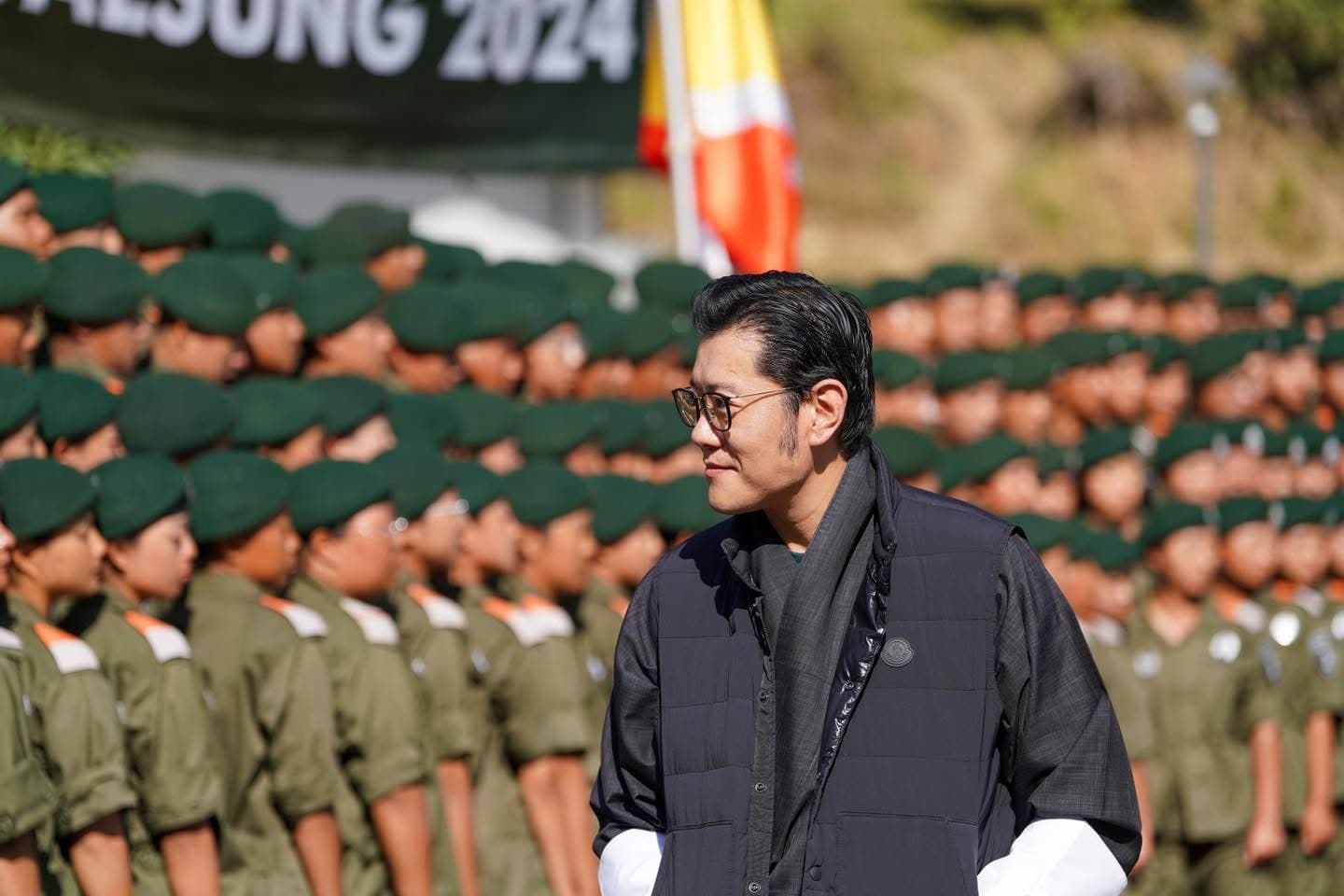
His Majesty Jigme Khesar Namgyel Wangchuck — the Fifth Druk Gyalpo, ascended 2006, crowned 2008. The current King of Bhutan. Married Her Majesty Jetsun Pema 2011.
Person
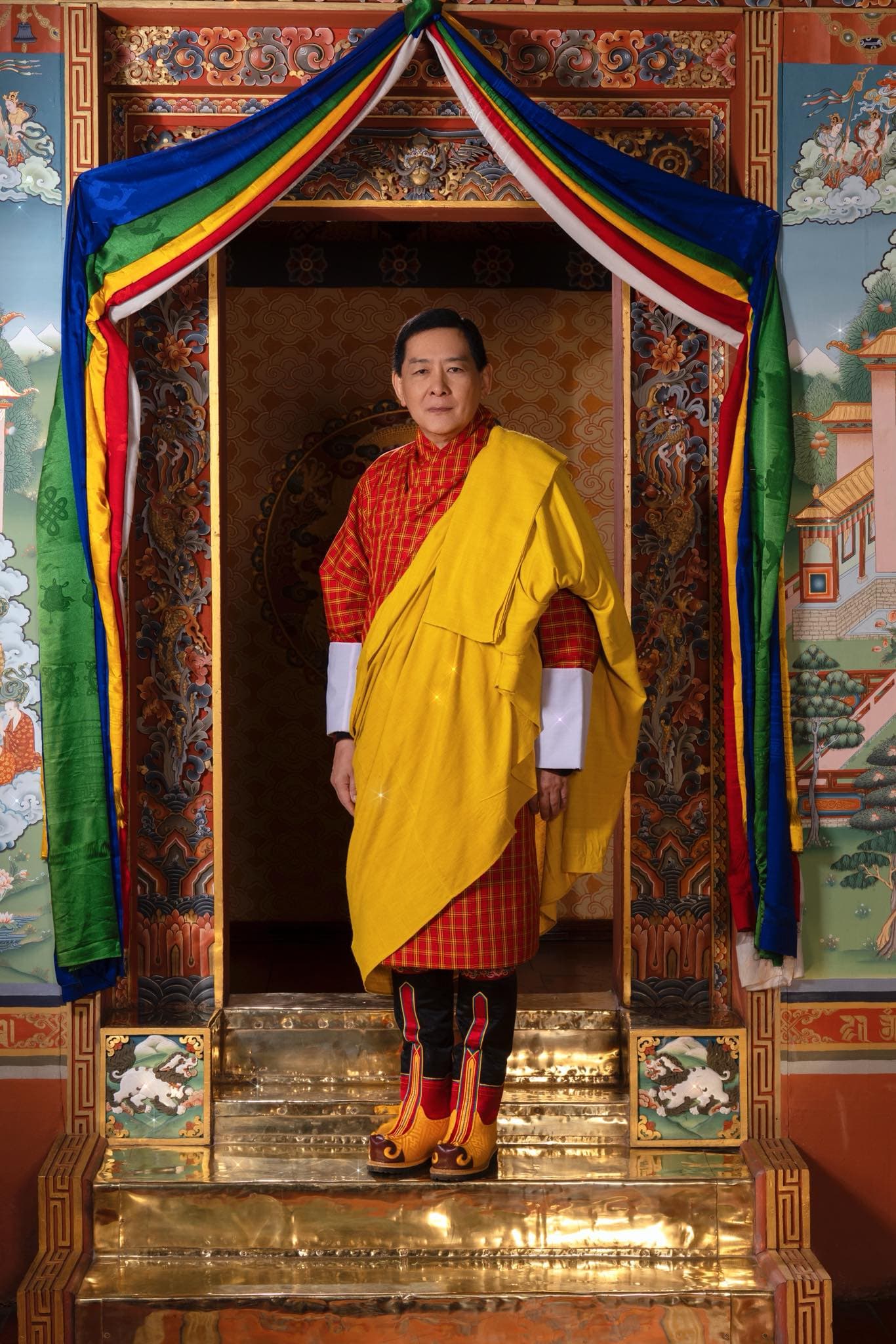
His Majesty Jigme Singye Wangchuck — the Fourth Druk Gyalpo of Bhutan. Articulated Gross National Happiness, opened Bhutan to tourism, voluntary abdication 2006.
Person
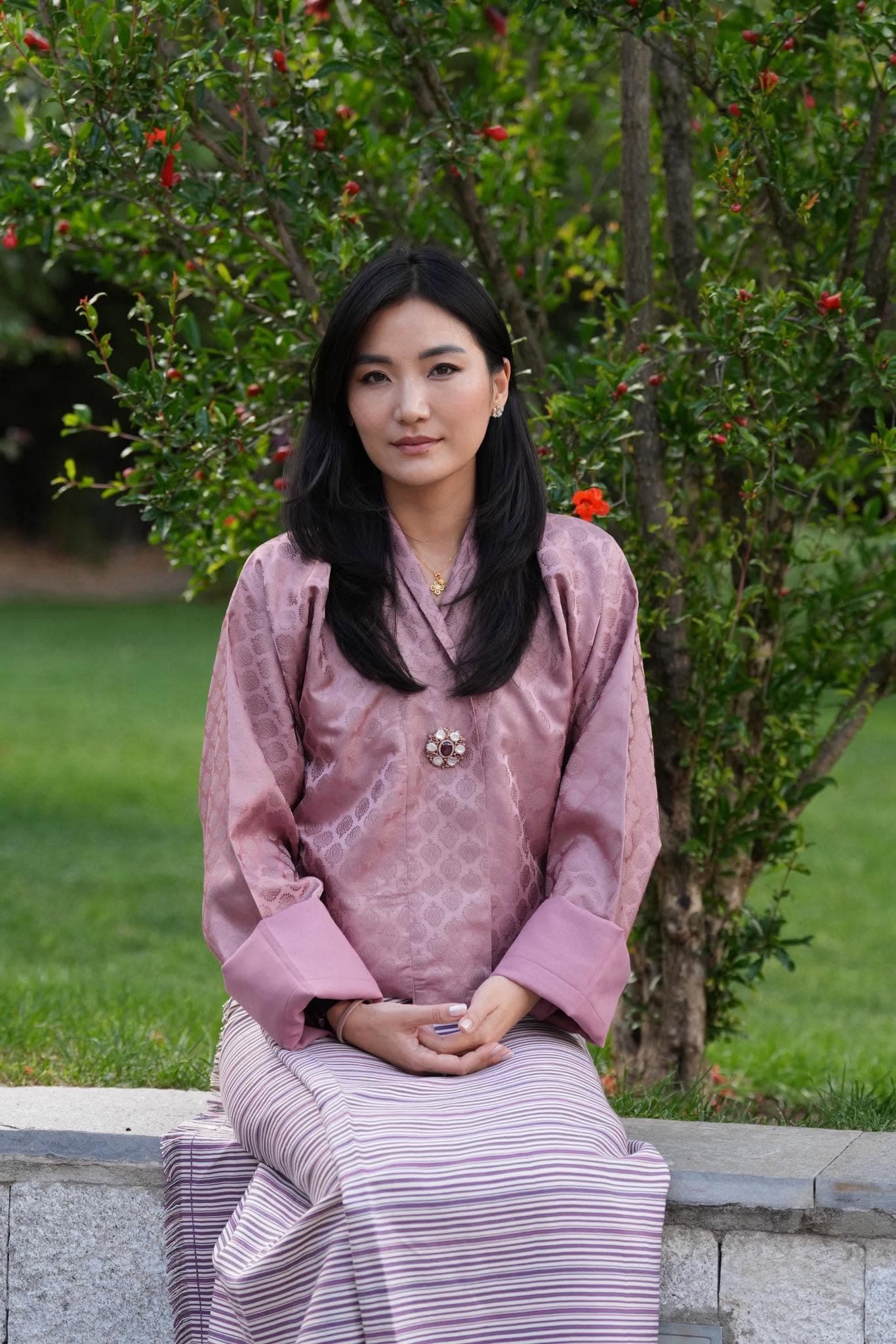
Her Majesty Queen Jetsun Pema Wangchuck — the contemporary Bhutanese Queen. Married to His Majesty the Fifth Druk Gyalpo 2011. UNICEF Goodwill Ambassador. Three royal children.
Where it stands now
Monument
Tashichho Dzong — the seat of Bhutan's central government and Je Khenpo summer residence in Thimphu. History, architecture, visiting.
Monument
Punakha Dzong — the Palace of Great Happiness, founded 1638. The history, the architecture, what to expect on a visit.
What followed
Event
The Voluntary Abdication of His Majesty the Fourth Druk Gyalpo — 14 December 2006. The internationally unprecedented royal handover enabling the 2008 democracy.
Event
Bhutan's Constitutional Democracy Transition — 2008. Constitution ratified, first democratic elections, the move from absolute to constitutional monarchy.
Event
The Royal Wedding of Their Majesties at Punakha Dzong — 13 October 2011. The Fifth Druk Gyalpo and Her Majesty Jetsun Pema. Three Bhutanese royal children since.
The wider idea
Theme
The Wangchuck dynasty — the hereditary monarchy of Bhutan since 17 December 1907. Five reigning monarchs across five generations. The contemporary state's institutional spine.
Theme
Bhutanese democracy — the constitutional monarchy, the 2008 transition, the National Assembly, the political party landscape. A distinctive Asian democracy.
Journeys that touch this
Journey
The signature-tier Bhutan journey. Private knowledgeable guide, the most considered lodges, helicopter or PC-24 charter, exclusive-use arrangements. By invitation, from USD 14,000.
Journey
A private seven-night Bhutan honeymoon for couples flying from Singapore. Bhutanese lodges, a matched guide, transparent all-inclusive pricing.
Five questions. A bespoke draft back within a day or two.