Preparing
LoadingPreparing
Loading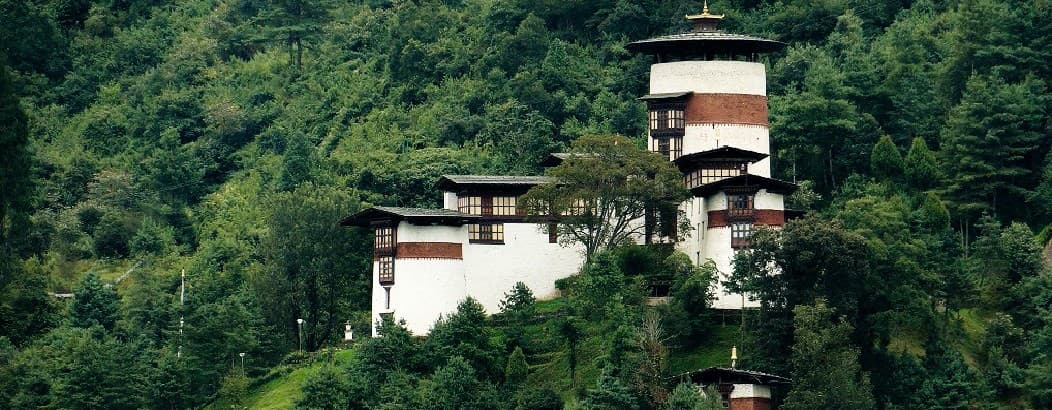
A Bhutanese national museum
The Royal Heritage Museum is housed in the Trongsa Ta Dzong — the watchtower built in the 17th century above Trongsa Dzong, now restored as the principal Bhutanese royal-history museum. Opened in 2008 to mark the centenary of the Wangchuck dynasty, the museum traces the dynasty from its 1907 founding through the contemporary period across five floors of curated exhibits. The royal-family artefacts, the personal effects of the principal Druk Gyalpos, and the contextual exhibits make this the essential visit for visitors with serious interest in the dynastic narrative.
Also known as
The Trongsa Ta Dzong was built in the 17th century as the watchtower for Trongsa Dzong below — the principal defensive observation post for the Trongsa Penlop's authority across the central Bhutanese region. The Ta Dzong fell into disuse across the 20th century as the watchtower function lost relevance; the restoration programme launched in the late 1990s under the patronage of His Majesty the Fourth Druk Gyalpo restored the structure and adapted it as the principal Bhutanese royal-history museum. The restoration combined traditional Bhutanese building techniques with museum-grade climate control and exhibit infrastructure; the result is one of the more significant heritage-restoration-and-adaptive-reuse projects in contemporary Bhutan.
The museum traces the Wangchuck dynasty narrative across five floors. The first floor — the dynastic context, the 19th-century background, the Trongsa Penlop institution, the 1907 founding-monarchy. The second floor — His Majesty the First Druk Gyalpo Ugyen Wangchuck (reigned 1907-1926), the dynasty founder, the personal-effects-and-state-papers. The third floor — His Majesty the Second Druk Gyalpo Jigme Wangchuck (reigned 1926-1952) and His Majesty the Third Druk Gyalpo Jigme Dorji Wangchuck (reigned 1952-1972), the institutional-consolidation-and-modernisation registers. The fourth floor — His Majesty the Fourth Druk Gyalpo Jigme Singye Wangchuck (reigned 1972-2006), the GNH-and-democracy-transition registers. The fifth floor — His Majesty the Fifth Druk Gyalpo Jigme Khesar Namgyel Wangchuck (reigning since 2006), the contemporary monarchy and the royal-family tradition including Her Majesty Queen Jetsun Pema and the three royal children. The chronological progression provides the dynastic narrative arc; visitors with substantial interest in the dynastic find the museum essential.
The museum's principal exhibits include royal-family artefacts not available at any other Bhutanese institution: personal effects of the principal Druk Gyalpos (His Majesty Ugyen Wangchuck's ceremonial sword, His Majesty Jigme Singye Wangchuck's GNH-era state papers, the royal-family photography across all five reigns); state-ceremonial regalia (royal kabneys, ceremonial dress, religious vestments); photographic-and-document archive (founding-era photography, state-paper records, the 20th-century photographic record); religious-artefact register (the principal lineage-and-religious imagery associated with the Wangchuck dynastic religious patronage). The matched guide briefs visitors on the exhibit; allowing 90-120 minutes for the museum visit is the appropriate.
Visiting
Common questions
Journeys featuring this site
Journey
The signature-tier Bhutan journey. Private knowledgeable guide, the most considered lodges, helicopter or PC-24 charter, exclusive-use arrangements. By invitation, from USD 14,000.
Journey
A fourteen-night Bhutan east-to-west circuit exiting via Samdrup Jongkhar and Guwahati. The full eastern dzongkhags, the quieter half of the country.
Journey
A seven-night Bhutan photography journey in October — Bhutan, golden-hour access at Punakha Dzong, a tripod-friendly guide, and transparent pricing.
Five questions. A bespoke draft back within a day or two.