Preparing
LoadingPreparing
Loading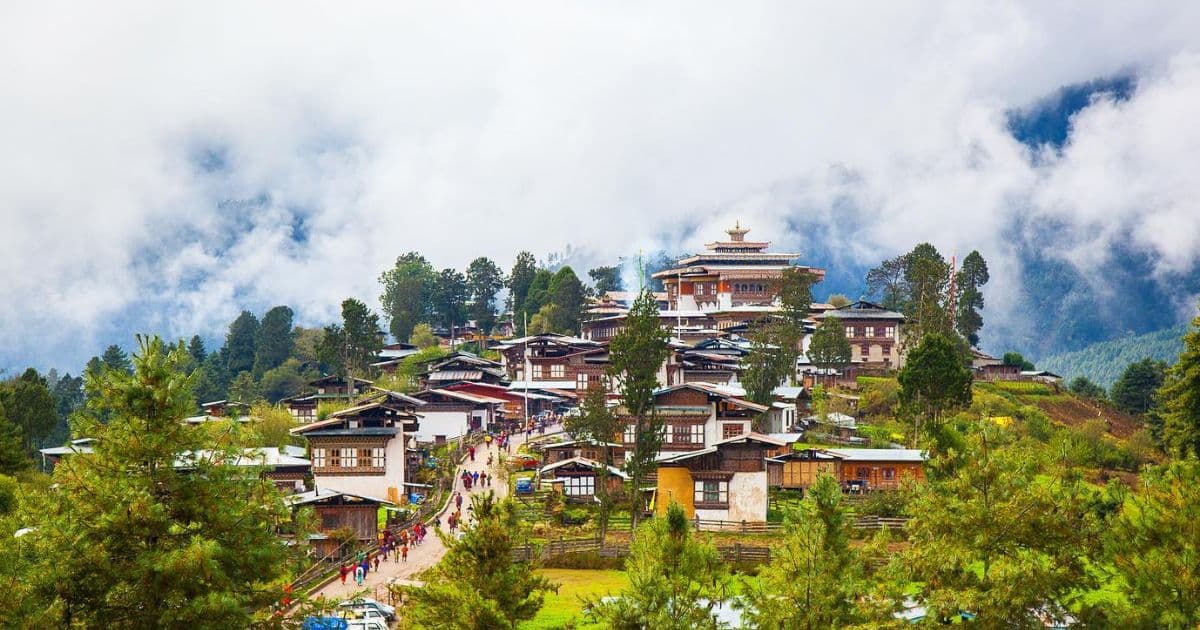
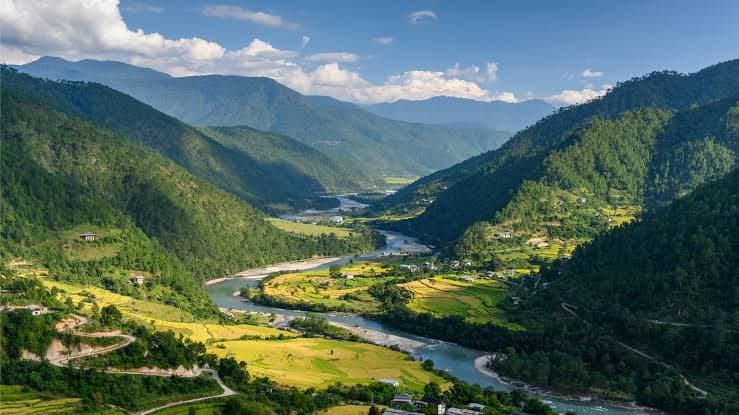
A Bhutanese valley
Phobjikha is a broad U-shaped glacial valley in the central Black Mountains at approximately 2,900 metres — one of the principal protected valleys in Bhutan and the wintering ground for several hundred black-necked cranes that arrive from the Tibetan plateau each late October. The valley is famously quiet: no overhead electric lines (buried underground to protect the crane flight paths), a small farming population, the high-altitude clarity, and a stillness that has no equivalent in the broader Himalayan region.
valley · Wangdue Phodrang · 2,900 m
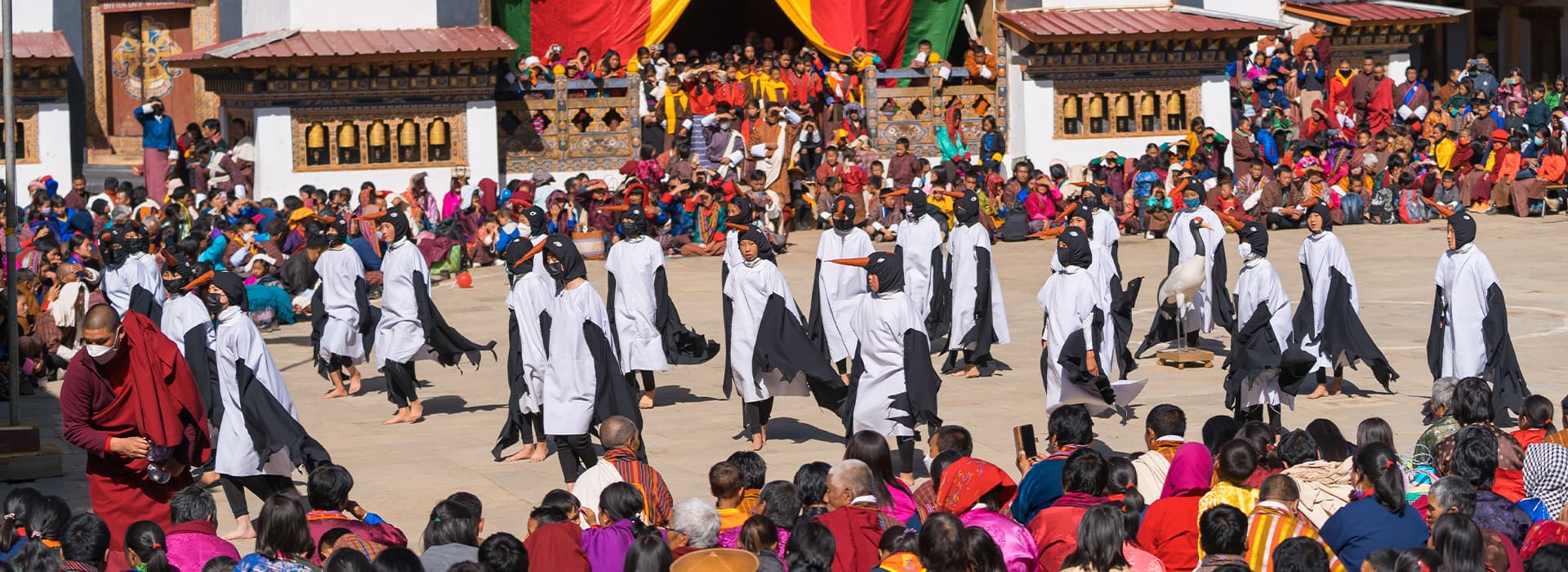
Phobjikha is the principal wintering site in Bhutan for the black-necked crane (Grus nigricollis), a globally vulnerable species. Approximately 300-500 cranes arrive in the valley each late October from their Tibetan breeding grounds, remain through the winter (when the Tibetan plateau is frozen), and depart in mid-February. The cranes feed in the wetland meadows on the valley floor; the dawn and dusk flight calls are among the most-remarked features of the visitor experience. The Royal Society for the Protection of Nature (RSPN) operates an information centre with viewing scopes on the valley floor; the centre is the principal access point for crane viewing. The Crane Festival on 11 November at Gangtey Monastery marks the arrival; see crane-festival.
Phobjikha is famously the quietest of the principal Bhutanese valleys. Several factors combine: the absence of overhead electric lines (buried underground in the valley floor to protect crane flight paths — the only valley in Bhutan with this); the small population (approximately 6,000 across the valley, mostly potato-farming subsistence-level); the high altitude (2,900m, above most road traffic); the protected status (within the Jigme Singye Wangchuck National Park buffer). The silence is not occasional but structural. Most visitors stay 1-2 nights and remark on the absence of mechanical noise as the principal experience.
Gangtey Monastery sits on the ridge at the southern end of the valley — the principal Nyingma Buddhist monastery of western Bhutan, founded in 1613 by the grandson of Pema Lingpa. The monastery houses approximately 200 monks and is one of the principal pilgrimage destinations of the Nyingma tradition. The village of Gangtey clusters around the monastery on the same ridge; from the monastery the view across the valley to the eastern ridge (where the premium lodges sit) is one of the principal images of central Bhutan. The Nature Trail walks the valley floor at 2-hour gentle pace; the matched guide leads through the wetland meadows.
The principal window is late October through mid-February — the crane season. Within that, the 11 November Crane Festival is the peak weekend; the post-festival period through January is quieter and arguably more rewarding for visitors prioritising silence. Outside the crane season (March-September), the valley is still spectacular for the geography and the monastery but without the cranes. Winter conditions can be cold (sub-zero at night common); the principal lodges (Amankora Gangtey, Six Senses Gangtey, Gangtey Lodge) are well-heated.
Visiting
Common questions
Journeys that visit Phobjikha
Seven nights, signature tier, no screens, the Phobjikha silence
A signature-tier seven-night Bhutan journey for founders. The Phobjikha silence, no-screens discipline, matched knowledgeable guide, the considered reset.
7 nights · from USD 32,000
A serious birding week
An eight-night Bhutan birding journey targeting the principal endemics — black-necked cranes at Phobjikha, white-bellied heron, hornbills, the beautiful nuthatch.
8 nights · from USD 14,000
A festival in late autumn
An eight-night Bhutan journey timed to the Black-Necked Crane Festival at Gangtey on 11 November — Paro, Thimphu, Punakha, and the Phobjikha valley, with a culturally fluent guide and Bhutanese lodges.
8 nights · from USD 8,000
When the valley gathers
Festival
Black-Necked Crane Festival — 11 November at Gangtey Goemba, Phobjikha. The cranes' return, the children's dances, the conservation register.
Festival
Gangtey Tshechu — three days at Gangtey Goemba in the Phobjikha valley. Dates, programme, what to expect as a visitor.
Where to go next
Place
Punakha — Bhutan's warm valley at 1,200m, the historical winter capital, the dzong at the river confluence, Chimi Lhakhang (the Drukpa Kunley temple).
Place
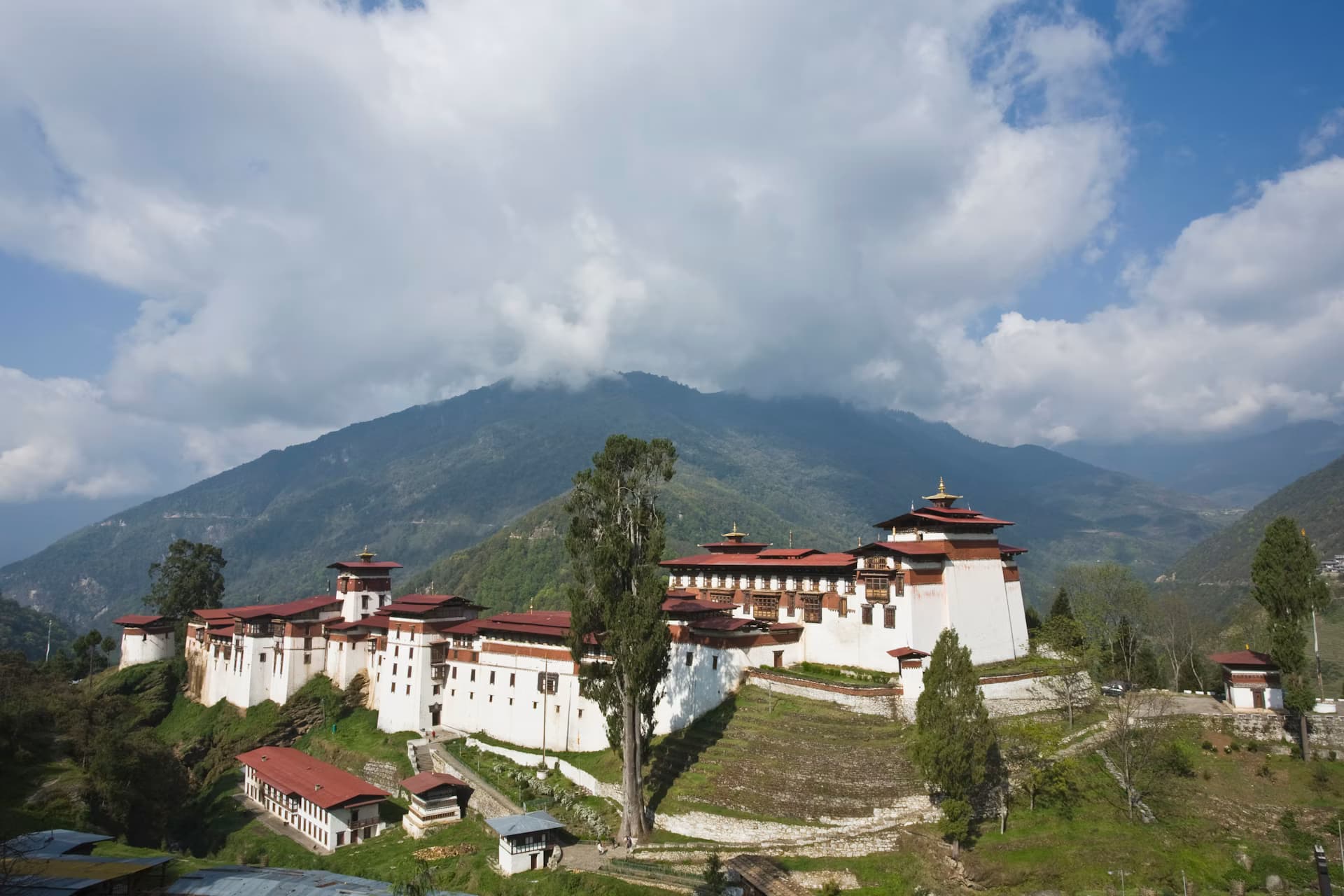
Trongsa — the ancestral seat of the Wangchuck royal dynasty. The longest dzong in Bhutan above the Mangde Chhu gorge; the Ta Dzong museum.
Journeys through here
Journey
A signature-tier seven-night Bhutan journey for founders. The Phobjikha silence, no-screens discipline, matched knowledgeable guide, the considered reset.
Journey
An eight-night Bhutan birding journey targeting the principal endemics — black-necked cranes at Phobjikha, white-bellied heron, hornbills, the beautiful nuthatch.
Journey
A six-night winter journey through Bhutan in January — clearest Himalayan visibility, Punakha's warm valley, fewer travellers, and lodges by the fire.
Five questions. A bespoke draft back within a day or two.