Preparing
LoadingPreparing
Loading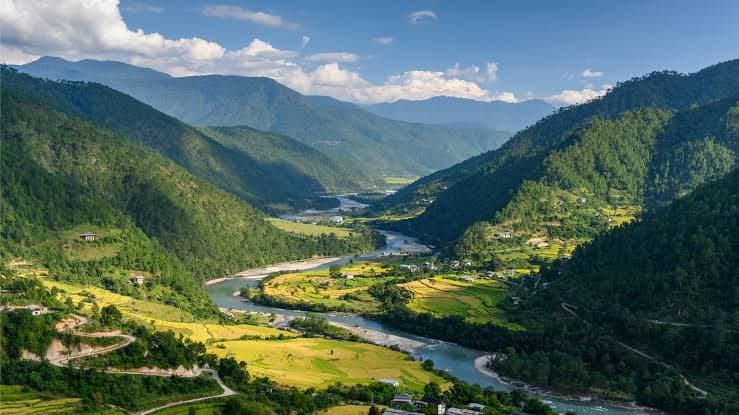
A Bhutanese valley
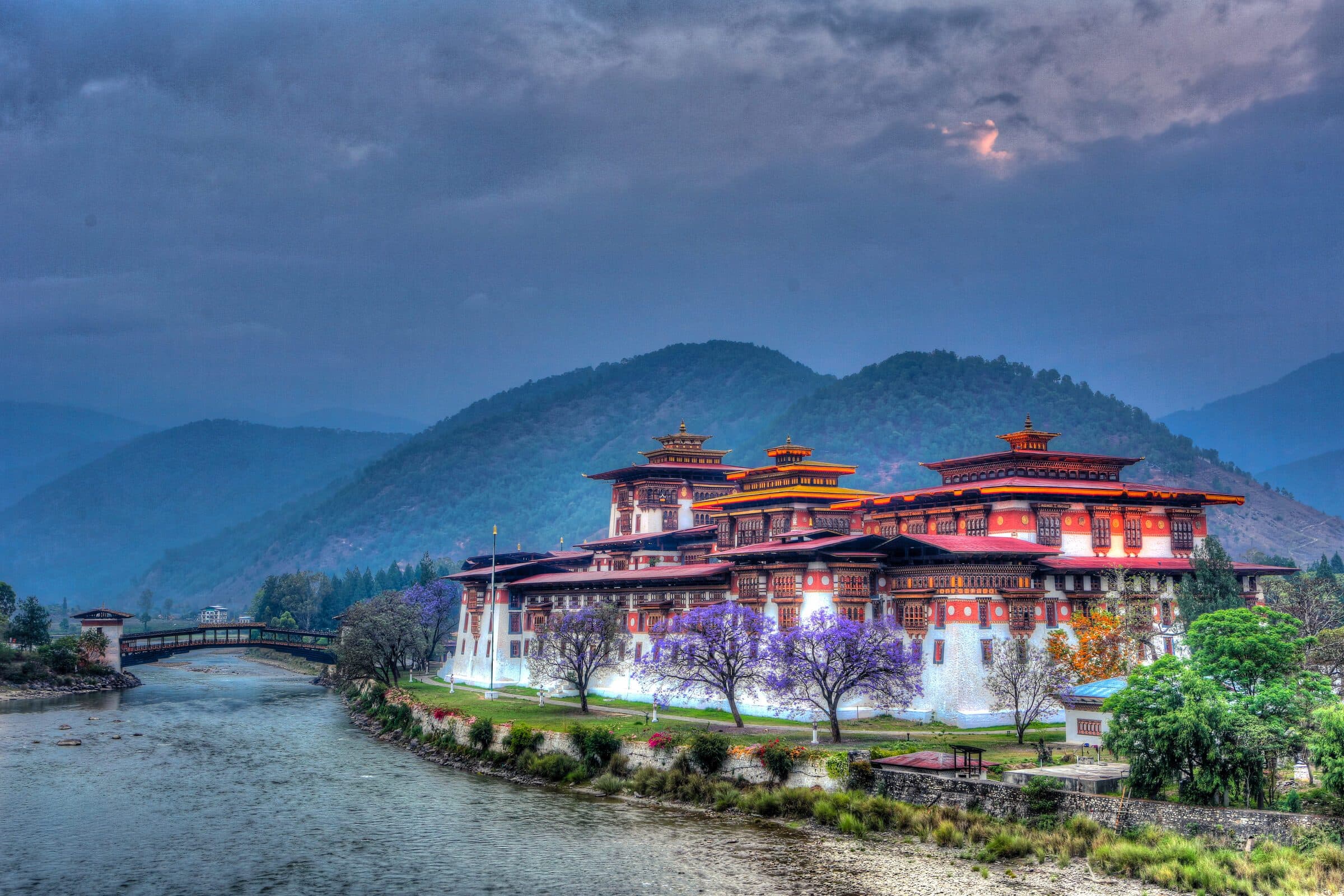
Punakha is Bhutan's historical winter capital — the seat of the Royal Government and the Zhung Dratshang during the cold months from the 17th century until 1955, and the warmest of the major Bhutanese valleys at approximately 1,200 metres. The Punakha Dzong, at the confluence of the Mo Chhu and Pho Chhu rivers, is widely considered the country's most beautiful dzong. The jacaranda flowering in spring and the mild winter climate give the valley a distinct atmospheric register.
dzongkhag · Punakha · 1,200 m
Punakha sits at approximately 1,200 metres — about 1,000 metres lower than Paro or Thimphu — and the climate is correspondingly warmer. Winter days are sunny and mild (typically 15-22°C even in January); summer is hot and humid. This climatic difference is the historical reason the Royal Government and the Zhung Dratshang relocated to Punakha for the winter months from the 17th century until 1955, when the modern capital was established at Thimphu. The Zhung Dratshang continues the seasonal pattern today — summer at Tashichho Dzong (Thimphu), winter at Punakha Dzong. The valley tradition is agricultural — rice paddies on the floor, the principal red-rice-and-fruit-tree zone of the country.
Punakha Dzong sits at the confluence of the Mo Chhu (the 'mother river', female) and the Pho Chhu (the 'father river', male) — the dzong on the spit of land between the two rivers, the spit accessible by suspension bridge. Founded by Zhabdrung Ngawang Namgyal in 1637 as the principal administrative seat of the unified Bhutanese state. The principal religious-and-administrative dzong of the country until 1955; remains the winter seat of the Zhung Dratshang. The largest collection of Bhutanese religious texts and the Machhen Lhakhang containing the Zhabdrung's preserved body are inside. Widely considered the country's most beautiful dzong, particularly in the late-afternoon light when the white facade catches the western sun.
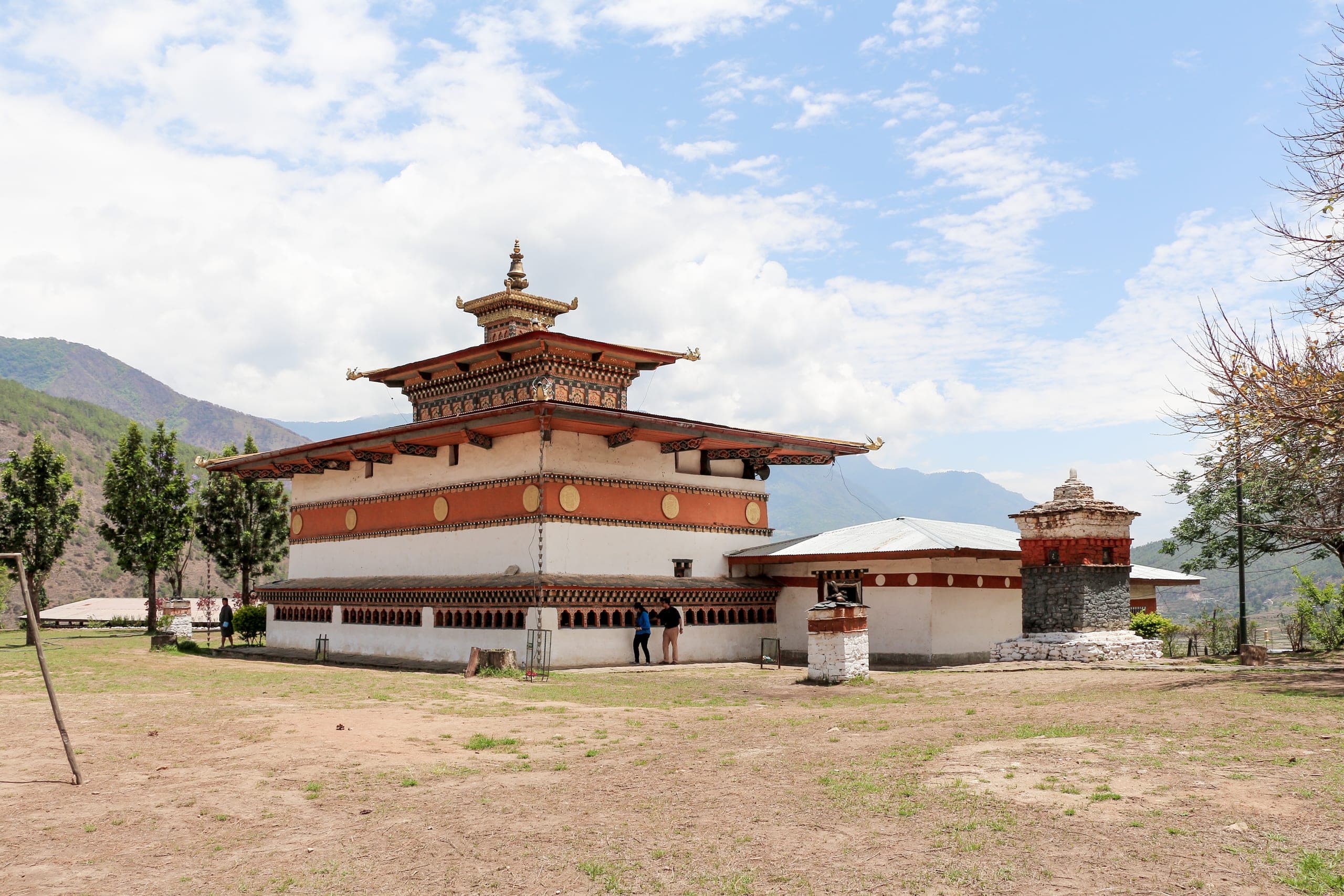
Chimi Lhakhang — the Drukpa Kunley temple, a fertility-blessing pilgrimage site reached by a 15-minute walk through rice paddies; the 'Divine Madman' tradition is one of the more distinctively Bhutanese religious registers. Khamsum Yulley Namgyal Chorten — the four-storey hilltop chorten in the upper valley, a 1.5-hour walk up from the parking area, with views back across the valley. The Mo Chhu river itself — kayaking and rafting at gentle beginner-friendly grades; fly-fishing for brown trout (introduced 20th century). The suspension bridge across the Pho Chhu — at 160 metres, one of the longest in Bhutan; worth the crossing for the river view.
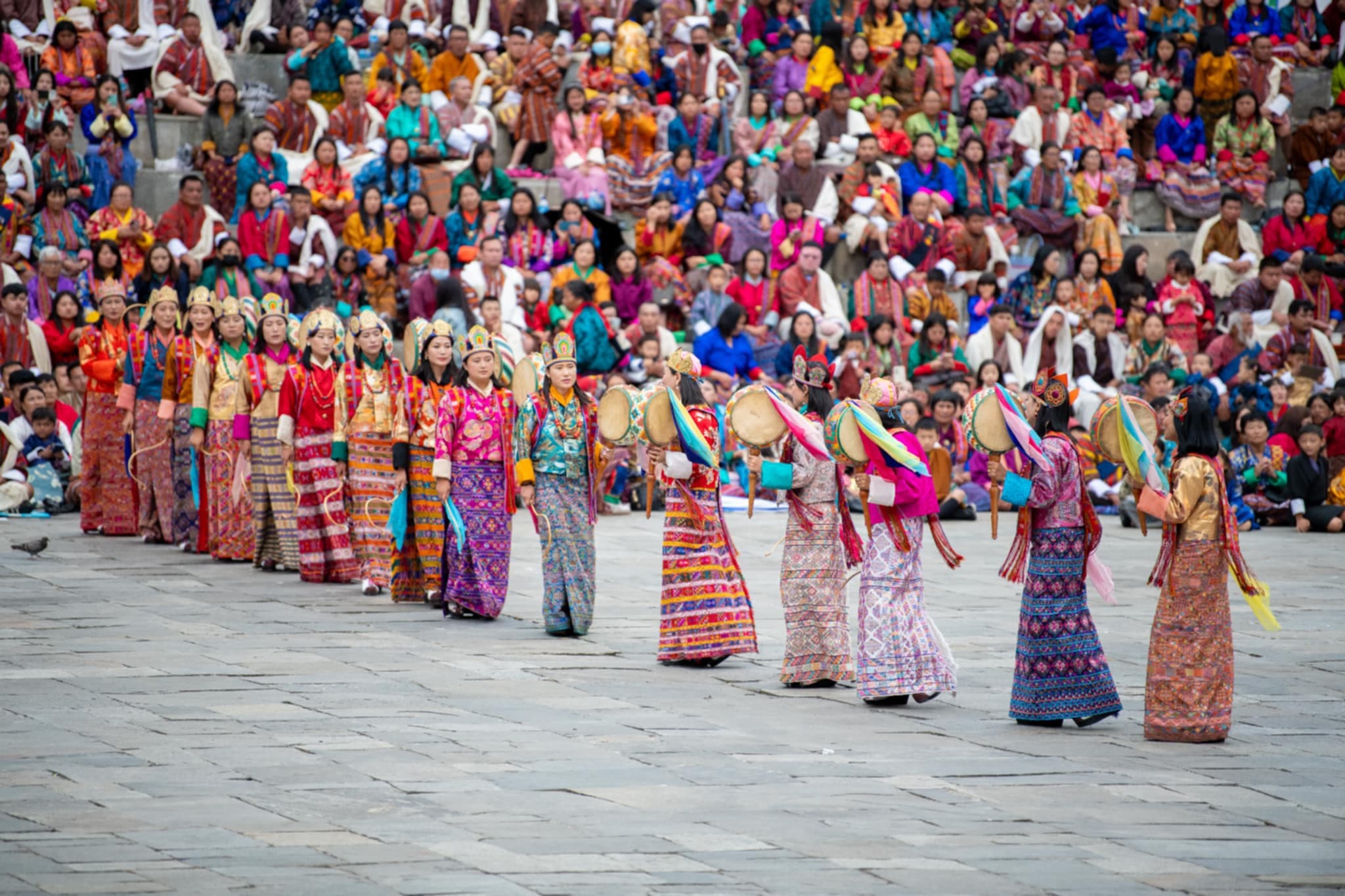
The annual Punakha Drubchen and Tshechu (February-March) is historically the most significant Bhutanese festival — the Drubchen reenacts the 17th-century repulsion of the Tibetan invasion, the only Bhutanese festival to include the warrior-victory cham dances. Held over six days at Punakha Dzong. The combination of warm-valley climate, river-confluence setting, and the most historically-significant festival makes Punakha a strong winter destination.
Visiting
Common questions
Journeys that visit Punakha
A Singapore Chinese New Year trip
Bhutan from Singapore for Chinese New Year — the Punakha Drubchen window, six nights, the considered alternative to the Paro and Thimphu peaks.
6 nights · from USD 5,200
By invitation, from USD 14,000 per traveller
The signature-tier Bhutan journey. Private knowledgeable guide, the most considered lodges, helicopter or PC-24 charter, exclusive-use arrangements. By invitation, from USD 14,000.
8 nights · from USD 22,000
From Delhi, Mumbai, Bangalore, Chennai, Hyderabad, Kolkata
A multigenerational Bhutan journey for Indian HNI families. Indian-national SDF rate, daily Drukair from DEL/CCU/BOM, Indian-fluent guide, signature-tier lodges.
8 nights · from USD 14,000
What to see here
Monument
Punakha Dzong — the Palace of Great Happiness, founded 1638. The history, the architecture, what to expect on a visit.
Monument
Chimi Lhakhang — Drukpa Kunley's 'Divine Madman' fertility temple in Punakha. History, the iconography, visiting protocol.
Monument
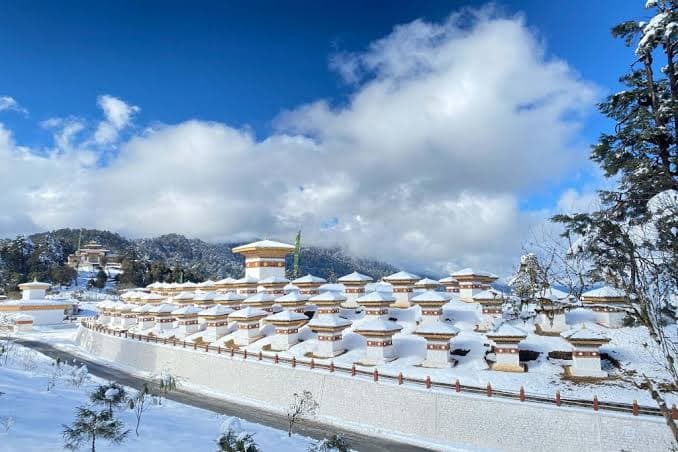
Dochu La — the 108-chorten pass at 3,100 metres between Thimphu and Punakha. The Druk Wangyel Chortens and the Himalayan panorama.
Where to go next
Place
Thimphu — the capital of Bhutan. Tashichho Dzong, Buddha Dordenma, the National Memorial Chorten, the Centenary Farmers' Market, the Folk Heritage Museum.
Place
Phobjikha valley — the glacial U-valley in central Black Mountains, wintering black-necked cranes (late Oct-mid Feb), Gangtey Monastery, the Nature Trail.
Journeys through here
Journey
A six-night winter journey through Bhutan in January — clearest Himalayan visibility, Punakha's warm valley, fewer travellers, and lodges by the fire.
Journey
A private seven-night Bhutan honeymoon for couples flying from Singapore. Bhutanese lodges, a matched guide, transparent all-inclusive pricing.
Journey
The signature-tier Bhutan journey. Private knowledgeable guide, the most considered lodges, helicopter or PC-24 charter, exclusive-use arrangements. By invitation, from USD 14,000.
Five questions. A bespoke draft back within a day or two.