- When exactly is the Black-Necked Crane Festival?
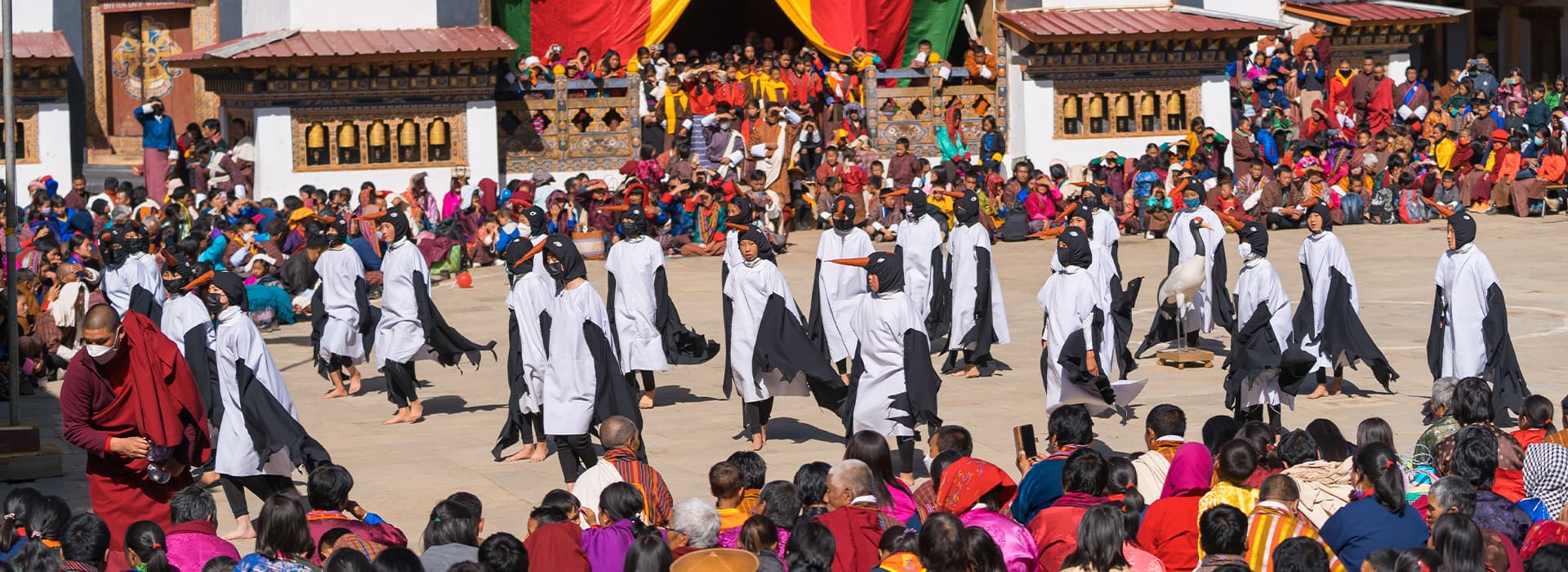
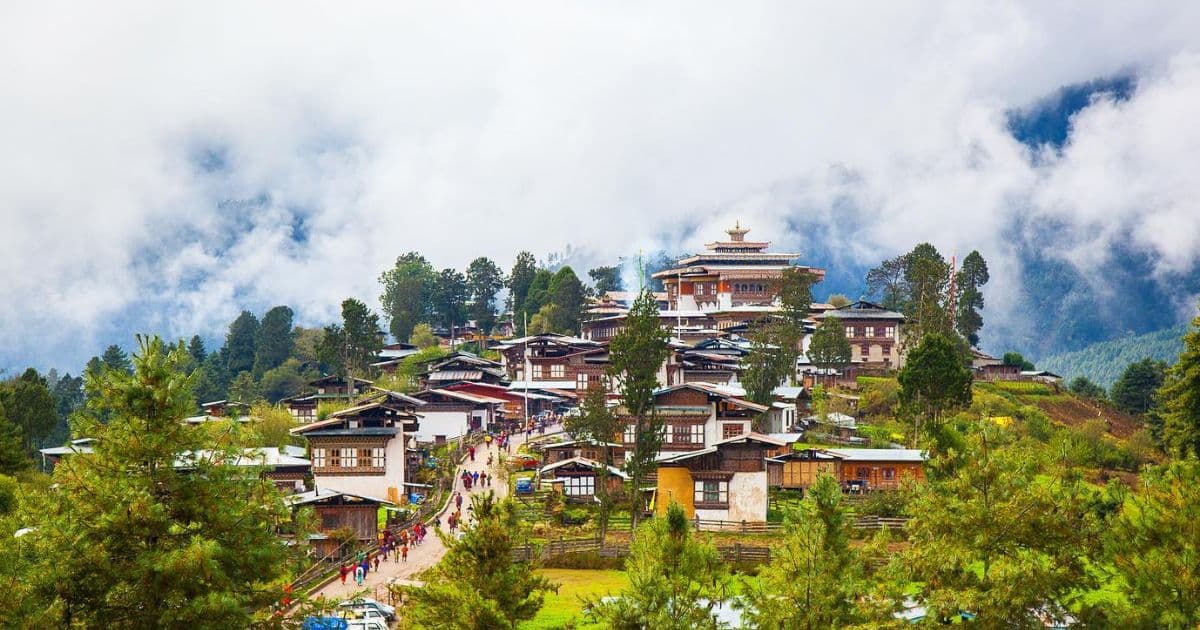
- On 11 November each year, in the courtyard of Gangtey Goempa in the Phobjikha valley. It is a single day — folk and masked dances, a crane dance by local schoolchildren, and a conservation focus run with the Royal Society for the Protection of Nature. The journey is built around that day, with the western circuit on either side.
- When are the cranes actually in the valley?
- The black-necked cranes arrive in Phobjikha from late October and stay until the middle of February, having flown down from the Tibetan plateau for the winter. The eleventh of November falls early in that window, once the birds have settled — so the festival and the cranes coincide, and you see them on the marsh as well as honoured in the courtyard.
- How close can we get to the cranes?
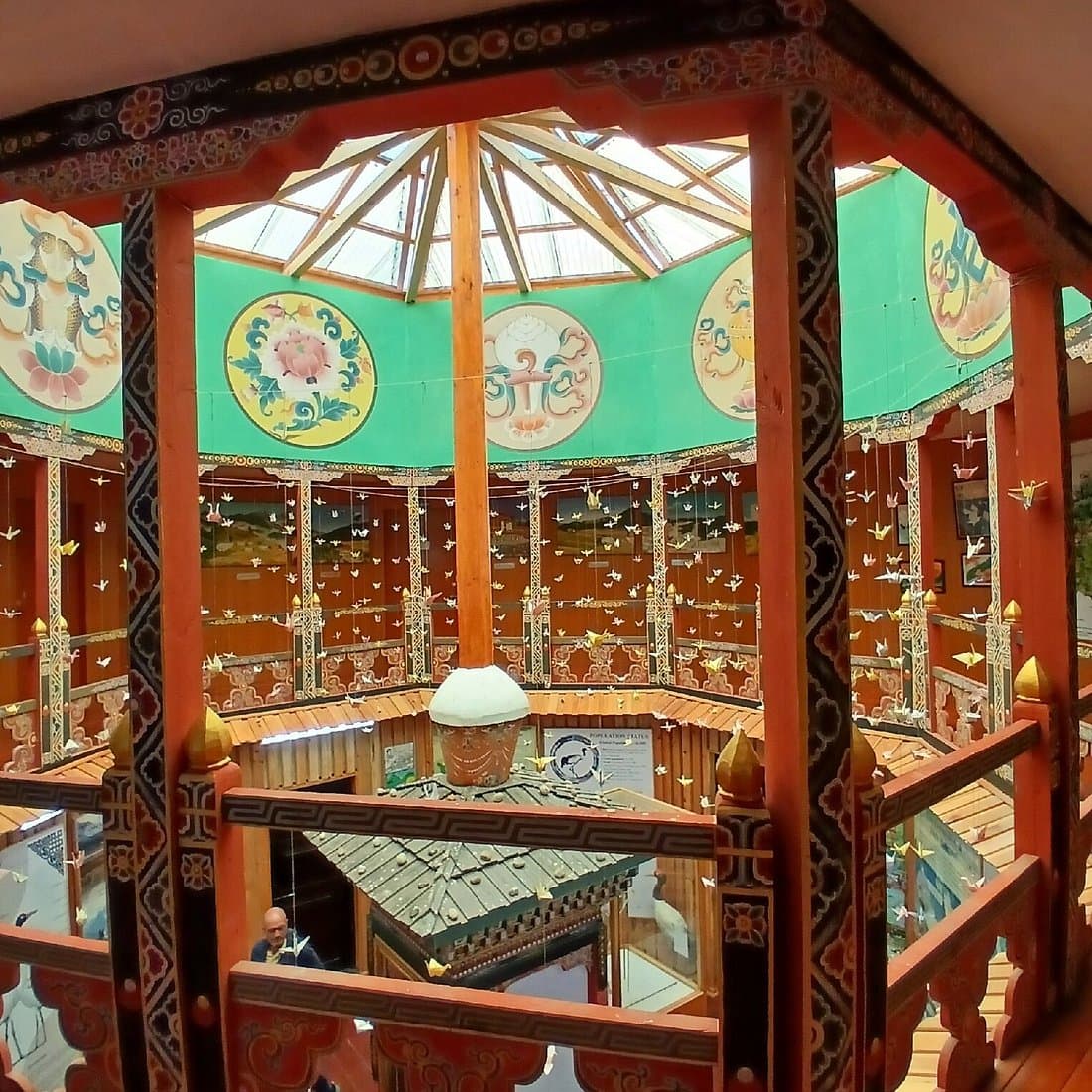
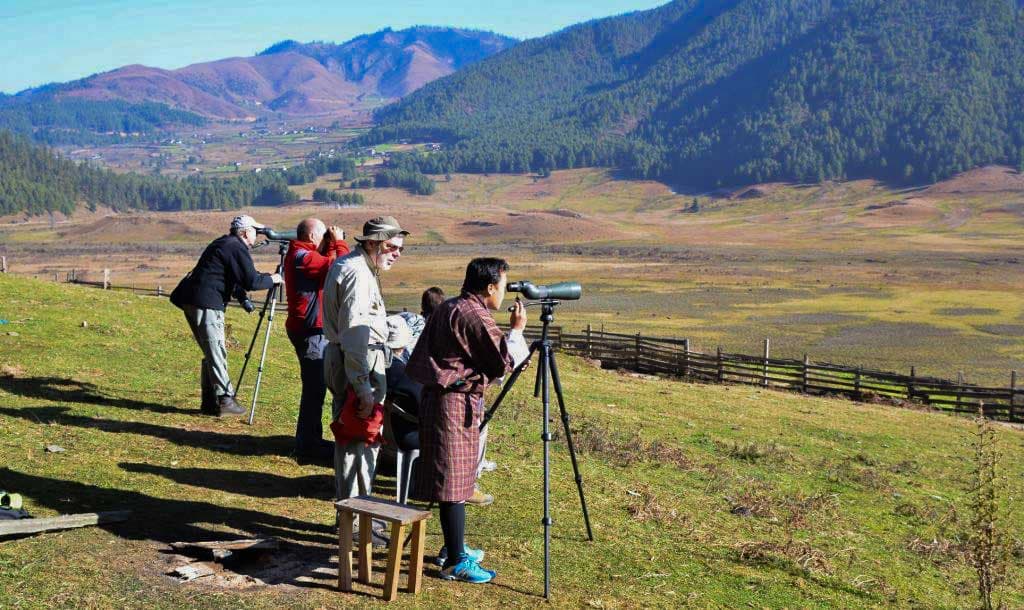
- Not close, and deliberately so. The cranes are rare and easily disturbed, so they are watched from the Black-Necked Crane Information Centre's viewing gallery and designated points, through mounted spotting scopes, never approached across the marsh. The scopes give fine views; your guide and the centre's staff help you find the birds where they are feeding on any given day. Long-lens photography of the distant birds is welcome.
- How cold is Phobjikha in November?
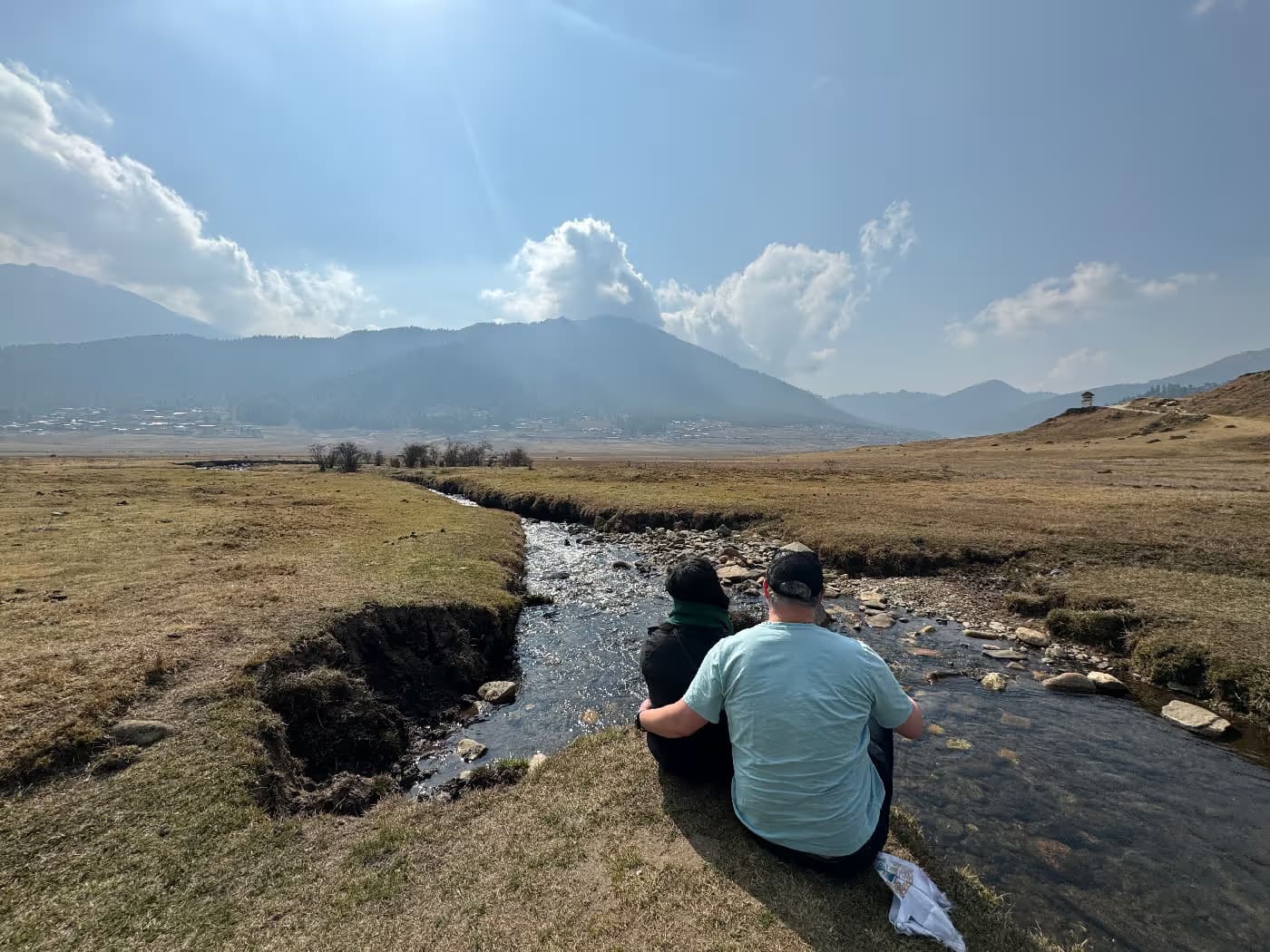
- Genuinely cold — the valley is high, wide, and treeless, and nights drop below freezing by mid-November, though the midday sun is strong. The high passes are clear at this point in the year. Pack proper layers; the valley lodges are well heated, and a clear, cold morning with the cranes calling across the marsh is the season at its finest.
- Is eight nights the right length?
- It is. Eight gives two unhurried nights in Phobjikha — one for the festival, one for the information centre and the nature trail — with the western circuit of Paro, Thimphu, and Punakha properly paced around it. A shorter trip would rush either the valley or the circuit; this length asks nothing of you that the country does not reward.