Preparing
LoadingPreparing
Loading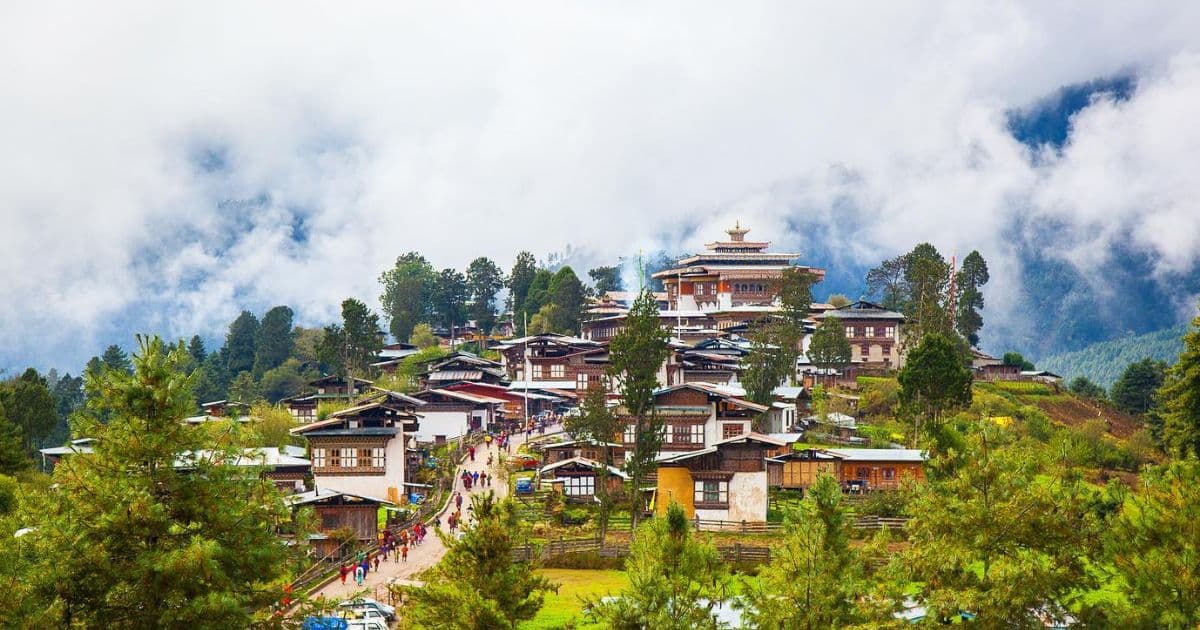
The 17th-century Nyingma monastery above the cranes' wintering valley
Gangtey Goemba sits on a hillock overlooking the Phobjikha valley at 3,000 metres elevation. Founded in 1613 by Pema Trinley — the grandson and reincarnation of the great Nyingma terton Pema Lingpa — the goemba is the principal Nyingma monastery of western Bhutan and overlooks the wintering grounds of the black-necked cranes.
Also known as · Gangteng Goemba · Gangtey Sanga Choeling
The Nyingma tradition holds that the great Bumthang terton Pema Lingpa (1450–1521) prophesied that one of his descendants would found a great monastery in the valley to the south-west of the Wangdue district. The prophecy was fulfilled by Pema Trinley (1564–1642), Pema Lingpa's grandson, who was recognised as the master's reincarnation. Pema Trinley founded Gangtey Goemba in 1613 on the hillock above the Phobjikha valley. The goemba is the principal Nyingma monastery of western Bhutan; the lineage of the Gangtey Trulku (the resident reincarnate lama) continues to the present day.
The goemba is built on the classic Bhutanese pattern but at the scale of a monastery rather than a dzong — the principal courtyard is roughly 30 metres on each side, with the central utse housing the principal chapels. The principal chapel contains a large image of Pema Lingpa flanked by his eight principal disciples; the iconography traces the Pema Lingpa terton lineage from the 15th century through to the present. The goemba's painted woodwork — particularly the courtyard galleries — was executed by master craftsmen across multiple restorations and is one of the principal expressions of Bhutanese religious art in the western dzongkhags.
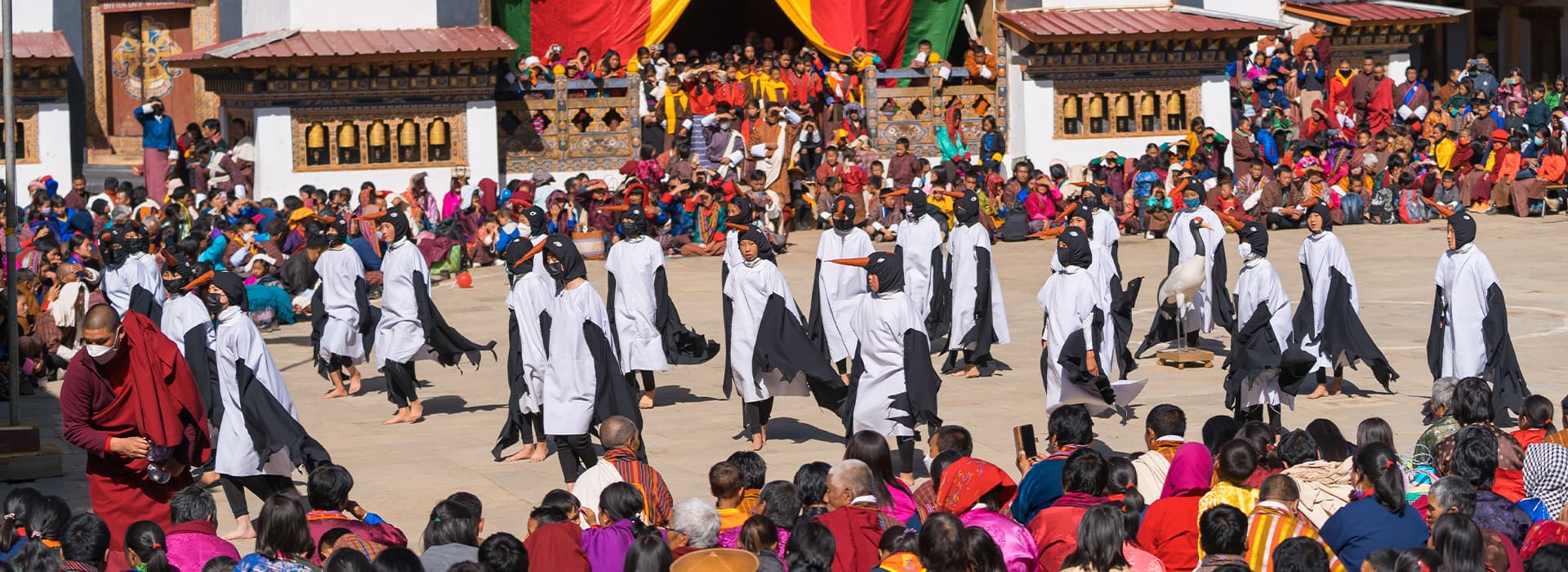
The Phobjikha valley below the goemba is the principal overwintering ground of the black-necked crane (Grus nigricollis) — around 600 birds typically overwinter in the valley from late October to mid-March. The relationship between the goemba and the cranes is reciprocal: the cranes' return in late October is held by the local community to be a blessing on the monastery, and the cranes circle the goemba three times on arrival and departure each year. The valley below the goemba is protected as a Royal Government conservation zone; powerlines have been buried underground at substantial cost to preserve the cranes' open flight space. The Crane Festival is held in the goemba's courtyard each 11 November.
Visiting
Common questions
Gangtey Goemba was founded in 1613 by Pema Trinley, the grandson and reincarnation of the great Nyingma terton Pema Lingpa (1450–1521). The lineage of the Gangtey Trulku (the resident reincarnate lama) continues to the present day; the current Gangtey Trulku is the 9th in the lineage.
From late October to mid-March, yes — the Phobjikha valley below the goemba is the principal overwintering ground of the black-necked crane in Bhutan. Around 600 birds typically overwinter; they feed in the valley's marshy floor from first light to mid-morning and again before dusk. Bring binoculars or a long lens; the cranes are at distance from the goemba (which sits above the valley).
Yes — the Crane Festival is held in the goemba's courtyard each 11 November and is the principal civic-religious moment of the cranes' overwintering window. Two to three days in Phobjikha around the festival date gives the festival day plus dawn and dusk crane viewing.
Approximately 5 hours by road from Paro via Thimphu, Punakha, and the Pele La pass (3,420 m). The drive is itself a notable journey — Dochu La, the rice terraces of Punakha, the cypress forests of Wangdue, the Lawala pass into the Phobjikha valley.
Amankora Gangtey (in the valley with a 15-minute drive to the goemba), Six Senses Gangtey (in the surrounding hills), Gangtey Lodge, Dewachen Hotel. Lodges are fewer than in Paro or Thimphu; book 4–6 months in advance for the crane window.
Festivals held here
Festival
Gangtey Tshechu — three days at Gangtey Goemba in the Phobjikha valley. Dates, programme, what to expect as a visitor.
Festival
Black-Necked Crane Festival — 11 November at Gangtey Goemba, Phobjikha. The cranes' return, the children's dances, the conservation register.
Journeys featuring this site
Journey
An eight-night Bhutan birding journey targeting the principal endemics — black-necked cranes at Phobjikha, white-bellied heron, hornbills, the beautiful nuthatch.
Journey
A seven-night Bhutan journey timed to Thimphu Tshechu in autumn — second-tier seating, a culturally fluent guide, Bhutanese lodges.
Journey
A seven-night Bhutan light-trek journey from Sydney — first half-day trails, comfortable lodges, a guide who paces the day to you.
Five questions. A bespoke draft back within a day or two.