Preparing
LoadingPreparing
Loading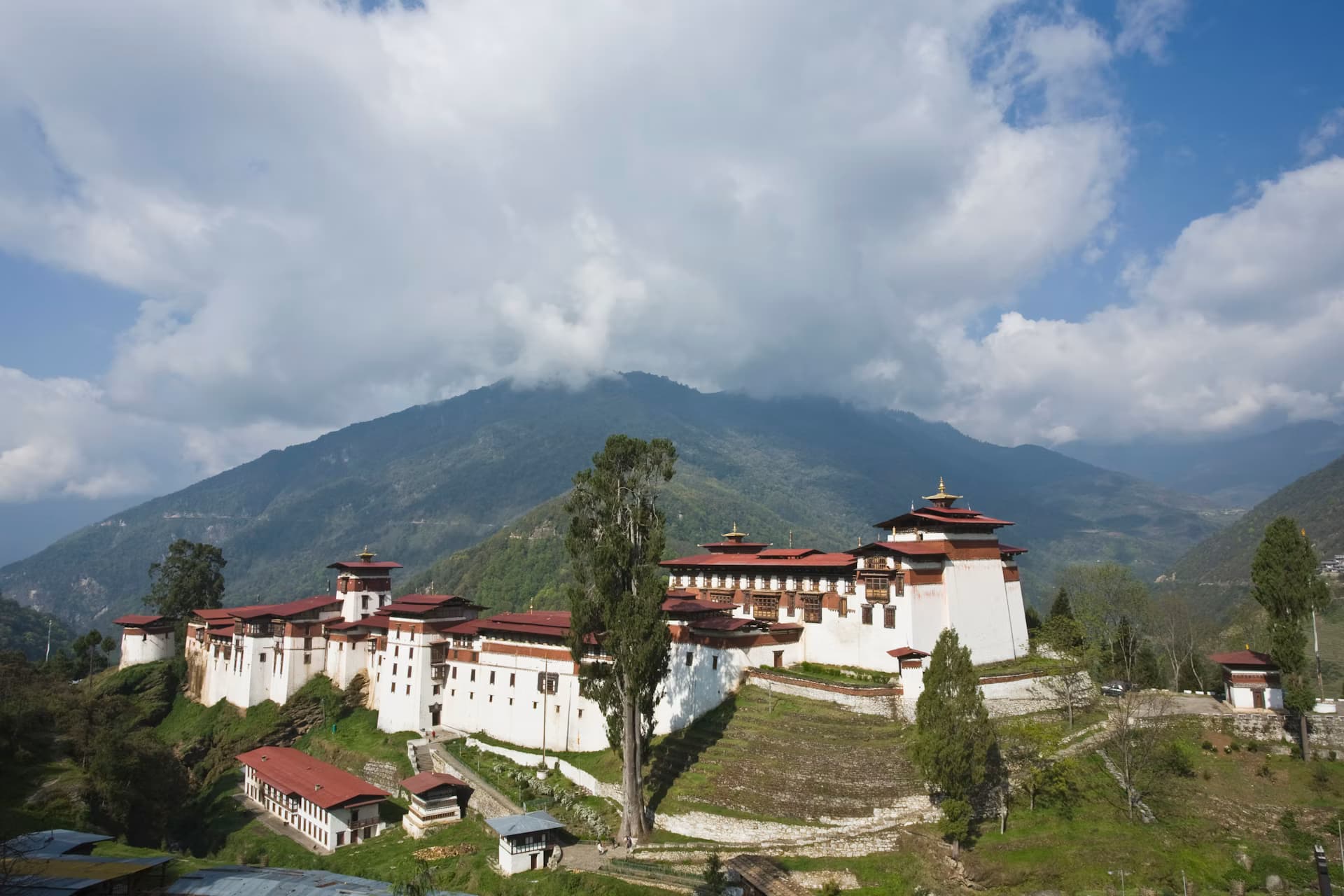
A Bhutanese town and dzongkhag
Trongsa sits on the central transverse spur between western and eastern Bhutan — the natural east-west road passes through here, and the strategic position made Trongsa Dzong the principal political seat from the 17th century onward. Trongsa Penlop (governor of Trongsa) was the most powerful provincial title in the country; His Majesty Ugyen Wangchuck, the first King of Bhutan, was Trongsa Penlop before his coronation in 1907. The dzongkhag remains the ancestral home of the Wangchuck royal dynasty.
dzongkhag · Trongsa · 2,200 m
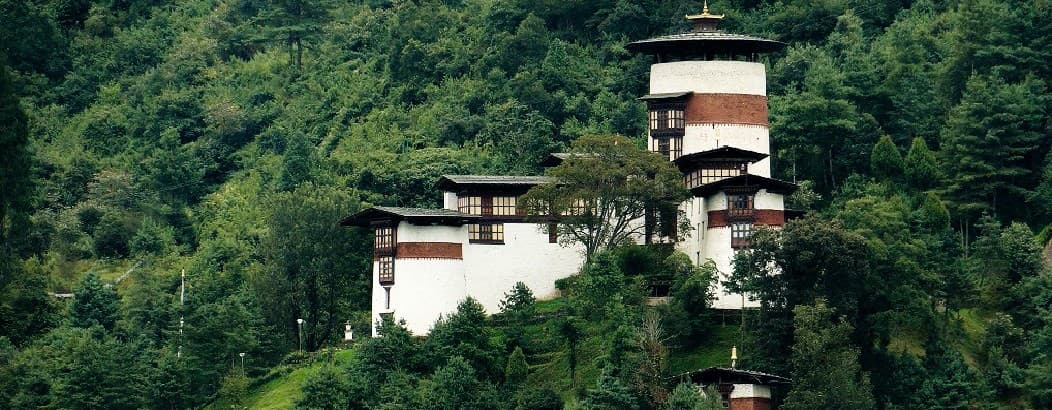
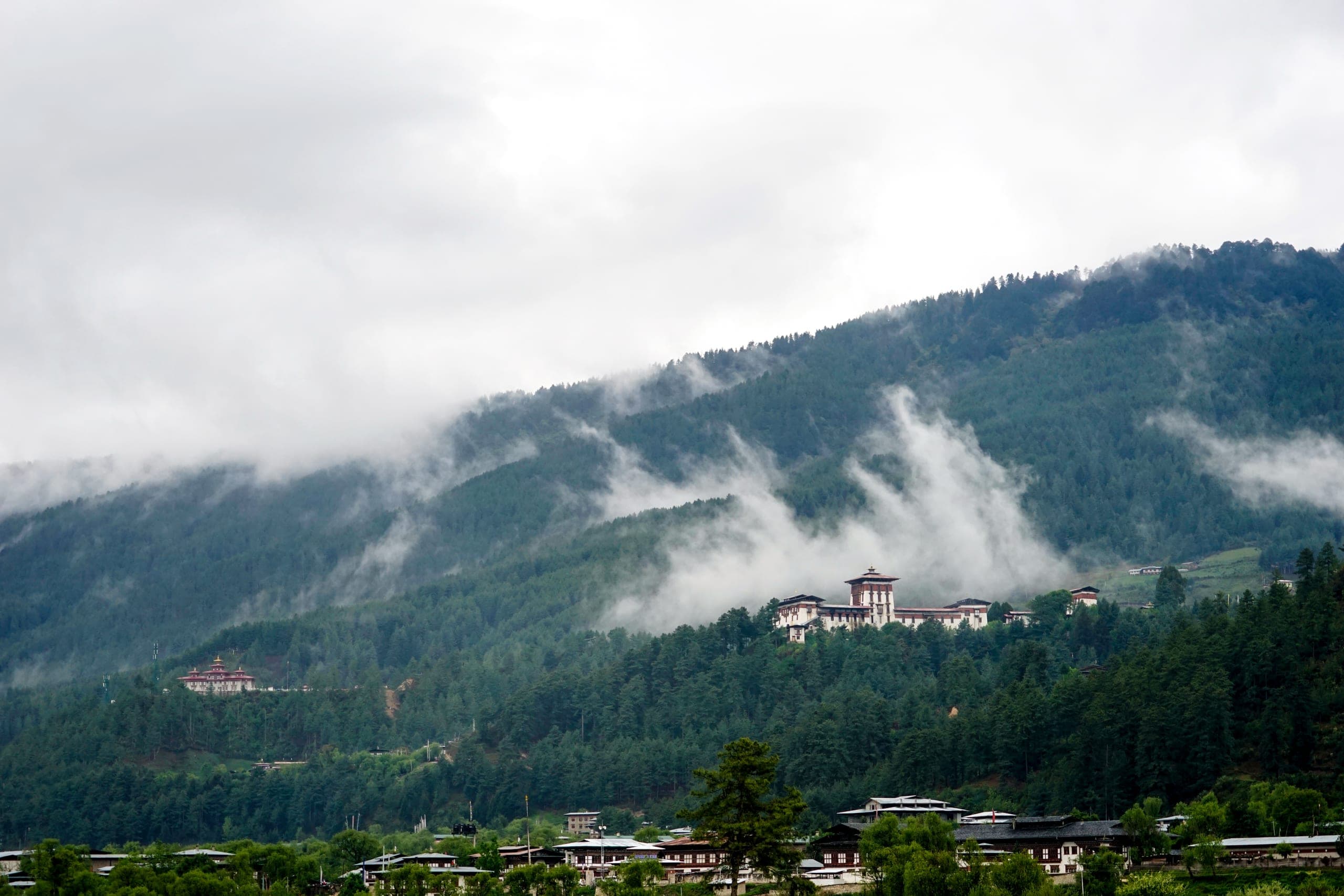
Trongsa Dzong, founded in 1644 by the Zhabdrung Ngawang Namgyal, is the longest dzong in Bhutan — a labyrinth of courtyards, temples, and administrative buildings strung along a high ridge above the Mangde Chhu gorge. The structural reason: the dzong was built incrementally by successive penlops (governors) over three centuries, each adding to the complex. The view from across the gorge is the principal image — the dzong appears to grow out of the cliff face, white-and-wood, the steep-roof profiles staggered along the ridge.
The Ta Dzong (watchtower) above Trongsa Dzong has been converted into a museum — the Royal Heritage Museum — opened in 2008 to mark the centenary of the Wangchuck monarchy and the constitutional democracy. The museum traces the Wangchuck dynasty from its origins through the principal moments of modern Bhutanese state-building. The substance is the royal connection: His Majesty Ugyen Wangchuck (first King), His Majesty Jigme Wangchuck (second King), His Majesty Jigme Dorji Wangchuck (third King — the modernising King), His Majesty Jigme Singye Wangchuck (fourth King — the GNH King), and His Majesty Jigme Khesar Namgyel Wangchuck (the present fifth King) — all carried the Trongsa Penlop title before coronation, marking Trongsa as the dynasty's ancestral seat.
Beyond the dzong and the Ta Dzong museum, Trongsa carries two principal Wangchuck-residential surfaces. Thruepang Palace, on the ridge below Trongsa Dzong, was the residential anchor built by His Majesty the Second Druk Gyalpo in the 1920s and the birthplace of His Majesty the Third Druk Gyalpo on 2 May 1928. Kuenga Rabten Palace, twenty-three kilometres south of Trongsa town on the Mangde Chhu river at 1,800 metres, was His Majesty the Second Druk Gyalpo's winter palace and the place He passed away in March 1952. Both are heritage sites under conservation; the combined Trongsa circuit (Trongsa Dzong + Royal Heritage Museum + Thruepang + Kuenga Rabten) is the most rewarding historical-anchor visit for visitors with serious interest in the Wangchuck dynasty. See Thruepang Palace and Kuenga Rabten Palace for the full narratives.
Most premium Bhutan itineraries traverse Trongsa as part of the east-bound drive from Phobjikha/Gangtey to Bumthang — the road descends substantially into the Mangde Chhu gorge, crosses the river at the foot of the dzong, and climbs steeply on the eastern side. Visitors stopping for a half-day visit the dzong (typically 1-2 hours including the lhakhang), the Ta Dzong museum (1-2 hours), and have lunch at one of the small Trongsa-town restaurants. A small number of premium itineraries include an overnight stop in Trongsa for slower-pace cultural immersion; the boutique lodge options are limited but workable. Most visitors stay 0 nights here — driving through — but for the Wangchuck-dynasty visitor the dzong and museum are essential.
Common questions
Approximately. The dzongkhag sits on the central transverse spur dividing western and eastern Bhutan; the principal east-west road passes through here. The strategic centrality made it the historical political seat from the 17th century onward.
Usually not. Most premium itineraries traverse Trongsa as a half-day stop between Phobjikha and Bumthang. For Wangchuck-dynasty enthusiasts or visitors with deeper royal-history interest, an overnight makes sense; the boutique lodge options are limited but workable.
Visiting
Journeys that visit Trongsa
A heritage-led journey
An eight-night Bhutan history and heritage journey — Simtokha (the oldest dzong), the National Museum of Bhutan in Paro's Ta Dzong, Punakha the former winter capital, and Trongsa the ancestral seat of the royal dynasty.
8 nights · from USD 9,000
The country at its own pace
A private thirteen-night Bhutan journey across the western and central valleys — Paro, Thimphu, Punakha, Gangtey, Trongsa, Bumthang. The unhurried fortnight, Bhutanese lodges, a matched guide.
13 nights · from USD 15,000
The country end to end, exit through Assam
A fourteen-night Bhutan east-to-west circuit exiting via Samdrup Jongkhar and Guwahati. The full eastern dzongkhags, the quieter half of the country.
14 nights · from USD 28,000
What to see here
Monument
Trongsa Dzong — the ancestral seat of the Wangchuck dynasty, the largest dzong in Bhutan. History, the Royal History Museum, visiting.
Monument
The Royal Heritage Museum at Trongsa Ta Dzong — the Wangchuck dynasty museum. Five floors tracing the dynasty from the 1907 founding to the contemporary period.
Monument
Thruepang Palace — built by the Second Druk Gyalpo, birthplace of the Third Druk Gyalpo on 2 May 1928. On the ridge below Trongsa Dzong.
Monument
Kuenga Rabten Palace — His Majesty the Second Druk Gyalpo's winter palace on the Mangde Chhu, south of Trongsa. Where His Majesty passed away in March 1952.
Where to go next
Place
Bumthang — the four central valleys, Bhutan's spiritual heartland. Kurjey, Jambay, Tamshing, Mebar Tsho. The densest religious circuit in the country.
Place
Phobjikha valley — the glacial U-valley in central Black Mountains, wintering black-necked cranes (late Oct-mid Feb), Gangtey Monastery, the Nature Trail.
Journeys through here
Journey
A fourteen-night Bhutan east-to-west circuit exiting via Samdrup Jongkhar and Guwahati. The full eastern dzongkhags, the quieter half of the country.
Journey
A ten-night Bhutan Buddhist pilgrimage for Asian-Buddhist travellers. Monastic context; matched monastic-trained guide; Bumthang religious circuit.
Five questions. A bespoke draft back within a day or two.