- What does 'no screens' actually mean in practice?
- The matched guide carries a single emergency line to the principal's household-side coordinator; nothing else gets through. The lodge concierge holds incoming calls that are not from that line. The principal's phone is on airplane mode or held by the household coordinator at the lodge (the founder's choice; both work). Outbound, the principal can write at the lodge desk when the urge arrives — most don't. The discipline is held by the matched guide rather than by an app. Most founders find Day 3 is when the body recognises the calm and stops reaching for the device; Day 6 in Phobjikha is when it stops reaching at all.
- What about genuine emergencies — board crisis, family situation?
- The single emergency line through the household coordinator is the channel. The lodge concierge in Phobjikha and Punakha both have working satellite-phone backup for the rare situations where the valley signal is intermittent. The matched guide carries the line. We've held this register for senior principals across the years and the protocol has worked through several moments. If the principal's role requires hourly reachability for the seven nights, this is not the trip — see the corporate retreat shape for a different register.
- Is the Phobjikha silence really as quiet as you describe?
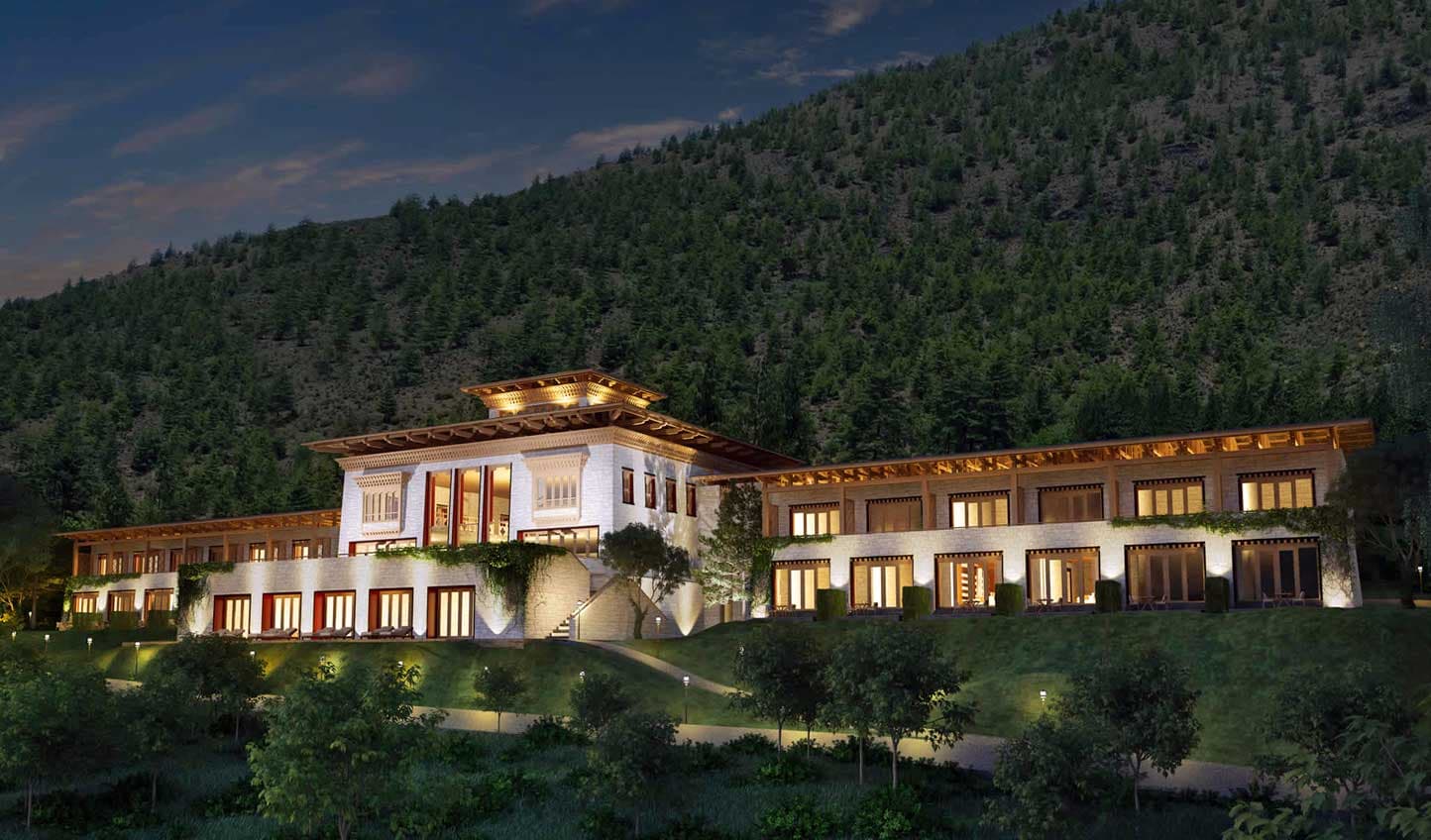
- Yes,. Phobjikha is a glacial valley at 2,900 m with no town, no electricity grid on the valley floor (the village uses underground cables to preserve the cranes' flight paths), a population of around 6,000 people across the valley, and a structural lack of commercial development. From late October the cranes arrive; the dawn calls across the valley are audible from the lodge terrace. The silence is the principal asset of the place. Most international travellers planning a Bhutan trip don't know about it; we treat it as the destination because it does the work that no other Bhutanese valley does at this scale.
- Is this trip appropriate for a founder couple, or just a solo founder?
- Both work. The trip is signature-tier whether one or two principals; the matched guide is held for the couple if travelling together. We've held this register for founders travelling solo (the most common shape), founders travelling with a co-founder or business partner (the matched guide reads the working register subtly), and founders travelling with a spouse who is on the trip for the trip (the matched guide reads the cultural). The seven-night shape works for all three; the no-screens discipline is held in the same way.
- What is the best time for this seven-night shape?
- Autumn (mid-October to late November) is the principal window — the cranes arrive in Phobjikha from late October, Bhutan is at peak visibility, the Himalayan range is visible from [[dochu-la|Dochu La]]. Clear-Sky Bhutan (December through February) is the second window — colder, the cranes still in residence through February, the lodges' fires lit by 4 p.m., the country at its quietest. Spring (March through May) catches the rhododendron and the jacaranda but the cranes have departed. We typically advise against deep monsoon (July and August) for the Phobjikha valley itself.
- What does the price band of USD 32,000 to 68,000 per traveller cover?
- The full in-country experience — Amankora across the four-valley circuit (or Gangtey Lodge for Phobjikha if preferred), the matched knowledgeable guide and the private vehicle on every leg, all meals and the curated dining, the Sustainable Development Fee (USD 100 per night, USD 700 total), the Bhutan visa, the in-country logistics, the pre-arrival household briefing, the post-trip recap. The upper end of the band reflects helicopter time between valleys (Paro–Punakha or Punakha–Phobjikha as preferred), exclusive-use lodge arrangements where the season allows, or signature-level dining curation. International flights are advised on; we coordinate timing with the Drukair rotation.