December year-end — the strongest Singapore-Bhutan alignment
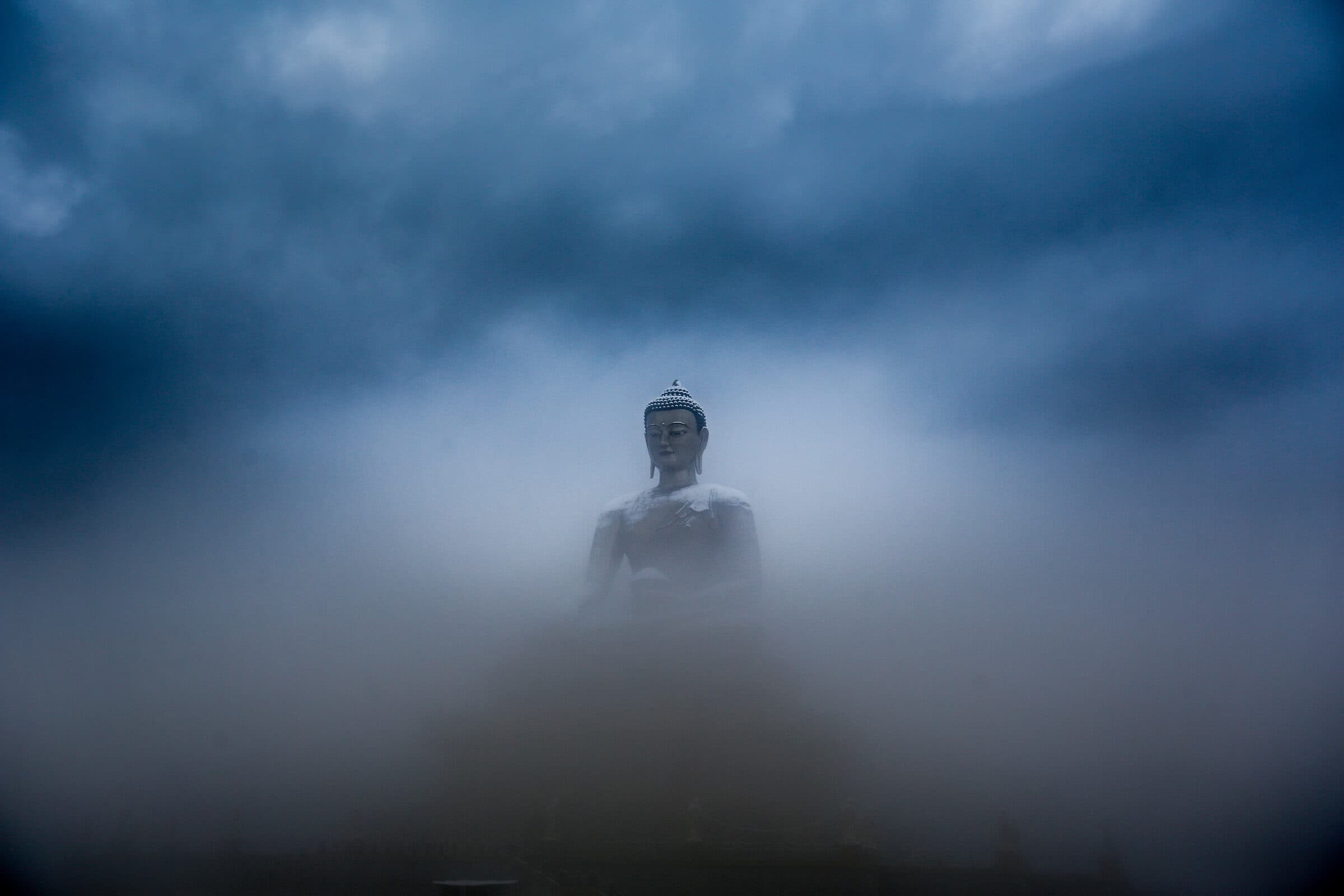
Singapore school holidays run from mid-November through early January — six weeks across the year-end. **This aligns perfectly with Clear-Sky Bhutan** (December–February), Bhutan's most-reliable panoramic window: clear bright skies, the most-reliable Himalayan visibility of the year, the lowest visitor count, and the deepest sense of the country at its quietest. **The Singapore family combination works** — a 6-night Sun-Sat trip in mid-December puts you in Paro for Tiger's Nest, in Punakha for the warm valley, and in Thimphu for the 17 December [[national-day|National Day]] ceremony at Changlimithang in the presence of the Royal Family. The 13-night extended block opens Bumthang for the deep cultural. Daytime temperatures are mild (Thimphu 10-16°C, Punakha warmer at 15-22°C); mornings are cold (0 to -5°C in Thimphu) — pack warm layers. **Demand from the Singapore market in this window is structurally high**; book the December dates 4-6 months in advance for the better lodge configurations.
Chinese New Year — the Punakha Drubchen alignment
Chinese New Year typically gives Singaporeans a 4-day public holiday (Friday-Monday or Saturday-Tuesday depending on the year), extending to 8-12 days with school-holiday and bridge-day combinations. **This often aligns with the Punakha Drubchen + Tshechu pair** (8th-10th day of the 1st Bhutanese lunar month, typically late February or early March). The cultural moment is substantial — the Drubchen's Serda procession (the only historical military re-enactment in the Bhutanese festival calendar) plus the principal chams plus the pre-dawn thongdrel unfurling — with a fraction of the visitor pressure of the Paro Tshechu or Thimphu Tshechu. **For Singapore families combining the CNY break with the school's pre-Term-1 window, this is the considered window**. We recommend the 6-night Sun-Sat trip with 2 Paro, 1 Thimphu, 2 Punakha (covering the Drubchen days), 1 Paro return.
March school holiday — overlaps with Paro Tshechu pressure
Singapore's March school holiday is a single week, typically mid-March. **This overlaps with the lead-up to the Paro Tshechu** (late March or early April depending on the lunar calendar). The pre-Tshechu shoulder gives spring rhododendron at lower altitude, clear pre-monsoon weather, and the country at the moment of awakening; the Tshechu week itself has substantial demand pressure on lodges, Drukair seats, and ground transport. **Our considered recommendation for Singapore families with a March-holiday booking**: lock the Paro Tshechu week early (9-12 months ahead) if your dates fall on the festival, or book the pre-Tshechu shoulder for a quieter spring. The April-after-Tshechu shoulder is similarly attractive with the alpine rhododendron approaching peak. **The smaller dzongkhag tshechus** ([[gangtey-tshechu|Gangtey]], [[wangdue-tshechu|Wangdue]], [[gom-kora-tshechu|Gom Kora]] in early April) give the festival with better availability.
June school holiday — the early-monsoon trade-off
Singapore's June school holiday is the longest — four full weeks. **This lands in the early monsoon window for Bhutan**, which requires careful framing. **Early June (first 2 weeks)** is the pre-monsoon shoulder — Royal Highlander Festival in Laya (23-24 October — note, this is *not* June), the alpine rhododendron at its highest range, the country green and vivid, with weather generally workable. **Late June through early July** is the heart of the Indian Monsoon and **we actively discourage** this window (sustained rain, road landslides, high-altitude treks closed, the Himalayan panorama obscured). **The considered recommendation for Singapore families needing the June timing**: target early June for the pre-monsoon shoulder, frame as the 'Green Bhutan' atmospheric experience rather than the panoramic-photographic one, expect occasional rain and adjust expectations accordingly. The trade-off: lower visitor count, the deepest green, and the most-flexible lodge availability of any school-holiday window.
September school holiday — the autumn shoulder
Singapore's September school holiday is a single week, typically mid-September. **This catches the late-monsoon to autumn transition** in Bhutan. The very early part of September (the first week) can still carry monsoon tails; mid-September clears progressively; by the third week the autumn clear-sky window typically opens. **The Thimphu Tshechu** lands in late September or early October most years, which puts demand pressure on the late-September dates. **Our considered recommendation**: target mid-September for the cleanest pre-Tshechu window (still warm, clearing, no festival pressure), or align with Thimphu Tshechu if cultural-festival exposure is the priority (9-12 month booking lead time). The smaller [[gangtey-tshechu|Gangtey Tshechu]] (early September depending on the lunar year) and [[wangdue-tshechu|Wangdue Tshechu]] (late September) offer alternatives.
Long-weekend windows — Vesak, Hari Raya, Deepavali
Singapore's other public holidays create natural long-weekend opportunities that, combined with leave days, support 6-10 night Bhutan trips. **Vesak Day** (May, the Buddha's birthday) — falls in the late-spring shoulder, warm and clear, with a meaningful religious resonance for the Buddhist visitor. **Hari Raya Puasa** (April-May, varies with the Islamic calendar) — late spring shoulder, similar to Vesak alignment. **Hari Raya Haji** (June-July, varies) — early monsoon, requires the same Green-Bhutan framing as the June school holiday. **Deepavali** (October-November) — falls in the autumn clear-sky window, often within a week of the [[crane-festival|Crane Festival]] (11 November); strong alignment for the cranes-in-Phobjikha visitor. **Long-weekend trips are typically 5-6 nights** (Friday-Sunday holiday + 2-3 leave days + travel days); the 6-night Sun-Sat Drukair cycle fits cleanly into the Vesak, Deepavali, and Hari Raya Puasa windows.
Booking lead time by Singapore window
The Singapore-market booking pressure varies sharply by window. **December year-end and Chinese New Year**: 4-6 months ahead is the standard lead time; 6-8 months for the December National Day week specifically. **March school holiday**: lock Paro Tshechu dates 9-12 months ahead; lock pre/post-Tshechu shoulder dates 3-4 months ahead. **June school holiday (early June)**: 2-3 months is adequate due to softer demand. **September school holiday**: 3-4 months for non-Tshechu dates; 9-12 months if aligning with Thimphu Tshechu. **Long-weekend trips (Vesak, Deepavali, Hari Raya)**: 2-3 months adequate except where the dates align with a festival peak.