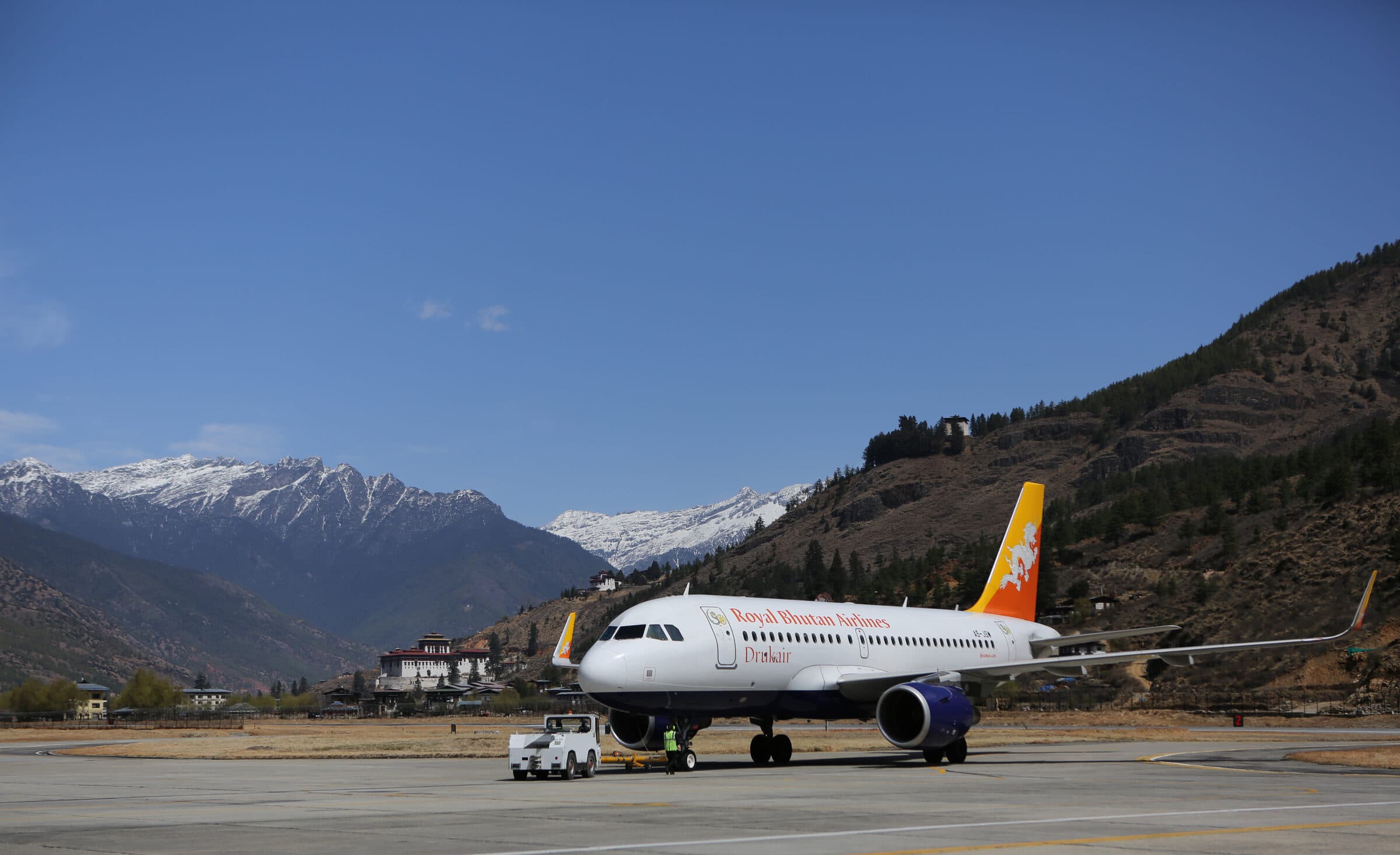
- Why is Paro Airport considered so difficult?
- The airport sits at 2,235 metres on a narrow valley floor between 5,500-metre peaks. The approach is visual only (no instrument-landing system support to final), and pilots execute a manual final turn at low altitude through the steep-walled valley. The runway is shorter than the international standard for the aircraft types serving it. Combined, these factors mean fewer than 50 pilots in the world are currently certified to land there. The difficulty refers to the technical demands of the approach — not to operational risk. The strict certification, the strict visual-flight-rules regime, and the carriers' strong safety records are the operational backbone.
- Are Drukair and Bhutan Airlines safe?
- Yes — both carriers maintain strong safety records, and the Royal Government's Department of Civil Aviation operates strict certification and ongoing oversight. The strict visual-flight-rules regime means flights are delayed or cancelled when weather is marginal, which is itself a safety feature. The Paro approach is demanding but well-procedured; the world-class safety record reflects the strict operational discipline.
- How do I book a flight to Bhutan?
- Through your licensed Bhutanese tour operator (who handles the visa and SDF), direct via drukair.com.bt or bhutanairlines.bt, or via select international travel agencies. As of 2026 Drukair is on the Verteil NDC distribution making it programmatically bookable through major GDS systems for the first time. We recommend booking via the operator for the bundled visa and SDF processing.
- Should I transit via Delhi or Kolkata?
- Not if you hold a non-Indian passport. India requires a transit visa for international passengers on certain transit itineraries, including some airside (not-leaving-the-airport) connections — the e-TV (e-Tourist Visa) process is online but not instant, and the airline / immigration interpretation of 'transit' versus 'arrival' varies. The friction makes Delhi, Kolkata, Mumbai, and Bagdogra impractical hubs for the typical non-Indian visitor. Route via Bangkok or Kathmandu instead — both offer visa-on-arrival or visa-free entry to most nationalities. Indian-passport-holders have no such constraint and can route through any Indian airport cleanly.
- What if my flight gets cancelled?
- If the cancellation is on the Bhutan side (weather delays or VFR cancellations), the operator absorbs the disruption — adjusting the itinerary, rebooking the next available flight, and absorbing the lodge cost differentials. If the cancellation is on the international leg before Bhutan, the operator works with the visitor's international carrier to reschedule. We build a 24-hour buffer into pre-Bhutan plans to absorb the most-common disruption windows.
- Can I fly into Bhutan at night?
- No — both Drukair and Bhutan Airlines operate visual-flight-rules only. No flights into or out of Paro after sunset. The last international arrival typically lands by 16:00; the first international departure typically takes off at 06:30. Flight schedules accommodate the daylight window.
- Are there other airports in Bhutan?
- Three domestic airports: Bathpalathang (Bumthang), Yongphula (Trashigang), and Gelephu (Sarpang). Drukair operates domestic routes between Paro and these airports using ATR 42-500 turboprops. Domestic flights also subject to visual flight rules. A new international airport is under planning in Gelephu (southern Bhutan), expected late this decade, which will offer an alternative to the Paro approach.