
Preparing
LoadingPreparing
Loading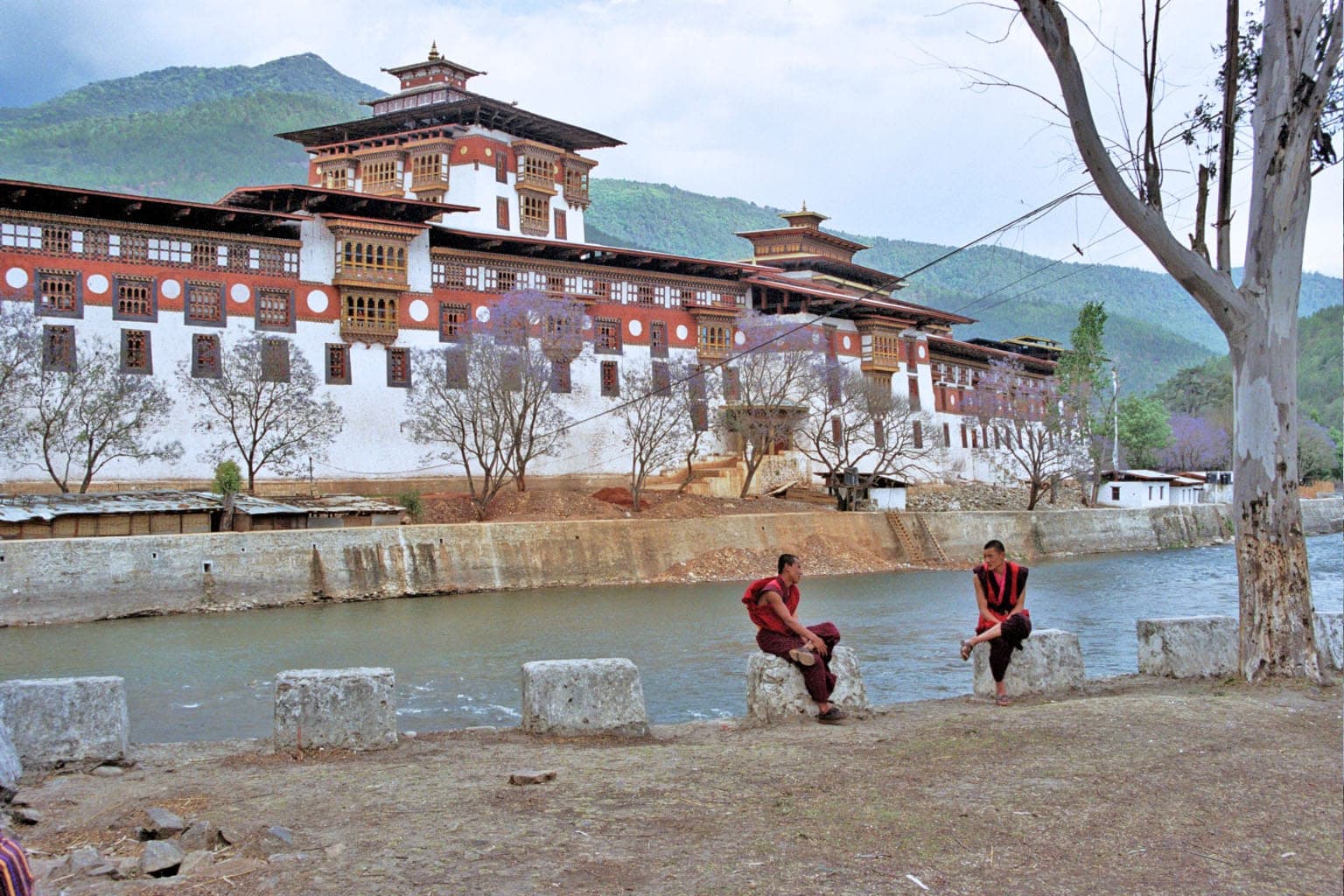
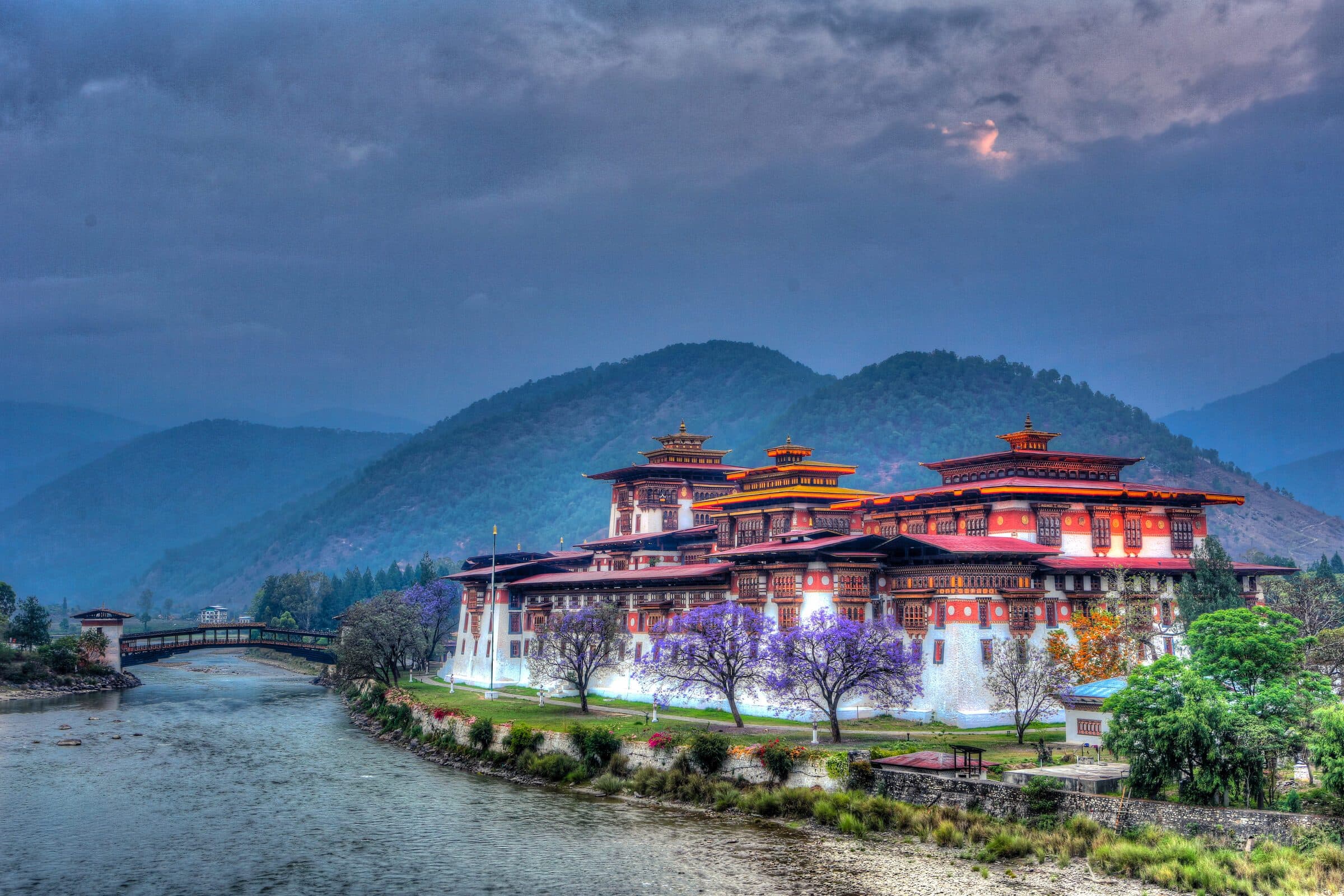
A Bhutanese historical event · Punakha Dzong
On 8 January 1910 at Punakha Dzong, His Majesty Ugyen Wangchuck — the First Druk Gyalpo, two years into His reign — and Sir Charles Bell, the British Political Officer in Sikkim, signed the Treaty of Punakha. The treaty replaced the 1865 Treaty of Sinchula, doubled the annual British subsidy from fifty thousand to one hundred thousand rupees, and added a provision that Bhutan would be guided by British advice in external affairs — with the explicit understanding that British India would not interfere in Bhutanese internal affairs. The 1910 Treaty framed the Bhutan-British India relationship until Indian independence in 1947 and the 1949 Bhutan-India Treaty of Friendship that replaced it.
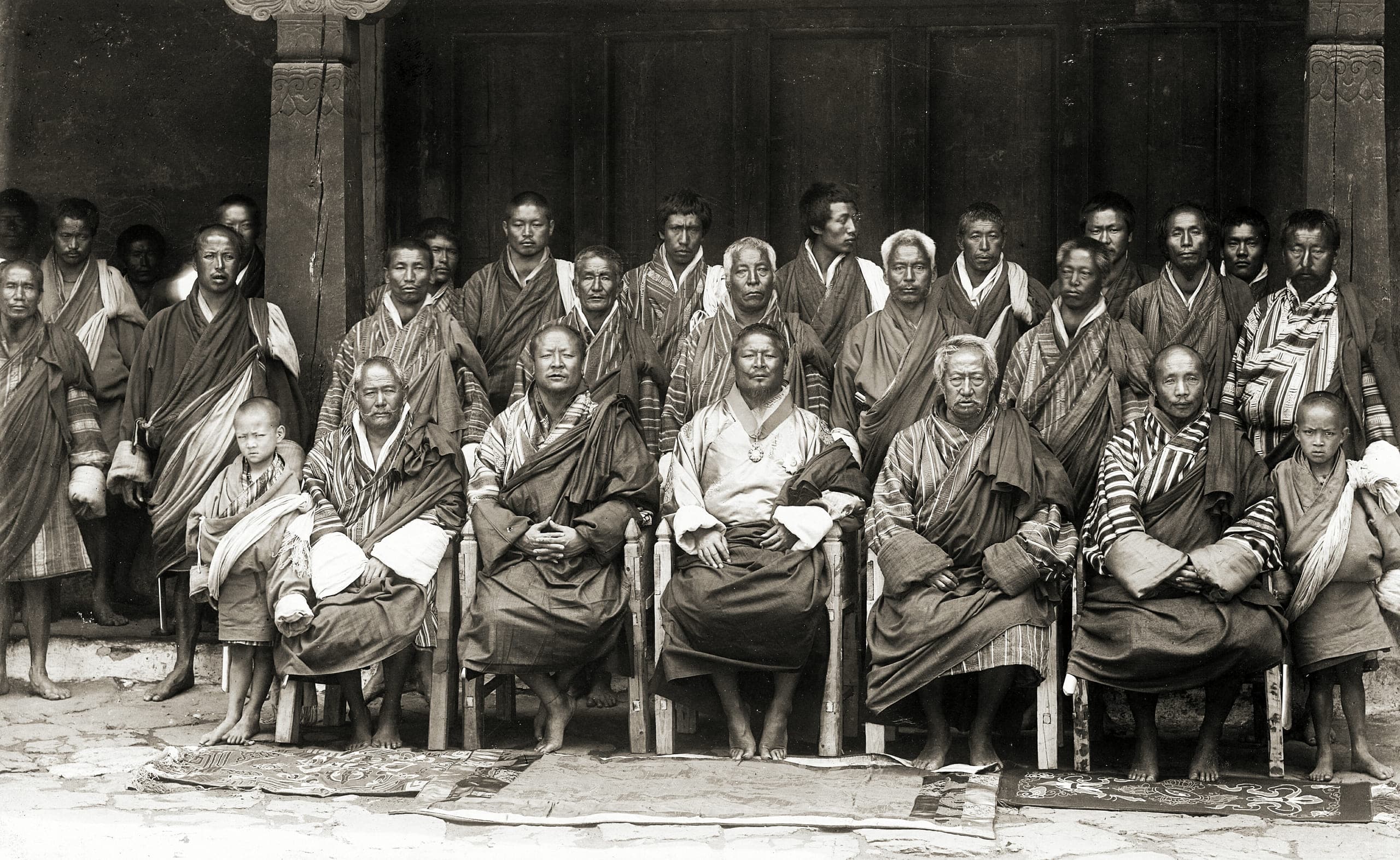
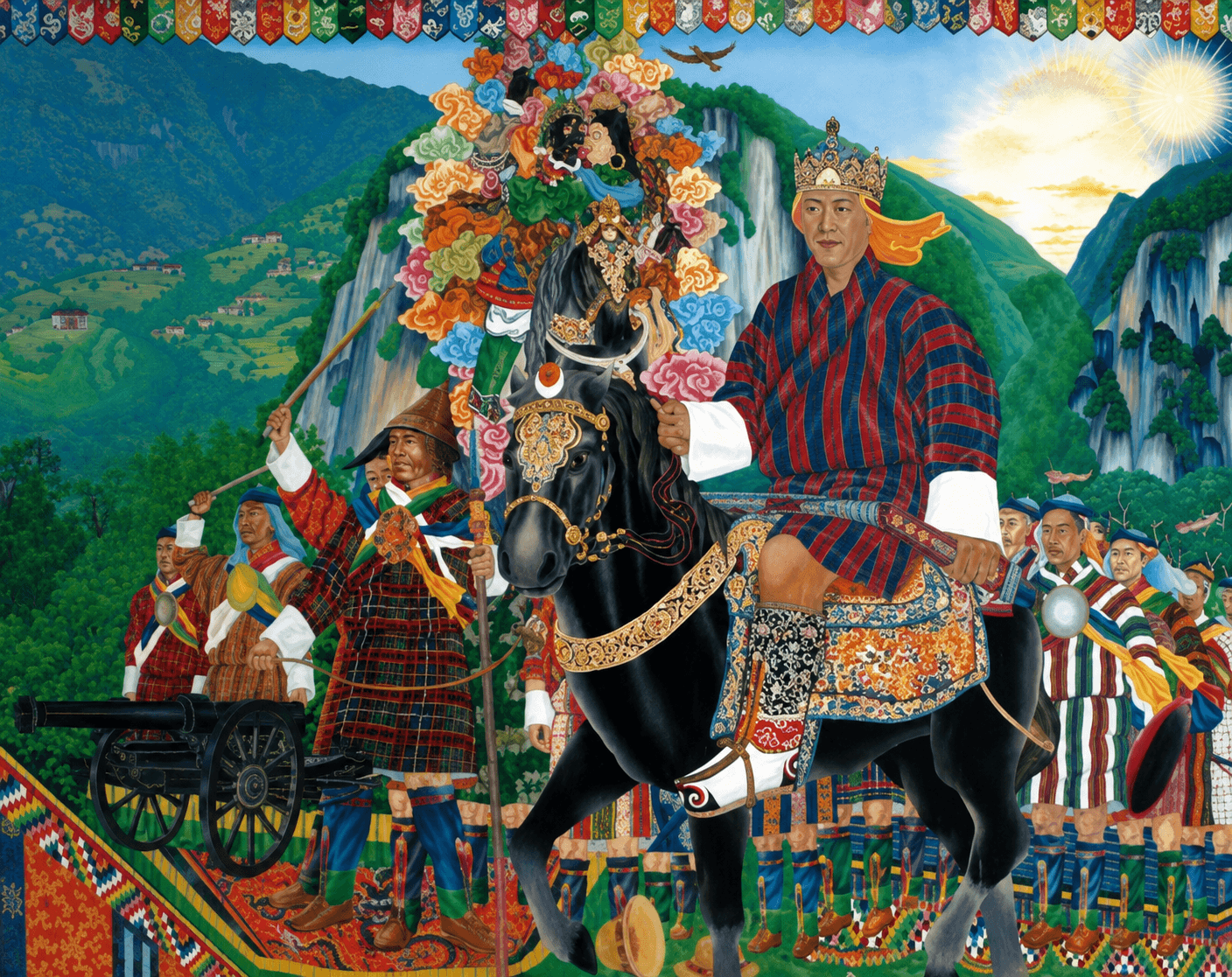
The 1910 Treaty was negotiated against the backdrop of His Majesty Ugyen Wangchuck's emerging standing with the British. The 1904 Anglo-Tibetan mediation had won British respect — Colonel Francis Younghusband's account of His Majesty's role, Sir John Claude White's personal rapport with His Majesty, the 1905 K.C.I.E. presented in Bhutan, the 1905 joint travel to Lhalung for the installation of the ninth Peling Sungtruel — had together established His Majesty as a paramount Himalayan figure in the British register. The 1907 founding of the hereditary monarchy had confirmed His Majesty's internal authority across the country. By 1910 the 1865 Treaty of Sinchula was visibly insufficient for the new framework — both sides needed an updated treaty that reflected His Majesty's position as a hereditary monarch and the broader strategic context that the Anglo-Tibetan and Anglo-Russian settlements of 1904-07 had created.
On 8 January 1910 at Punakha Dzong, the principal religious-political seat of the country, His Majesty Ugyen Wangchuck and Sir Charles Bell (the British Political Officer in Sikkim, who had taken up the post from Sir John Claude White) signed the Treaty. Sir Charles Bell was already well-known to His Majesty through earlier diplomatic exchanges; the personal rapport between the two figures eased the negotiation. The signing took place at the same dzong where the 1907 Oath of Allegiance had been signed twenty-five months earlier — the religious-political register of the venue reinforcing the constitutional weight of the new treaty.
The 1910 Treaty established several updated provisions. Doubled subsidy — the annual British payment to Bhutan was raised from fifty thousand rupees (under the 1865 Sinchula framework) to one hundred thousand rupees, the principal external revenue stream of the early Wangchuck state. External affairs framework — Bhutan agreed to be guided by British advice in matters of external relations; in practice this operated as Bhutanese consultation with the British Political Officer rather than as a binding constraint on Bhutanese foreign policy. Internal autonomy — the British explicitly agreed not to interfere in Bhutanese internal affairs; no resident British Agent was permitted in Bhutan. Trade framework — the free-trade provisions of the 1865 Treaty were carried forward and updated. The combined framework gave Bhutan substantial sovereignty within the broader British Indian regional structure. See the 1865 Treaty of Sinchula for the antecedent framework and the 1949 Bhutan-India Treaty for the successor.
In December 1911 — eleven months after the Punakha signing — His Majesty Ugyen Wangchuck travelled to India and attended the Delhi Coronation Durbar, the ceremonial gathering marking the accession of King George V of England as Emperor of India. His Majesty met King George V at the Durbar; the meeting was the principal personal diplomatic exchange between a Bhutanese monarch and a British sovereign during the colonial period. The visit confirmed in personal terms the standing that the 1910 Treaty had formalised in institutional terms — Bhutan was a sovereign Himalayan state in good standing with the paramount imperial power of the region. The Durbar visit is part of the Wangchuck dynasty's diplomatic-history narrative; photographs and accounts from the period are part of the holdings at the Royal Heritage Museum at Trongsa Ta Dzong.
The 1910 Treaty framed the Bhutan-British India relationship for nearly four decades, until Indian independence required a new treaty (the 1949 Bhutan-India Treaty of Friendship). The annual subsidy supported the educational and infrastructural initiatives that His Majesty Ugyen Wangchuck undertook across His reign — the first modern schools at Haa (Wangchuck Lhodzong) and Bumthang, the early Bhutanese students sent to schools in Kalimpong, the reduction of land taxes and woola labour obligations. The external-affairs framework established by the 1910 Treaty — Bhutan in close consultation with its southern neighbour while retaining sovereignty — has been the structural template of every subsequent treaty arrangement, including the 1949 Treaty and its 2007 revision. The contemporary Bhutan-India open border, the ngultrum-rupee parity, the hydropower partnership, the Indian visitor numbers — all trace their structural origin to the 1910 framework.
Common questions
No — Bhutan retained sovereignty. The advisory clause in the 1910 Treaty (and the parallel clause carried into the 1949 Treaty until its 2007 revision) could in principle have been read as a protectorate-style constraint, but in practice it operated as consultation rather than as binding control. The British explicitly agreed not to interfere in Bhutanese internal affairs; no resident British Agent was permitted in Bhutan. Compared with the contemporaneous British relationships with Sikkim (a protectorate with British political officers in residence) and Nepal (a complex semi-protectorate framework), the Bhutanese arrangement under the 1910 Treaty preserved substantially more autonomy.
Two principal differences: the doubling of the annual British subsidy (from fifty thousand to one hundred thousand rupees) and the addition of the external-affairs advisory clause. The territorial framework — the Bhutan-British India frontier along the foothills above the Duars — was carried forward unchanged. The free-trade provisions were updated but retained the same principle. The principal reason for the revision was that the 1865 framework, negotiated when Bhutan had no hereditary monarch, did not fit the post-1907 constitutional structure under His Majesty Ugyen Wangchuck.
Formally, on 8 August 1949, when it was replaced by the Bhutan-India Treaty of Friendship signed at Darjeeling between His Majesty the Second Druk Gyalpo Jigme Wangchuck and the newly-independent Government of India. The 1910 Treaty had been with British India; Indian independence in August 1947 required a new bilateral framework with the sovereign Republic of India. The 1949 Treaty carried forward the structural framework of the 1910 Treaty (with the external-affairs advisory clause preserved until its removal in the 2007 revision) and added the return of thirty-two square kilometres of Deothang territory to Bhutanese sovereignty.
Who was there
Person
His Majesty Ugyen Wangchuck (1862-1926) — the First Druk Gyalpo of Bhutan, crowned 17 December 1907 at Punakha Dzong. The unifier of the modern Bhutanese state.
Person
Trongsa Poenlop Jigme Namgyel (1825-1881) — the Black Regent, architect of united Bhutan, father of His Majesty the First Druk Gyalpo. The principal pre-monarchy figure.
Where it stands now
Monument
Punakha Dzong — the Palace of Great Happiness, founded 1638. The history, the architecture, what to expect on a visit.
Monument
Trongsa Dzong — the ancestral seat of the Wangchuck dynasty, the largest dzong in Bhutan. History, the Royal History Museum, visiting.
What followed
Event
The Treaty of Sinchula — 11 November 1865. Ended the Duar War, ceded the Bengal Duars, established the annual British subsidy that funded the early Bhutanese state.
Event
The Oath of Allegiance — 17 December 1907 at Punakha Dzong. The founding document of the Wangchuck dynasty, sealed in red with the Nga Chudrugma seal of the Zhabdrung.
Event
The Bhutan-India Treaty of Friendship — signed 8 August 1949 in Darjeeling. The foundational bilateral framework. Revised 2007.
Event
The 1904 Anglo-Tibetan Mediation — His Majesty Ugyen Wangchuck's diplomatic crucible at the Younghusband expedition; the foundation of British recognition leading to 1907.
The wider idea
Theme
The Wangchuck dynasty — the hereditary monarchy of Bhutan since 17 December 1907. Five reigning monarchs across five generations. The contemporary state's institutional spine.
Theme
Bhutan-India relations — the foundational bilateral relationship. 1949 Treaty, hydropower partnership, ngultrum-rupee parity, the open border. The contemporary partnership.
Five questions. A bespoke draft back within a day or two.