Preparing
LoadingPreparing
Loading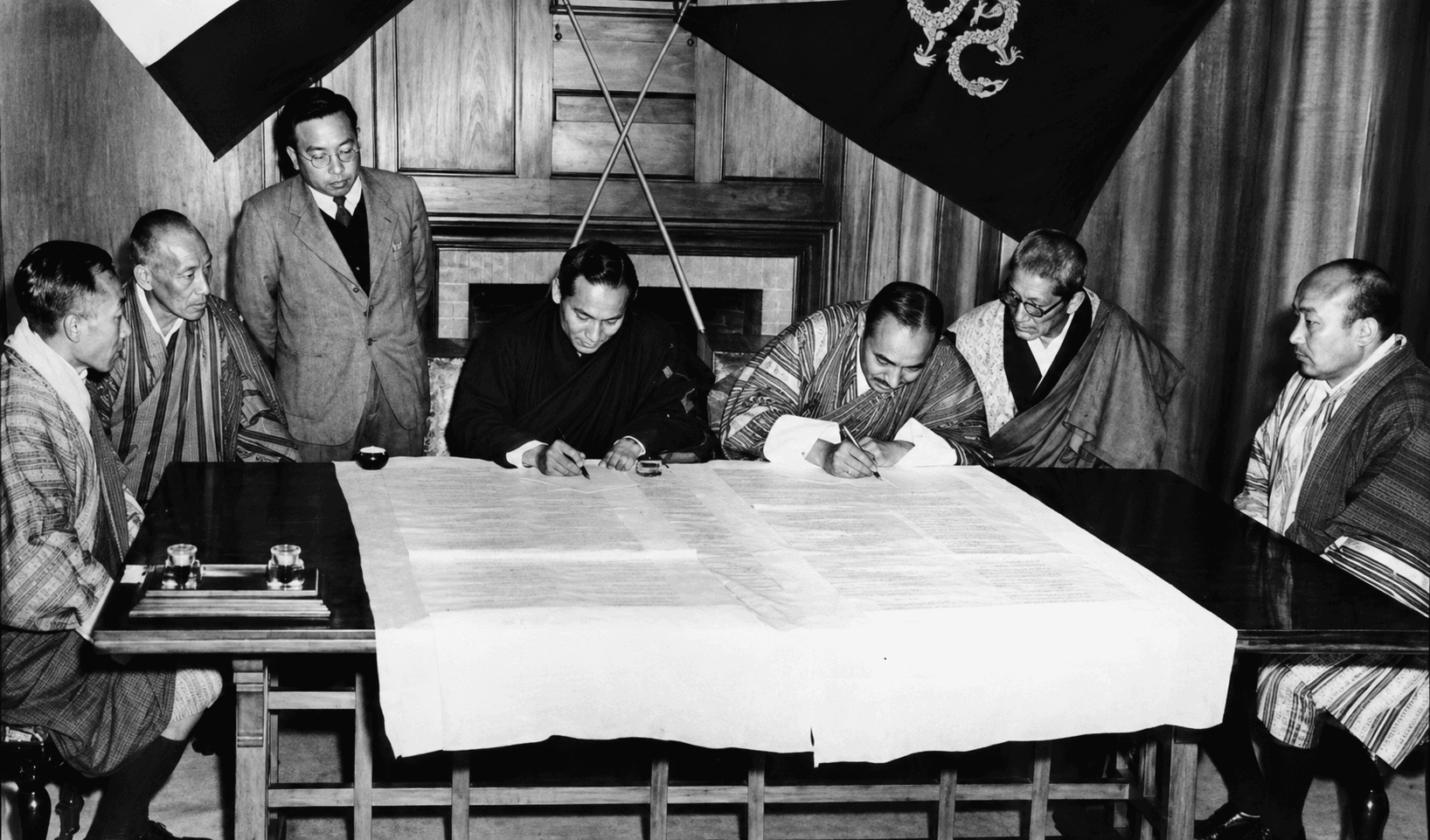
A Bhutanese bilateral event · Darjeeling, India
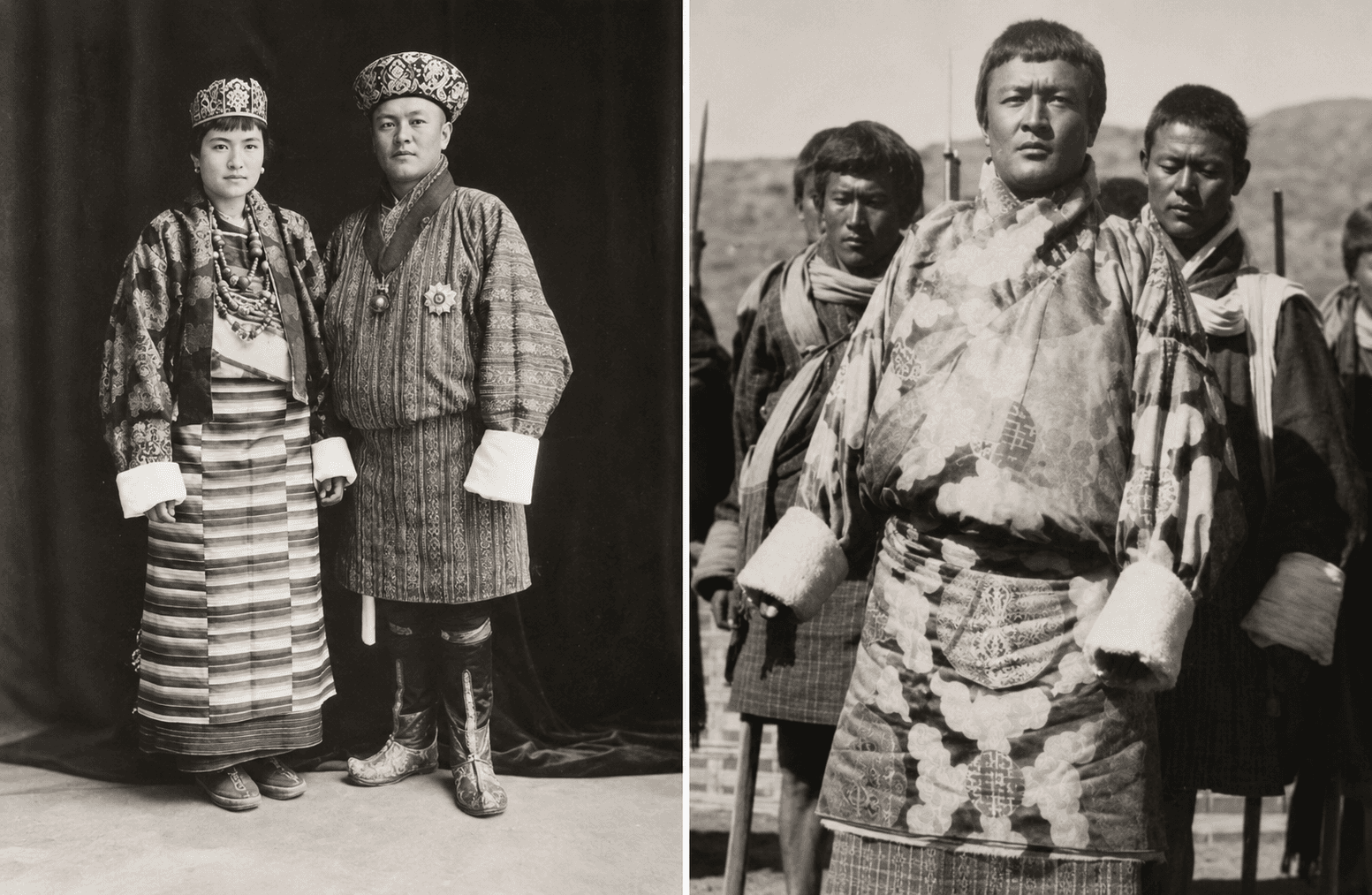
On 8 August 1949 in Darjeeling, His Majesty the Second Druk Gyalpo Jigme Wangchuck and the newly-independent Government of India signed the Bhutan-India Treaty of Friendship — the foundational bilateral framework that has shaped the Bhutan-India relationship across the subsequent decades. The treaty preserved substantial Bhutanese sovereignty while establishing the framework for the deep practical partnership (economic, security, cultural) that contemporary Bhutan and India operate within. The treaty was revised in 2007 to remove a clause that could have been read as constraining Bhutanese foreign-policy autonomy.
On 8 August 1949, His Majesty the Second Druk Gyalpo Jigme Wangchuck and the Government of India (represented by Harishwar Dayal, the political officer for Sikkim) signed the Treaty of Perpetual Peace and Friendship in Darjeeling. The signing came at a pivotal moment — India had achieved independence from Britain in August 1947; the broader regional security framework was being reshaped by the Chinese revolution (which would conclude in October 1949) and the Tibetan-Chinese situation that would deteriorate across the subsequent years. The treaty replaced the earlier 1910 Treaty of Punakha (between Bhutan and British India) and established the framework for the contemporary Bhutan-India relationship. The signing was a careful diplomatic exercise on both sides — preserving Bhutanese sovereignty while establishing the framework for the deep practical partnership that both countries needed in the post-WWII regional context.
The 1949 Treaty established several foundational provisions. Mutual recognition — both parties recognised each other's sovereignty and territorial integrity. The advisory clause — the original treaty contained a clause stating that Bhutan would 'be guided by the advice of India' in matters of external relations; in practice this operated as Bhutanese consultation with India on major external matters rather than as a binding constraint on Bhutanese autonomy. Trade and transit — the treaty established the principal trade-and-transit framework that supports the contemporary Bhutan-India open border at Phuentsholing-Jaigaon and other crossing points. The territorial settlement — the treaty returned 32 square kilometres of Deothang territory to Bhutanese sovereignty, an area held by British India since the 1864-65 Duar War and persistently sought back across the intervening 80 years (His Majesty the Second Druk Gyalpo had pressed the question across the 1930s and 1940s; the 1949 settlement was the principal territorial concession to Bhutan beyond the autonomy framework). The combined framework provided the foundation for the Bhutan-India economic, security, and cultural integration that has developed across the subsequent decades. See Bhutan-India relations for the broader contemporary context.
On 8 February 2007, the Bhutan-India Treaty was revised under His Majesty the Fourth Druk Gyalpo (in his final year of formal reign before the 2006 voluntary abdication's full effect) and the Government of India under Prime Minister Manmohan Singh. The principal revision removed the advisory clause that could have been read as constraining Bhutanese foreign-policy autonomy; the revised treaty frames the Bhutan-India relationship on the basis of equal-sovereign cooperation. The revised framework also strengthened the economic-and-security cooperation provisions that have shaped the contemporary partnership. The 2007 revision is the principal contemporary treaty framework; the contemporary Bhutan-India relationship operates within this framework.
The contemporary Bhutan-India relationship that international visitors encounter — the ngultrum-rupee parity, the open border at Phuentsholing-Jaigaon, the Indian visitor numbers, the Bhutanese SDF differential for Indian visitors (Nu 1,200 vs USD 100), the hydropower-export economy — all operate within the framework that the 1949 Treaty established and the 2007 revision updated. The matched guide briefs international visitors on the broader bilateral context where relevant. For non-Indian-passport international visitors, the principal practical implication is that India is not viable as a transit route into Bhutan (the open border is for Indian-passport-holders); international visitors fly into Paro on Drukair or Bhutan Airlines. See the Bhutan from Singapore guide for typical routing.
Common questions
No — Bhutan retained sovereignty under both the 1949 Treaty and the 2007 revision. The advisory clause in the 1949 original could in principle have been read as constraining Bhutanese autonomy in external relations, but in practice it operated as consultation rather than a binding constraint; the 2007 revision removed this clause to clarify the equal-sovereign framework. Bhutan has been a fully sovereign country recognised as such by the United Nations (member since 1971), maintains independent foreign relations, and operates as a regional actor. The 1949 Treaty established the foundational partnership framework; it did not establish a protectorate.
Darjeeling was the regional administrative centre for the area through the British and early-post-independence period; the political officer for Sikkim (with broader regional remit covering Bhutan, Tibet, and the eastern Himalayan region) was based at Gangtok with a Darjeeling presence. The signing location reflected the practical regional administrative geography of 1949 rather than any Bhutanese-Indian political subordination.
Through several institutional registers: regular state-visit exchanges between His Majesty the Fifth Druk Gyalpo and the Indian Prime Minister; Indian development assistance covering infrastructure, education, health; the principal hydropower-export partnership (Chukha, Tala, Punatsangchhu, Mangdechhu, and other projects); the Indian Military Training Team (IMTRAT) supporting the Royal Bhutan Army; the open-border trade framework. The combined tradition is one of the more comprehensive bilateral partnerships in contemporary South Asia. See Bhutan-India relations for the contemporary framework.
Who was there
Person
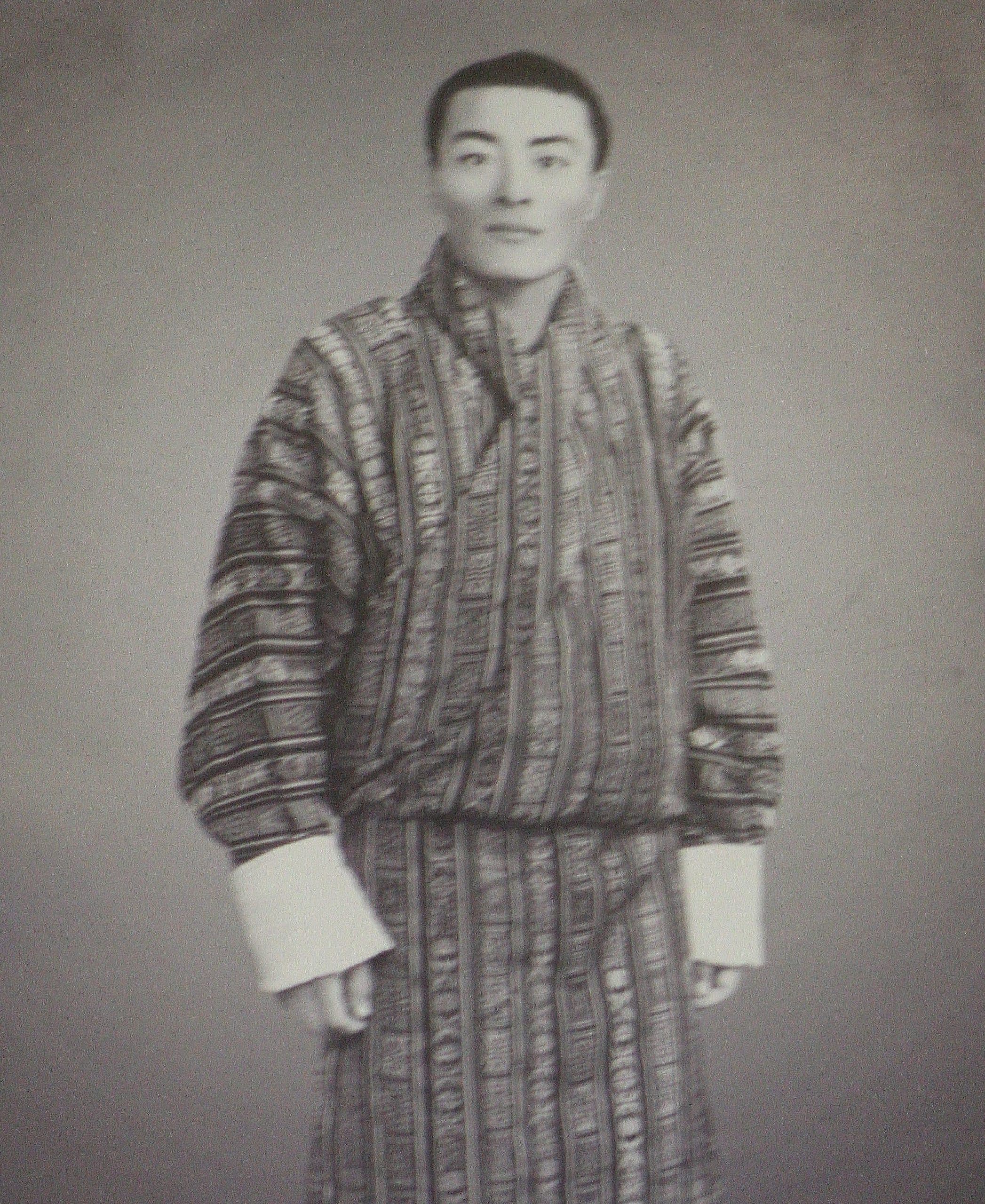
His Majesty the Second Druk Gyalpo Jigme Wangchuck — the consolidating monarch (reigned 1926-1952). Wangduecholing Palace, institutional consolidation, Bhutan-India treaty 1949.
Person
His Majesty Jigme Dorji Wangchuck (1929-1972) — the Third Druk Gyalpo of Bhutan. The modernising king who abolished slavery, established the National Assembly, and led UN admission.
Person
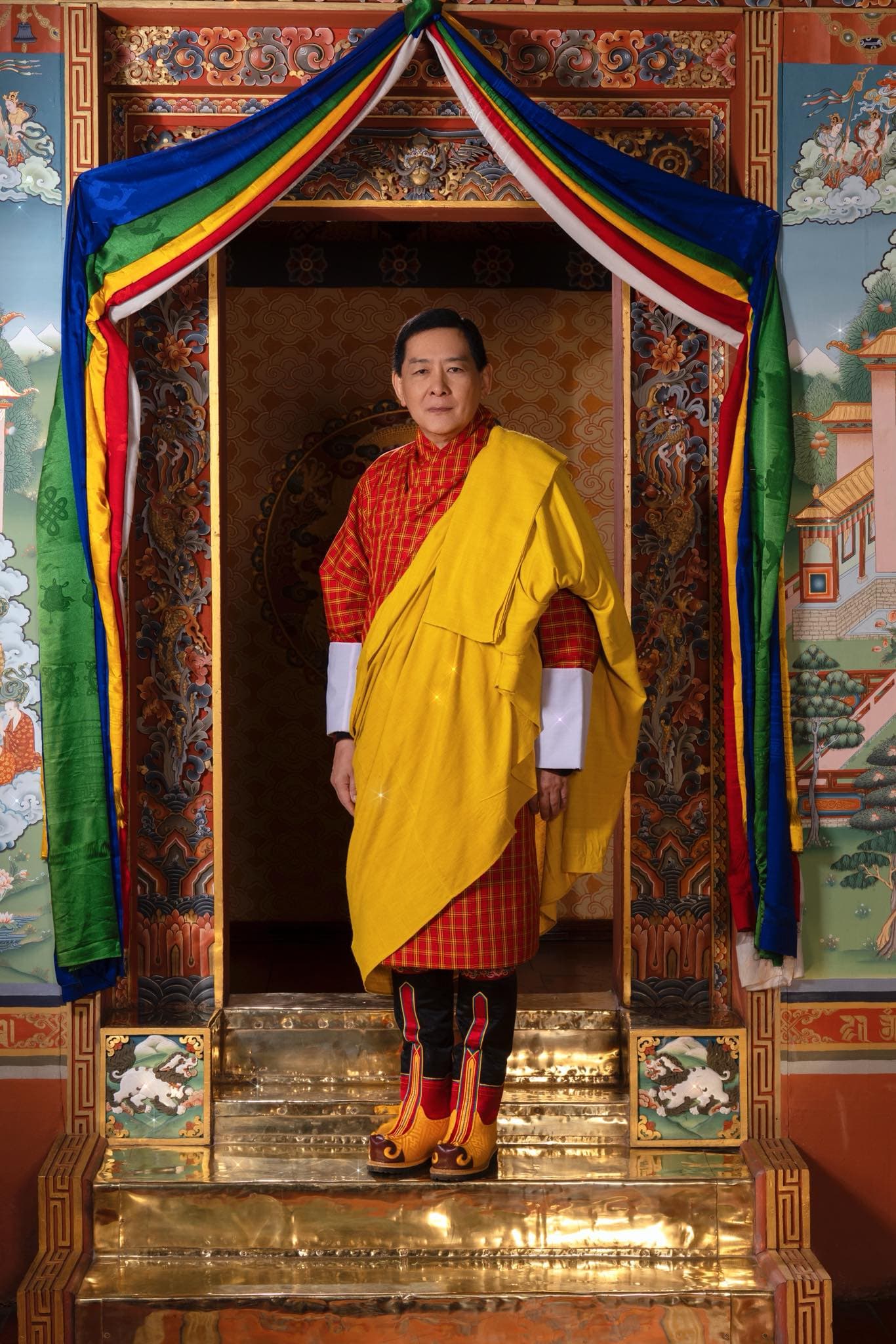
His Majesty Jigme Singye Wangchuck — the Fourth Druk Gyalpo of Bhutan. Articulated Gross National Happiness, opened Bhutan to tourism, voluntary abdication 2006.
What followed
Event
Bhutan's admission to the United Nations — 21 September 1971, under the Third Druk Gyalpo. The formal completion of Bhutan's emergence from self-isolation.
Event
Bhutan's Constitutional Democracy Transition — 2008. Constitution ratified, first democratic elections, the move from absolute to constitutional monarchy.
The wider idea
Theme
Bhutan-India relations — the foundational bilateral relationship. 1949 Treaty, hydropower partnership, ngultrum-rupee parity, the open border. The contemporary partnership.
Theme
The Wangchuck dynasty — the hereditary monarchy of Bhutan since 17 December 1907. Five reigning monarchs across five generations. The contemporary state's institutional spine.
Five questions. A bespoke draft back within a day or two.