Preparing
LoadingPreparing
Loading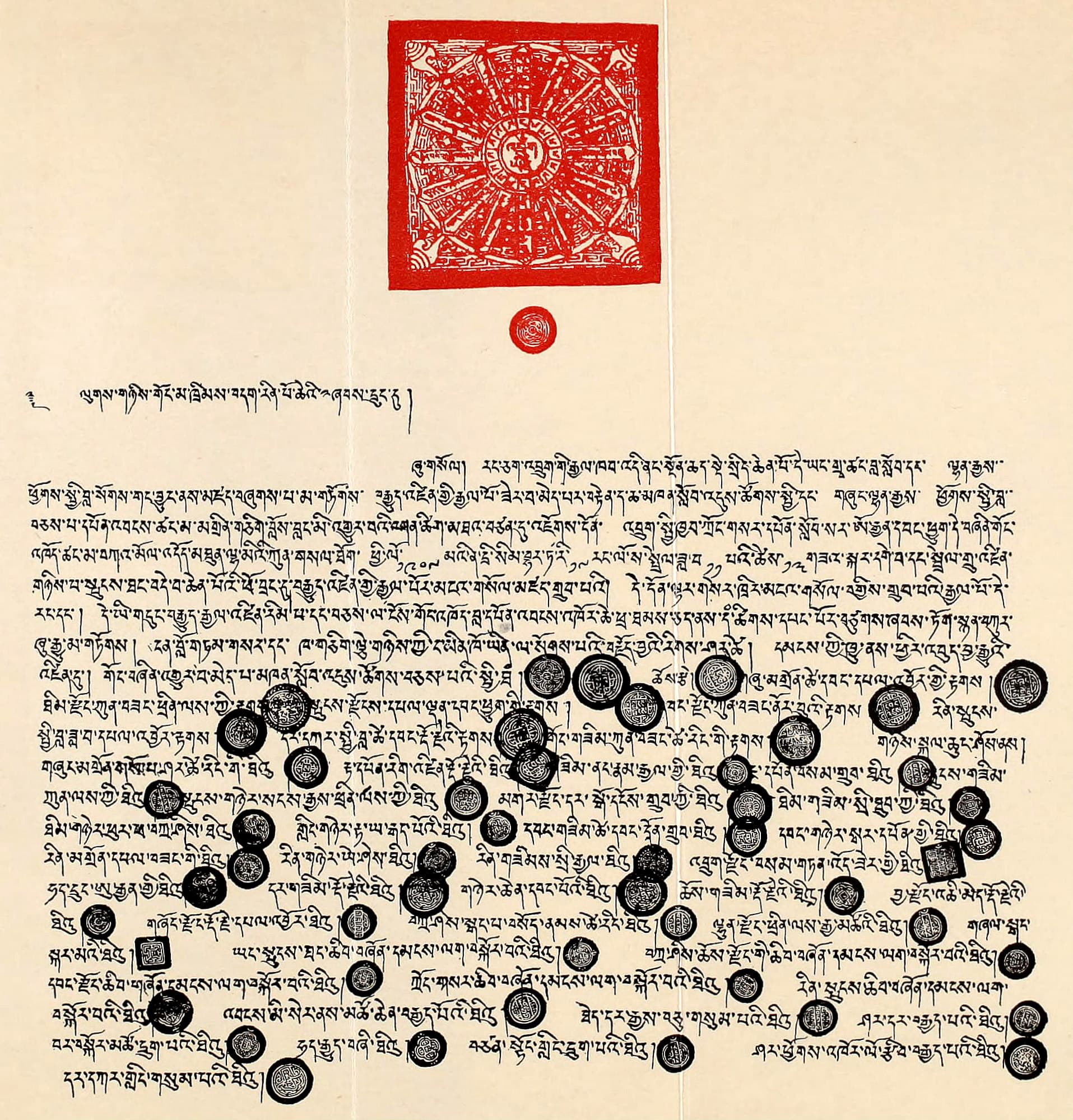
A Bhutanese royal event · Punakha Dzong
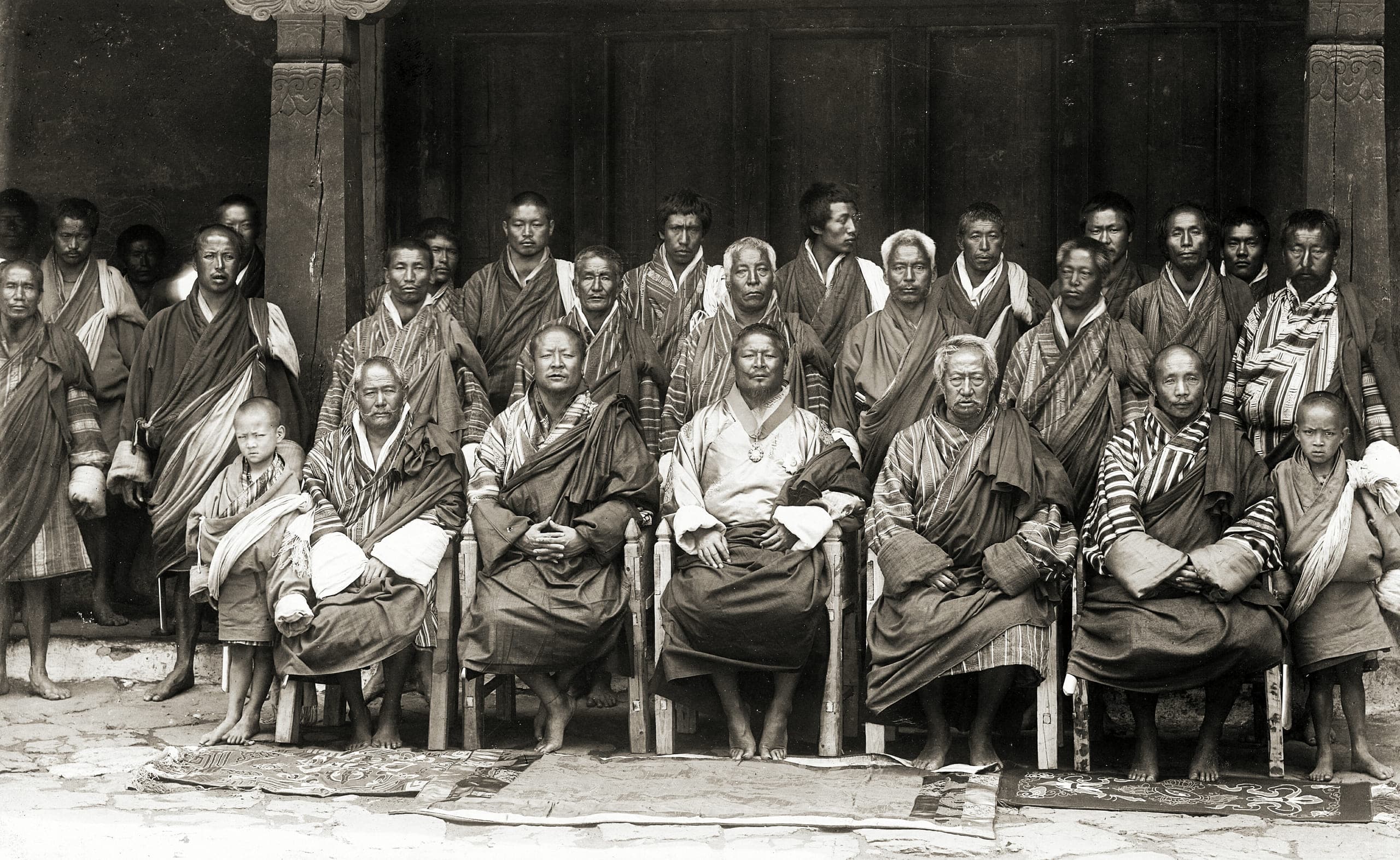
On 17 December 1907 at Punakha Dzong, an assembly of the Lhengye Tshog, the Central Monk Body under the Je Khenpo, the principal poenlops and dzongpoens, and the senior government officials of Bhutan signed and sealed the Oath of Allegiance — unanimously electing His Majesty Ugyen Wangchuck as the First Druk Gyalpo and establishing the hereditary monarchy that continues to the present. The document itself, sealed in red with the Nga Chudrugma seal of Zhabdrung Ngawang Namgyal, is the founding artefact of the contemporary Bhutanese state. The date — 17 December — has been the Bhutanese National Day ever since.
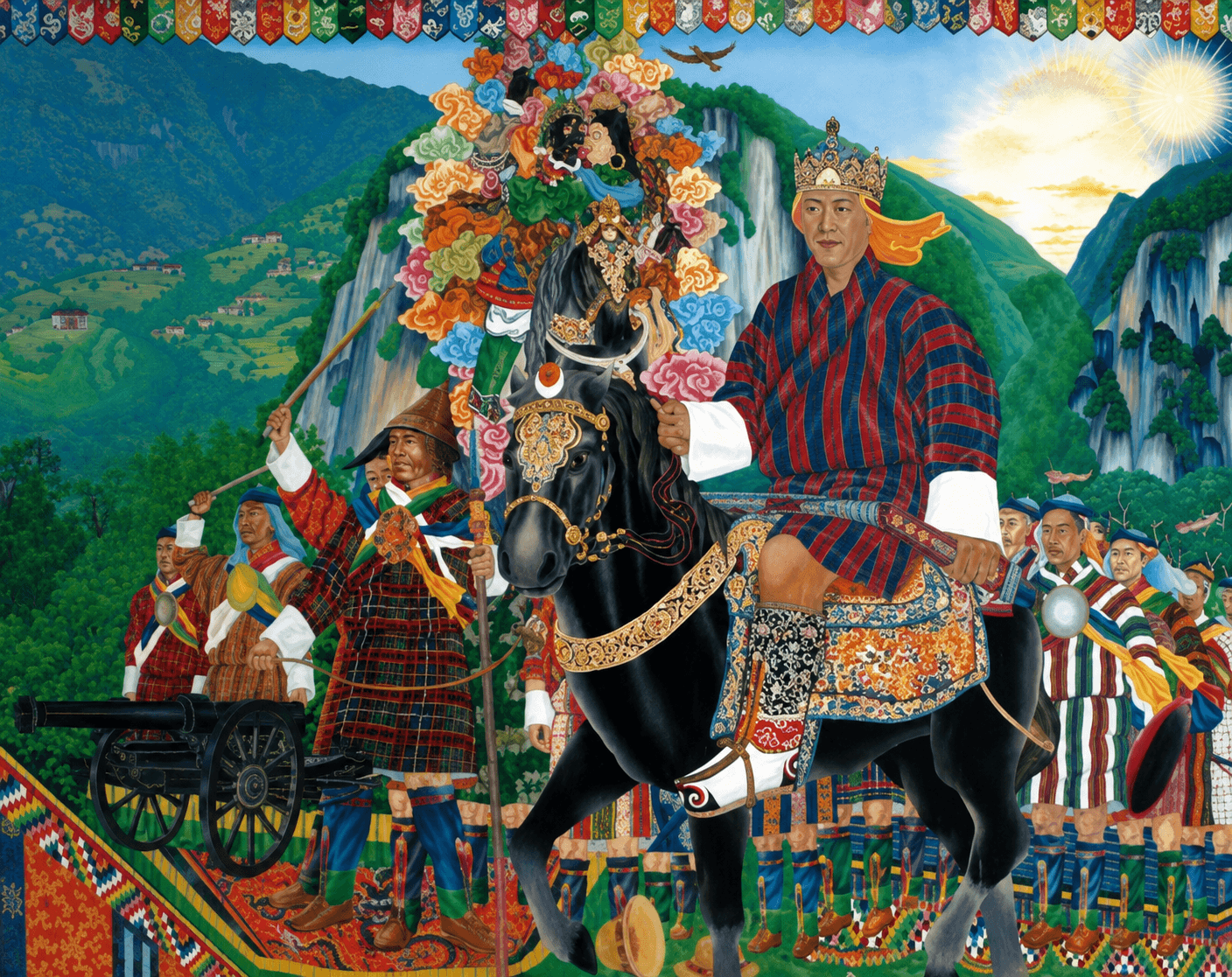
By 1906 both principal seats of the old Choesi institutional structure — the Zhabdrung's seat as religious head of state, and the Druk Desi's seat as political head — sat vacant. Druk Desi Sangay Dorji had died in 1903 after an eighteen-year reign; his successor Choglye Truelku Yeshe Nguedrup served briefly before retiring in 1906 (later returning as Je Khenpo, 1915-1917) and no new Druk Desi was nominated. Zhabdrung Jigme Choegyal had died in 1904 and the new Zhabdrung incarnation had not yet been recognised. With both seats empty, the Lhengye Tshog (the Royal Cabinet) faced the institutional question that had hung over the country for the previous century: could the Choesi dual-system framework continue? After deliberation across 1906 and into 1907, the assembled body resolved that the country needed a hereditary monarchy under His Majesty Ugyen Wangchuck — the Trongsa Penlop whose paramount authority across the country had been consolidated since the 1885 settlement at Changlimithang, and whose diplomatic standing had been established at the 1904 Anglo-Tibetan mediation at Lhasa.
On 17 December 1907 — corresponding to the 12th day of the 11th month of the Earth Monkey year in the Bhutanese lunar calendar — the assembly convened at Punakha Dzong, the historical winter capital of the country and the principal religious-political seat since the time of the Zhabdrung. The signatories included: the full Lhengye Tshog (the Royal Cabinet); the Je Khenpo and the Central Monk Body of the Zhung Dratshang; the principal poenlops (Trongsa, Paro, Daga) and dzongpoens of the dzongkhags; the senior government officials of the country. Two original copies of the Oath were prepared. Each was sealed in red with the Nga Chudrugma seal of Zhabdrung Ngawang Namgyal, which had served as the official seal of every Zhabdrung successor and was now imprinted in confirmation of the new constitutional structure. The British delegation, led by Sir John Claude White (the Political Officer in Sikkim), attended as witnesses but did not sign — the founding was a sovereign Bhutanese act, not a British-mediated settlement.
The Oath document itself states the date in the canonical Bhutanese form: '17 December 1907, corresponding to the 12th day of the 11th month of our own year of the Earth Monkey'. The text affirms the unanimous election of His Majesty Ugyen Wangchuck as the First Druk Gyalpo, the principle of hereditary succession through His male line, the continued role of the Je Khenpo and the Zhung Dratshang in the religious life of the country, and the institutional framework for the new constitutional structure. The choice of date is significant — the Earth Monkey year of the Bhutanese lunar calendar carries auspicious religious associations; the date 17 December has remained the Bhutanese National Day for over a century. The two original copies of the Oath are preserved in the National Archives.
The Bhutanese National Day on 17 December commemorates the 1907 founding each year, with the principal national ceremony at Changlimithang Stadium in Thimphu. The 17 December 2007 centenary was a major state event marking both the hundred-year continuity of the dynasty and the parallel constitutional democracy transition — His Majesty the Fifth Druk Gyalpo had formally ascended in December 2006 and would be formally crowned at Tashichho Dzong on 6 November 2008. The 2008 Constitution of Bhutan, ratified across the same centenary period, was the considered evolution of the framework first established at Punakha Dzong on 17 December 1907. The Punakha Dzong itself remains the principal ceremonial venue for royal-family events including the 2011 royal wedding of Their Majesties.
Common questions
Punakha Dzong was the winter capital of the Bhutanese state from the founding of the dual-system institutional structure by Zhabdrung Ngawang Namgyal in 1637 until the gradual shift of administrative functions to Thimphu in the 1950s and 1960s. The dzong has the principal religious-political weight of any building in the country. Choosing Punakha for the 1907 founding established continuity with the four-hundred-year institutional tradition and gave the new constitutional structure the maximum religious-political legitimacy.
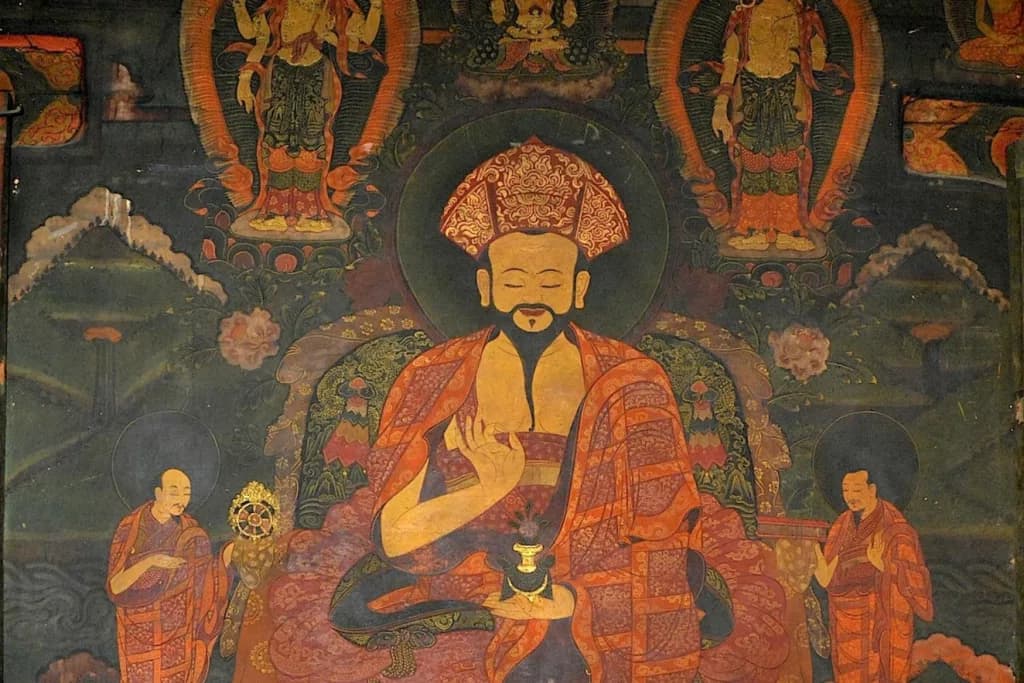
The Nga Chudrugma is the personal seal of Zhabdrung Ngawang Namgyal, the founder of the unified Bhutanese state in the 17th century. The seal has served as the official seal of every Zhabdrung successor across the subsequent centuries and is the principal symbol of the religious-political authority of the Bhutanese state. Imprinting it in red on the 1907 Oath was the religious-political act that established continuity between the Zhabdrung-era institutional framework and the new hereditary monarchy — the new framework was not a rupture but a constitutional evolution.
The two original copies of the Oath are preserved in the National Archives and are not on public display. The Royal Heritage Museum at the Trongsa Ta Dzong has substantial materials on the 1907 founding including reproductions of the seal and the document, photographs from the period, and detailed contextual narrative; for visitors with a serious interest, this is the principal place to encounter the founding. Punakha Dzong itself — open to visitors most days — is the physical site of the signing; the Kuenra (the principal ceremonial hall) is where the 1907 assembly convened.
Who was there
Person
His Majesty Ugyen Wangchuck (1862-1926) — the First Druk Gyalpo of Bhutan, crowned 17 December 1907 at Punakha Dzong. The unifier of the modern Bhutanese state.
Person
Trongsa Poenlop Jigme Namgyel (1825-1881) — the Black Regent, architect of united Bhutan, father of His Majesty the First Druk Gyalpo. The principal pre-monarchy figure.
Person
The Zhabdrung Ngawang Namgyal (1594-1651) — the founder of unified Bhutan. The 17th-century Drukpa Kagyu lama who built the dzong system and repulsed Tibetan invasions.
Where it stands now
Monument
Punakha Dzong — the Palace of Great Happiness, founded 1638. The history, the architecture, what to expect on a visit.
Monument
Trongsa Dzong — the ancestral seat of the Wangchuck dynasty, the largest dzong in Bhutan. History, the Royal History Museum, visiting.
Monument
Tashichho Dzong — the seat of Bhutan's central government and Je Khenpo summer residence in Thimphu. History, architecture, visiting.
What followed
Event
The Battle of Changlimithang — February 1885. The consolidation moment ending the 19th-century civil-war period; set the stage for the 1907 monarchy.
Event
The 1904 Anglo-Tibetan Mediation — His Majesty Ugyen Wangchuck's diplomatic crucible at the Younghusband expedition; the foundation of British recognition leading to 1907.
Event
The Treaty of Punakha — 8 January 1910. Replaced Sinchula; doubled the British subsidy; framed external affairs. The Bhutan-British India framework until 1949.
Five questions. A bespoke draft back within a day or two.