Preparing
LoadingPreparing
Loading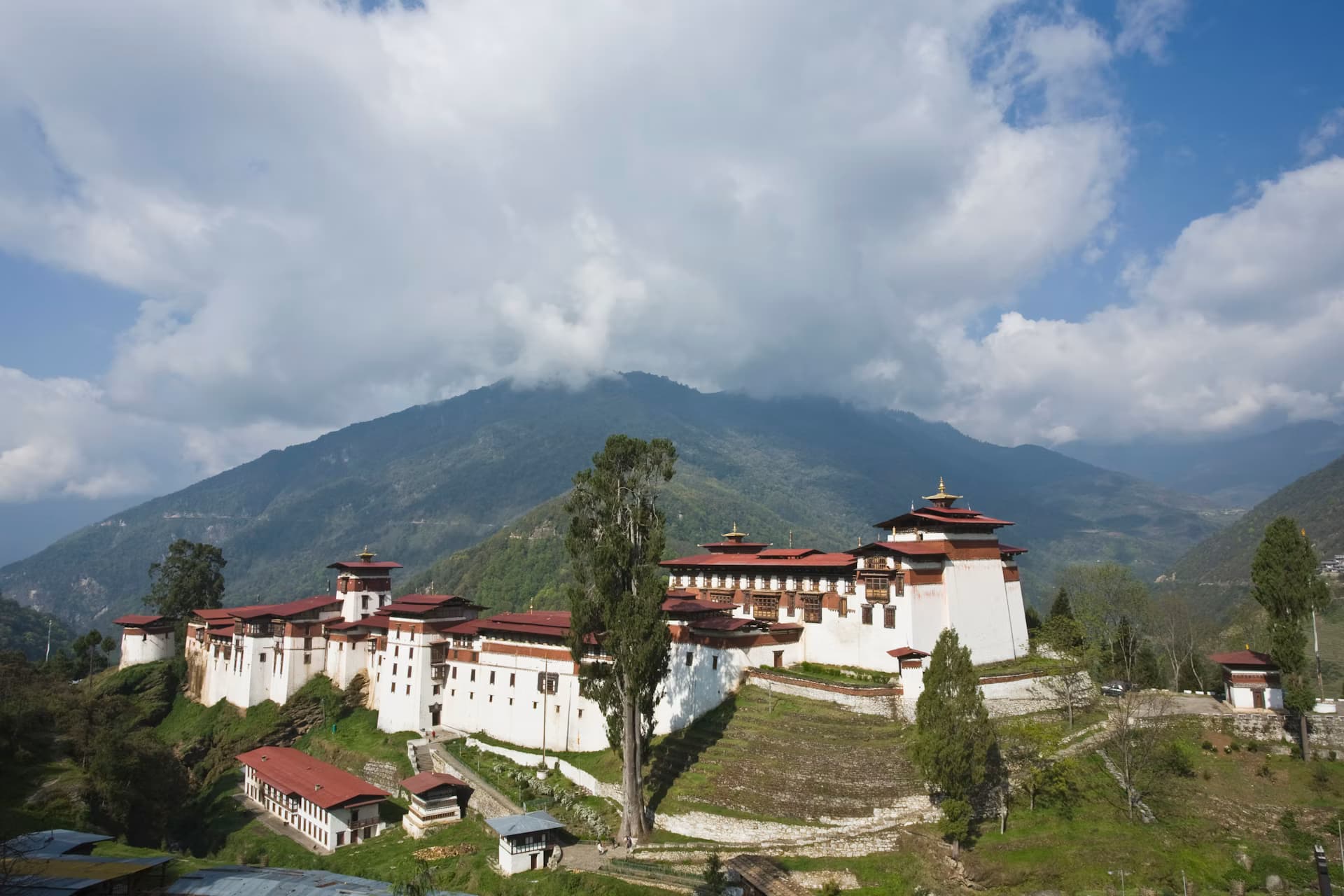
The ancestral seat of the Wangchuck dynasty
Trongsa Dzong sits on a high ridge above the Mangde Chhu gorge in central Bhutan at 2,200 metres elevation. It is the largest dzong in the country by floor area, founded in 1648 by Chogyel Mingyur Tenpa as the seat of the Trongsa Penlop — the Governor of central Bhutan. The Wangchuck dynasty arose from this position; every Crown Prince of Bhutan serves as Trongsa Penlop before ascending the Golden Throne.
Also known as · Chokhor Raptentse Dzong
Trongsa Dzong commands the only road between western and eastern Bhutan. For nearly four centuries, every traveller, every army, every messenger has had to pass beneath its walls. The dzong was founded in 1648 by Chogyel Mingyur Tenpa, the first Trongsa Penlop (Governor of Trongsa) and lieutenant of the Zhabdrung. The position made the Trongsa Penlop one of the most powerful figures in the Bhutanese polity — controlling all east-west trade and all military movement — and the Wangchuck dynasty rose from this strategic foundation.
Ugyen Wangchuck, the first Druk Gyalpo, was the Trongsa Penlop when the National Assembly unanimously elected him as Bhutan's hereditary monarch on 17 December 1907. The election ended decades of internal civil conflict and inaugurated the modern Bhutanese state. By tradition continued through to His Majesty the 5th King, every Crown Prince of Bhutan serves as Trongsa Penlop before ascending the Golden Throne — a formal tenure at the dzong that includes administrative responsibility for the central dzongkhags and ceremonial residence in the dzong's principal apartments.
Trongsa Dzong is the largest dzong in Bhutan by floor area — twenty-five lhakhangs and a labyrinthine arrangement of courtyards, corridors, and stair-cases. The dzong's former watchtower (Ta Dzong, a fortified observation post above the principal complex) was converted in 2008 to the Royal History Museum, which traces the Wangchuck dynasty's history from the first Trongsa Penlop through to His Majesty the 5th King. The museum's collection includes royal-court artefacts, the original Tibetan-Bhutanese trade ledgers, and a notable collection of Bhutanese textile arts.
Visiting
Common questions
Ugyen Wangchuck, the first Druk Gyalpo, was the Trongsa Penlop when the National Assembly unanimously elected him as Bhutan's hereditary monarch in 1907. By tradition continued through to His Majesty the 5th King, every Crown Prince of Bhutan serves as Trongsa Penlop before ascending the Golden Throne.
Trongsa is the largest dzong in Bhutan by floor area — twenty-five lhakhangs and an extensive arrangement of courtyards, corridors, and stair-cases. The architectural complexity reflects the dzong's centuries-long role as the administrative centre of central Bhutan.
Housed in the dzong's former watchtower (Ta Dzong), the museum was opened in 2008 and traces the Wangchuck dynasty's history from the first Trongsa Penlop through to His Majesty the 5th King. The collection includes royal-court artefacts, the original Tibetan-Bhutanese trade ledgers, and Bhutanese textile arts. Allow 1–2 hours for a thorough visit.
Approximately 7 hours by road from Paro via Thimphu, Wangdue, and the Pele La pass (3,420m). Most itineraries break the drive with an overnight in Punakha or Phobjikha. There is a domestic Drukair flight from Paro to Bumthang's Bathpalathang airport (2 hours' drive from Trongsa) that can reduce the road portion in clear-weather windows.
Trongsa has limited premium options — Yangkhil Resort and Tashi Ninjay Resort are the principal choices. Most visitors base in Bumthang (2 hours' drive) at Amankora Bumthang or Six Senses Bumthang and travel to Trongsa for the dzong visit.
Journeys featuring this site
Journey
A fourteen-night Bhutan east-to-west circuit exiting via Samdrup Jongkhar and Guwahati. The full eastern dzongkhags, the quieter half of the country.
Journey
A seven-night Bhutan journey timed to Thimphu Tshechu in autumn — second-tier seating, a culturally fluent guide, Bhutanese lodges.
Journey
A six-night winter journey through Bhutan in January — clearest Himalayan visibility, Punakha's warm valley, fewer travellers, and lodges by the fire.
Five questions. A bespoke draft back within a day or two.