
Preparing
LoadingPreparing
Loading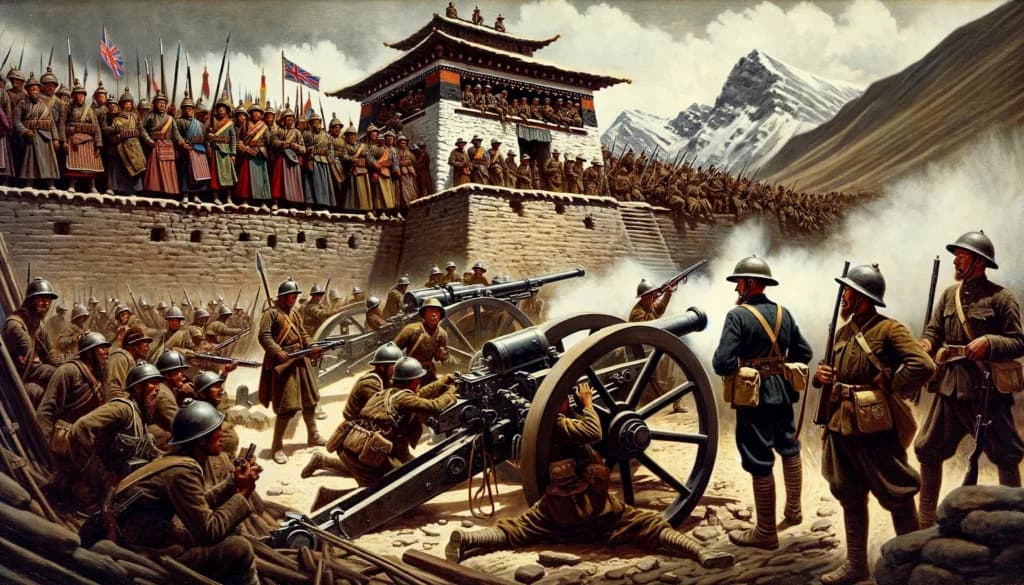
A Bhutanese historical event · Chumbi Valley, Lhasa (Tibet)
When the British Younghusband expedition advanced on Lhasa in 1903-04, His Majesty Ugyen Wangchuck, then Trongsa Poenlop and the paramount political figure of Bhutan, joined the British column as mediator — neither siding with the British force nor with the Tibetan defenders, but operating between the two powers across the long approach march from the Chumbi Valley to Lhasa. His Majesty entered Lhasa in full chibdrel ceremony in August 1904, wearing for the first time the raven-headed crown adapted from His father's battle helmet, and was the chief negotiator (alongside the Nepalese resident) of the Treaty signed at the Potala Palace on 7 September 1904. The diplomatic standing this won — Colonel Francis Younghusband described Him as 'straight and possessed of a natural authority' — was the foundation of British recognition that made the 1907 founding of the hereditary monarchy possible.
By the early 1900s, the British Empire's broader strategic interest in Tibet — driven by concerns about Russian influence in Central Asia — had escalated into a planned military expedition. Colonel Francis Younghusband led the British force from the Chumbi Valley into Tibet in late 1903 and through 1904, with two principal battles before reaching Lhasa: at Guru and at Gyantse, both heavy Tibetan defeats. The Tibetan government's diplomatic position required careful handling — a Tibetan-British settlement was needed without humiliating the Dalai Lama's authority. Younghusband sought a mediator with religious-political credibility on both sides; the choice fell on His Majesty Ugyen Wangchuck of Bhutan.
Younghusband had first invited His Majesty Ugyen Wangchuck to meet about the Tibet-British situation in 1903; His Majesty had sent His representative Thimphu Dzongpoen Kuenzang Thinley instead — a deliberate decision to avoid the appearance of siding with the British. His Majesty's real sympathies were with Tibet (the Tibetan Buddhist tradition is the religious anchor of Bhutan; the Bhutanese state is in many respects culturally and religiously derived from Tibet), but He did not want to risk the hard-earned internal peace of the country by getting drawn into a foreign war. The mediator role was the elegant solution — His Majesty joined the British column in the Chumbi Valley as a neutral diplomatic figure rather than as a fighter. Across the long march to Lhasa, He operated between the two powers — providing the Tibetan side with a religiously-credible Buddhist intermediary and the British side with a Himalayan political figure of substantial standing.
The British expedition reached Lhasa in August 1904 after the two preceding battles. His Majesty Ugyen Wangchuck entered the city in full chibdrel ceremony — the traditional Bhutanese ceremonial procession reserved for the most senior figures — wearing for the first time His raven-headed crown, adapted by His own command from His father Trongsa Poenlop Jigme Namgyel's battle helmet. The crown is now the iconic visual register of the Bhutanese monarchy; its first ceremonial use was the 1904 entry into Lhasa. The choice of crown carried the symbolism intentionally — His Majesty was the son and successor of the architect of united Bhutan, entering Lhasa as the religious-political representative of a Himalayan Buddhist state in good standing with the British power.
On 7 September 1904, the Treaty was signed at the Potala Palace in Lhasa, ending the Anglo-Tibetan conflict. His Majesty Ugyen Wangchuck was the chief negotiator on behalf of the mediation, working alongside the Nepalese resident representing the second Himalayan neutral party. The Zhabdrung Jigme Choegyal (1862-1904) composed a poem in His Majesty's honour upon news of the achievement. The diplomatic standing won at Lhasa transformed the Bhutan-British India relationship: Colonel Francis Younghusband described His Majesty as 'straight and possessed of a natural authority'; Sir John Claude White, the British Political Officer in Sikkim, would the following year personally present in Bhutan the K.C.I.E. (Knight Commander of the Indian Empire) insignia to His Majesty. The personal rapport between Sir John Claude White and His Majesty Ugyen Wangchuck became the principal foundation of the Bhutan-British India relationship that would shape the 1910 Treaty of Punakha and the broader 20th-century framework.
The 1904 mediation is the direct diplomatic foundation of the 1907 founding of the hereditary monarchy. The British recognition of His Majesty Ugyen Wangchuck as a paramount Himalayan figure made the Lhengye Tshog's 1907 election — which the British accepted without reservation — possible in a way it might not have been a decade earlier. The Lhasa entry, the Potala Treaty negotiation, the K.C.I.E., and the Sir John Claude White rapport together established the standing that allowed the new monarchy to be born into a recognised international position rather than as an isolated regional dynasty. See the 1907 Oath of Allegiance and the 1910 Treaty of Punakha for the immediate sequel events.
Common questions
No. His Majesty Ugyen Wangchuck operated strictly as a mediator across the 1904 expedition; no Bhutanese troops fought on either side. The neutrality was deliberate — His Majesty's real sympathies were with Tibet (the religious-cultural anchor of Bhutan), but the country's hard-earned internal peace would have been substantially at risk in a foreign war. The mediator role allowed the country to retain its sovereignty while contributing to the Tibet-British settlement.
The Druk Gyalpo's ceremonial crown, surmounted by the head of a raven (Mahakala in His protector form). The crown was adapted by His Majesty Ugyen Wangchuck from His father Trongsa Poenlop Jigme Namgyel's battle helmet and first worn in ceremonial form at the 1904 entry into Lhasa. Every subsequent Druk Gyalpo has worn the raven-headed crown at coronation; it is the iconic visual symbol of the Bhutanese monarchy. Visitors can see contemporary photographs of the crown at the Royal Heritage Museum at Trongsa Ta Dzong.
The Tibetan government accepted the treaty under substantial duress — two prior battles had been heavy Tibetan defeats, and the British force was at Lhasa. The treaty established British trade and political access to Tibet without formally ending Tibetan sovereignty. His Majesty Ugyen Wangchuck's mediation softened the terms compared with what an unmediated settlement might have produced, but the broader Tibetan position was substantially weakened. The treaty was modified by subsequent agreements (1906, 1907) between the British, the Chinese, and the Russians, none of which involved Tibet directly.
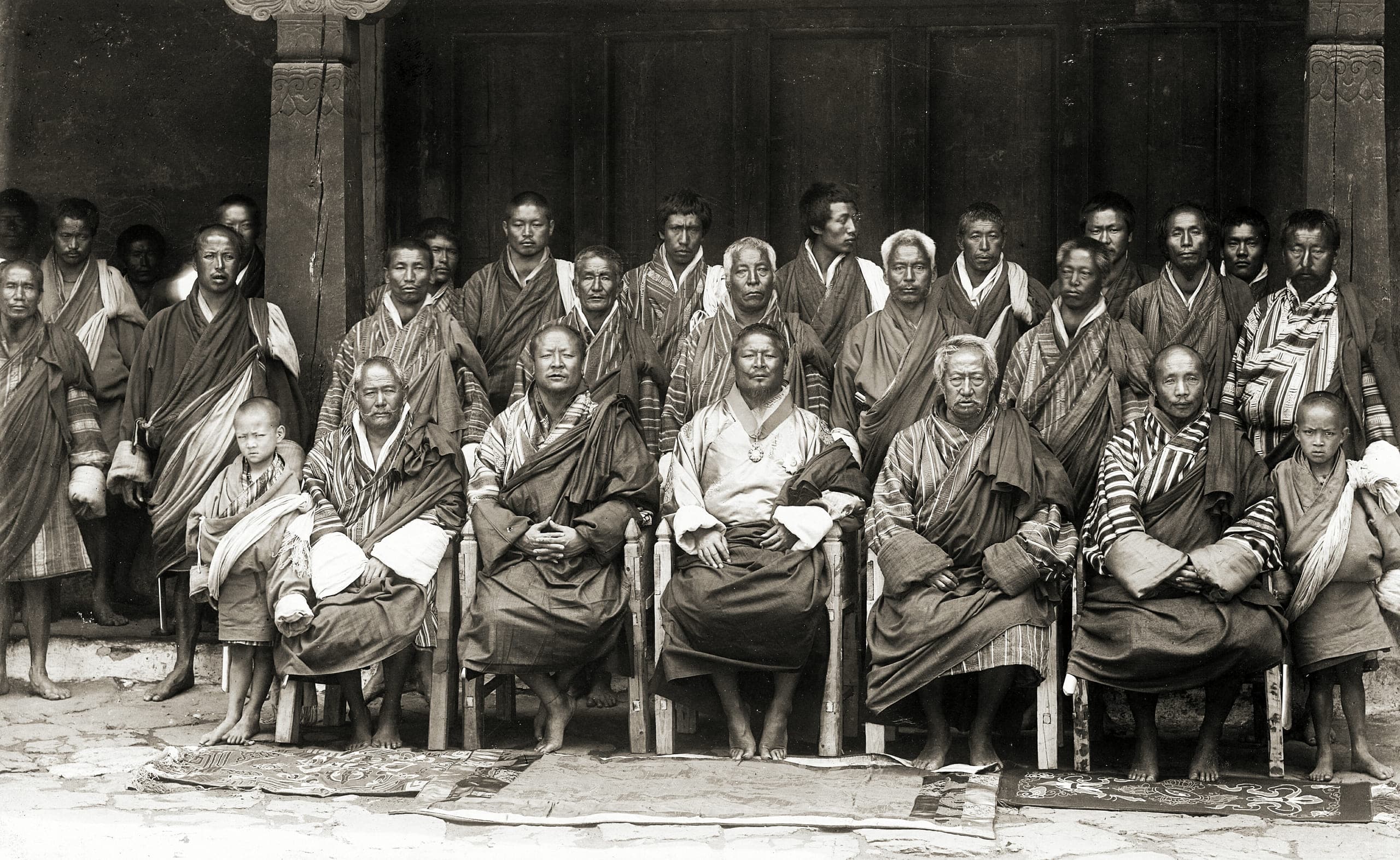
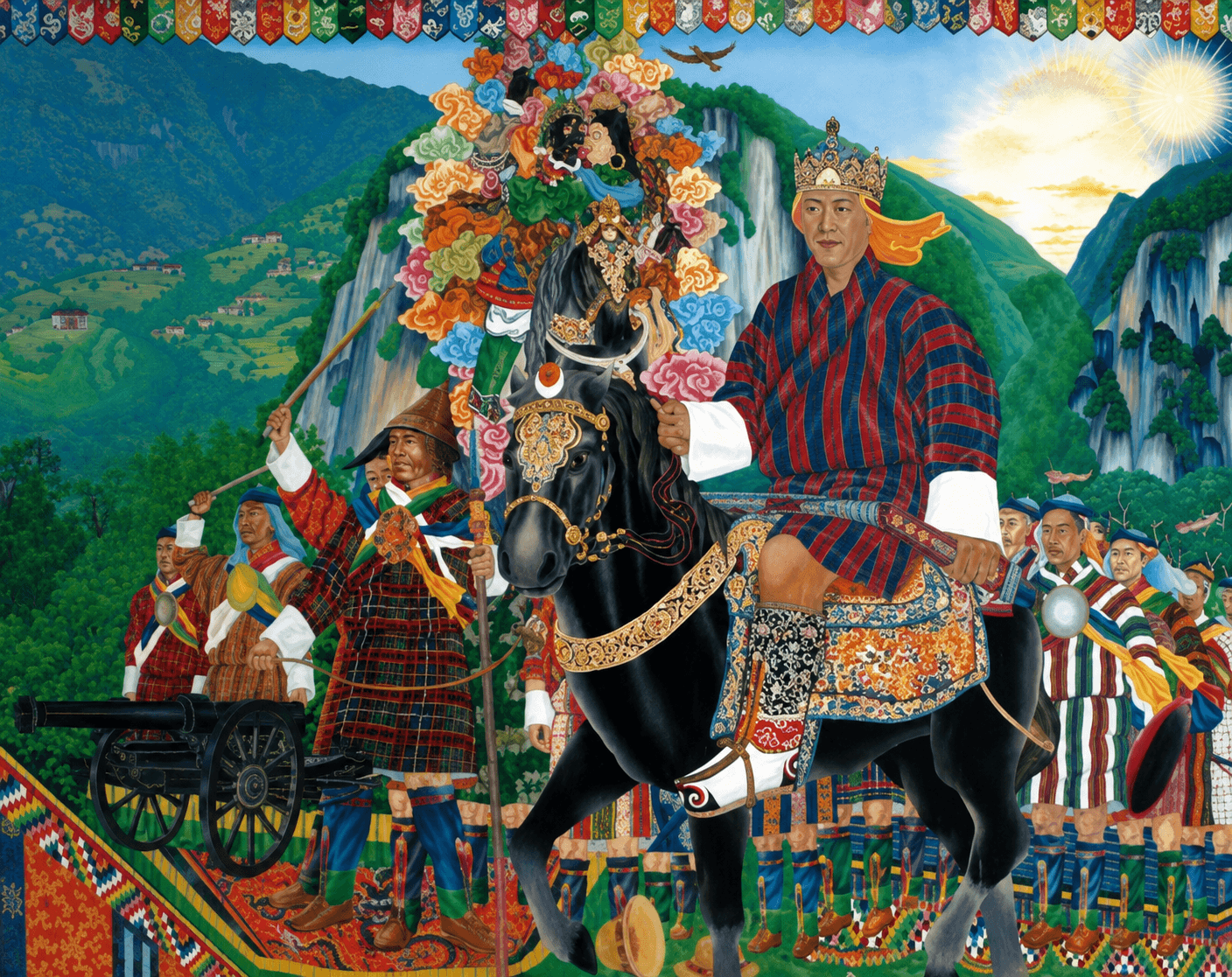
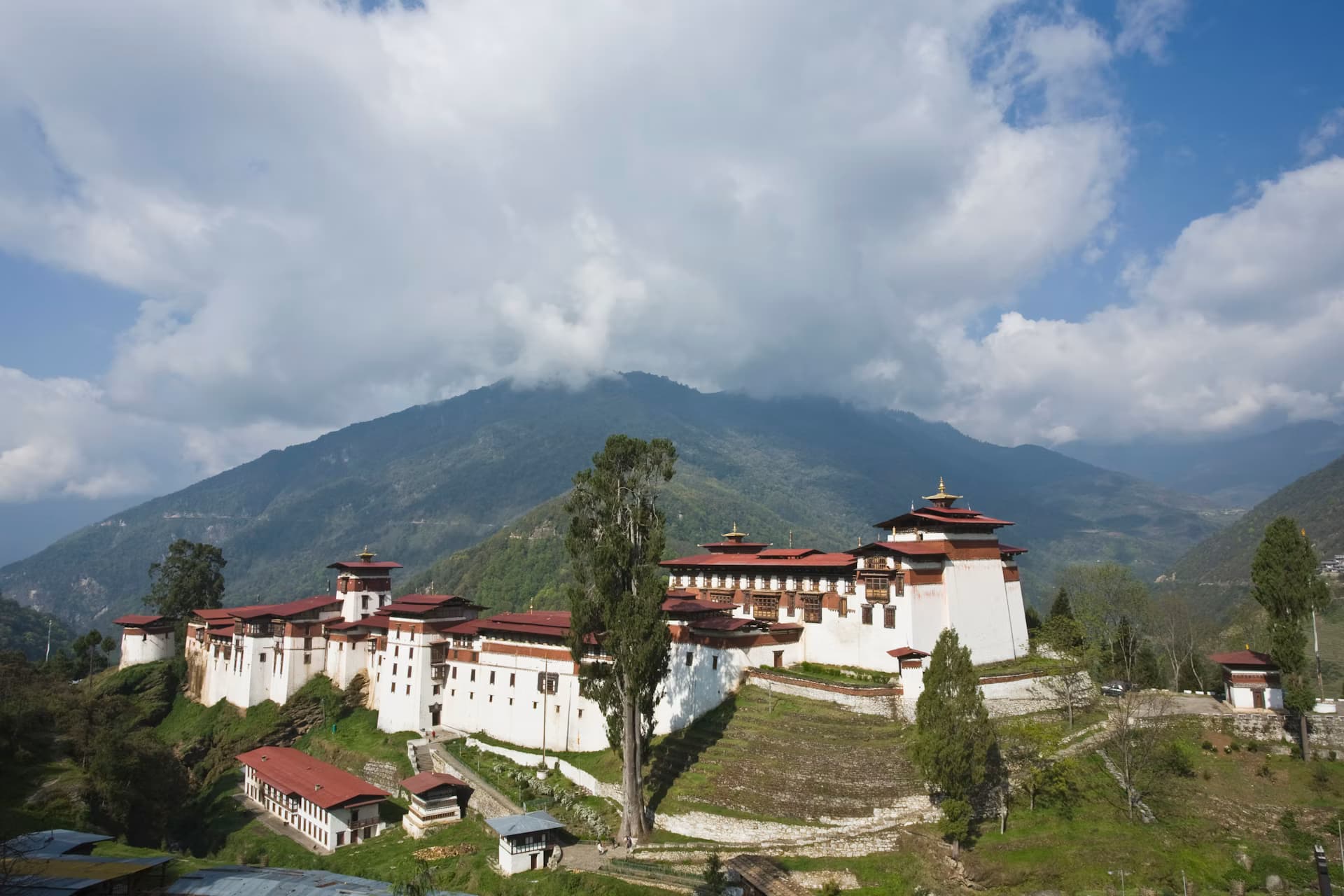
Who was there
Person
His Majesty Ugyen Wangchuck (1862-1926) — the First Druk Gyalpo of Bhutan, crowned 17 December 1907 at Punakha Dzong. The unifier of the modern Bhutanese state.
Person
Trongsa Poenlop Jigme Namgyel (1825-1881) — the Black Regent, architect of united Bhutan, father of His Majesty the First Druk Gyalpo. The principal pre-monarchy figure.
What followed
Event
The Oath of Allegiance — 17 December 1907 at Punakha Dzong. The founding document of the Wangchuck dynasty, sealed in red with the Nga Chudrugma seal of the Zhabdrung.
Event
The Treaty of Punakha — 8 January 1910. Replaced Sinchula; doubled the British subsidy; framed external affairs. The Bhutan-British India framework until 1949.
Event
The Battle of Changlimithang — February 1885. The consolidation moment ending the 19th-century civil-war period; set the stage for the 1907 monarchy.
Five questions. A bespoke draft back within a day or two.