Preparing
LoadingPreparing
Loading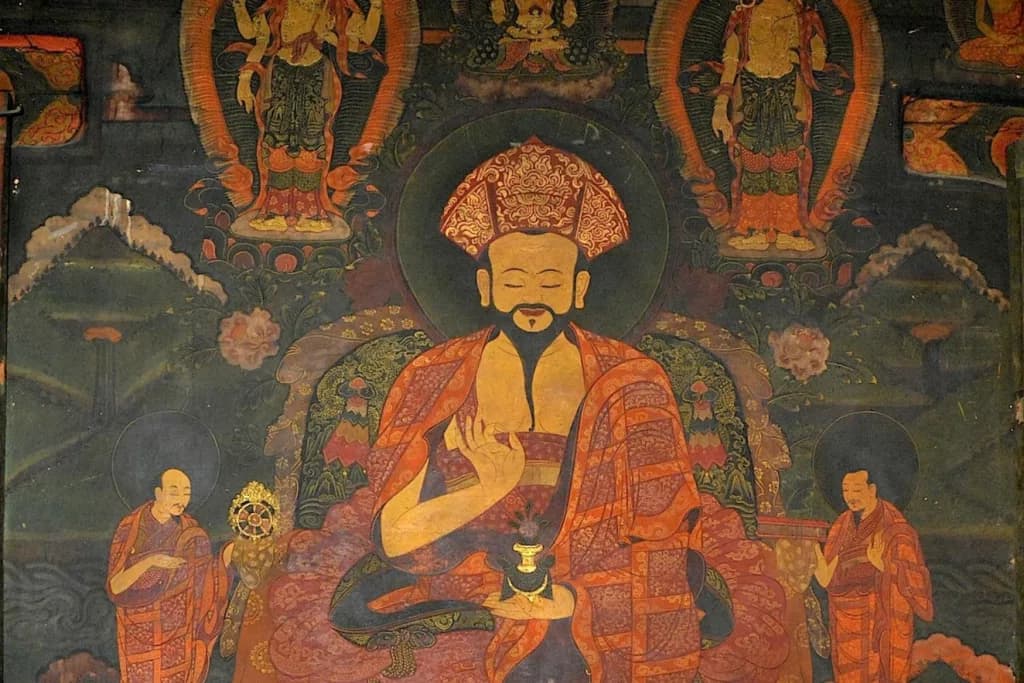
A Bhutanese religious and political founder
1594 to 1651
The Zhabdrung Ngawang Namgyal (1594-1651) was the Tibetan-born Drukpa Kagyu lama who unified Bhutan into a single state in the 17th century — establishing the dual-government system (the Je Khenpo as religious head, the Druk Desi as civic head) that endured until the 1907 Wangchuck monarchy, building the principal dzongs across the country (Punakha, Wangdue Phodrang, Paro Rinpung, Tashichho), and successfully repulsing five Tibetan invasions. The principal figure of the Bhutanese political-religious foundation.
The Zhabdrung Ngawang Namgyal was born in 1594 in Tibet to the Drukpa Kagyu lineage. The Drukpa Kagyu's principal seat was Ralung Monastery in central Tibet; the Zhabdrung was recognised in childhood as the reincarnation of Pema Karpo, the great Drukpa Kagyu master (1527-1592). Sectarian conflict with the Tsang king of Tibet — who favoured a competing Drukpa Kagyu candidate as Pema Karpo's reincarnation — led the Zhabdrung to flee Tibet southward in 1616, taking refuge in the western Bhutanese valleys. The Bhutanese lay and monastic communities welcomed him as the legitimate Drukpa Kagyu master; the Tibetan invasion that pursued him was repulsed at the Battle of Five Lamas (1634), the first of five major Bhutanese-Tibetan military encounters.
From his arrival in 1616, the Zhabdrung undertook the deliberate political-religious unification of the Bhutanese valleys — previously a patchwork of competing valleys, monastic factions, and local rulers. Principal achievements: established the dual-government system (the Choesi system) with the Je Khenpo as religious head of state and the Druk Desi as civic head, a structure that endured until the 1907 Wangchuck monarchy; codified the Bhutanese legal framework (the Tsa Yig) drawing on Buddhist principles; built the principal dzong system — Punakha Dzong (1637, the principal religious-political capital), Wangdue Phodrang Dzong (1638), Paro Rinpung Dzong (1646), Tashichho Dzong (1641), and others — as administrative-religious-defensive complexes that organised the country's political geography; established the Zhung Dratshang (the central monk body) as the institutional religious authority; successfully repulsed five Tibetan invasions between 1634 and 1648, each defeat reinforcing Bhutanese sovereignty.
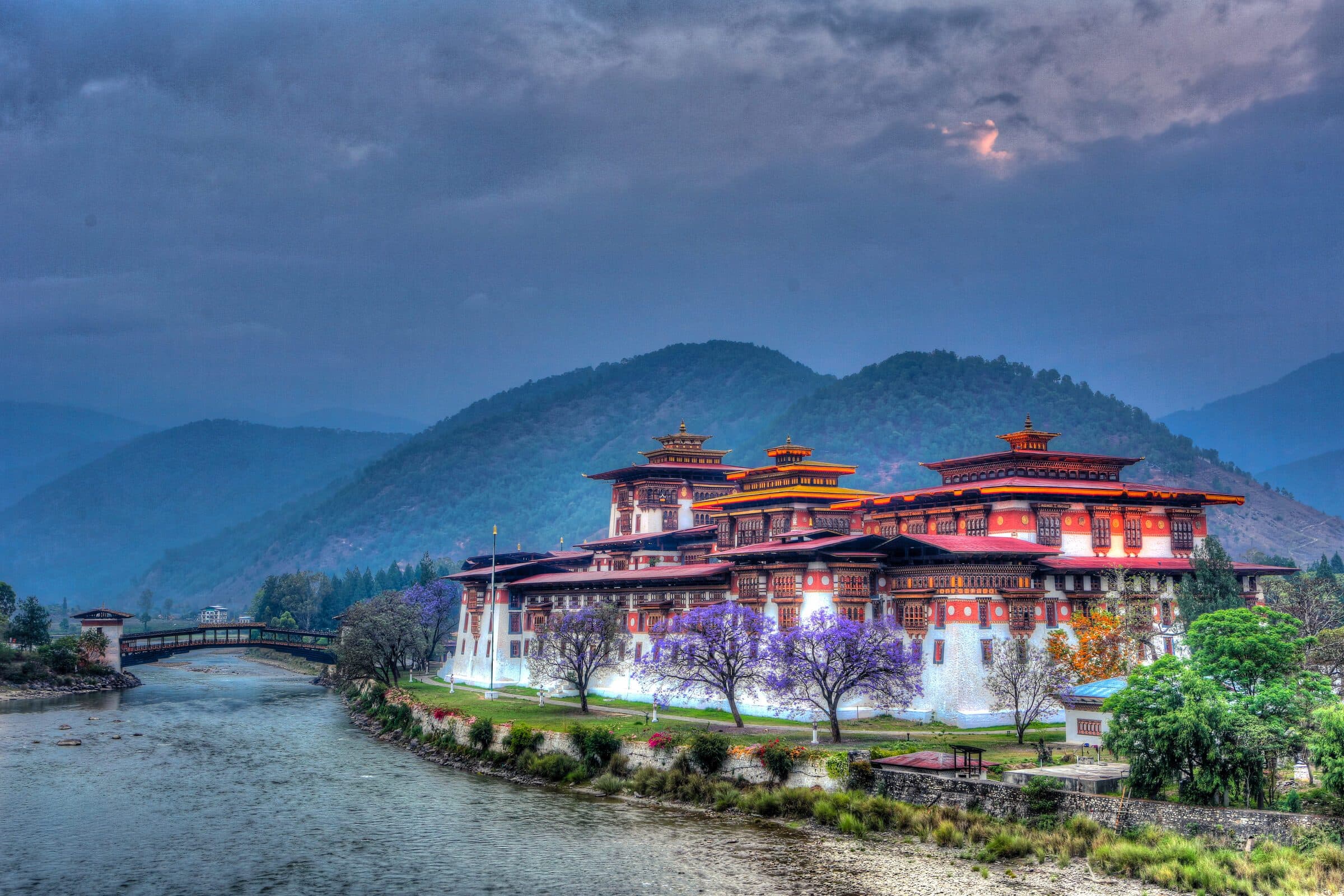
The Zhabdrung entered meditative retreat at Punakha Dzong in 1651 and remained in retreat until his death — though the death was concealed from the country for approximately fifty years (until 1705) to maintain political continuity through the institutional structures the Zhabdrung had established. The Zhabdrung's body is preserved at the Machhen Lhakhang inside Punakha Dzong; the lhakhang is one of the most sacred sites in the country and is opened only for specific religious ceremonies. The Zhabdrung's reincarnation lineage continues to the present — there are speech-, mind-, and body-incarnation lines, each held by a successive line of lamas, though the political role of the Zhabdrung incarnations was substantially modified after the 1907 establishment of the Wangchuck monarchy.
Throughout the country. Punakha Dzong — the principal religious-political capital established by the Zhabdrung in 1637; the Machhen Lhakhang containing the Zhabdrung's preserved body is the principal pilgrimage site. The principal dzongs — Wangdue Phodrang, Paro Rinpung, Tashichho, Trongsa, Drukgyel — all founded by the Zhabdrung or under his direction. The Punakha Drubchen festival — the annual reenactment of the 17th-century repulsion of the Tibetan invasion, the only Bhutanese festival to include the warrior-victory cham dances. The Choesi institutional structure — the contemporary Bhutanese state retains structural traces of the dual-government system, particularly in the relationship between the Zhung Dratshang and the civic government. The Zhabdrung is the principal foundational figure of the Bhutanese state; visitors with serious cultural interest will find references to him at every major dzong, in every standard Bhutanese cultural-history orientation, in the religious-political tradition of contemporary national identity.
Also known as
Common questions
Bhutan's centuries of self-isolation meant the Zhabdrung's story was not internationally circulated. Within Bhutan, the figure is foundational; internationally, the awareness has grown substantially since the 1974 tourism opening but remains less widespread than figures of comparable national significance in better-known countries.
The annual Drubchen festival at Punakha Dzong (February-March) reenacts the 17th-century repulsion of the Tibetan invasion — the only Bhutanese festival to include the warrior-victory cham dances. The festival is the principal celebration of the Zhabdrung-era unification narrative.
Only during specific religious ceremonies and with appropriate cultural-religious protocol — the matched guide arranges where the relationship allows. The lhakhang is not open to general tourism visiting; visitors typically encounter the Zhabdrung legacy through the broader Punakha Dzong visit, the dzong's central temple, and the cham masked dances during the Drubchen window.
Others in this story
Person
Guru Rinpoche — Padmasambhava, the 8th-century Vajrayana master, the principal religious figure of Bhutan. The eight manifestations, the principal sacred sites.
Person
Pema Lingpa (1450-1521) — the great Bhutanese terton (treasure-revealer) in the Nyingma tradition. The Mebar Tsho miracle, Tamshing Lhakhang, the three reincarnation lines.
What they built
Monument
Punakha Dzong — the Palace of Great Happiness, founded 1638. The history, the architecture, what to expect on a visit.
Monument
Tashichho Dzong — the seat of Bhutan's central government and Je Khenpo summer residence in Thimphu. History, architecture, visiting.
Monument
Rinpung Dzong (Paro Dzong) — the heap of jewels, founded 1644. History, architecture, visiting, the Paro Tshechu venue.
Monument
Drukgyel Dzong — the 1649 Bhutanese victory fortress, ruined by fire 1951, under restoration. The Chomolhari panorama and visiting.
Journeys that touch this
Journey
A ten-night Bhutan Buddhist pilgrimage for Asian-Buddhist travellers. Monastic context; matched monastic-trained guide; Bumthang religious circuit.
Journey
A nine-night Bhutan Buddhist journey for Thai, Japanese, and Korean travellers. Comparative Vajrayana / Theravada / Tendai / Zen / Seon. Knowledgeable monastic-trained guide.
Five questions. A bespoke draft back within a day or two.