Preparing
LoadingPreparing
Loading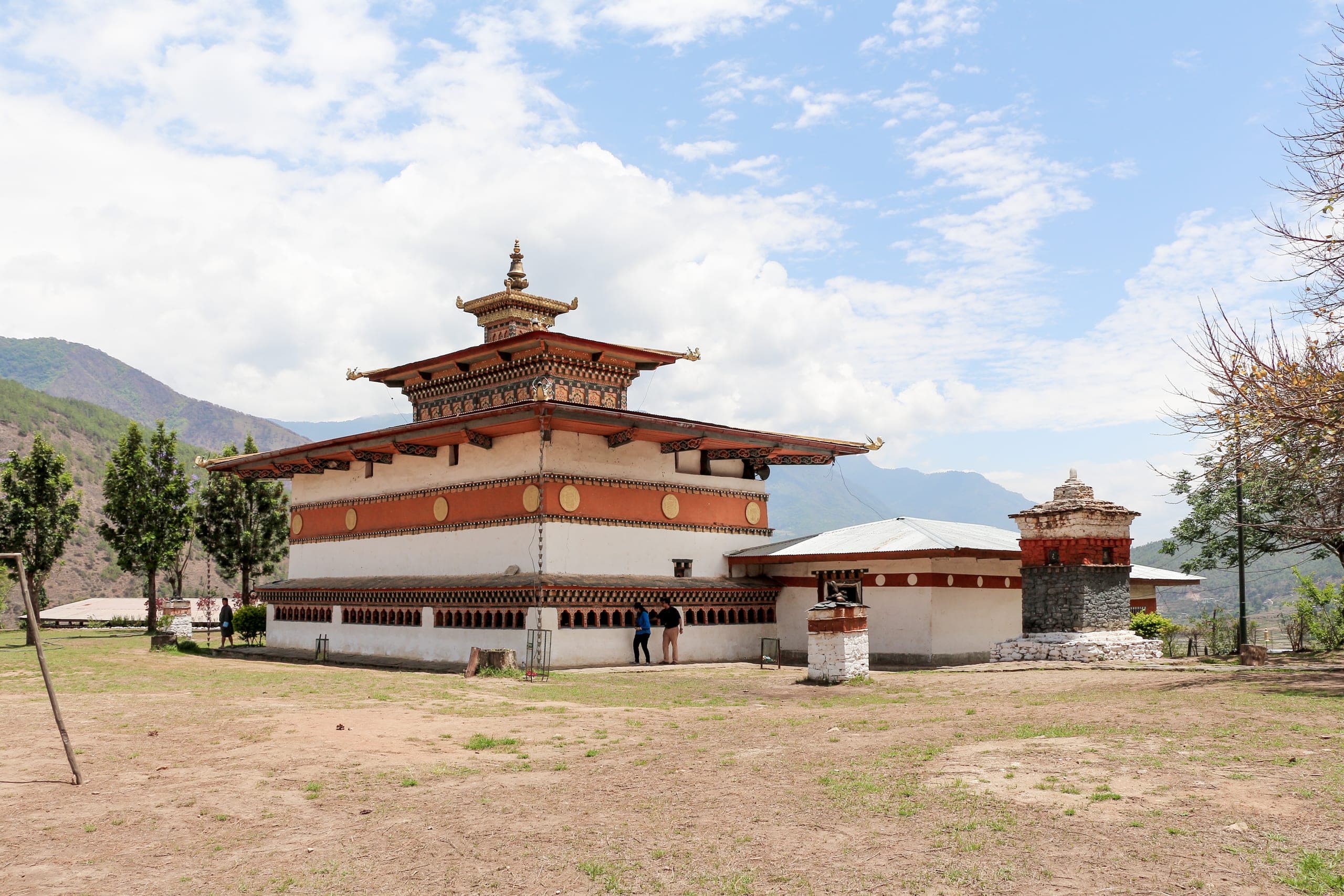
The Divine Madman's monastery
Chimi Lhakhang sits on a low hillock above the Lobesa rice fields, a 20-minute walk from the road south of Punakha. Built in 1499 by Lam Ngawang Choegyel and dedicated to the great 'Divine Madman' Drukpa Kunley, the lhakhang is the country's principal fertility pilgrimage site and the source of the phallus iconography seen on Bhutanese village houses.
Also known as · Chimi Lakhang · Divine Madman's Monastery · Temple of Fertility
Drukpa Kunley (1455–1529) is one of the most-loved figures in Bhutanese religious history — a wandering Tibetan yogin who used wild humour, irreverence, song, and uninhibited behaviour to teach the dharma to a population that, in his estimation, had grown stuck in orthodoxy. He shocked establishment monks, wrote bawdy verse, and used his 'flaming thunderbolt of wisdom' (held in iconography to be his phallus) to subdue demons and bring fertility to childless couples. The Bhutanese village tradition of painting phalluses on house walls — distinctive and widely-photographed — comes directly from the Drukpa Kunley lineage. Chimi Lhakhang was built in 1499 by his cousin Lam Ngawang Choegyel, on a site Drukpa Kunley had blessed as a fertility-pilgrimage destination.
Chimi Lhakhang is the country's principal fertility pilgrimage site. Bhutanese couples who have been unable to conceive visit the lhakhang to receive a blessing from the resident lama — a touch on the head with a wooden phallus held by tradition to be the one Drukpa Kunley brought from Tibet. The Bhutanese register here is solemn and grateful; the iconography may strike international visitors as unusual but the protocol is reverent rather than ribald. Couples who later conceive return to name their child at the lhakhang; the lhakhang's record-book contains the names of thousands of children named through this tradition. Many of the children's names begin with 'Kuenley' or 'Chimi' in honour of the source.
The lhakhang is reached by a 20-minute walk from the road through the Lobesa rice fields. The walk is one of the principal photographic moments of any Punakha trip — paddy bunds, white-washed village houses (often painted with the distinctive phallus iconography), prayer flags strung along the path, the lhakhang's golden roof rising at the top of the hillock. The Lobesa valley is at 1,280 metres — the lowest, warmest, and most agriculturally productive of the Punakha valleys — and the walk through the rice fields varies in character by season: the bright green of the post-monsoon transplanting, the gold of the autumn harvest, the brown of the winter fallow.
Visiting
Common questions
Drukpa Kunley (1455–1529) was a wandering Tibetan yogin — the 'Divine Madman' — who used wild humour, irreverence, song, and uninhibited behaviour to teach the dharma. He's one of the most-loved figures in Bhutanese religious history. The phallus iconography on Bhutanese village houses comes directly from his lineage; the symbol represents the 'flaming thunderbolt of wisdom' he used to subdue demons.
Yes — it is the country's principal fertility pilgrimage site. Bhutanese couples who have been unable to conceive visit to receive a blessing from the resident lama. The lhakhang's record-book contains the names of thousands of children born after the blessing. International visitors are welcome to receive the blessing or to attend respectfully.
The iconography is treated with reverence in the Bhutanese register and represents the 'flaming thunderbolt of wisdom' in the Drukpa Kunley lineage. The cultural meaning is fertility-blessing and the subduing of demons, not ribaldry. Your guide will brief you on the context; most international visitors find the experience profound rather than uncomfortable.
30–45 minutes inside the lhakhang and the 20-minute walk each way across the rice fields. Most visitors allow 1.5–2 hours for the combined visit. We typically combine Chimi Lhakhang with Punakha Dzong and the Punakha suspension bridge as a half-day Punakha itinerary.
Amankora Punakha (the lodge sits in the valley with a 20-minute drive to Chimi Lhakhang), COMO Uma Punakha, Six Senses Punakha, Dhensa Boutique Resort, and Zhingkham Resort. Premium lodges fill 3–6 months in advance for the festival window.
Journeys featuring this site
Journey
A private seven-night Bhutan honeymoon for couples flying from Singapore. Bhutanese lodges, a matched guide, transparent all-inclusive pricing.
Journey
A nine-night Bhutan itinerary built around the Paro Tshechu — the spring mask-dance festival at Rinpung Dzong, with six days for the wider country.
Journey
A private seven-night Bhutan honeymoon for couples flying from Mumbai. Bhutanese lodges, a matched guide, transparent all-inclusive pricing.
Five questions. A bespoke draft back within a day or two.