Preparing
LoadingPreparing
Loading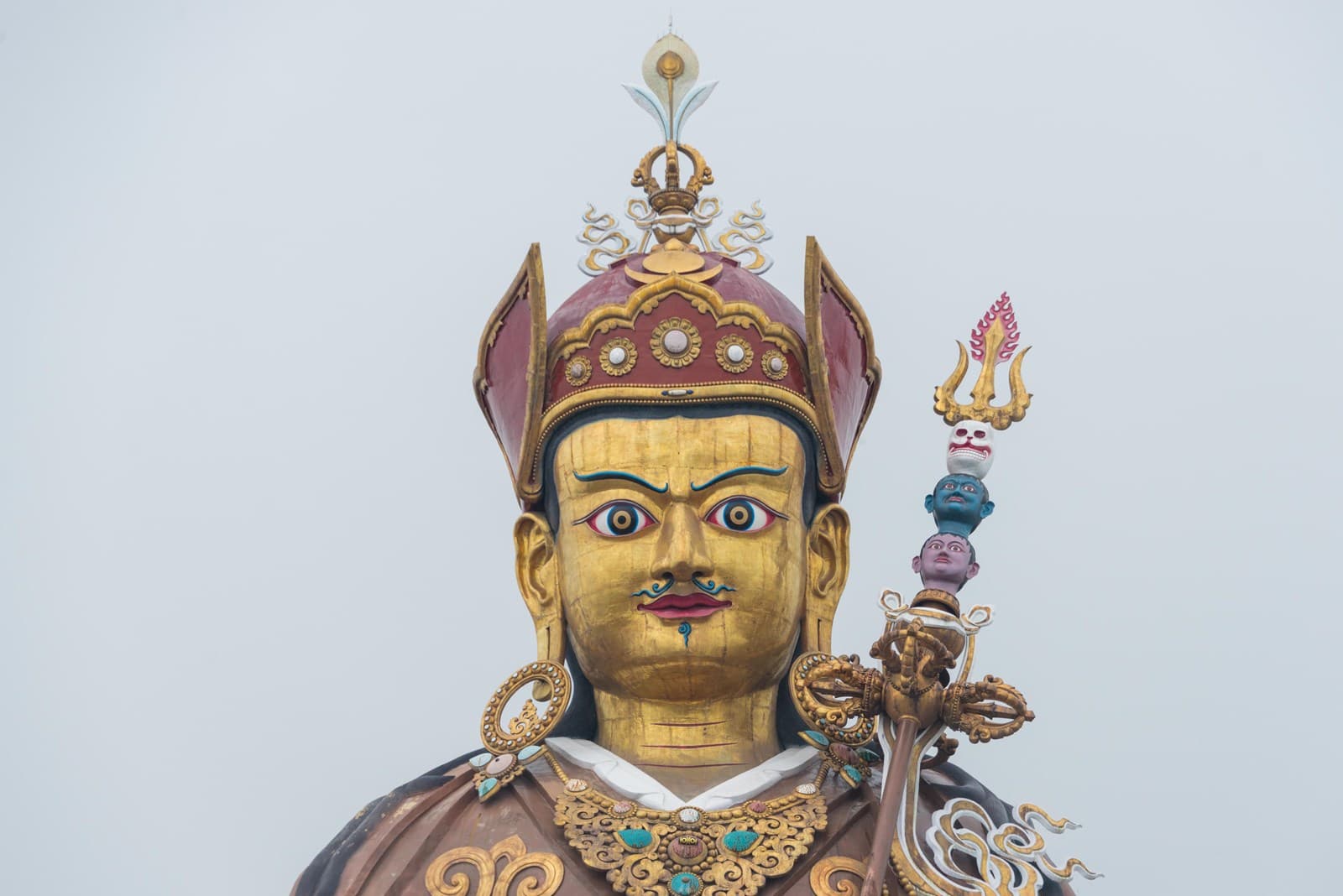
A Bhutanese religious figure
717 to 762
Guru Rinpoche — Padmasambhava in Sanskrit — is the 8th-century Vajrayana master credited with bringing Tantric Buddhism to the Himalayas, and the principal figure of religious veneration in Bhutan. The Bhutanese tradition holds Guru Rinpoche as the second Buddha; the eight manifestations of Guru Rinpoche are the iconographic spine of Bhutanese monastery art and the principal subject of masked dances at every tshechu festival. Most of the country's principal sacred sites — Paro Taktsang, Kurjey Lhakhang, Singye Dzong, the cliff caves of Bumthang — are associated with Guru Rinpoche's 8th-century journey.
Padmasambhava (Sanskrit: 'Lotus-Born') — known to Bhutanese as Guru Rinpoche ('Precious Master') — was an 8th-century Indian Vajrayana master credited with the principal transmission of Tantric Buddhism from India to Tibet and the broader Himalayan region. The historical accounts hold that Padmasambhava came from the Swat valley of present-day Pakistan, travelled to Tibet at the invitation of King Trisong Detsen in 762 CE, and from Tibet made the principal journey south to subdue local protector deities and establish Vajrayana practice across the Himalayan ranges. The Bhutanese journey is held to have included the principal sites at Paro Taktsang, Kurjey Lhakhang (Bumthang), Singye Dzong (Lhuentse), and the numerous cliff caves at Bumthang.
The Bhutanese religious tradition holds eight principal manifestations of Guru Rinpoche, each representing a different aspect of the master's teaching activity. The eight are the iconographic spine of Bhutanese monastery art and the principal subject of cham masked dances at every tshechu festival. The principal manifestations: Guru Tsokye Dorje (the Lake-Born form, the original lotus emergence); Guru Padmasambhava (the conventional teacher form); Guru Padma Gyalpo (the King); Guru Loden Choksey (the Scholar); Guru Senge Dradok (the Lion's Roar, wrathful form); Guru Nyima Ozer (the Sun-Ray Yogi); Guru Dorje Drolo (the Tiger-Riding wrathful form, associated with Paro Taktsang); and Guru Shakya Senge (the Buddha-form). At each tshechu, the cham masked dances enact the eight manifestations and the principal Vajrayana teachings.
Across the country. Paro Taktsang (Tiger's Nest) — the cliff cave where Guru Rinpoche meditated in his Dorje Drolo form, riding a tiger; the principal pilgrimage site of Bhutan. Kurjey Lhakhang (Bumthang) — the cliff where Guru Rinpoche left a body imprint while subduing the local demon-king Shelging Karpo; the three-temple complex around the cliff is one of the country's most sacred sites. Singye Dzong (Lhuentse) — the eastern meditation site, less visited but historically central. The cliff caves of Bumthang (Tang, Membartsho, Kunzangdrak) — multiple Guru Rinpoche meditation sites in the central valleys. The tshechus — every major tshechu features the cham masked dances enacting the eight manifestations; Paro Tshechu and Thimphu Tshechu are the largest, but every dzongkhag holds its own tshechu cycle.
Guru Rinpoche is the principal figure of Bhutanese religious veneration; the Nyingma school of Vajrayana, of which Guru Rinpoche is the founder-master, has substantial presence in Bhutan particularly through the Pema Lingpa tradition in Bumthang and eastern Bhutan. The Drukpa Kagyu (the state religion) also venerates Guru Rinpoche as a foundational figure. The Bhutanese mantra tradition includes the Guru Rinpoche mantra — *Om Ah Hung Vajra Guru Padma Siddhi Hung* — heard everywhere from monasteries to taxi drivers. For visitors with prior Buddhist background, the cross-tradition study of Guru Rinpoche is often the principal cultural-religious moment of a Bhutan trip.
Also known as
Common questions
The traditional accounts hold yes — the 8th-century journey from Tibet southward included the principal sites in Bhutan (Paro Taktsang, Bumthang). Modern historical scholarship is less definitive about the specific journey dates and routes; what is certain is that Guru Rinpoche is the foundational figure of the Vajrayana tradition that came to dominate Bhutanese religious life.
Sakyamuni Buddha (5th-4th century BCE, India) is the historical founder of Buddhism. Guru Rinpoche (8th century CE, India and Tibet) is the principal master of the Vajrayana (Tantric) Buddhist tradition — the second Buddha in the Bhutanese tradition because he is the figure who brought the Vajrayana teaching to the Himalayan region. Sakyamuni is venerated across all Buddhist traditions; Guru Rinpoche is specifically the Vajrayana master.
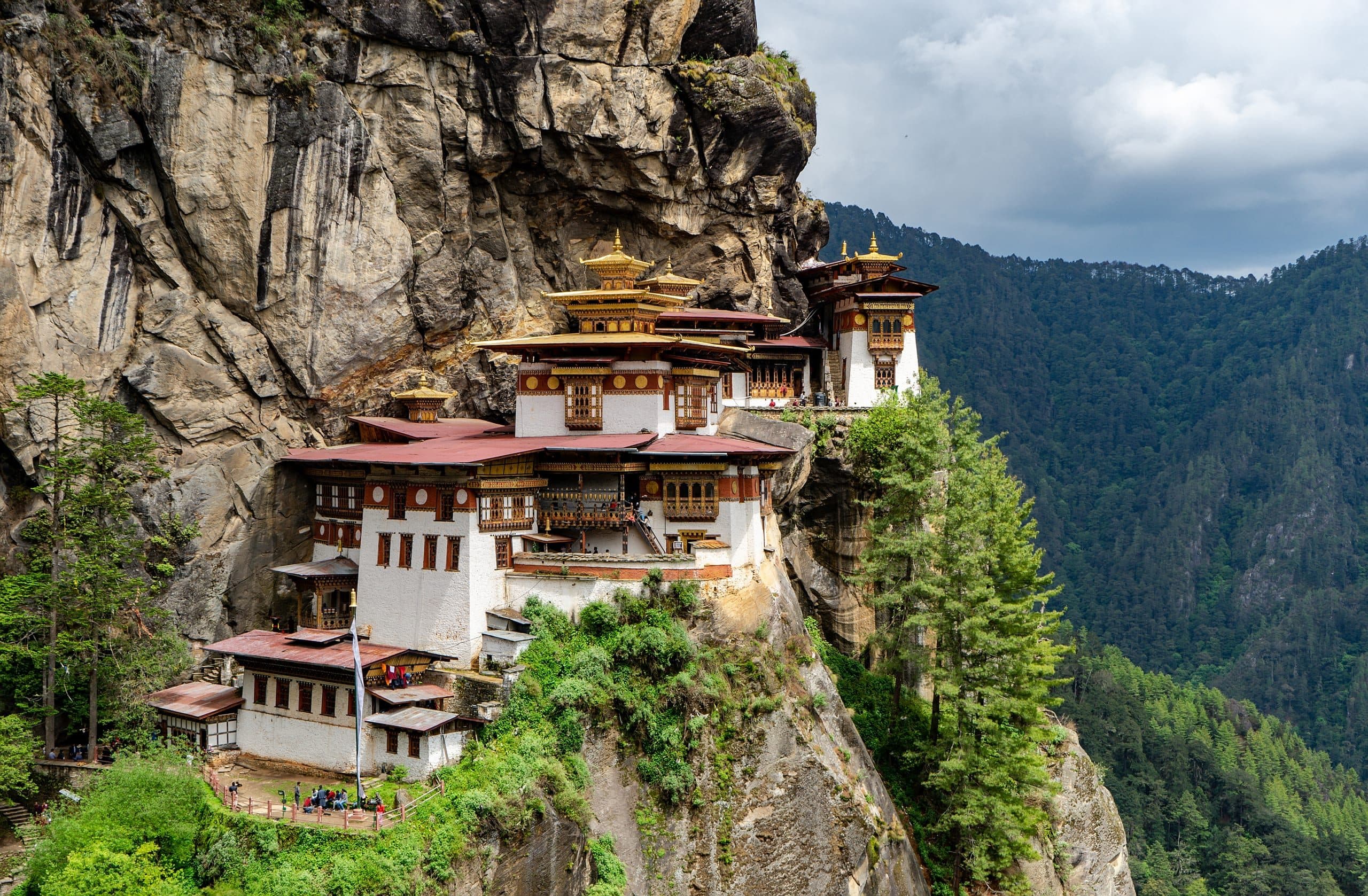
Paro Taktsang is the cliff where Guru Rinpoche meditated in his Dorje Drolo form, riding a tiger. The principal pilgrimage site of Bhutan; the climb is itself the principal contemporary Bhutanese pilgrimage. Every Bhutanese citizen aspires to make the climb at least once in life. International visitors find it the central image of their Bhutan trip.
What they built
Monument
Paro Taktsang (Tiger's Nest) — the founding by Guru Rinpoche, the 1692 monastery, the 2-hour hike, what to know before you visit.
Monument
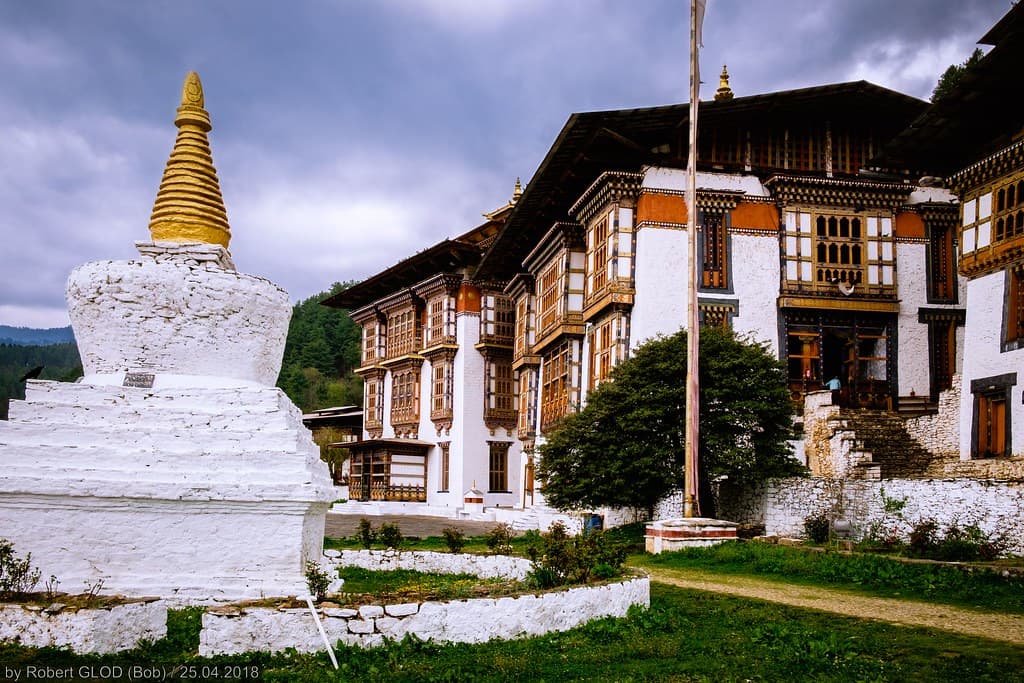
Kurjey Lhakhang — the Bumthang cliff cave bearing Guru Rinpoche's body imprint. The three-temple complex, history, visiting.
Monument
Tamshing Lhakhang — the 1501 monastery of Pema Lingpa, in the Choekhor valley of Bumthang. History, the chain-mail vest relic, visiting.
Journeys that touch this
Journey
A ten-night Bhutan Buddhist pilgrimage for Asian-Buddhist travellers. Monastic context; matched monastic-trained guide; Bumthang religious circuit.
Journey
A nine-night Bhutan Buddhist journey for Thai, Japanese, and Korean travellers. Comparative Vajrayana / Theravada / Tendai / Zen / Seon. Knowledgeable monastic-trained guide.
Journey
A nine-night Bhutan itinerary built around the Paro Tshechu — the spring mask-dance festival at Rinpung Dzong, with six days for the wider country.
Five questions. A bespoke draft back within a day or two.