Preparing
LoadingPreparing
Loading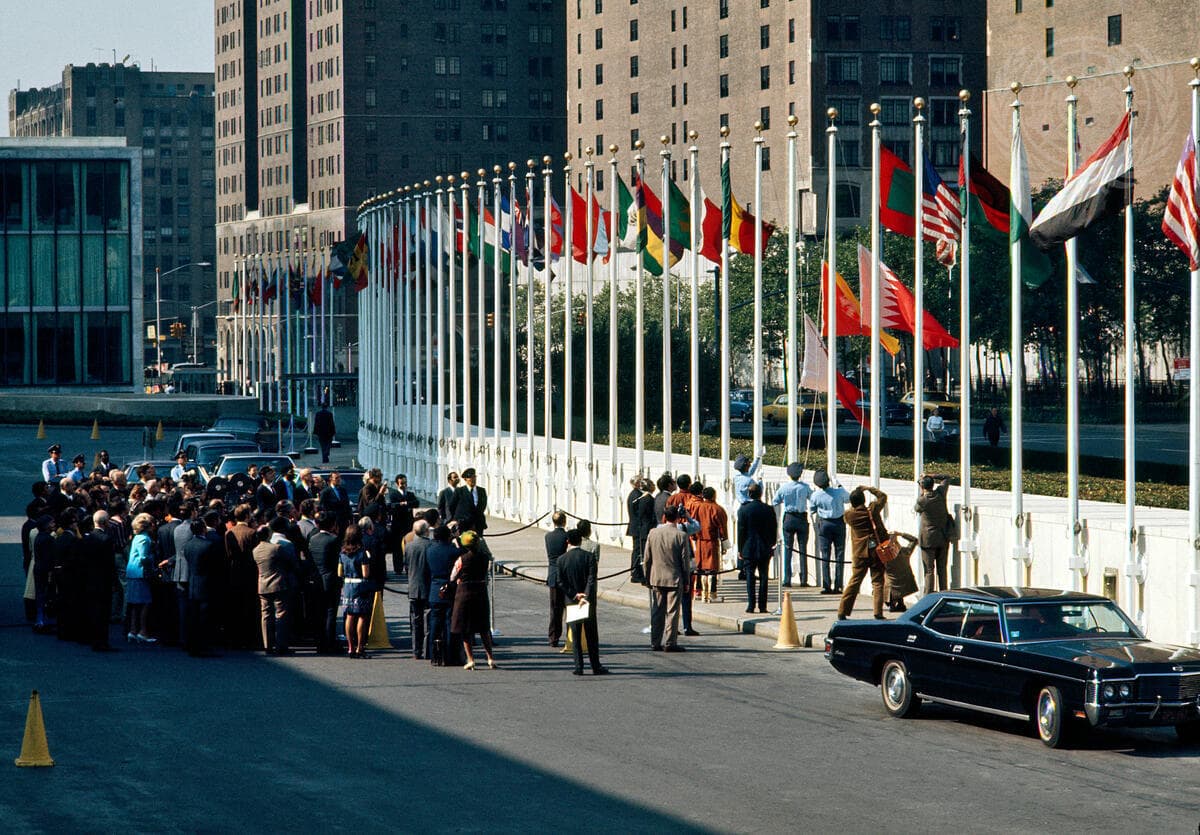
A Bhutanese historical event · United Nations Headquarters, New York / Royal Government of Bhutan, Thimphu
Bhutan was admitted to the United Nations on 21 September 1971 as the organization's 128th member state, under the reign of His Majesty the Third Druk Gyalpo Jigme Dorji Wangchuck. The admission was the formal completion of the country's emergence from its centuries-long policy of self-isolation and marked the beginning of Bhutan's contemporary international engagement.
On 21 September 1971, the United Nations General Assembly admitted the Kingdom of Bhutan as its 128th member state by acclamation. The admission was the culmination of a multi-year diplomatic process initiated under the reign of His Majesty the Third Druk Gyalpo Jigme Dorji Wangchuck — the modernising King whose tenure (1952-1972) brought Bhutan from a deliberate self-isolation into the contemporary state system. Bhutan's principal sponsor at the UN was India, with whom Bhutan had signed the 1949 Treaty of Friendship; the admission process was supported by the broader UN membership without significant opposition. His Majesty described the admission in words that have entered the Bhutanese national memory: as important to the country as 'when Zhabdrung Rinpoche came to our land bringing unto us the message of the Truth and Dharma' — placing the 1971 international recognition alongside the 17th-century arrival of the Zhabdrung as one of the two principal hinge-moments in the institutional history of the modern Bhutanese state.
Bhutan had maintained a deliberate policy of self-isolation since the 17th-century unification under Zhabdrung Ngawang Namgyal. The Third King Jigme Dorji Wangchuck began the deliberate emergence in the 1950s — admitting the country to the Colombo Plan (1962), the Universal Postal Union (1969), and finally the UN (1971). The sequence is itself meaningful: Bhutan engaged with the international system on its own terms, at its own pace, accepting the obligations of state membership while maintaining the distinctive elements of Bhutanese governance and culture. The UN admission completed the international-recognition arc; the subsequent contemporary period (the Fourth King's GNH framework, the 2008 constitutional democracy, the 2023 onward national rebranding) operates within the international state-system framework Bhutan joined in 1971.
Bhutan's UN membership has consequences for the contemporary visitor experience. The visa framework, the diplomatic representations, the international press accreditation, the international NGO presence — all operate within the UN-member-state framework. The Bhutanese diplomatic corps (Permanent Missions in New York, Geneva, Brussels, Delhi, Bangkok) is the institutional expression. The annual UN General Assembly High-Level Week in September features the Bhutanese delegation; the GNH framework has been formally promoted by Bhutan at the UN (2011 General Assembly Resolution 65/309, the 2012 World Happiness Report, the 20 March International Day of Happiness).
Common questions
Deliberate policy. Bhutan's self-isolation since the 17th century was a considered strategic choice. The Third Druk Gyalpo's deliberate gradual emergence in the 1950s-1970s reflected the country's preference for international engagement on its own terms. The 1971 admission completed the arc — substantial enough recognition to operate in the international system, late enough that the distinctive Bhutanese governance and cultural register remained intact.
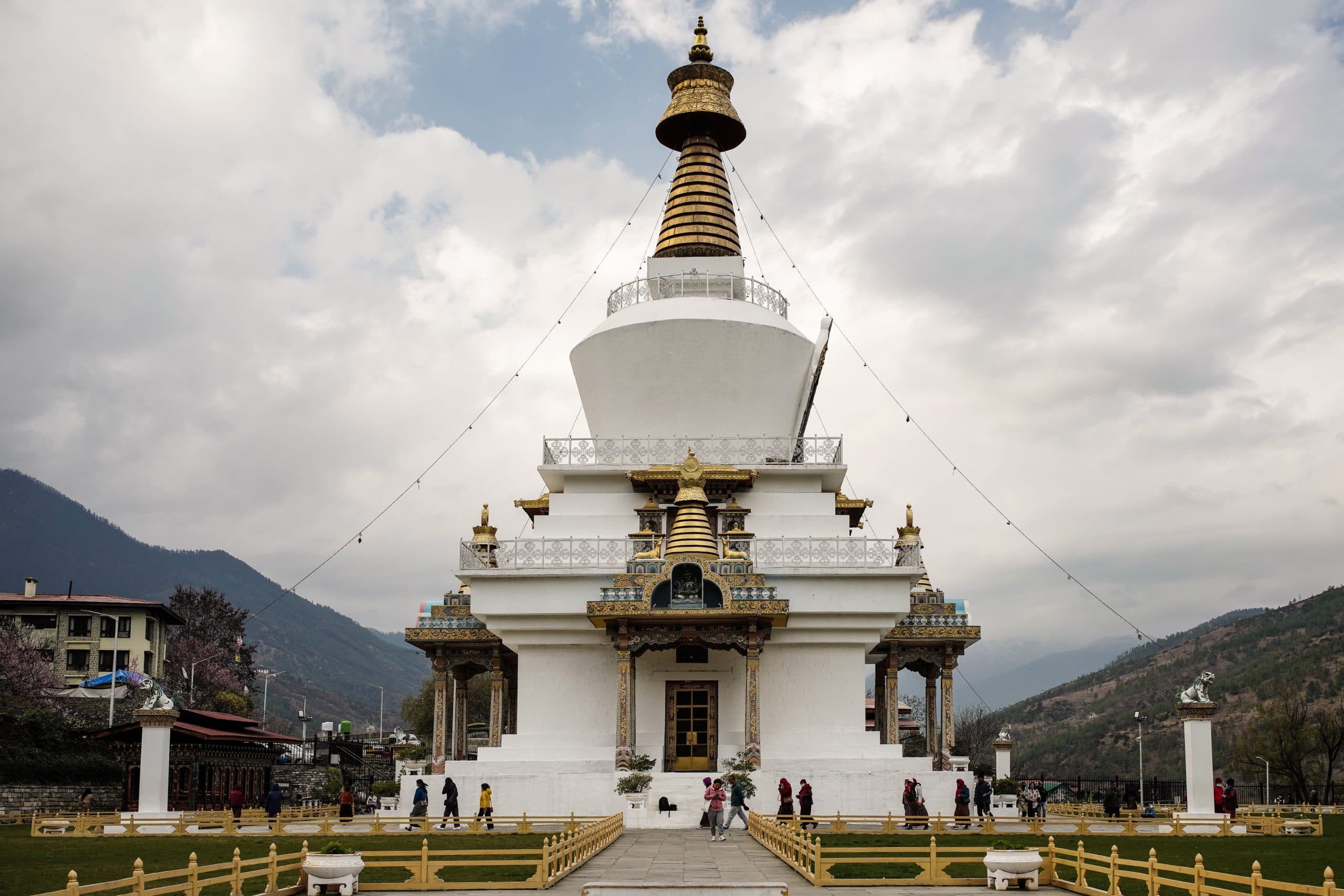
Yes. The National Memorial Chorten was built in 1974 in memory of His Majesty the Third Druk Gyalpo Jigme Dorji Wangchuck after his early death in 1972. The chorten is the principal Thimphu pilgrimage site; circumambulating it is one of the everyday Bhutanese acts of memorial.
Limited but present. The UN agencies in Bhutan (UNDP, UNICEF, WHO, others) have offices in Thimphu; UN-related cultural programmes are occasionally open to visitors. The matched guide handles arrangements where the relationship allows.
What followed
Event
Bhutan opens to international tourism — June 1974, around the Coronation of the Fourth King. The high-value-low-impact framework, the 200 inaugural visitors.
Event
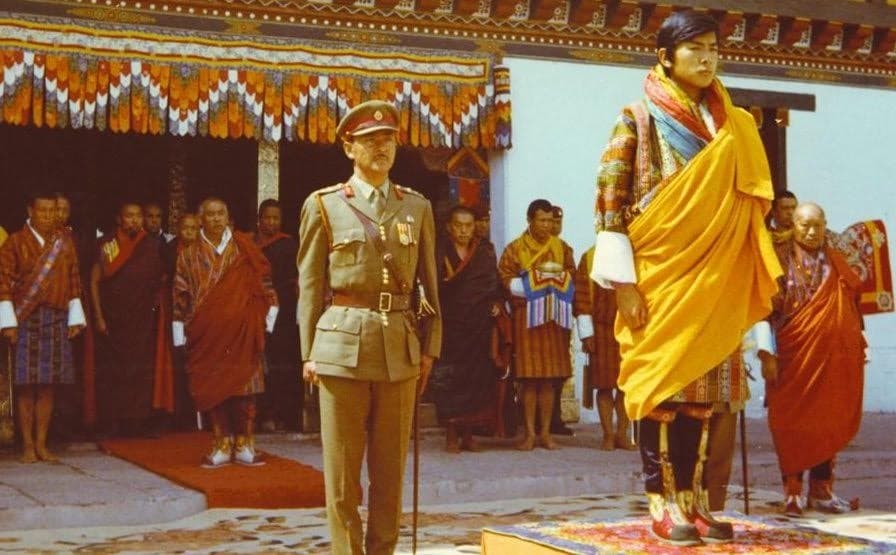
Coronation of His Majesty Jigme Singye Wangchuck, the Fourth Druk Gyalpo — 2 June 1974 at Tashichho Dzong, Thimphu. Age 18, the youngest monarch in the world.
Journeys that touch this
Journey
The signature-tier Bhutan journey. Private knowledgeable guide, the most considered lodges, helicopter or PC-24 charter, exclusive-use arrangements. By invitation, from USD 14,000.
Journey
A ten-night Bhutan Buddhist pilgrimage for Asian-Buddhist travellers. Monastic context; matched monastic-trained guide; Bumthang religious circuit.
Five questions. A bespoke draft back within a day or two.