Preparing
LoadingPreparing
Loading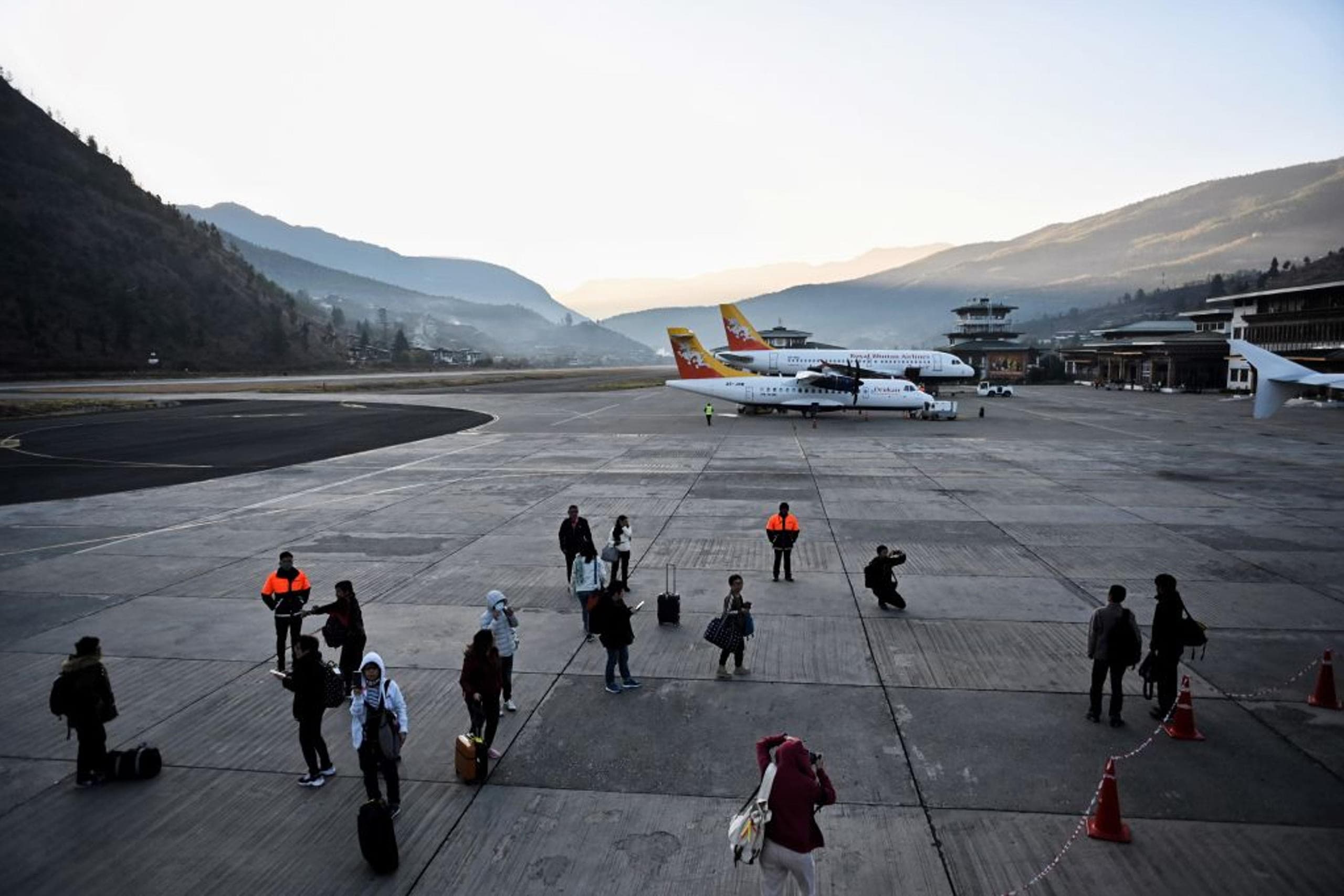
A Bhutanese historical event · Thimphu / Paro
Bhutan opened to international tourism in 1974 — the first international visitors arriving in June for the coronation of His Majesty the Fourth Druk Gyalpo Jigme Singye Wangchuck. The opening was deliberate: high-value, low-impact, the principles articulated under the Fourth King's emerging Gross National Happiness framework. Approximately 200 visitors arrived in the inaugural year; the policy framework that limited the volume continues, in evolved form, today.
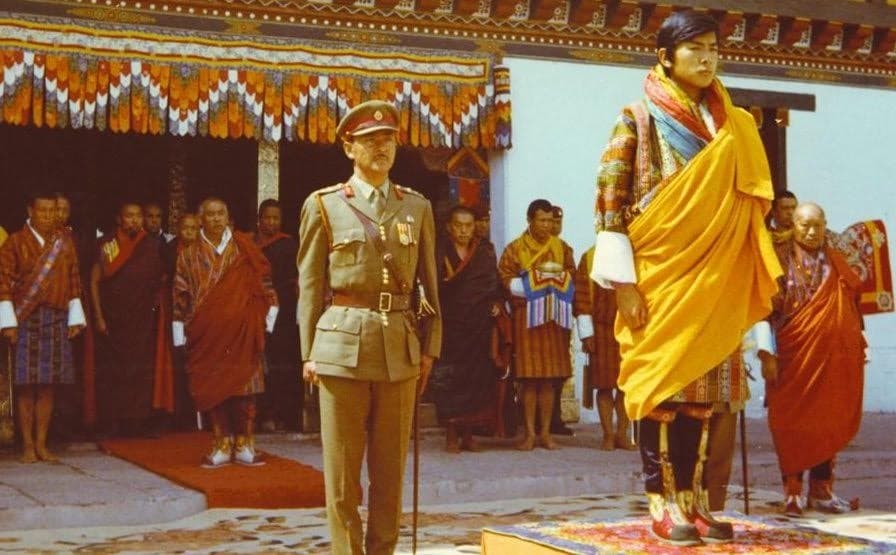
In June 1974 Bhutan opened to international tourism for the first time. The opening was timed to the coronation of His Majesty the Fourth Druk Gyalpo Jigme Singye Wangchuck on 2 June 1974 — international guests, foreign press, and a small first wave of visitors arrived in Paro for the coronation ceremonies. Approximately 200 visitors arrived in the inaugural year. The Royal Government established the Bhutan Tourism Corporation Limited as the principal state operator; international visitor numbers grew slowly thereafter under the deliberate state-managed framework.
The principle articulated for the inaugural framework — and developed over the subsequent decades — was 'high-value, low-impact' tourism. The structural implications: a daily Sustainable Development Fee (originally framed as a minimum-spend tariff, later codified as the SDF) ensures the visitor contributes to the Bhutanese economy; mandatory operation through licensed Bhutanese tour operators (no independent backpacker tourism) ensures the cultural framework is mediated; the visitor volume is implicitly capped by the price rather than by formal quota. The framework was strategically anchored to the broader Gross National Happiness governance principle articulated by His Majesty the Fourth Druk Gyalpo from the early 1970s onward.
Visitor numbers grew slowly through the 1970s-1980s (under 5,000 annually through most of the period). The 1991-2008 period saw substantial growth under the developing Wangchuck-monarchy framework. The 2008 constitutional democracy transition retained the high-value-low-impact framework. The 2020-2022 pandemic closure was followed by the 2022-2023 reopening with substantially increased SDF rates (USD 200 per night, subsequently adjusted to USD 100). In 2025, Bhutan welcomed approximately 209,376 international visitors (44.3% YoY growth over 2024). The framework continues to evolve; the principle — high-value, low-impact, GNH-anchored — remains the canonical Bhutanese tourism approach.
Common questions
Yes, before 1974, and again during the 2020-2022 pandemic period. The pre-1974 closure was the country's centuries-long deliberate isolation policy; the 2020-2022 closure was the global pandemic response. Both were followed by deliberate reopening on Bhutanese terms.
Yes. The 2022-2023 reopening retained the principle — the SDF, the licensed-operator framework, the absence of independent backpacker tourism, the GNH-anchored approach. The SDF rate has varied (USD 200 then USD 100); the framework has not.
High-value: visitors contribute to the Bhutanese economy through the SDF, the licensed-operator framework, and the premium-tier pricing. Low-impact: visitor volume is contained relative to the country's small population and fragile cultural-environmental. The framework optimises for cultural-environmental preservation rather than visitor-volume growth.
What followed
Event
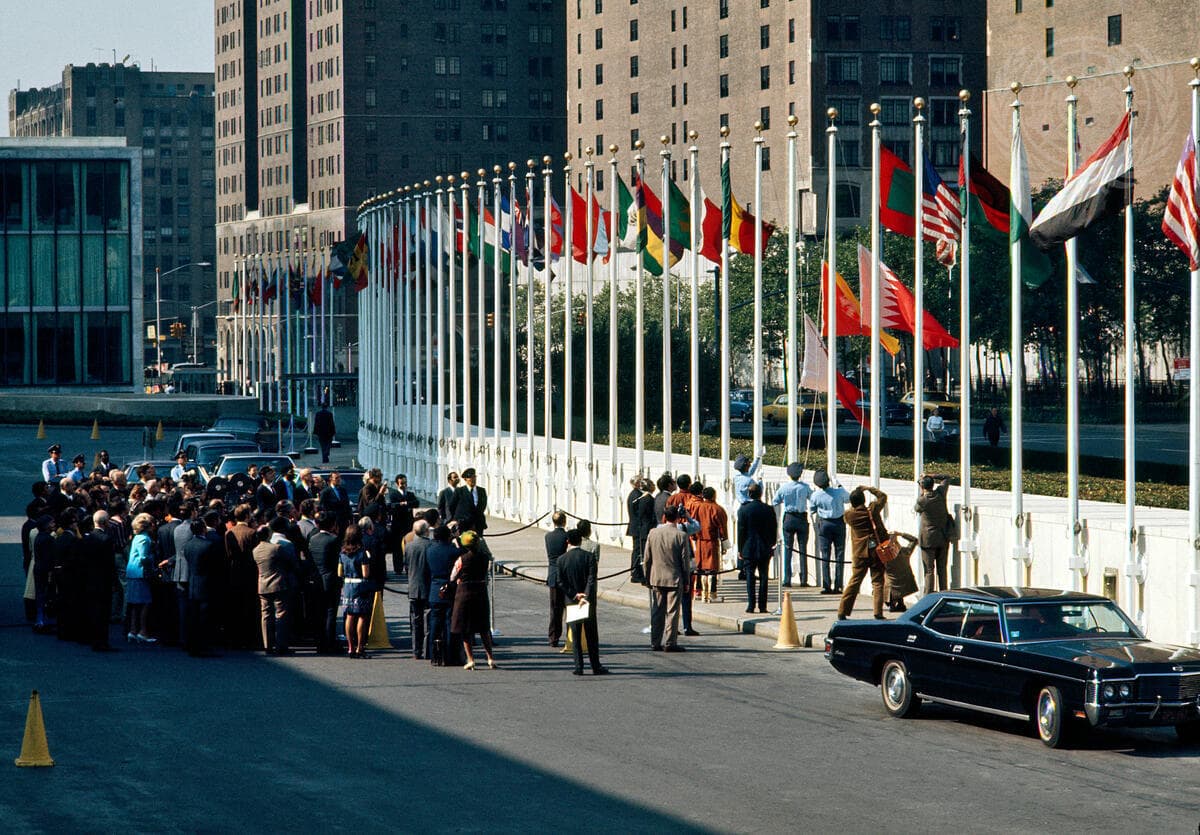
Bhutan's admission to the United Nations — 21 September 1971, under the Third Druk Gyalpo. The formal completion of Bhutan's emergence from self-isolation.
Event
Coronation of His Majesty Jigme Singye Wangchuck, the Fourth Druk Gyalpo — 2 June 1974 at Tashichho Dzong, Thimphu. Age 18, the youngest monarch in the world.
Journeys that touch this
Journey
The signature-tier Bhutan journey. Private knowledgeable guide, the most considered lodges, helicopter or PC-24 charter, exclusive-use arrangements. By invitation, from USD 14,000.
Journey
A ten-night Bhutan Buddhist pilgrimage for Asian-Buddhist travellers. Monastic context; matched monastic-trained guide; Bumthang religious circuit.
Five questions. A bespoke draft back within a day or two.