Preparing
LoadingPreparing
Loading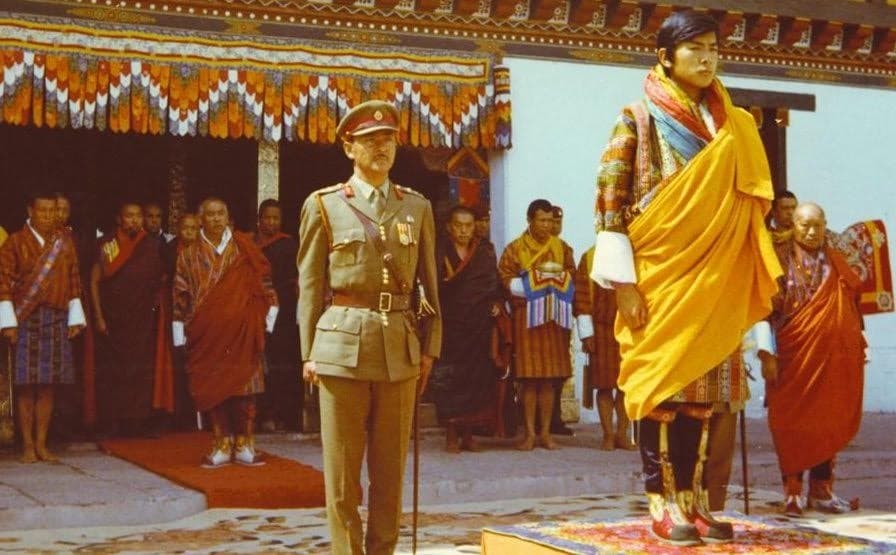
A Bhutanese royal event · Tashichho Dzong, Thimphu
On 2 June 1974, His Majesty Jigme Singye Wangchuck was formally crowned as the Fourth Druk Gyalpo of Bhutan at Tashichho Dzong in Thimphu — at the age of eighteen, the youngest monarch in the world at the time. The coronation marked the beginning of the reign that would define modern Bhutan: the articulation of Gross National Happiness, the deliberate opening to international tourism, the constitutional transition to democracy in 2008.
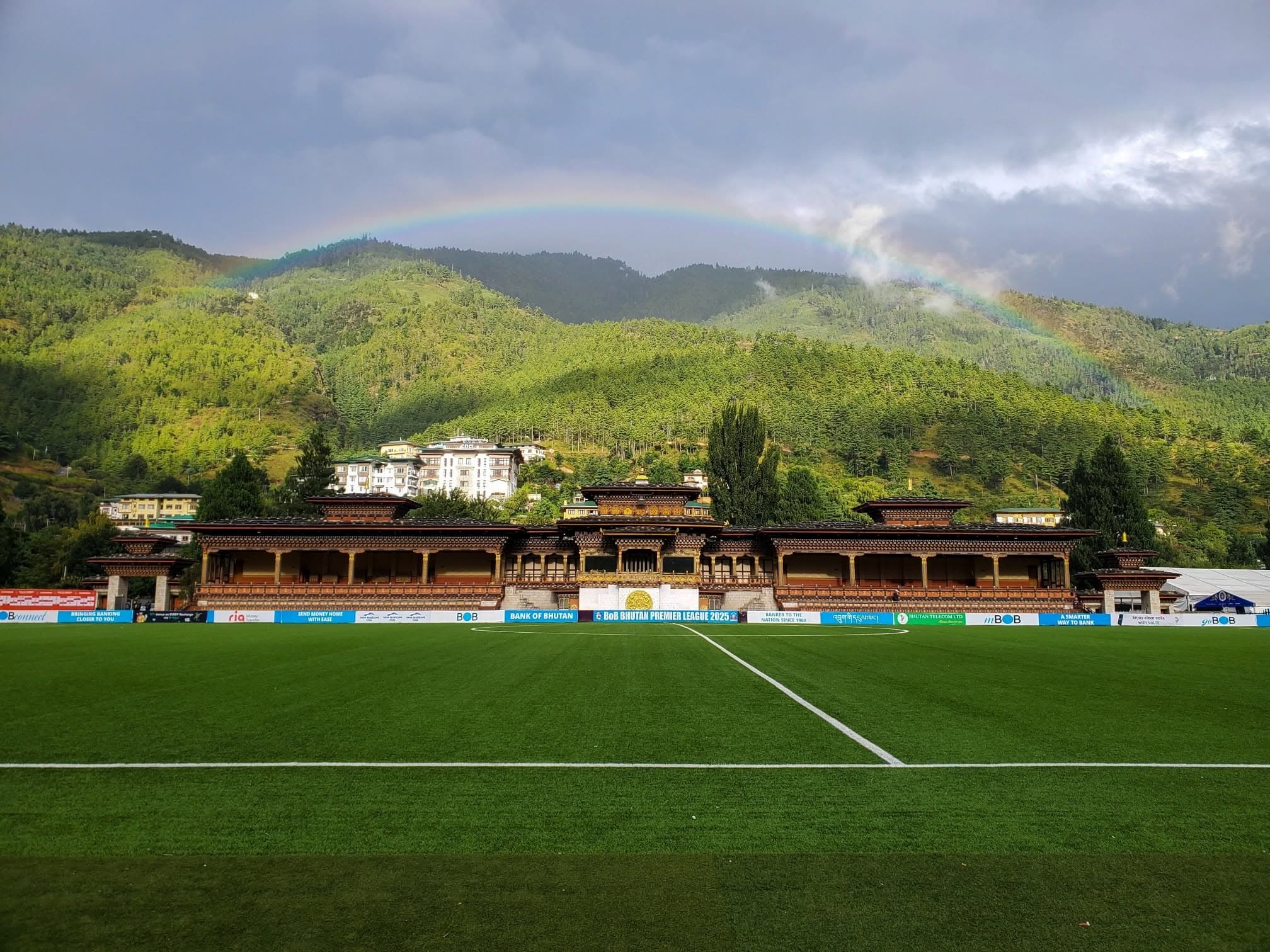
On 2 June 1974, His Majesty Jigme Singye Wangchuck was formally crowned as the Fourth Druk Gyalpo. At eighteen years old, His Majesty was the youngest reigning monarch in the world at the time of coronation — an international framing that drew substantial press attention. The ceremony was held at Changlimithang Stadium in central Thimphu, the principal Bhutanese ceremonial ground; His Majesty had ascended the throne earlier — on the passing of His Majesty the Third Druk Gyalpo Jigme Dorji Wangchuck in July 1972 — but the formal coronation ceremonies, requiring substantial ritual preparation and astrological calibration, were held two years later. The coronation was treated by the religious tradition as the fulfilment of a prophecy long-attributed to Drukdra Dorje, the great Bhutanese terton, that the kingdom would in due course be ruled by 'the youngest King in the world'. The coronation was the first major Bhutanese state event opened to international observers; it coincided with the opening of Bhutan to international tourism, and at the coronation address His Majesty set down the foundational Nine Goals — Gross National Happiness named as the first of the nine — that would shape His thirty-four-year reign.
His Majesty the Fourth Druk Gyalpo's reign (1972-2006, with the formal coronation in 1974) is widely regarded as the most consequential in modern Bhutanese history. The principal achievements: the articulation of Gross National Happiness as the country's development framework (1972 onward, formalised 1986); the deliberate opening to international tourism on the high-value-low-impact model (1974); the constitutional transition to democracy (drafted from 2001, ratified 2008, the first elections held 2008); the voluntary abdication in favour of His Majesty the Fifth Druk Gyalpo (handover commenced 2006, completed 2008); the broader modernisation of the Bhutanese state while preserving the cultural and religious framework. His Majesty's Decree of 2005 announcing the intention to abdicate at age fifty in favour of His son was internationally unprecedented; it confirmed the Wangchuck monarchy's commitment to the constitutional-democracy transition.
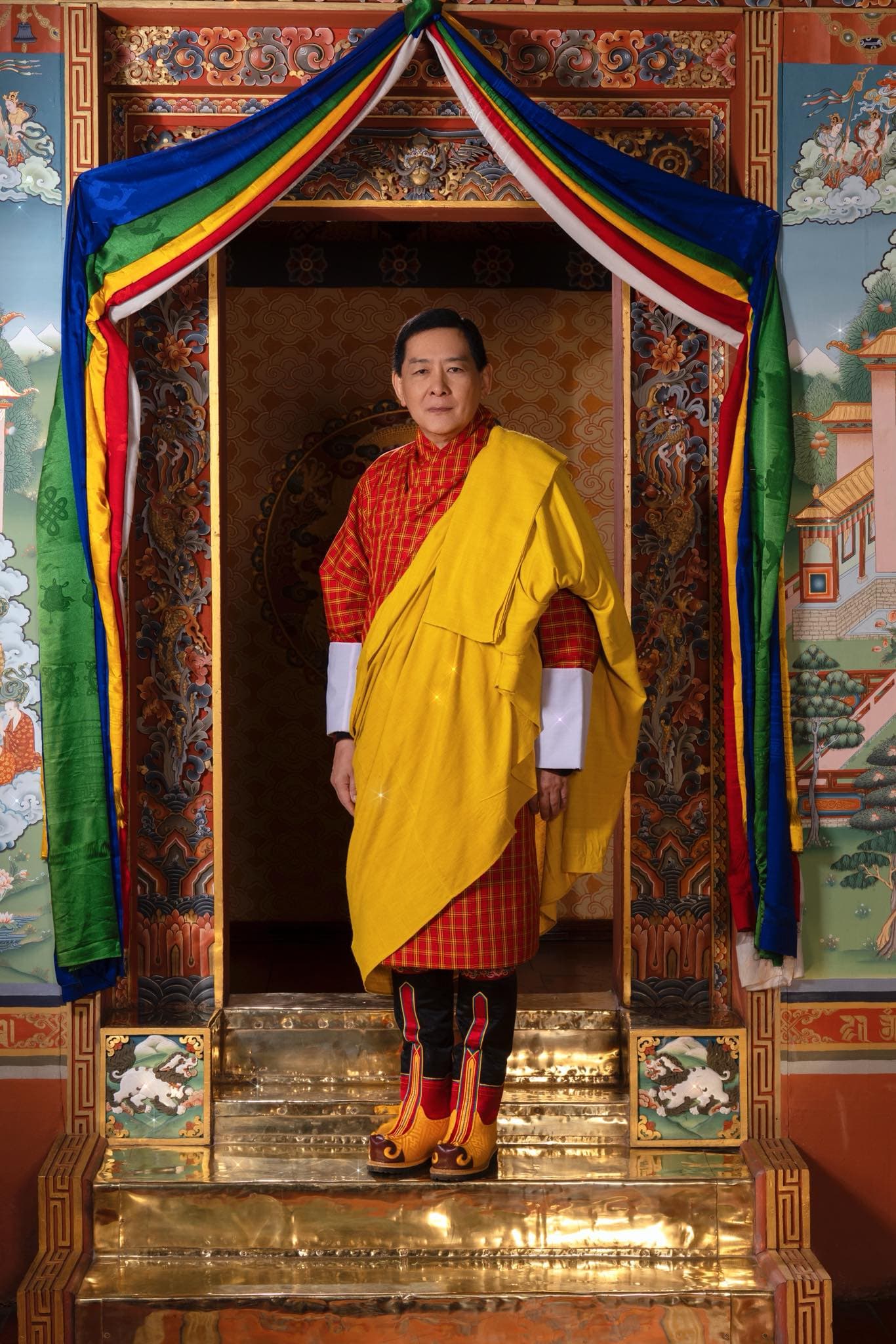
The coronation event itself is historical, but the legacy is the contemporary Bhutan a visitor encounters. The GNH framework articulated by His Majesty is visible in the forest cover, the SDF, the tourism framework, the festival calendar, the constitutional governance. His Majesty the Fourth Druk Gyalpo retains the title of King Father (Druk Gyalpo Jigme Singye Wangchuck) and is one of the most-revered figures in contemporary Bhutan; visitors will encounter the royal portraits in most dzongs, lodges, and government buildings. The Royal portraits — His Majesty the Fourth King, His Majesty the Fifth King, Their Majesties the Queens — are themselves the visual register of the contemporary Bhutanese royal household.
Common questions
Yes. At eighteen years old in 1974, His Majesty was the youngest monarch in the world at the time of coronation. His Majesty had been preparing for the role since the age of sixteen, when His Majesty's father, the Third Druk Gyalpo, made him heir apparent.
To facilitate the constitutional democracy transition. His Majesty announced in 2005 the intention to abdicate at age fifty in favour of His son. The decision was unprecedented — most monarchs reign until natural death. The voluntary handover allowed the constitutional democracy to be established under His Majesty the Fifth Druk Gyalpo, with His Majesty the Fourth Druk Gyalpo as King Father remaining a respected guiding figure.
His Majesty's portrait is in every dzong, lodge, and government building (alongside His Majesty the Fifth King and Her Majesty the Queen Jetsun Pema). His Majesty's GNH framework, the tourism model, the constitutional democracy, the forest-cover requirement, the SDF — all are the legacy a visitor encounters. His Majesty occasionally appears publicly at major events (the principal tshechus, royal weddings, state ceremonies).
Where it stands now
Monument
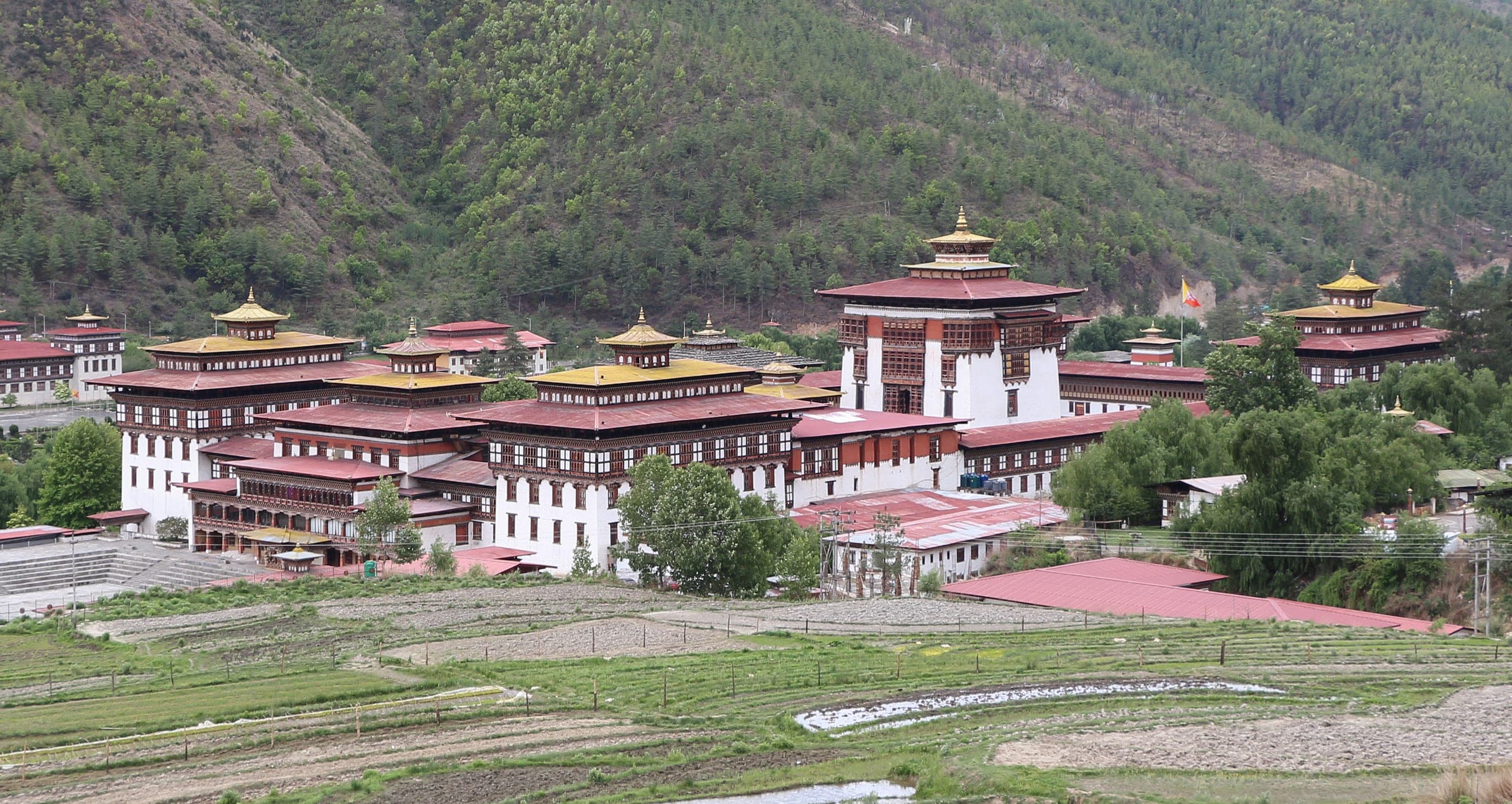
Tashichho Dzong — the seat of Bhutan's central government and Je Khenpo summer residence in Thimphu. History, architecture, visiting.
Monument
Changlimithang Stadium — the principal Bhutanese ceremonial ground in central Thimphu. Site of the 1885 consolidation, the royal coronations, the National Day.
What followed
Event
Bhutan's admission to the United Nations — 21 September 1971, under the Third Druk Gyalpo. The formal completion of Bhutan's emergence from self-isolation.
Event
Bhutan opens to international tourism — June 1974, around the Coronation of the Fourth King. The high-value-low-impact framework, the 200 inaugural visitors.
Five questions. A bespoke draft back within a day or two.