Preparing
LoadingPreparing
Loading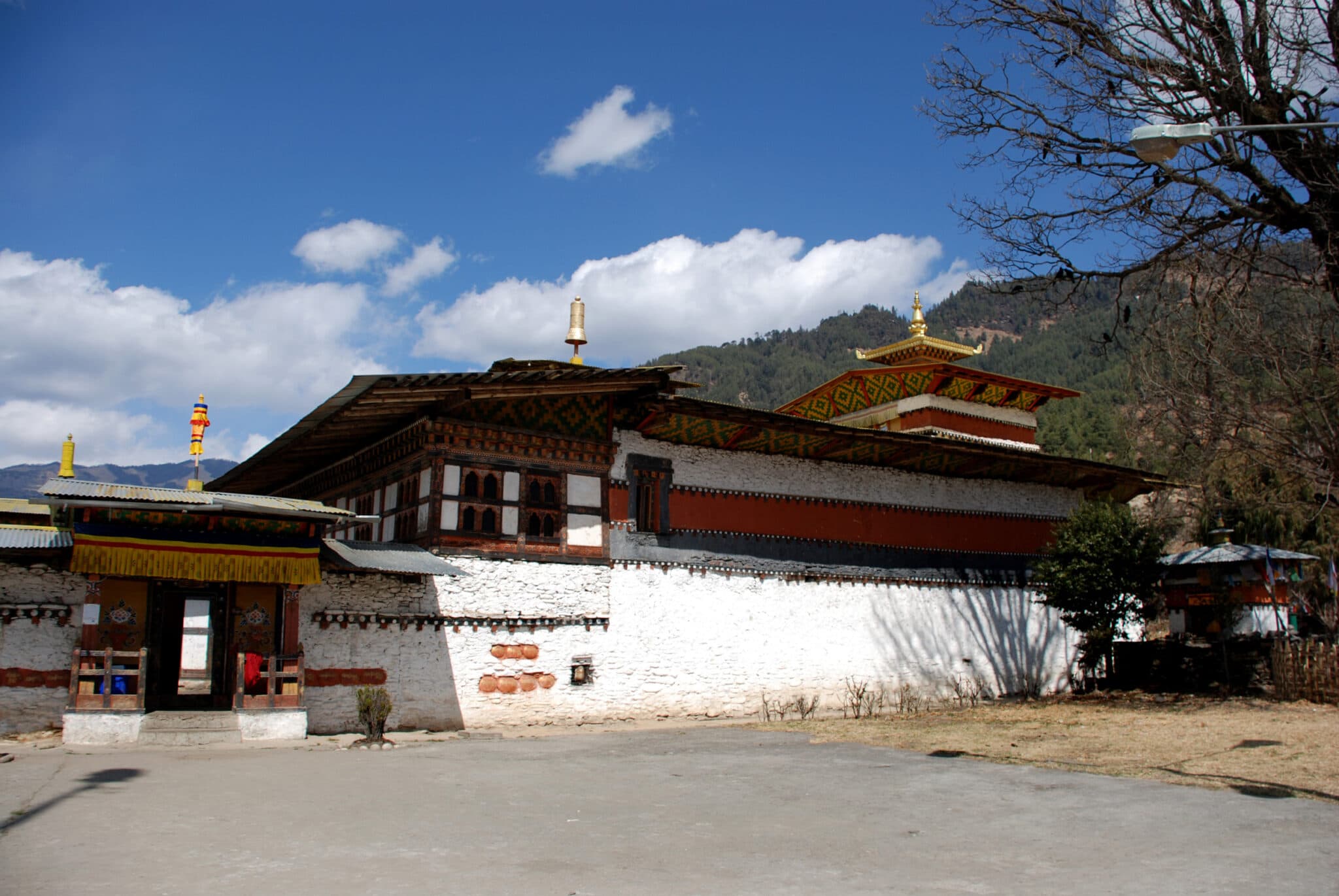
Pema Lingpa's principal seat
Tamshing Lhakhang sits in the Choekhor valley of Bumthang at 2,600 metres elevation, across the Chamkhar Chhu from Jakar Dzong. The monastery was founded in 1501 by Pema Lingpa — one of the five sovereign tertons of the Nyingma tradition — as his principal seat. The Royal Family of Bhutan traces ancestry through Pema Lingpa's descendants, and the monastery holds a continuous lineage through more than five centuries.
Also known as · Tamzhing Lhakhang · Tamshing Lhundrup Choling
Pema Lingpa (1450–1521) was a Bumthang-born farmer-yogin who became one of the five sovereign tertons of the Nyingma tradition — the great revealers of hidden teachings (terma) concealed by Padmasambhava in the 8th century for retrieval at a later age. Pema Lingpa retrieved his first terma from Mebar Tsho (the burning lake in the Tang valley) by leaping into the water carrying a butter lamp and emerging with the treasure and the lamp still alight. He founded Tamshing Lhakhang in 1501 as his principal seat; the monastery has held his lineage continuously for over five centuries. The Royal Family of Bhutan traces ancestry through Pema Lingpa's descendants; the lineage and the Wangchuck dynasty are intertwined.
The monastery's principal chapel contains 15th-century murals painted by Pema Lingpa himself — extremely rare in Himalayan religious art for a master to have executed his own monastery's frescos. The murals depict the Nyingma protector deities, the lineage of Pema Lingpa's tertons, and the principal Vajrayana teachings of the era. The monastery also holds Pema Lingpa's chain-mail vest — a heavy steel vest the terton is held to have fashioned with his own hands. The vest is brought out once a year, during the Tamshing Phala Choepa festival (8th–10th day of the 8th Bhutanese lunar month), to be passed over the heads of the assembled community for blessing. The Bhutanese tradition holds that anyone who can walk three full circumambulations of the monastery carrying the vest will receive substantial spiritual merit; the vest is heavy enough that few succeed.
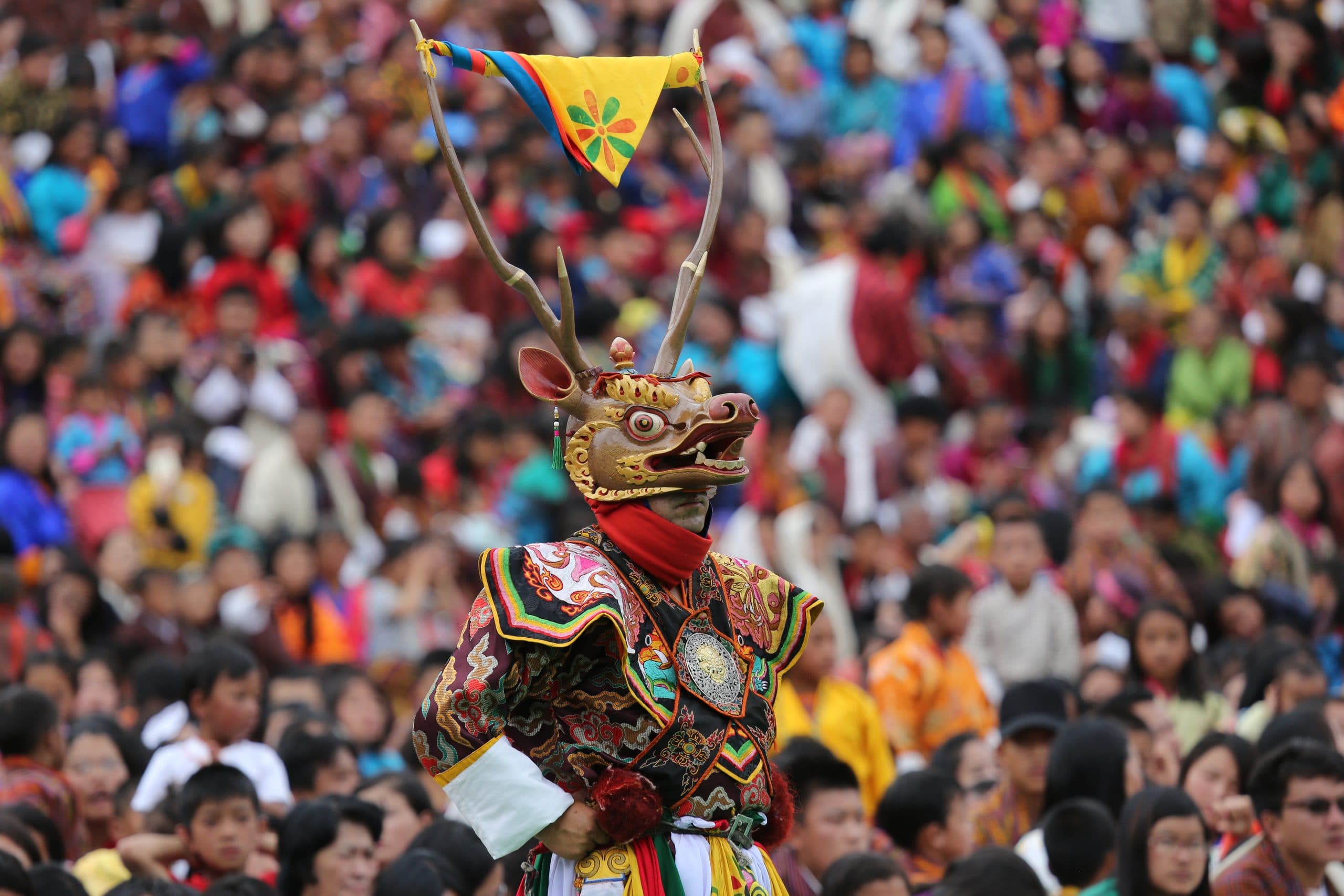
The Tamshing Phala Choepa is the principal festival of the monastery, held annually in late September or early October. The festival's distinctive tradition is the cycle of chams composed by Pema Lingpa himself in the 15th century, executed in their original choreography. The lineage continuity — the chams unchanged from a 500-year-old original, performed by monks of the same monastic line — is the festival's principal distinction among the Bhutanese tshechus.
Visiting
Common questions
Pema Lingpa (1450–1521) was a Bumthang-born farmer-yogin who became one of the five sovereign tertons of the Nyingma tradition — the great revealers of hidden teachings (terma) concealed by Padmasambhava in the 8th century. He founded Tamshing Lhakhang in 1501 as his principal seat. The Royal Family of Bhutan traces ancestry through his descendants.
Yes — the principal chapel's murals were painted by Pema Lingpa himself in the early 16th century. The murals have been maintained continuously by the monastic line and have not been substantially over-painted in their 500-year history. They are among the most-important surviving examples of early Bhutanese Buddhist art.
A heavy steel vest Pema Lingpa is held to have fashioned with his own hands. The vest is brought out once a year, during the Tamshing Phala Choepa festival, to be passed over the heads of the assembled community for blessing. The Bhutanese tradition holds that anyone who can walk three full circumambulations of the monastery carrying the vest receives substantial spiritual merit.
Jambay Lhakhang (founded 659 CE) and Kurjey Lhakhang (built around an 8th-century Guru Rinpoche cave) sit at the older, founding-era religious layer of the Bumthang landscape. Tamshing Lhakhang is the principal expression of the 15th-16th century terton lineage — distinctively Bhutanese rather than imported from Tibet. All three should be combined in a thorough Bumthang circuit.
Amankora Bumthang (in the Choekhor valley, 10 minutes from Tamshing), Six Senses Bumthang, Wangdicholing Resort, and Jakar Village Lodge. Lodges are fewer than in Paro or Thimphu; book 6+ months in advance for the autumn festival window.
Journeys featuring this site
Journey
A fourteen-night Bhutan east-to-west circuit exiting via Samdrup Jongkhar and Guwahati. The full eastern dzongkhags, the quieter half of the country.
Journey
A seven-night Bhutan journey timed to Thimphu Tshechu in autumn — second-tier seating, a culturally fluent guide, Bhutanese lodges.
Five questions. A bespoke draft back within a day or two.