Preparing
LoadingPreparing
Loading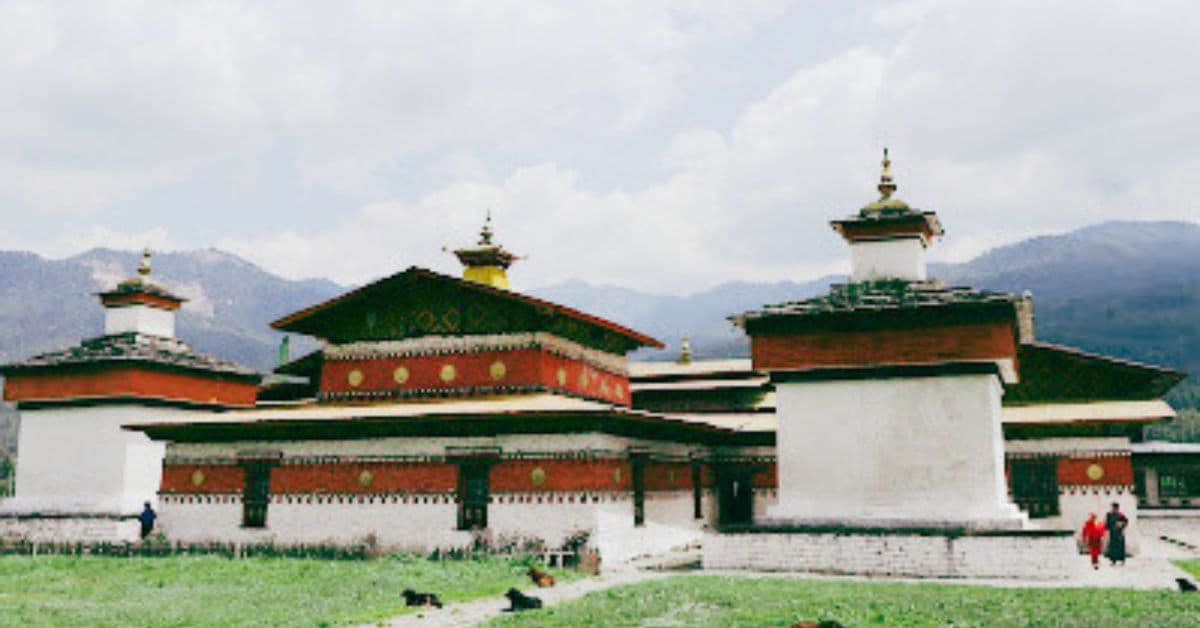
The other Songtsen Gampo founding of 659 CE
Jambay Lhakhang sits in the Choekhor valley of Bumthang at 2,600 metres elevation. Like Kyichu Lhakhang in Paro, it is one of 108 temples built by the Tibetan king Songtsen Gampo in 659 CE — Jambay pinning the left knee of the giant ogress whose body lay across the Himalayan landscape. The temple has been continuously active for over thirteen centuries and is the venue of the famed Jambay Lhakhang Drup with its Mewang fire ritual.
Also known as · Jampa Lhakhang · Jambay Goemba
The Tibetan tradition holds that Songtsen Gampo recognised the Himalayan landscape as the form of a giant ogress and commissioned 108 temples to be built simultaneously in a single day, each pinning a critical point on her body. Two of the 108 lie in present-day Bhutan: Kyichu Lhakhang in Paro (pinning the left foot) and Jambay Lhakhang in Bumthang (pinning the left knee). Jambay is held to predate Kyichu by a small interval — making it one of the very earliest Buddhist temples built in the broader Himalayan region. The Bhutanese tradition holds Jambay as 'the oldest temple in Bhutan' in popular reference, though the question of priority between Jambay and Kyichu remains a matter of devotional rather than archaeological distinction.
A century after Jambay's founding, Guru Rinpoche (Padmasambhava) visited Bumthang at the invitation of Sindhu Raja and used Jambay Lhakhang as one of his principal meditation venues. The Guru is held to have restored and reconsecrated the temple, augmenting the principal images and frescos under the Vajrayana tradition. The Kurjey Lhakhang (Guru Rinpoche's body-imprint cave) sits 10 minutes' walk from Jambay across the Choekhor valley; the two temples together form the principal early-Buddhist religious landscape of Bumthang.
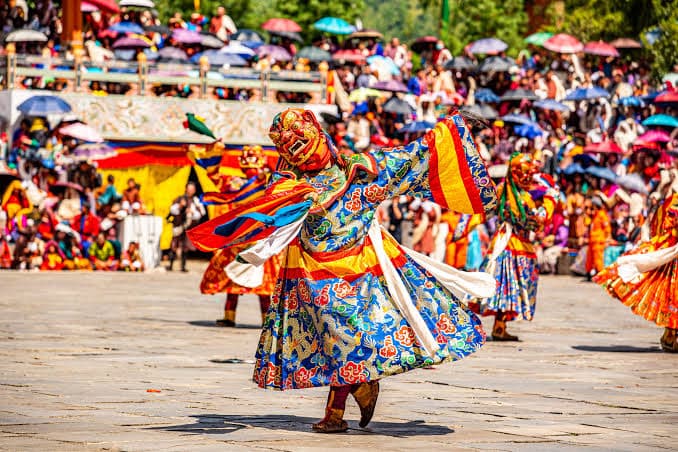
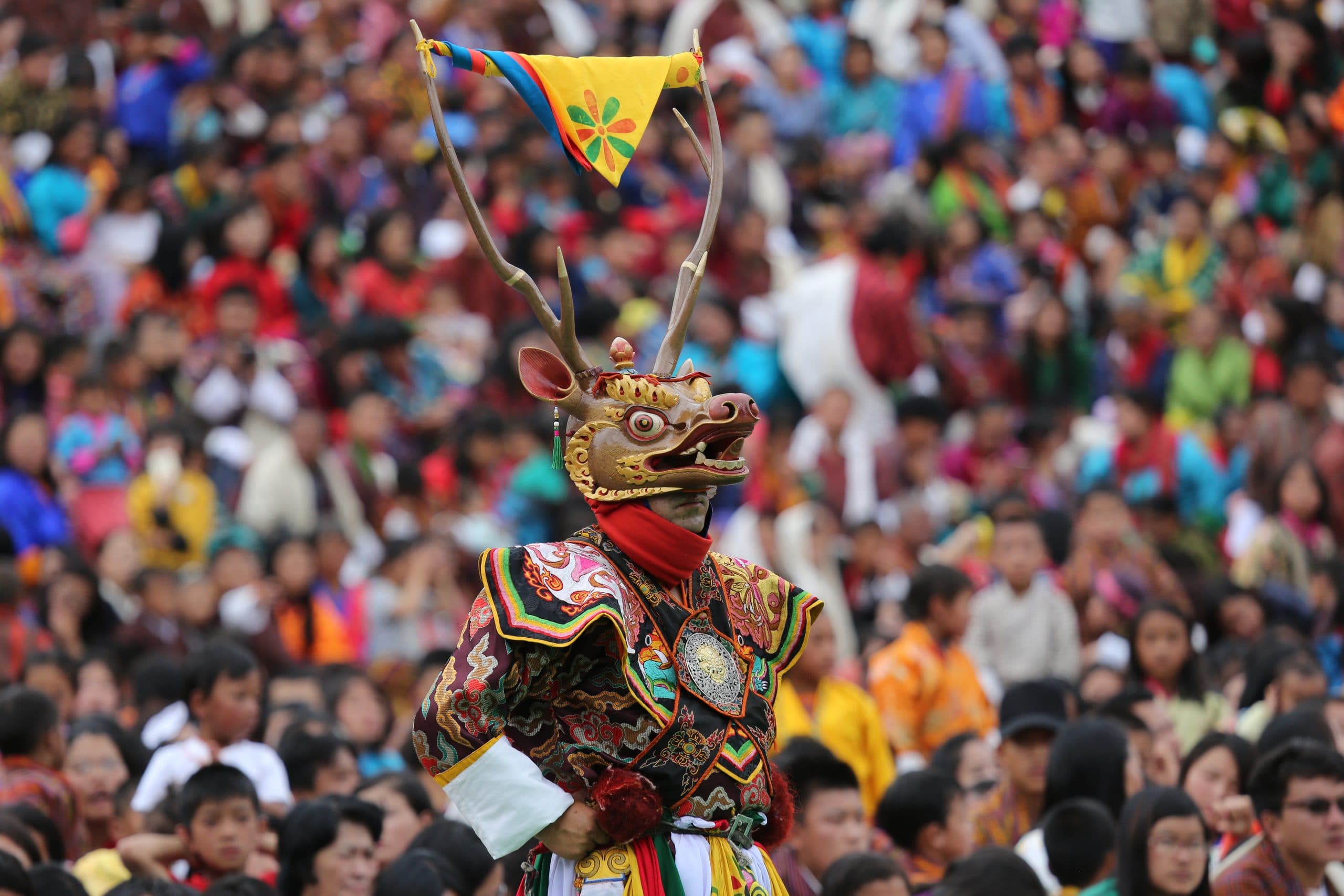
Jambay Lhakhang is the venue of the Jambay Lhakhang Drup, held annually in late October or November (15th–19th day of the 9th Bhutanese lunar month). The festival's principal moments are the Mewang (the fire-blessing ceremony, attended at midnight on the second night) and the Tercham (a sacred fertility cham performed in the small hours). The festival sits at the older, more pilgrimage-flavoured register of the eastern Bhutanese tradition. The Mewang's lit grass arch in the meadow beside the temple is one of the most-photographed festival moments in Bhutan.
Visiting
Common questions
Jambay Lhakhang and Kyichu Lhakhang in Paro are both held to have been founded by Songtsen Gampo in 659 CE — both are among the 108 temples he commissioned to pin the limbs of the giant ogress. The Bhutanese tradition holds Jambay as 'the oldest temple in Bhutan' in popular reference, though the question of priority between Jambay and Kyichu is a matter of devotional rather than archaeological distinction. Both predate the broader spread of Vajrayana Buddhism by approximately a century.
The Mewang is the fire-blessing ceremony held on the second evening of the Jambay Lhakhang Drup festival (mid-October to mid-November depending on the lunar year). A high arch of dried grass is set alight in the meadow beside the temple; the assembled local community runs beneath it for blessing and cleansing. It is one of the few Bhutanese festival moments held at night, and the photographic tradition is exceptional.
Yes — Jambay Lhakhang, Kurjey Lhakhang (10 minutes' walk away), Tamshing Lhakhang (the Pema Lingpa monastery, 15 minutes by road), Jakar Dzong, and Mebar Tsho (Pema Lingpa's burning lake) form the standard Bumthang circuit. Most visitors plan 2–3 days in Bumthang to do the circuit comfortably.
Approximately 9 hours by road from Paro via Thimphu, Punakha, and Trongsa — typically broken across two driving days. There is also a domestic Drukair flight from Paro to Bumthang's Bathpalathang airport (operating in clear-weather windows).
The Tercham is held in the small hours of one of the Drup festival nights and is a sacred fertility cham; photography is restricted. Many international visitors choose to skip the small-hours session and attend only the daytime chams. Your guide will brief you on the schedule and the cultural context; the decision sits with you.
Festivals held here
Festival
Jambay Lhakhang Drup — five days at Bumthang's oldest temple, including the Mewang fire ritual. Dates, programme, what to expect.
Festival
Tamshing Phala Choepa — three days at the 15th-century Tamshing Lhakhang in Bumthang, founded by the terton Pema Lingpa. Dates, programme, what to expect.
Journeys featuring this site
Journey
A fourteen-night Bhutan east-to-west circuit exiting via Samdrup Jongkhar and Guwahati. The full eastern dzongkhags, the quieter half of the country.
Journey
A seven-night Bhutan journey timed to Thimphu Tshechu in autumn — second-tier seating, a culturally fluent guide, Bhutanese lodges.
Journey
A ten-night Bhutan Buddhist pilgrimage for Asian-Buddhist travellers. Monastic context; matched monastic-trained guide; Bumthang religious circuit.
Five questions. A bespoke draft back within a day or two.