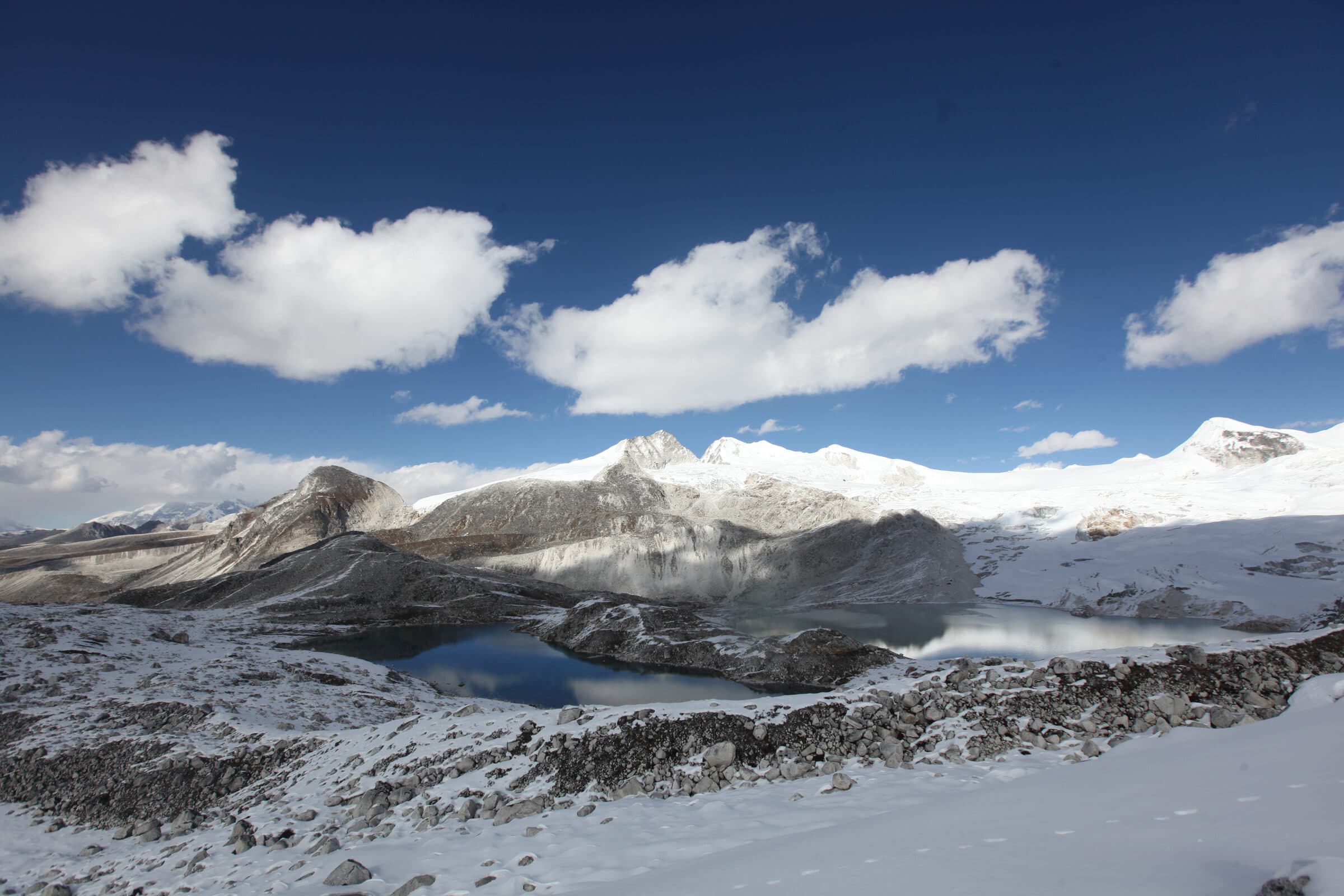
- Are there really a thousand lakes?
- No — the name is poetic rather than literal. The Dagala high country holds approximately twenty principal lakes plus a substantial number of small alpine tarns. The Day-3 lake-camp gives the visitor access to perhaps eight or nine of the principal lakes within easy walking distance.
- How difficult is the Dagala trek?
- Moderate-to-strenuous. The maximum altitude is 4,520 metres and Days 2-4 sit at or above 4,000 metres. Pre-trek conditioning over 2-3 months is the standard preparation. The terrain itself is well-defined trail; the altitude is the principal challenge.
- What's the panorama like?
- From Pangalabtsa (4,520m, Day 4) the view north includes Chomolhari (7,326m), Jichu Drake (6,989m), Masagang (7,158m), Tsendagang, and on exceptional clear days Gangkhar Puensum (7,570m). Many trekkers consider the Pangalabtsa view among the most-substantial Himalayan panoramas of any Bhutanese trek south of the Lingshi-Laya country.
- Can I fish in the lakes?
- Yes — the lakes were stocked with trout in the 1970s as part of a Royal Government fisheries programme, and catch-and-release fly fishing is permitted in some of the principal lakes (permits arranged through the operator). Bring a 4-piece pack rod if angling is of interest.
- Is the Dagala trek crowded?
- No — Dagala is one of the quieter multi-day treks in the Bhutanese system. The Druk Path (six days, also accessible from Thimphu) carries substantially more traffic; Dagala is for visitors who prefer the quieter, lake-and-panorama register over the better-known Druk Path itinerary.