Preparing
LoadingPreparing
Loading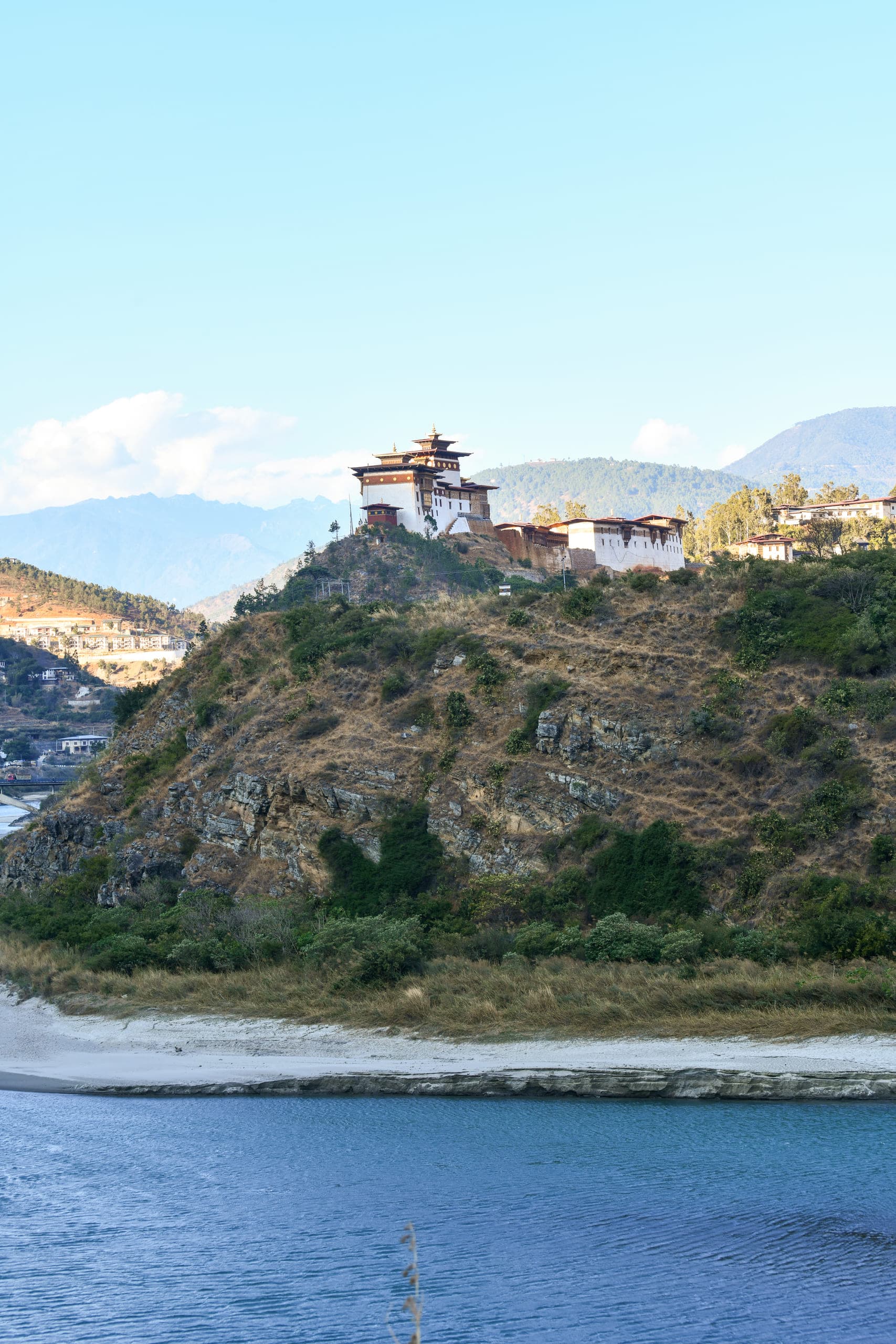
The rebuilt central-western dzong
Wangdue Phodrang Dzong sits on a ridge above the confluence of the Punatsang Chhu and the Dang Chhu in central-western Bhutan at 1,300 metres elevation. Founded in 1638 by Zhabdrung Ngawang Namgyal, the dzong burned to the ground in 2012 in an electrical fire. The Royal Government's decade-long restoration was completed and the dzong reopened on 11 November 2022 — the birthday of His Majesty the 4th King.
Wangdue Phodrang Dzong was founded in 1638 by Zhabdrung Ngawang Namgyal. The site selection follows a prophecy: while travelling through the valley, the Zhabdrung met a boy named Wangdi playing in the sand by the river — he took the name as a sign and named the new dzong after him (Wangdi Phodrang, contracted to Wangdue). The dzong commands the confluence of the Punatsang Chhu (the principal western river system, draining from Punakha) and the Dang Chhu (from the Phobjikha valley) — and historically controlled the trade routes between western Bhutan and the central dzongkhags.
On 24 June 2012, an electrical fault in the dzong's interior wiring ignited a fire that consumed the timber-framed structure within hours. The dzong's relics and the principal Buddha images were rescued by the monastic community; the structure itself burned to the foundations. The Royal Government immediately commissioned a comprehensive restoration. Master Bhutanese craftsmen — carpenters, woodcarvers, painters, master-builders — were assembled from across the kingdom; the timber was sourced from Royal Government-managed forests; the proportions and detail were reconstructed from photographic archives and oral tradition. The decade-long restoration was completed in 2022 and the dzong reopened on 11 November 2022 — His Majesty the 4th King's birthday.
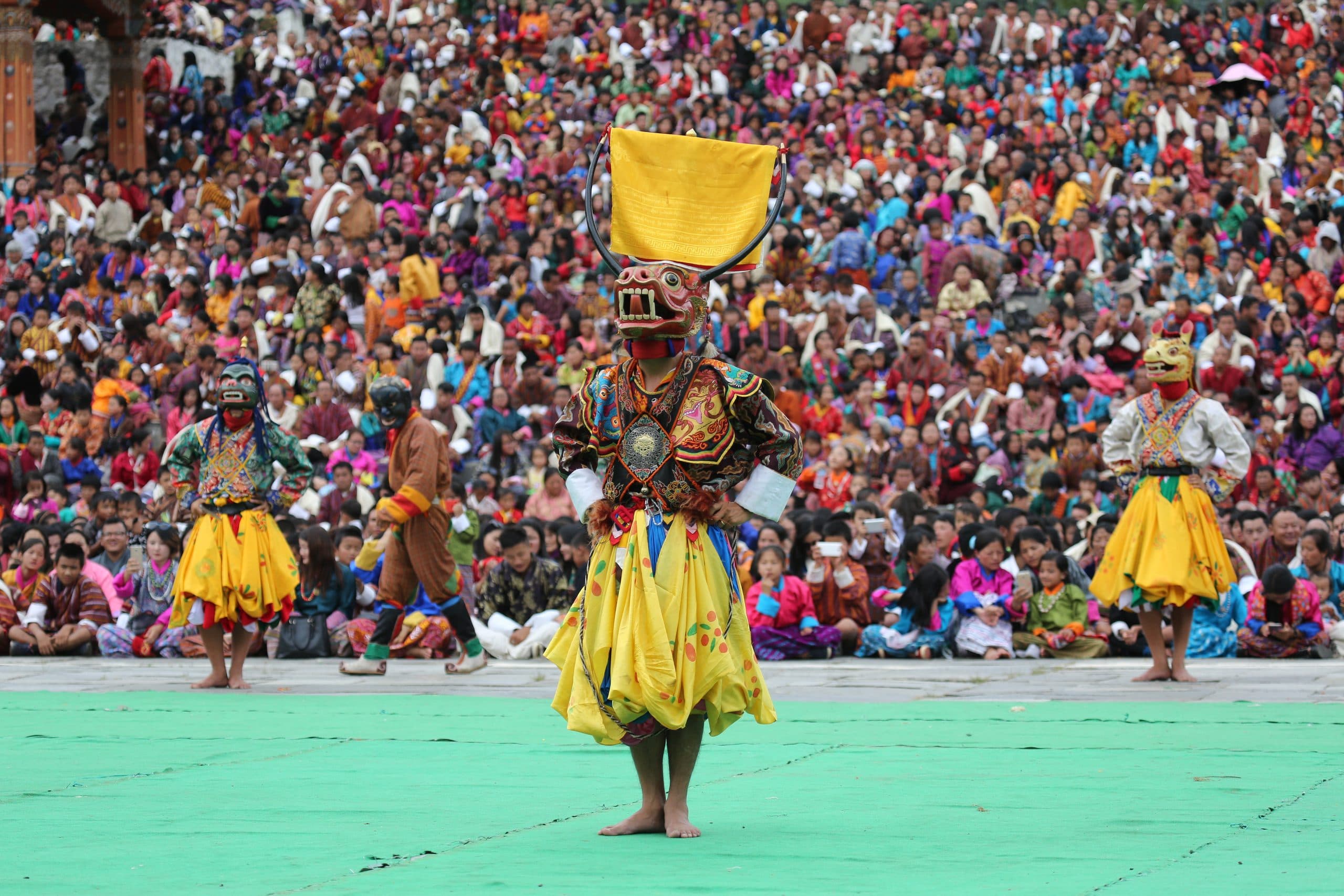
The rebuilt dzong is faithful to the 17th-century original. The timber detail, the painted woodwork on the courtyard galleries, and the principal lhakhangs were re-executed by master craftsmen across the restoration decade. The Wangdue Tshechu (8th–10th day of the 8th Bhutanese lunar month, typically late September or early October) returned to the rebuilt dzong courtyard from that season. The Tshechu's distinctive cham is the Raksha Mangcham — the dance of the wrathful judgement of the dead, performed by sixteen dancers in fierce masks. It is a Wangdue specialty and a principal Day 2 cham.
Visiting
Common questions
The original dzong was founded in 1638 by Zhabdrung Ngawang Namgyal. It burned to the ground on 24 June 2012 in an electrical fire. The Royal Government's decade-long restoration was completed and the dzong reopened on 11 November 2022 — His Majesty the 4th King's birthday.
Yes — the restoration used traditional methods and was guided by photographic archives, oral tradition, and master Bhutanese craftsmen assembled from across the kingdom. The timber detail, the proportions, and the painted woodwork were re-executed in faithful form. The dzong's current appearance is substantially indistinguishable from photographic records of the pre-fire structure.
The Raksha Mangcham is the dance of the wrathful judgement of the dead — sixteen dancers in fierce masks, performed on Day 2 of the Wangdue Tshechu. It is a Wangdue specialty and one of the most striking chams in the Bhutanese repertoire. The cham represents the bardo (the intermediate state between death and rebirth) and the deities who judge the deceased's actions.
Most visitors base in Punakha (40 minutes' drive) at Amankora Punakha, COMO Uma Punakha, Six Senses Punakha, or Dhensa Boutique Resort. The Phobjikha lodges (Amankora Gangtey, Six Senses Gangtey) are 90 minutes' drive over the Lawala pass.
The 2012 fire is widely discussed and is a moment of substantial national grief — the dzong was a 17th-century structure of immense cultural significance. The Royal Government's decision to rebuild faithfully (rather than modernise) is held by Bhutanese as a model of cultural-heritage stewardship. International visitors are welcome to discuss the fire and the restoration with their guide; the topic is open and the Bhutanese sense the visitor's interest as respectful curiosity.
Journeys featuring this site
Journey
A seven-night Bhutan journey timed to Thimphu Tshechu in autumn — second-tier seating, a culturally fluent guide, Bhutanese lodges.
Journey
A private seven-night Bhutan honeymoon for couples flying from Singapore. Bhutanese lodges, a matched guide, transparent all-inclusive pricing.
Journey
A seven-night Bhutan photography journey in October — Bhutan, golden-hour access at Punakha Dzong, a tripod-friendly guide, and transparent pricing.
Five questions. A bespoke draft back within a day or two.