- When exactly is the Thimphu Tshechu?
- It falls on the 10th to 12th day of the 8th month of the Bhutanese lunar calendar, which converts to late September or early October on the Gregorian calendar — so the precise dates shift each year. The Department of Tourism publishes the festival calendar well in advance, and we confirm the specific year's dates in your proposal. We build the week against those exact days, not a guess.
- Is there a thongdrel at the Thimphu Tshechu?
- Not at the Tshechu itself. The giant appliqué thongdrel is unfurled at the preceding Thimphu Drubchen, which runs in the same Tashichho Dzong courtyard in the days immediately before the Tshechu. Taken together, the Drubchen and the Tshechu are how a Bhutanese family attends; we time the week to catch the thongdrel dawn and the cham cycle both.
- Photography during the cham dances?
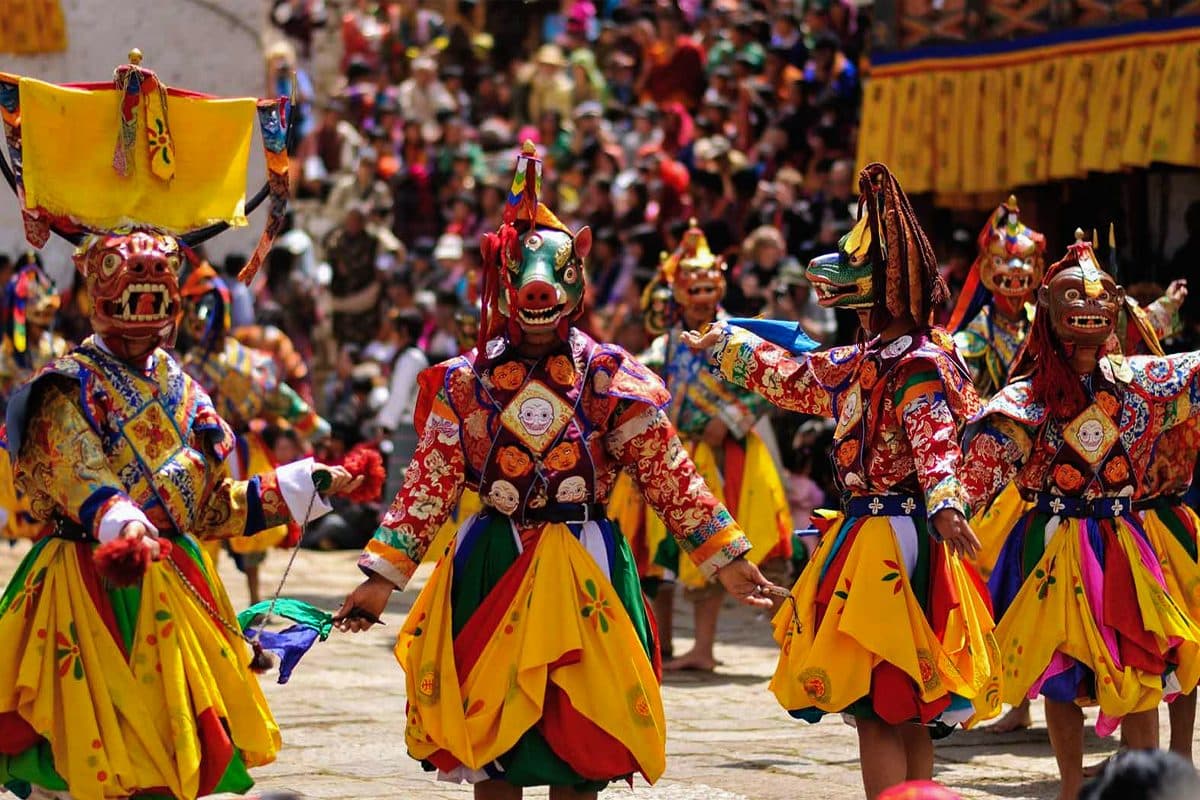
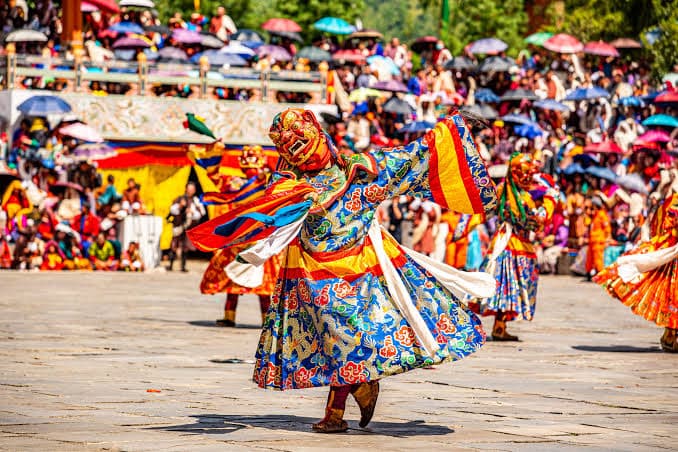
- Welcomed in the courtyard, with restraint at the moments the local custom signals — your guide will indicate when a camera should come down, and no flash at any point. Seating is held where the line of sight is clean, so long-lens work reads well. During the pre-dawn thongdrel, cameras are generally lowered for the blessing itself.
- How crowded is it, and why a small group?
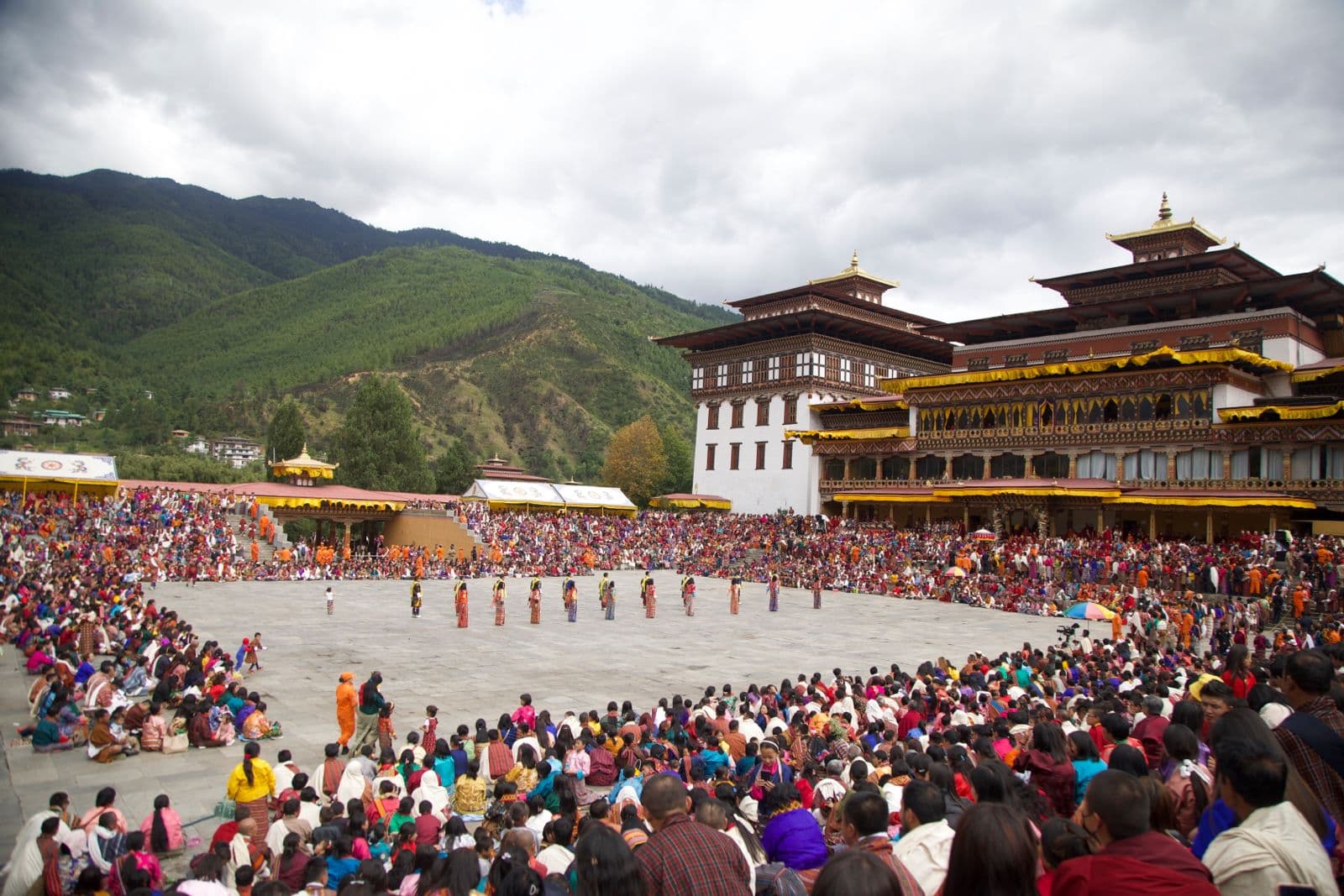
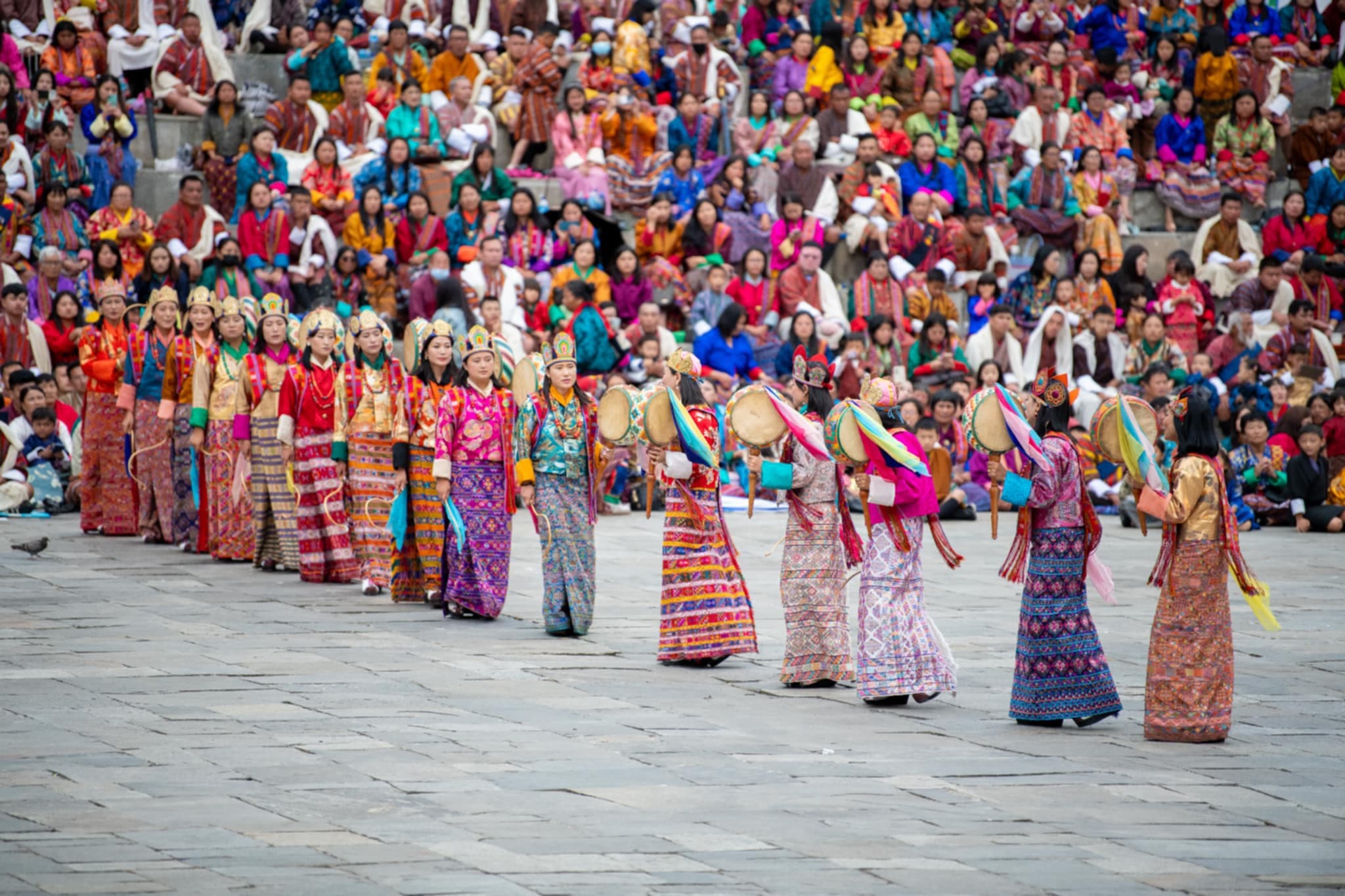
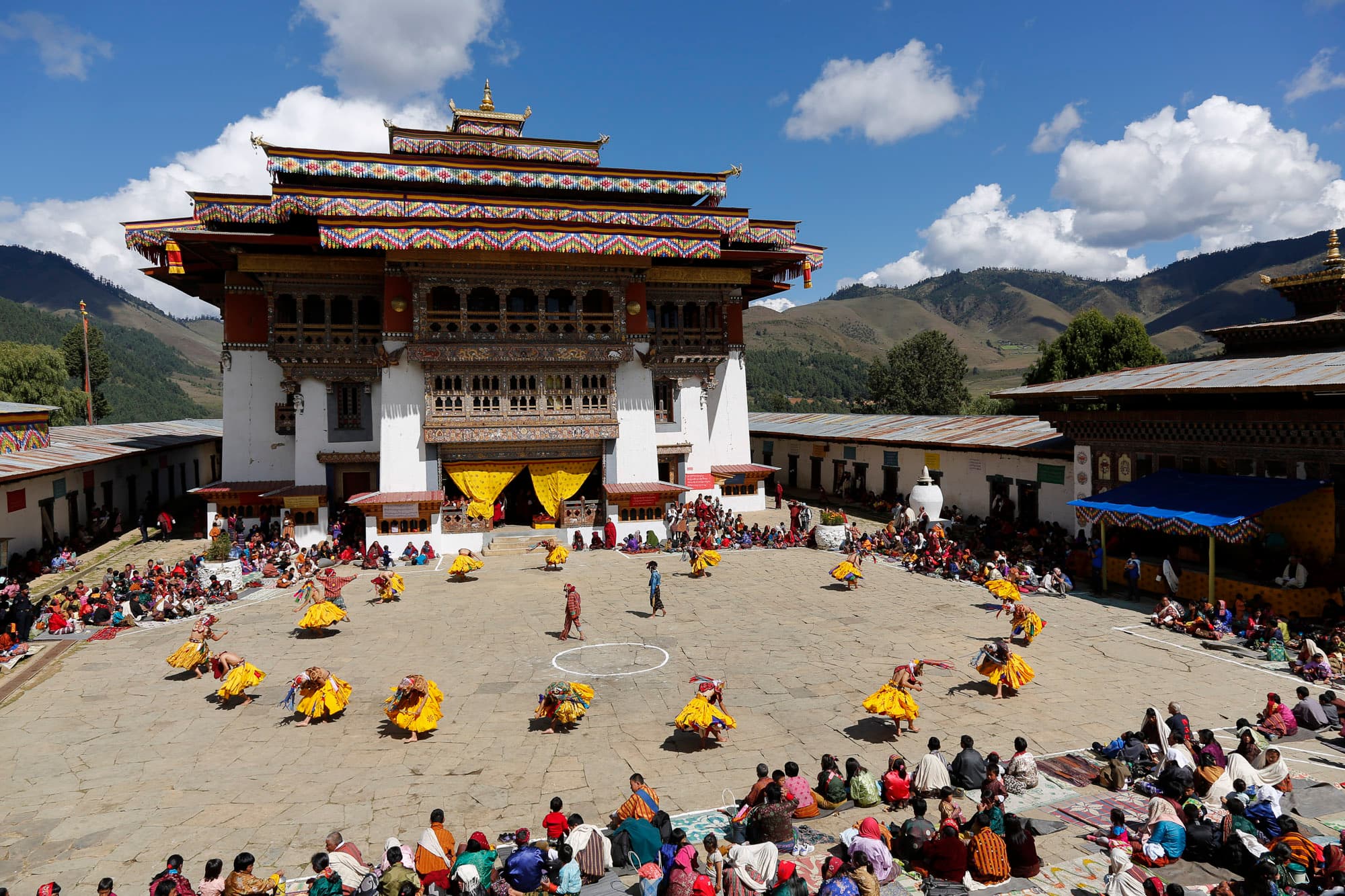
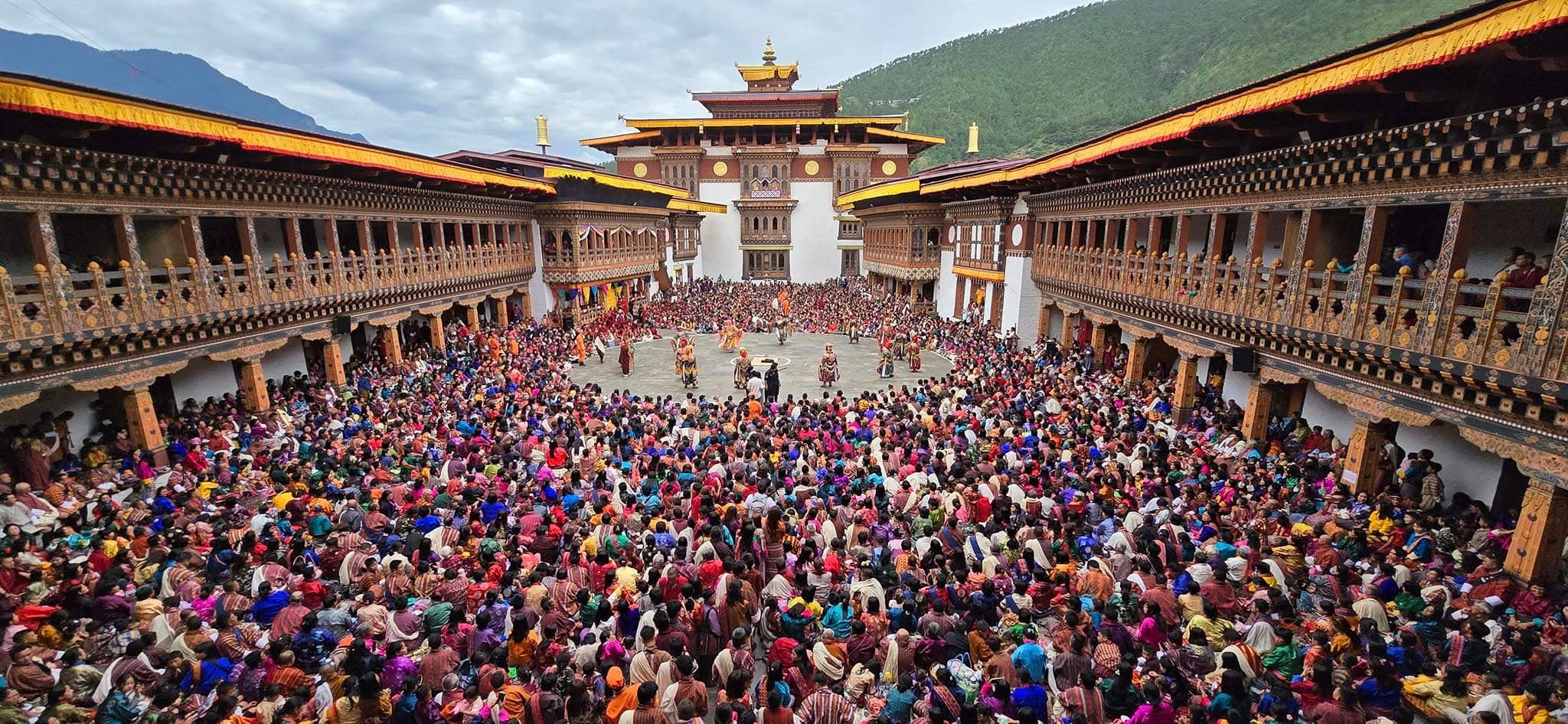
- Bhutanese families travel in for the Tshechu and it is the most-attended festival in the country; the courtyard is dense and the city full. You should not expect quiet. A small group of six or eight, with seating secured well ahead and a guide reading each dance, is how the festival stays legible rather than overwhelming. Plan accommodation and dzong access many months out.
- What is the Sustainable Development Fee, and is it included?
- Yes. The SDF is USD 100 per night per international visitor, set by the Royal Government of Bhutan. It funds free health and education for Bhutanese citizens and the country's environmental protection, and is included in your transparent price breakdown across the seven nights.
- Could we attend the Paro Tshechu in spring instead?
- Yes — we run the same shape for the Paro Tshechu, typically late March or early April at Rinpung Dzong, where the thongdrel is part of the Tshechu itself. Paro draws the largest international share; Thimphu draws the largest crowd overall and the fuller sense of the capital at festival. We are happy to advise which suits you.