- When exactly is Chorten Kora 2026?
- Two pilgrimage days fifteen days apart: Dakpa Kora on 4 March 2026 (15th day of the 1st lunar month), Drupa Kora on 19 March 2026 (30th day of the 1st lunar month). The dates shift each Gregorian year with the Bhutanese lunar calendar.
- Are the two pilgrimage windows different?
- Substantially. The Dakpa Kora is principally attended by the Dakpa community from across the Indian border in Arunachal Pradesh; the dress, language, and pilgrimage tradition are distinct. The Drupa Kora is the Bhutanese window. The festival's character is different across the two days; both are notable in their own right.
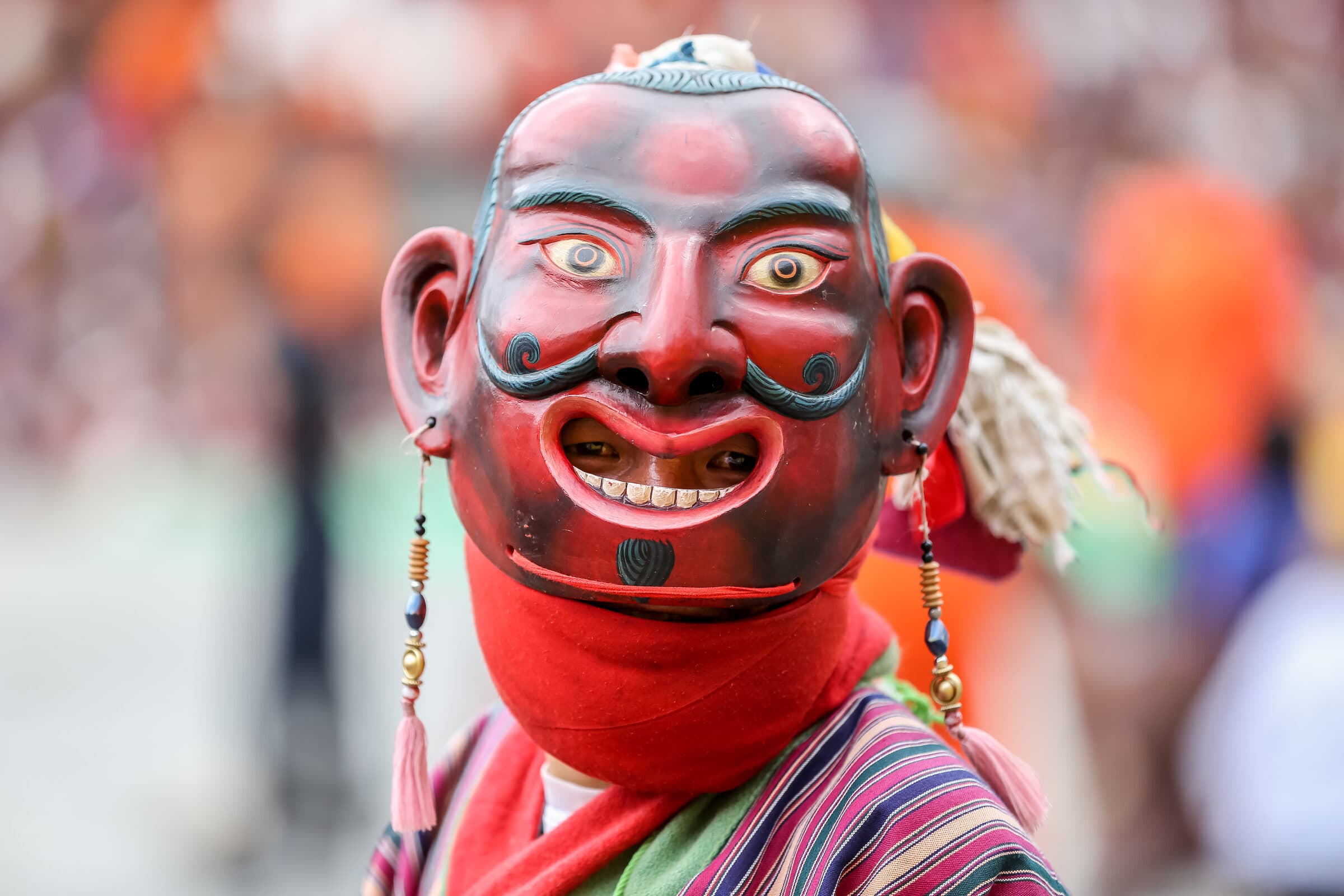
- Are there mask dances?
- Chorten Kora is principally a pilgrimage rather than a chams festival — the day's activity is circumambulation of the stupa, not mask-dance performance. For chams in eastern Bhutan, see the Gom Kora Tshechu at the nearby meditation cave (late March / early April) or the Trashigang Tshechu (late November / early December).
- Why is the stupa modelled on Bodhnath?
- Chorten Kora was built in 1740 by Lama Ngawang Loday, a nephew of the Zhabdrung. The Lama travelled to Nepal, carved a model of Bodhnath in a single radish, and brought the model back as the template — the carved-radish detail explains the proportional differences between Chorten Kora and the Bodhnath original.
- How do I get to Trashiyangtse?
- Approximately 2–3 days of driving from Paro via Thimphu, Bumthang, Mongar, and Trashigang. We typically combine Chorten Kora with the broader eastern circuit and build a 10–12 day itinerary that ends with a domestic Drukair flight from Yongphula (Trashigang) back to Paro.