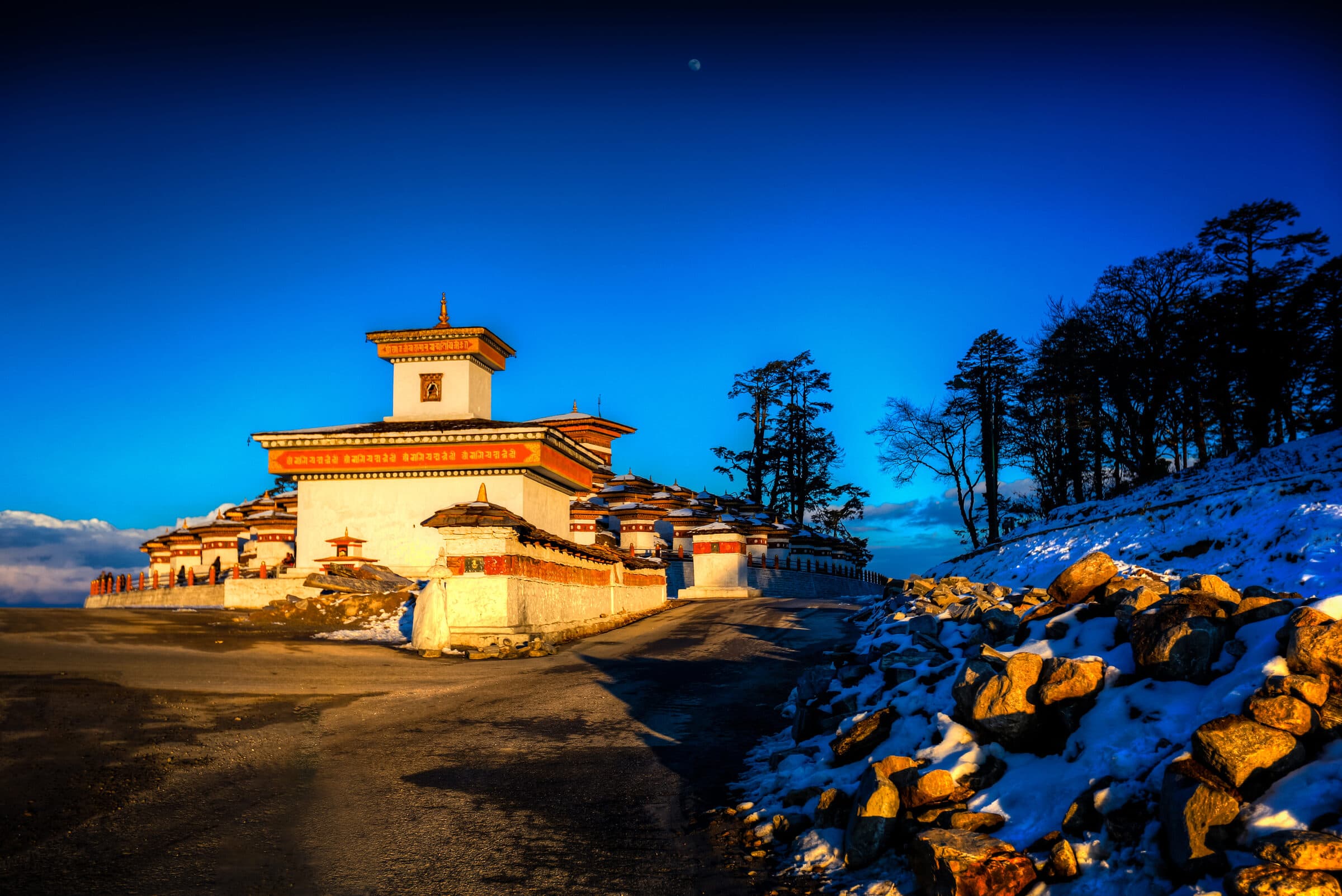
The high monastery
Phajoding is not a single building but a scattered settlement of temples, shrines, monks' quarters, and meditation huts spread across the steep mountainside high above Thimphu, at around 3,600 metres — well above the city, in the zone where the forest thins towards the alpine. It takes its name from Phajo Drukgom Zhigpo, the 13th-century Tibetan master who carried the Drukpa Kagyu tradition into Bhutan and who is held to have meditated on this slope; the monastery that grew here became, in time, one of the wealthiest and most important in the country. Today, after centuries of use and a period of decline, parts of it have been restored, and it remains a place of monastic education and meditation retreat — a working religious settlement on the mountain, watching over the capital below.