- How hard is the Tiger's Nest hike?
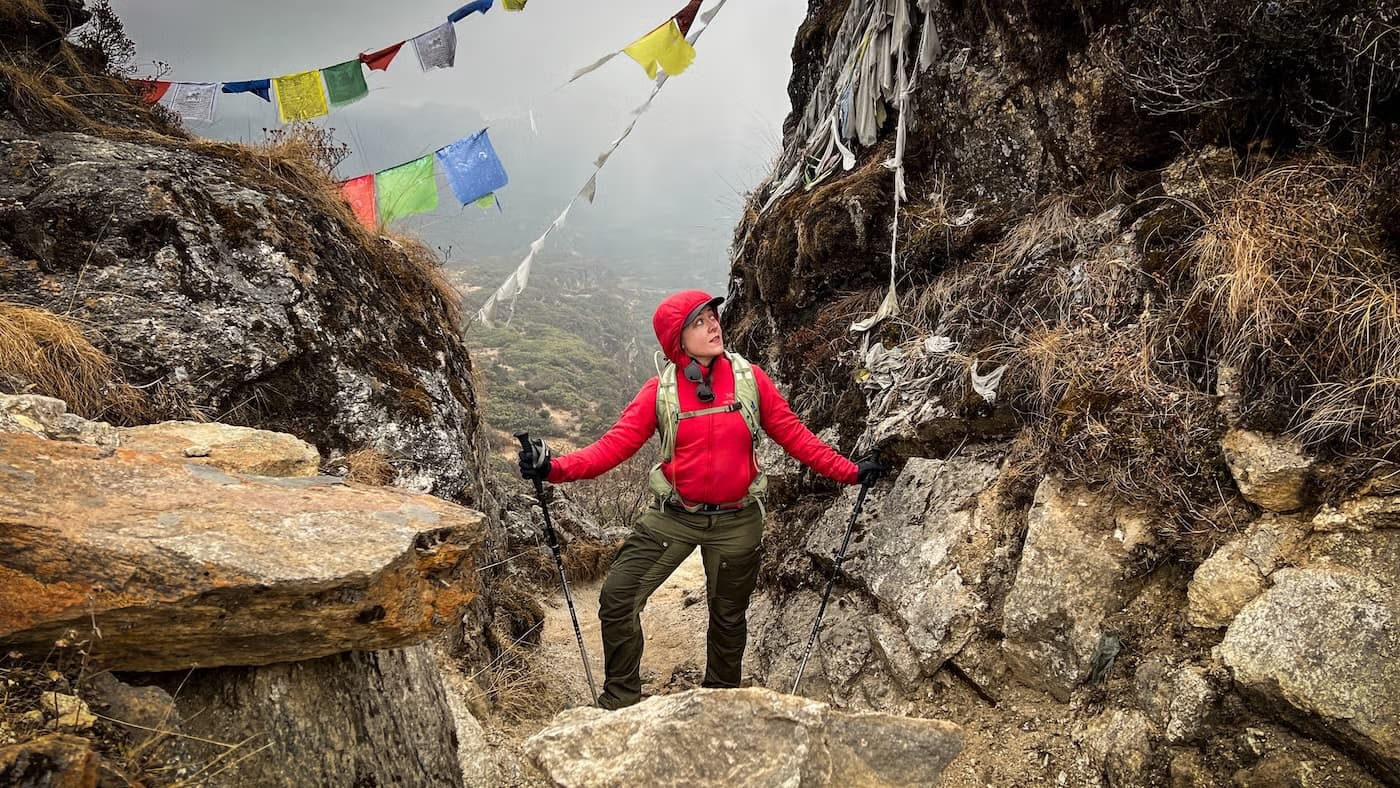
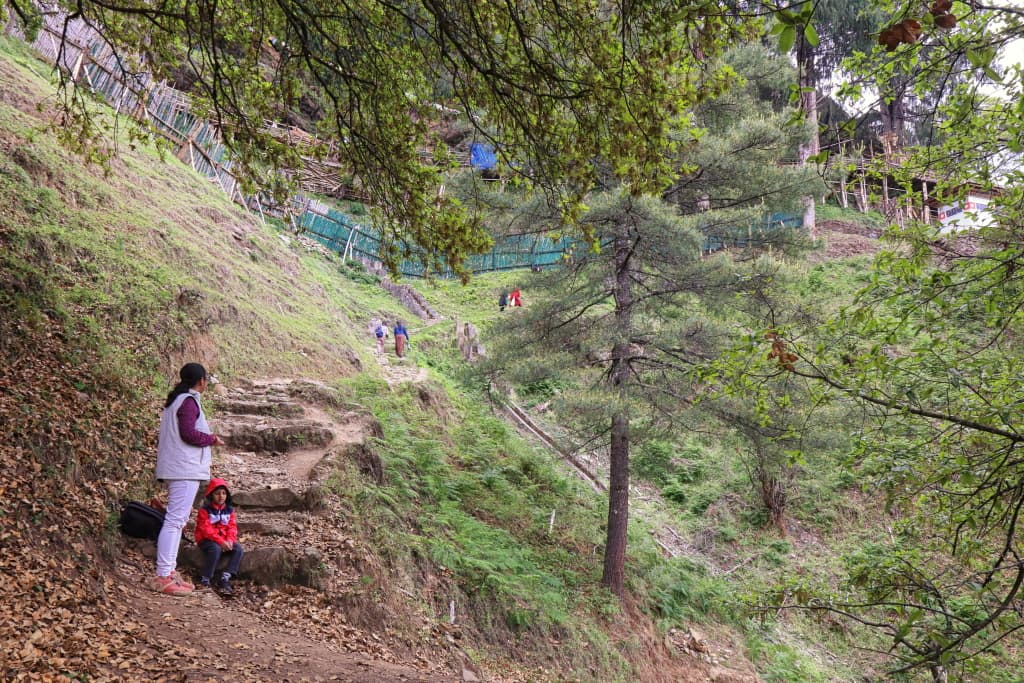
- Moderate. The path is well-made but climbs steadily — roughly two to three hours up and a little less down, with the monastery at about 3,120 metres. The main demand is the altitude as much as the gradient, which is why we put it on the final full day, after the week has acclimatised you across Thimphu and Punakha. We pace it to you, with rests and the cafeteria viewpoint partway; the great majority of guests in reasonable health complete it comfortably and remember it as the morning of the trip.
- How high is the Tiger's Nest?
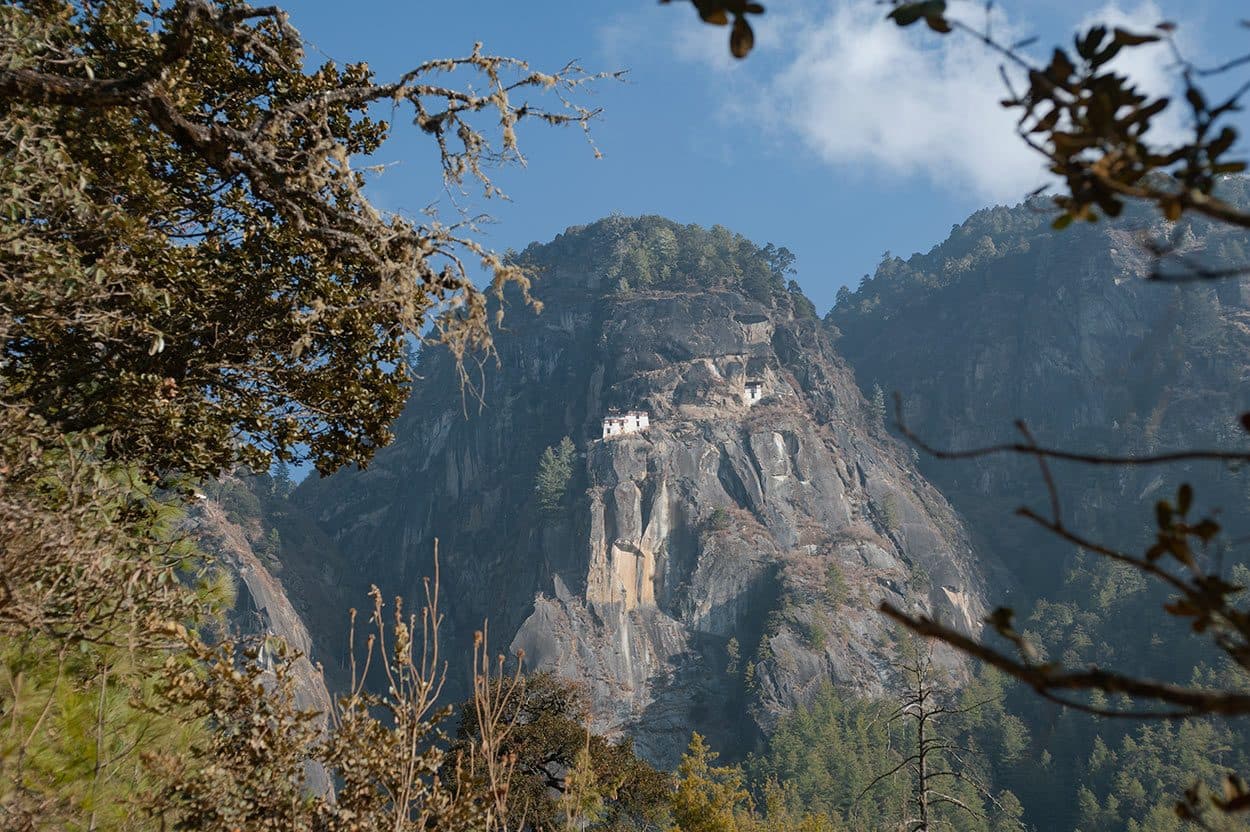
- The monastery buildings sit at about 3,120 metres, on a cliff face roughly 900 metres above the Paro valley floor. The trailhead is lower, so the walk is a continuous climb through pine and rhododendron forest. Because you will have crossed Dochu La at 3,100 metres earlier in the week and spent nights at altitude, the height is familiar by the time you make the ascent.
- Are ponies available on the way up?
- Yes, for part of the lower section — ponies can carry you up to around the cafeteria viewpoint, after which the final stretch to the monastery is on foot for everyone, on conservation grounds. Some guests ride the lower half and walk the rest; others walk throughout. Your guide arranges the ponies on the day, and there is no need to decide in advance.
- When is the best time to climb to Tiger's Nest?
- Set out early in the morning, both for the cooler air and for the light — the classic photograph from the cafeteria viewpoint is at its finest before midday, and the path is quieter. Across the year, autumn (September to November) and spring (March to May) give the clearest conditions; the trail is walked in any season, and your guide reads the day's weather and adjusts the start accordingly.
- What should we wear, and can we photograph the monastery?
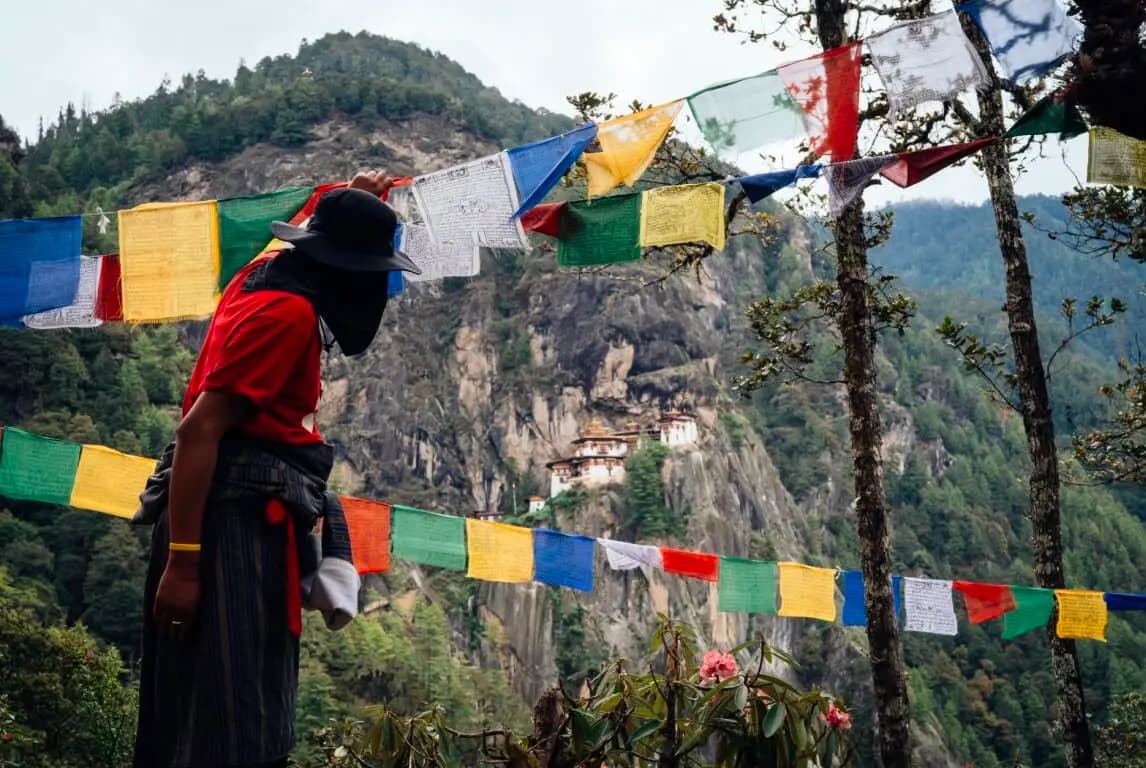
- Long trousers and covered shoulders, with sturdy walking shoes rather than trainers; layers, as the morning starts cool and warms on the climb. Photography is welcome across the approach and from the viewpoints — the cliff-face context is at its best from the cafeteria and the final ridge — but is not permitted inside the lhakhang, where hats and shoes come off. The monastery is an active place of worship with resident monks, and the day is the better for being unhurried and quiet.
- What is the Sustainable Development Fee, and is it included?
- Yes. The SDF is USD 100 per night for each international adult, set by the Royal Government of Bhutan. It funds free health and education for Bhutanese citizens and conservation across the country, and it is itemised plainly in your price breakdown alongside everything else.
- How does the flight to Bhutan work?
- Paro is the only airport in the country, served by Drukair (KB) and Bhutan Airlines (B3) from a handful of regional hubs. We advise on the international legs and the hub stopover, and ticket the Paro flight on your behalf; the in-country logistics, lodges, guide, visa, and SDF we arrange in full. The right routing depends on where you are flying from, which we work through with you at the planning stage.