- What is Zorig Chusum, and where do we see it?
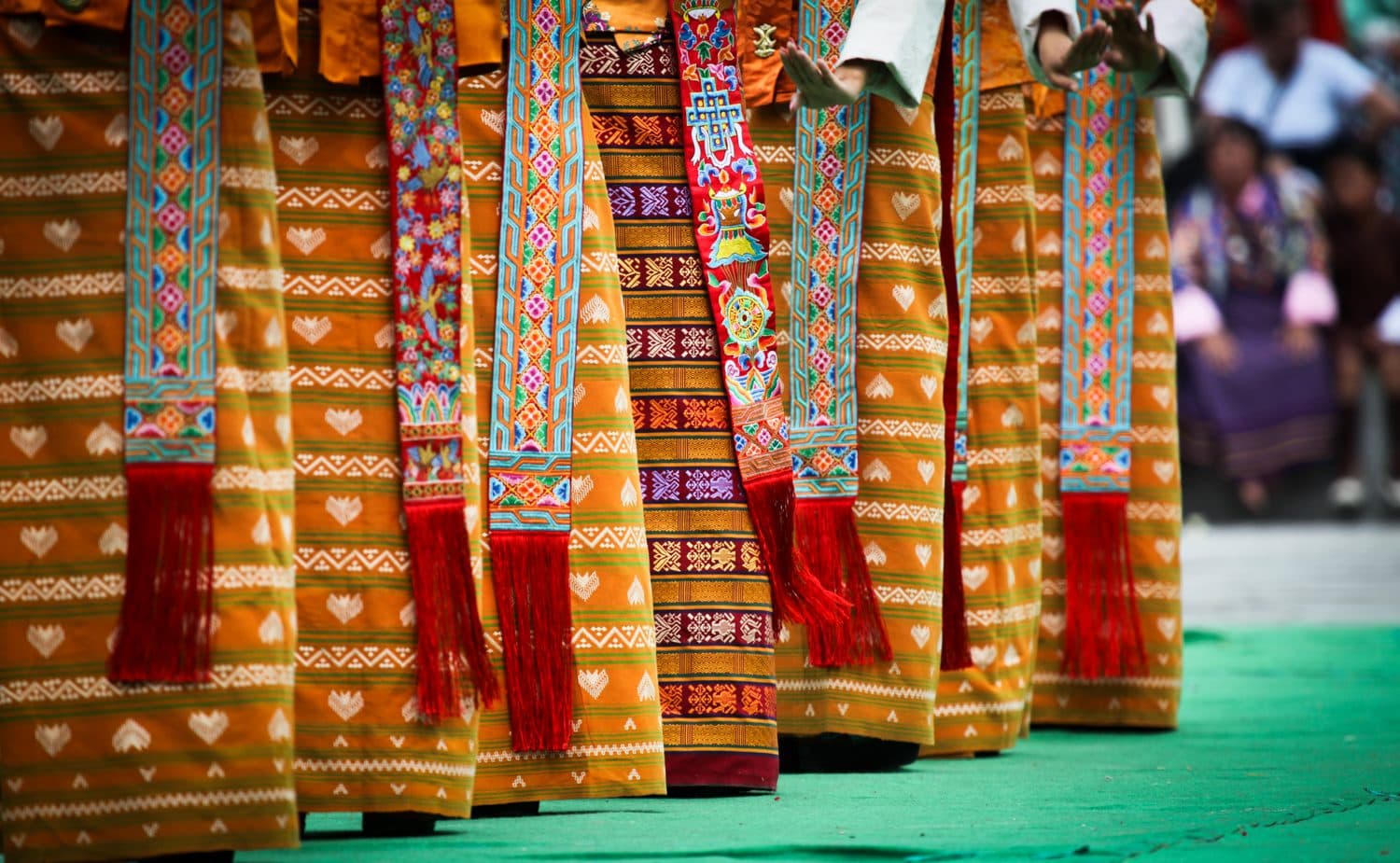
- Zorig Chusum is 'the thirteen arts and crafts' — the formal canon of Bhutanese skilled craft, among them painting, sculpture and statue-making, wood and slate carving, weaving, embroidery, papermaking, and calligraphy. The natural home for an introduction is the National Institute for Zorig Chusum in Thimphu, the school where young Bhutanese learn these arts across years of apprenticeship; from there the week opens out to individual makers in Paro, Thimphu, and the Punakha valley.
- Will we actually meet the makers, or only watch demonstrations?
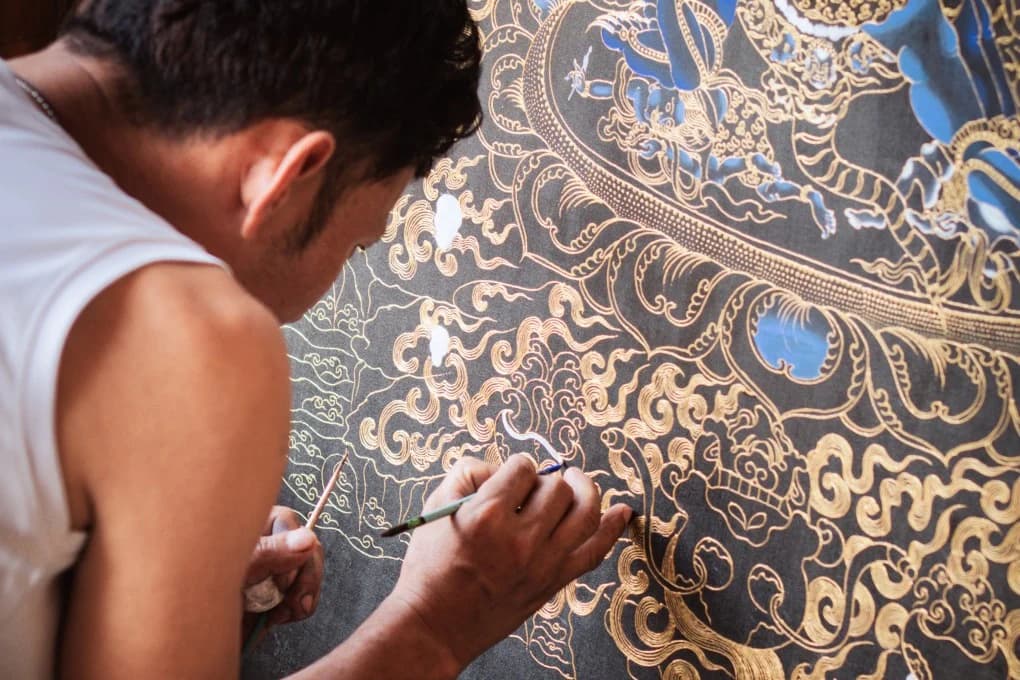
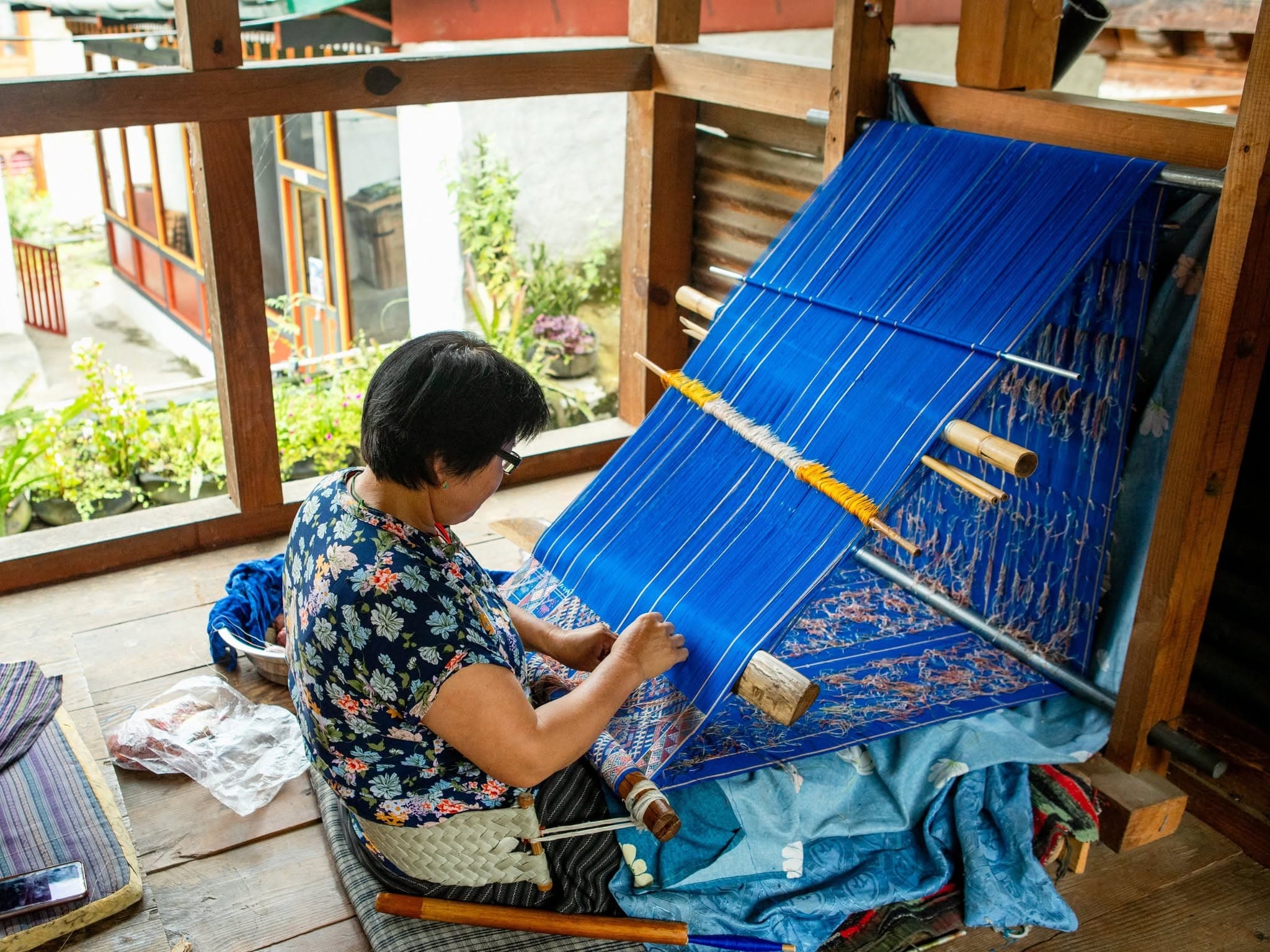
- Meet them. The journey is built around introductions at working studios and homes rather than staged demonstrations — the thangka painter at the grid, the deh-sho papermaker at the drying frame, the weaver at the backstrap loom, the carver at the block. The guide makes the introduction and translates; what follows is a conversation, and where a maker is willing the visit runs to its own length rather than a fixed clock.
- Can we try a craft ourselves, or commission a piece?
- Both can be arranged. A half-day at the loom or an hour learning the first strokes of thangka colour are rewarding as participation, if not as mastery; and a piece may be commissioned from a maker met during the week — a woven kira, a carved panel, a small painted work — paid in part on agreement and the balance on completion, shipped from Bhutan. Note the lead time, as a serious weaving or thangka can take many months. Tell us in your intake and we build it into the proposal.
- Why read the dzong for how it is built?
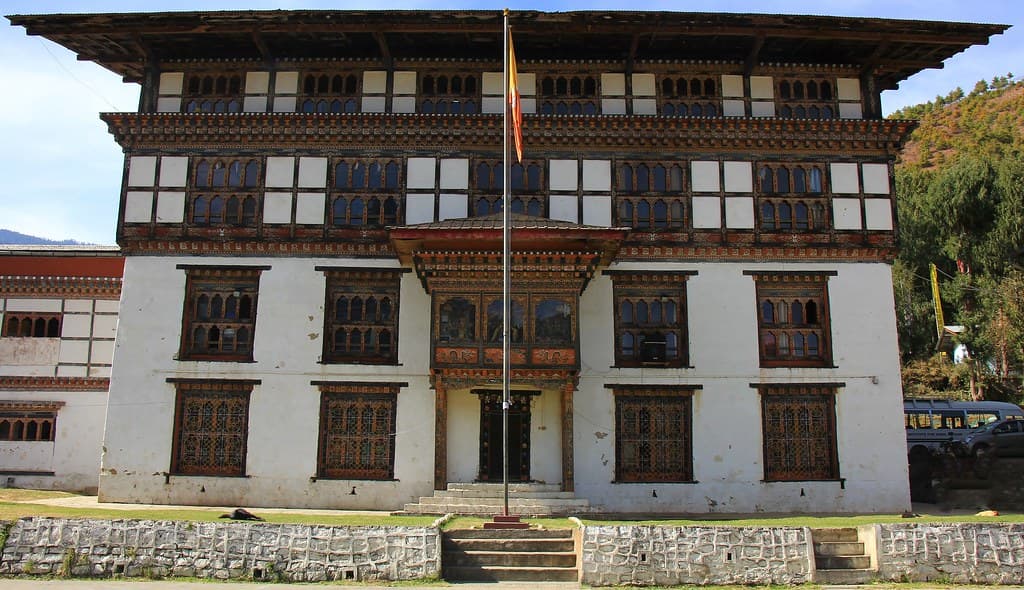
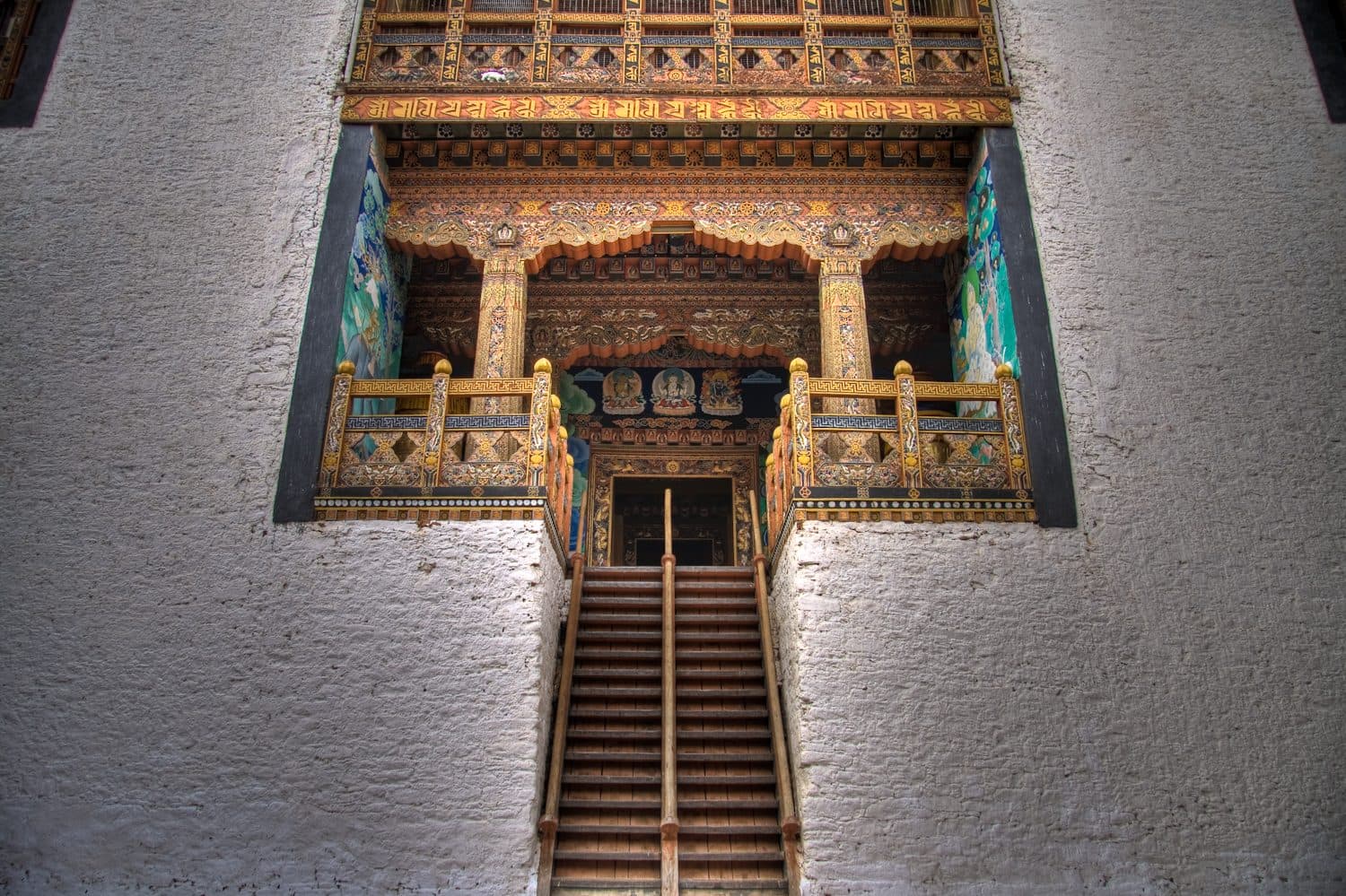
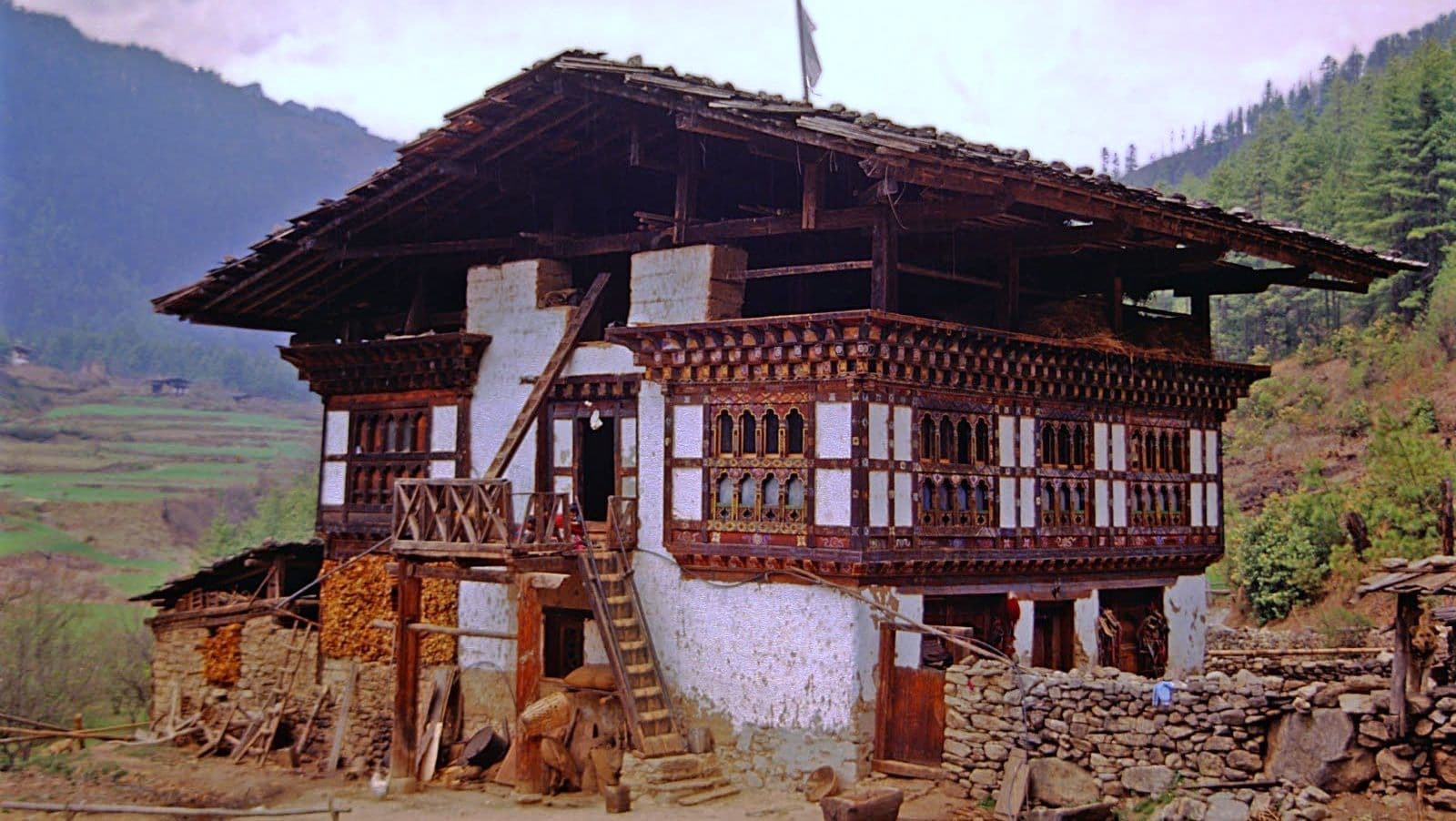
- Because the architecture is itself one of the thirteen arts in practice. A dzong is raised in rammed earth and timber by a master builder, or zowe, working without formal drawings and without a single nail in the joinery; the battered white walls, the carved window frames, and the painted brackets are the same crafts seen separately in the studios, here at the scale of a building. Punakha Dzong, at the confluence of the Mo and Pho Chhu, is among the finest examples in the country to read this way.
- Is autumn the right season for this journey?
- October and November give the clearest skies and the steadiest light for studio visits and for photographing finished work, and the workshops keep their ordinary working rhythm. April is the second window, with the rhododendron and longer evenings. The studios at the National Institute for Zorig Chusum are indoor and weather-independent, though we time the visit to the school term rather than the holidays, when the benches are empty and the visit loses its point.