- Is Bhutanese food very hot?
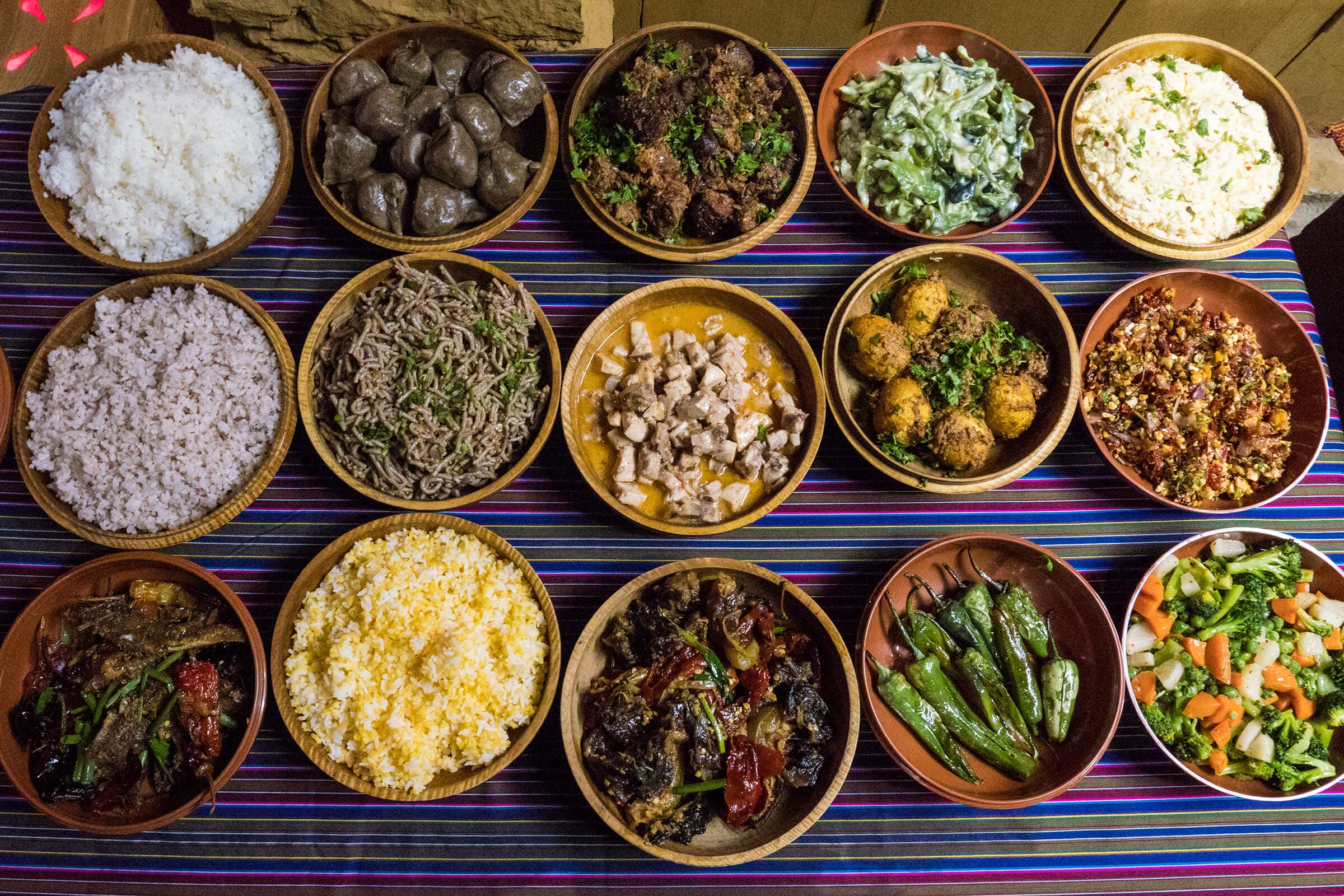
- Ema datshi — the national dish — treats the chilli as a vegetable cooked in its own right rather than as a seasoning, so yes, it carries real heat, more than most visitors expect at first. The pleasure is that the heat is honest and the cooking around it is gentle: the datshi cheese softens it, red rice steadies it, and most kitchens will pitch the chilli to your taste without being asked twice. We calibrate the heat with you across the week, and there is always a milder kewa datshi (potato and cheese) or shamu datshi (mushroom) alongside.
- Will I find a fine-dining scene in Bhutan?
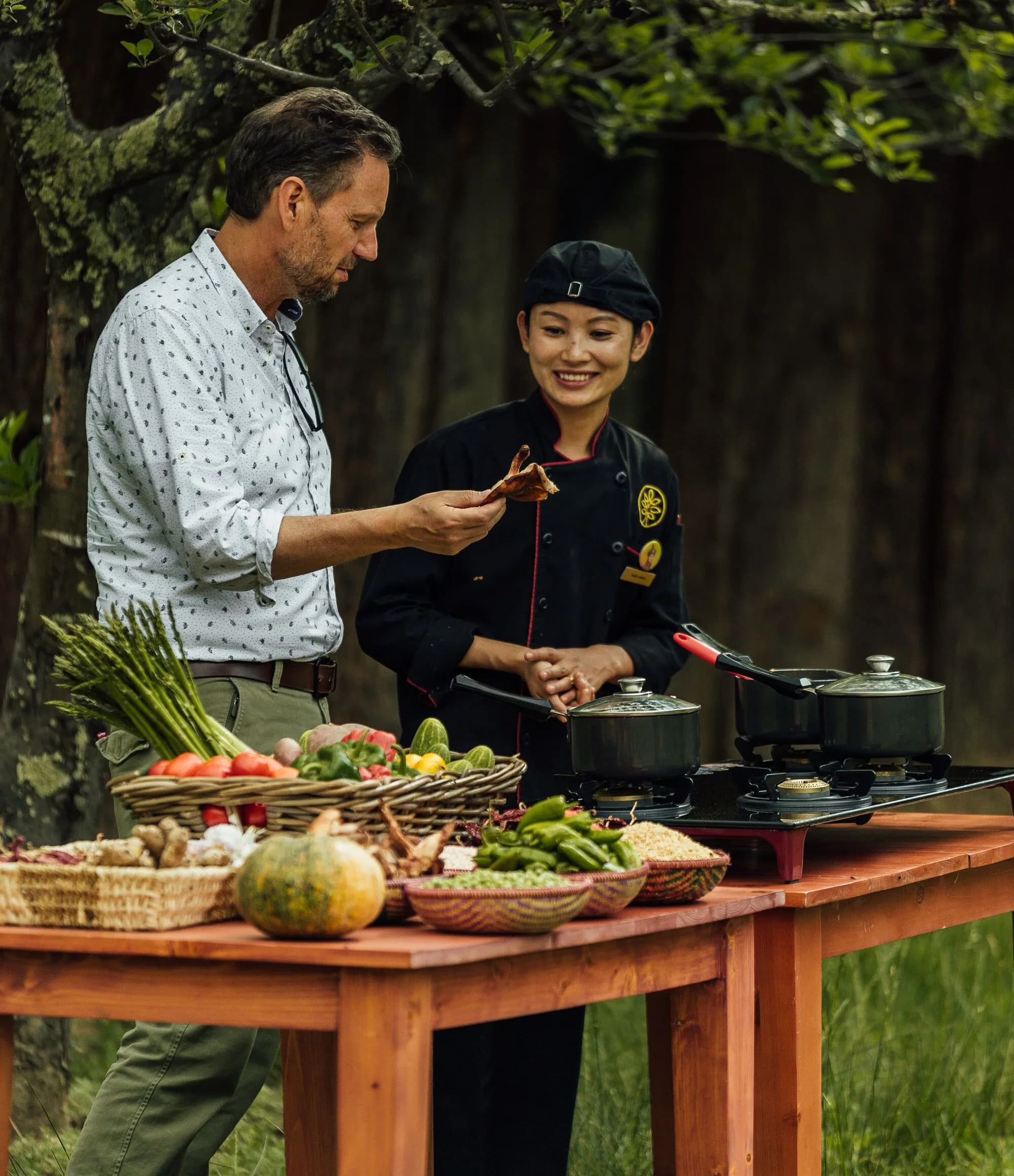
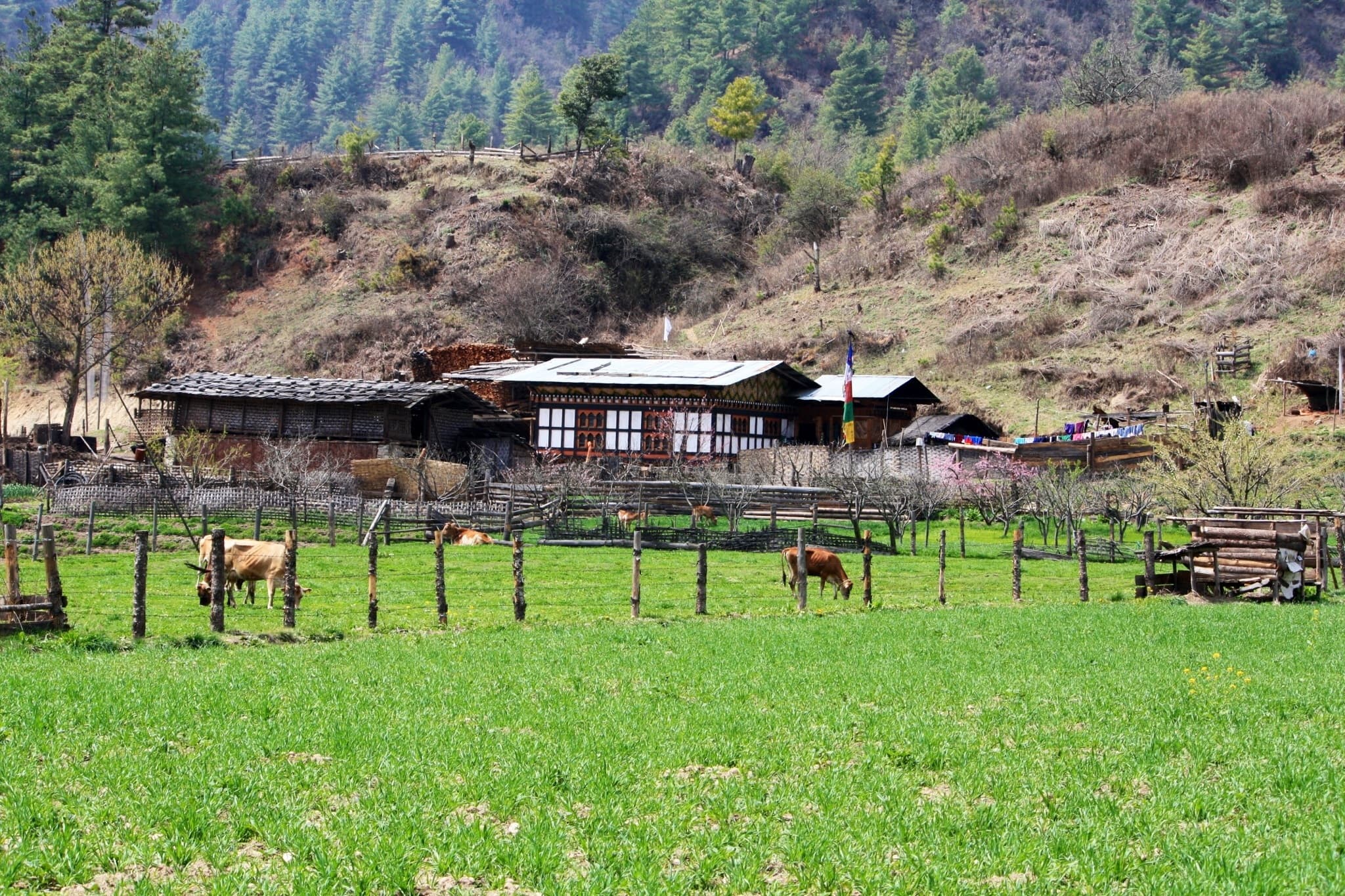
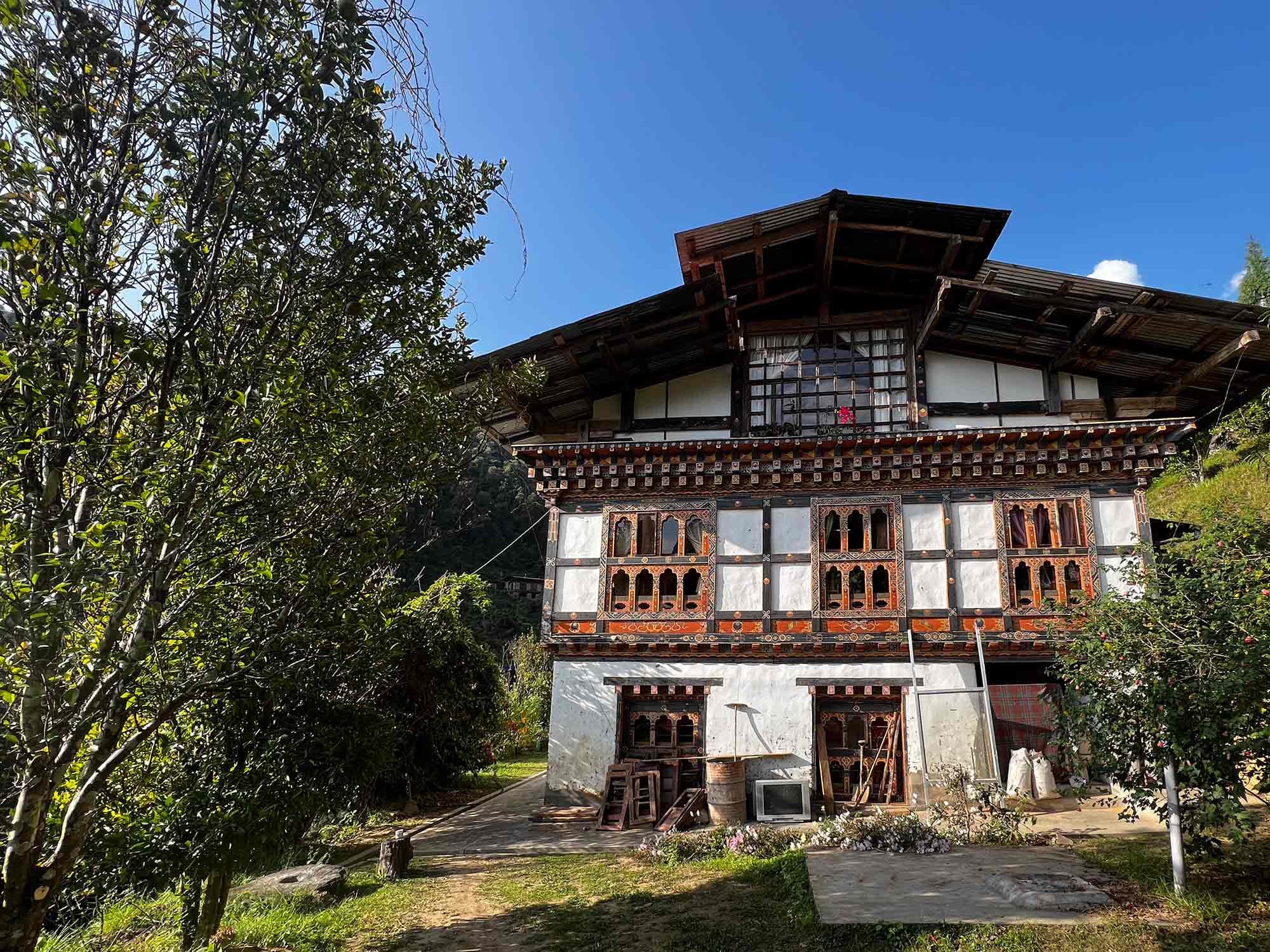
- Not in the sense a city traveller might mean, and that is rather the point. Bhutanese food is seasonal, farm-close, and unfussy — red rice, the chilli, river fish, buckwheat in the high valleys, dairy and apples. What the premium lodges add is a considered kitchen that reads the season closely and cooks what the valley is giving that week, rather than an imported menu. The journey is built around that honesty: a farmhouse meal over a wood stove, a cooking lesson with your hands in it, the cheese-and-ale farm in Bumthang — the pleasures are real and close to the ground.
- What makes Bumthang worth the drive east?
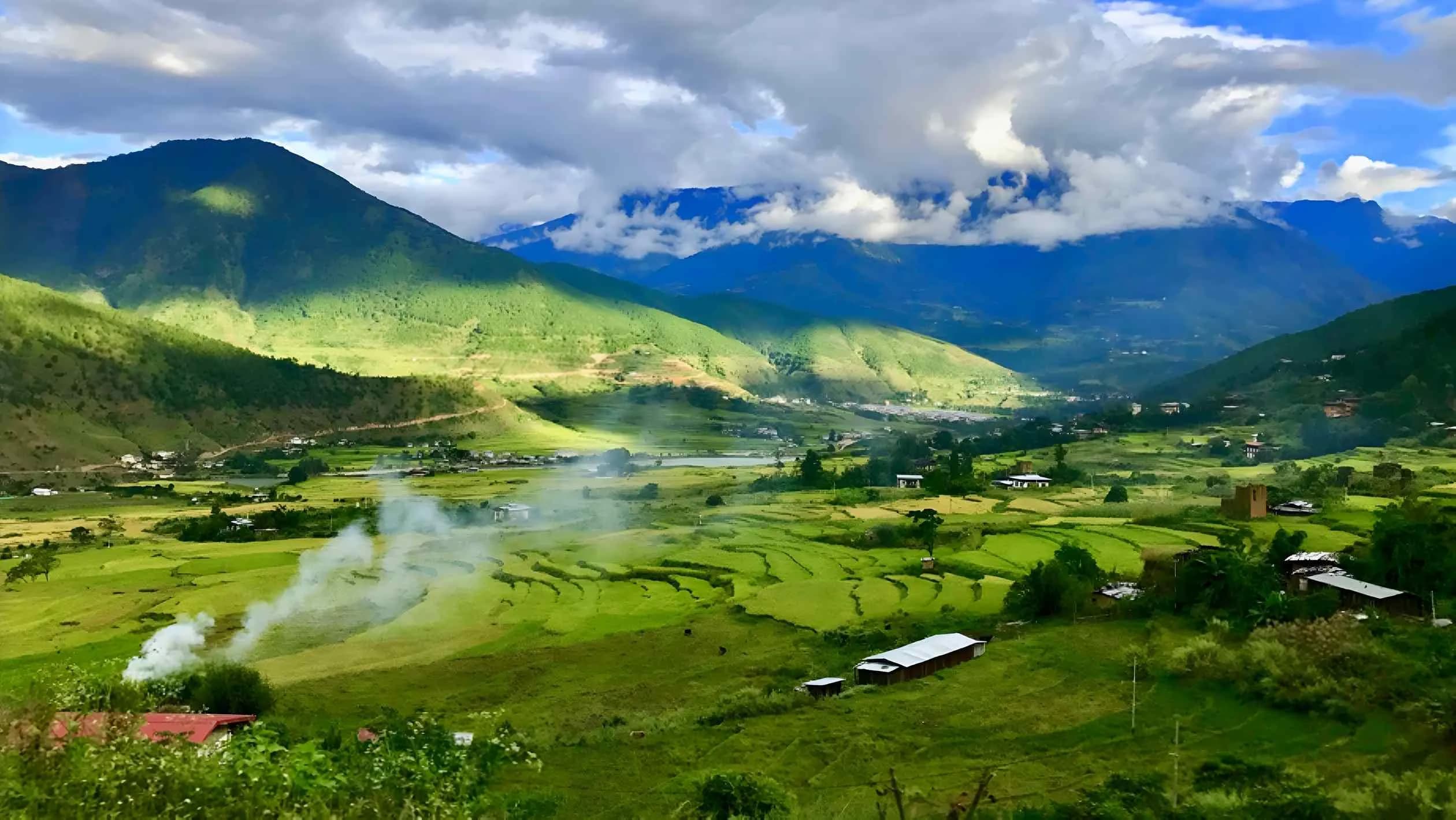
- Bumthang is the central heartland — the high cluster of valleys you reach on eight nights and above, a long day's drive east of Punakha over the Pele La and the Yotong La. It is buckwheat country: the soft khuli pancakes and the grey puta noodles you will not meet so readily further west. It is also the home of the Bumthang Swiss Farm, the legacy of a Swiss agronomist who settled in the valley and brought Alpine cheese-making and brewing — the firm Gouda-style and Emmental-style cheeses, and the unfiltered Red Panda wheat beer, poured fresh after a cold day. For a traveller who eats their way through a country, it is the heart of the journey.
- What is suja, and the hot stone bath?
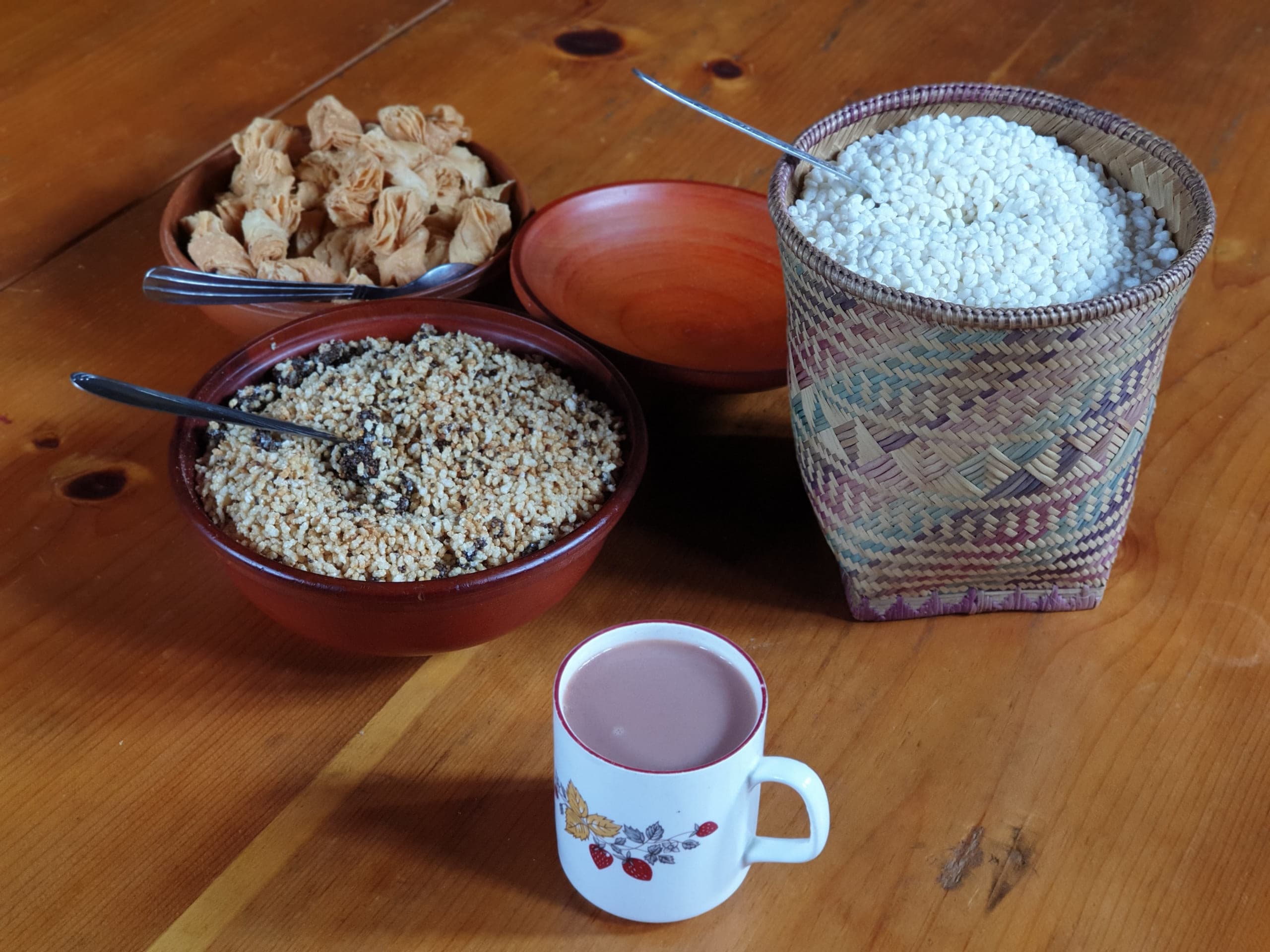
- Suja is the Bhutanese butter tea — fermented brick tea, butter (traditionally yak butter), and salt, churned together in a wooden dongmo until it turns smooth. The salted, buttery register is unfamiliar at first and grows on most visitors over a cup or two; it is offered the moment you arrive at a household, and accepting it is part of the welcome. The hot stone bath — menchu — is the farmhouse's own restorative: river stones heated in a fire and lowered into a wooden tub of water and artemisia, the most welcome thing after a cold day in the high valleys. Both feature through the week, and both are part of the table as much as the kitchen.
- How does the flight to Bhutan work?
- All flights to Bhutan land at Paro, the country's only airport, operated by Drukair (KB) and Bhutan Airlines (B3), typically via a regional hub. We advise on the routing and ticket the Paro sector on your behalf at the prevailing rate, and we arrange everything within Bhutan — the lodges, the matched guide, the in-country logistics, the visa, and the Sustainable Development Fee of USD 100 per night, which is set by the Royal Government of Bhutan and included transparently in your price breakdown.